Home/ The Journal/ bowel habits
bowel habits
What's a normal bowel movement? Frequency, shape, and signs of a healthy poop

Short version: A normal bowel movement is soft, easy to pass, and over in a few minutes. You should not need to push hard, and you should feel finished after. 95.9% of adults with normal habits go between 3 times a day and 3 times a week.
- A daily poop is not the test. Only 33% of women in a Bristol study had a clear 24-hour cycle.
- How it felt counts as much as how often. Straining, hard stool, or feeling unfinished in more than 1 of every 4 trips is a clinical marker.
- Most people who skipped the phone were done in 5 minutes or less.
- Blood, black stool, or a change that will not go away is a doctor call.
Last updated October 2026.
You went this morning. It took a while. It was work. You still feel like there is more.
Does that count as normal?
Most charts only ask how often and what shape. They skip the part you actually felt. So here is the fuller check.
What is a normal bowel movement?
A normal bowel movement passes without much effort, without pain, and leaves you feeling done. It comes on a pattern that is steady for you.
That last part is the agency's view too. The NIDDK says people have different patterns and "only you know what's normal for you," on its constipation definition page.
Shape is a better clue to gut speed than frequency. In 66 volunteers, stool form tracked gut transit time more closely than how often people went, per the Bristol stool scale study.
Here are 5 signs you can check in one trip.
| Sign | Usually normal | Worth noticing |
|---|---|---|
| Frequency | 3 a day to 3 a week | Fewer than 3 a week |
| Shape | Soft and formed, Bristol type 3 or 4 | Hard lumps, types 1 or 2 |
| Effort | Little or no pushing | Straining in more than 1 of 4 trips |
| Finish | You feel empty | You often feel there is more |
| Time | A few minutes | Long sits, most days |
How often is a regular bowel movement?
Regular means 3 times a day to 3 times a week, for most adults. In US survey data on 4,775 adults with normal habits, 95.9% landed there, per the NHANES study of normal bowel patterns.
So where did the daily rule come from? Habit, mostly.
A classic study in Bristol, England, tracked 838 men and 1,059 women. Once a day was the most common pattern, but only 33% of women had a clear 24-hour cycle. A third of women went less often than daily.
"[C]onventionally normal bowel function is enjoyed by less than half the population." Heaton and colleagues, Gut, 1992
If you are not a once-a-day person, you did not fail at anything. That is a body with its own schedule, not a character flaw.
What should going actually feel like?
It should feel easy. Some mild pressure is fine. Pushing until you hold your breath is not the goal.
Doctors use this part too. The Rome IV criteria for functional constipation look at straining, hard stool, and a feeling of not being empty, each in more than 25% of bowel movements. Two or more, over 3 months, with symptoms that began at least 6 months back, is the bar. A 2026 review of constipation management lays out the full list.
Notice what that means. You can go every single day and still meet that bar, because frequency is only 1 of the 6 items.
Straining is also common, even in healthy people. In one study of 52 healthy volunteers, 44.2% reported more straining at the start, and 28.8% reported not feeling empty.
So if it has been hard work, you are not doing it wrong. Hard stool and slow transit make it hard. That is a signal to read.
How long should a bowel movement take?
Usually just a few minutes. No official number exists, but one small study gives a useful picture.
Researchers surveyed 125 adults having a screening colonoscopy. Among the 42 who did not use a phone on the toilet, 92.8% were done in 5 minutes or less. Among the 83 who did, 37.3% stayed longer than 5. Phone users had a 46% higher risk of hemorrhoids, per the 2025 PLOS One study. It shows a link in one group, not proof that phones cause them.
An easy swap: leave the phone outside.

Why are regular bowel movements important?
A steady pattern keeps waste moving. Slow transit changes what your gut microbes do with it.
A 2024 study in Cell Reports Medicine looked at generally healthy adults. People who went less often had higher levels of a microbe-made toxin, 3-indoxyl sulfate, and that was tied to lower kidney function. Women also tended to report fewer bowel movements than men.
Keep this in proportion. The data were self-reported and the group was mostly White and from the US West Coast. The authors say more work is needed to measure disease risk. It is a reason to pay attention, not a reason to panic about a slow week.
How do you make going easier?
Start with timing, position, and fiber. All 3 are low effort.
- Use the window after breakfast. The NIDDK says trying 15 to 45 minutes after breakfast may help, because eating helps your colon move stool. Its constipation treatment page also says to go as soon as you feel the need.
- Put your feet up. The NIDDK suggests a footstool. In the 52-person study above, a toilet stool came with less straining and better emptying, but nobody was blinded. A 2026 trial in 150 women after pelvic surgery found no difference in strain. It is cheap to try, and it may do little.
- Build up fiber slowly. Adults need 22 to 34 grams a day, depending on age and sex, per the NIDDK. In a 2022 meta-analysis of 16 trials in people with chronic constipation, 66% responded to fiber and 41% to control. Better stool frequency came with more than 10 g a day for at least 4 weeks.
Food comes first. Try our list of high-fiber foods for women, and see how much fiber women need per day. Seya's fiber gummy supports regularity. It covers part of your daily total, below the doses those trials used, so treat it as one piece.
Want to go deeper on one sign? Read how often you should poop or what healthy poop looks like, type by type.
When is a bowel movement not normal?
Call a doctor when something new sticks, or when you see a red flag.
The NIDDK says to see a doctor if symptoms do not go away with self-care, or if you have a family history of colon or rectal cancer. Go right away for bleeding from the rectum, blood in your stool, constant belly pain, or weight loss you did not plan, per its page on constipation symptoms and causes.
Most of the time, the cause is simple. A visit is how you find out.
Frequently asked questions
How often is a regular bowel movement?
Anywhere from 3 times a day to 3 times a week counts as regular for most adults. In a US survey of 4,775 adults with normal habits, 95.9% fell in that range. Regular means steady for you. It does not mean daily.
Why are regular bowel movements important?
They move waste out before gut microbes spend more time on it. In a study of generally healthy adults, lower frequency was linked to more of a microbe-made toxin called 3-indoxyl sulfate and lower kidney function. That study shows a link, not a cause, and it does not predict your own risk.
Is it good to have regular bowel movements?
Yes. A steady pattern is one easy sign that things are moving well. Most people are not perfectly regular, though. In a Bristol study, only 33% of women had a clear 24-hour cycle. A slightly uneven schedule is common and is not a problem by itself.
Is it good to have a bowel movement every day?
It is good if that is your natural pattern, but you do not need it. A third of women in the Bristol study went less often than daily. If you go every other day and it is soft and easy, that can be normal. Forcing a daily trip only adds straining.
What are healthy poops?
Healthy poops are soft, formed, and easy to pass, with no pain, blood, or long strain. You should feel finished afterward. Researchers in the NHANES data found women with normal habits reported a wide range, Bristol types 2 to 6, so one odd day means little.
What does the healthiest poop look like?
Think of a smooth, soft log or a cracked sausage shape, which is Bristol type 3 or 4. Shape is only half of it. The other half is how it felt to pass. Easy and complete is what you want.
These statements have not been evaluated by the Food and Drug Administration. This product is not intended to diagnose, treat, cure, or prevent any disease. This article is educational and is not medical advice. Talk to your clinician about your own symptoms.
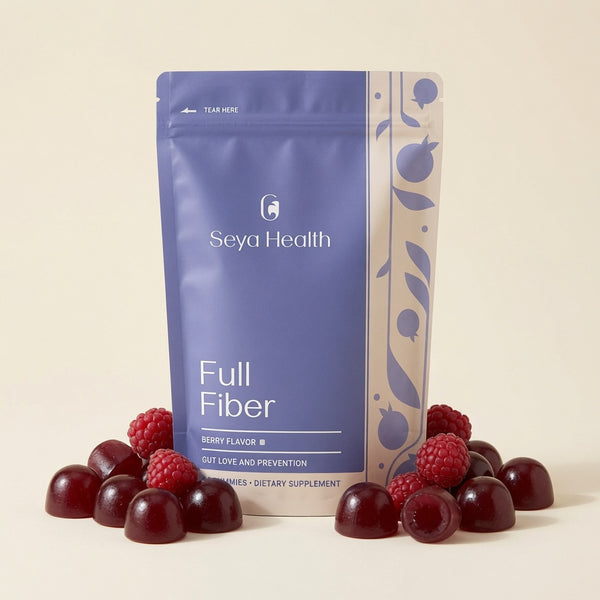
Seya Full Fiber
Phần lớn phụ nữ không nạp đủ chất xơ. Seya Full Fiber cung cấp 6 gam từ ba loại chất xơ trong ba viên kẹo dẻo chay nhỏ. Từ thực vật, không gelatin, không đường rượu.
Mua Full Fiber