
Home/ The Journal/ digestive health
digestive health
How Much Fiber Do Women Actually Need? Grams by Age, and Why It's More Than You Think
How much fiber do women need per day? Targets by age, why women's bodies use fiber differently, the foods that get you there, and how to close the gap.

By the Seya Health Editorial Team · Last reviewed September 2026
Most women need 22 to 28 grams of fiber a day, and the exact number changes with age and life stage. Women 19 to 30 aim for about 28 grams, 31 to 50 for about 25, and 51 and older for about 22. Pregnancy raises it to around 28, and breastfeeding to about 29.
Here is the catch: more than 90% of women fall short, most getting only about half of what they need. This guide covers your exact target, why women's bodies use fiber differently than men's, the foods that get you there, and how to close the gap without wrecking your stomach.
Your fiber target by age and life stage
Fiber recommendations are set by the Dietary Guidelines for Americans and the National Academies. For women, the targets look like this:
| Life stage | Daily fiber (women) |
|---|---|
| Ages 19 to 30 | 28 g |
| Ages 31 to 50 | 25 g |
| Ages 51 and older | 22 g |
| Pregnancy | ~28 g |
| Breastfeeding | ~29 g |
If you would rather not track by age, there is a simpler rule the guidelines use: about 14 grams of fiber for every 1,000 calories you eat (Dietary Guidelines for Americans). Either way, most women land somewhere in the mid-20s of grams.
Why you may have heard "38 grams"
The number 38 grams gets repeated a lot, but that is the target for younger men. Men need more fiber than women, partly because they eat more calories on average. Using a man's number can make your goal feel out of reach when it is not. Your target is very likely in the 22 to 28 gram range.
Why almost all women fall short
This is the part that surprises people: more than 90% of women do not get enough fiber, a shortfall of roughly half. The average adult eats only about 16 to 17 grams a day (American Society for Nutrition). So if you feel like you are "probably fine" on fiber, the odds say otherwise. It is not a willpower problem. Fiber-rich foods take planning, and modern eating is built around foods that have had the fiber stripped out.
The three kinds of fiber, and why you want all of them
"Fiber" is not one thing. It comes in a few forms, and they do different jobs:
- Soluble fiber dissolves in water and turns gel-like. It slows how fast sugar from food reaches your blood, which helps steady energy, and it helps lower cholesterol. Found in oats, beans, apples, and citrus.
- Insoluble fiber does not dissolve. It adds bulk and helps food move through you. Found in whole grains, nuts, and the skins of many vegetables.
- Fermentable (prebiotic) fiber is the type your gut bacteria eat. When they ferment it, they make short-chain fatty acids like butyrate that feed the cells lining your colon. This is the type behind most of fiber's gut benefits. Resistant starch (in cooled cooked potatoes, green bananas, legumes, and some tapioca fibers) is a well-studied fermentable fiber.
Most whole foods carry a mix. The takeaway: a good fiber routine is not just "roughage." The fermentable types that feed your gut bacteria do a lot of the real work.
Why fiber matters more for a woman's body
General fiber advice treats everyone the same. But a woman's gut, hormones, and health risks are different enough that fiber does some things specifically for you.
Your gut helps manage your estrogen
A group of your gut bacteria, sometimes called the estrobolome, helps regulate estrogen. They make an enzyme (beta-glucuronidase) that decides how much estrogen gets reabsorbed back into your body versus cleared out (Gut Microbes, 2023). Higher fiber intake is linked to lower activity of that enzyme, which supports how your body processes and clears estrogen. Men have no equivalent system. Worth being clear: this is about supporting how your body handles estrogen, and the research points to fiber tending to lower estrogen exposure, most relevant for women over 40. It is not a hormone treatment.
Your gut is not the same as a man's
Women and men have measurably different gut microbiomes, and studies find fiber's effects can be even stronger in women (Sex, BMI, and dietary fiber influence the gut microbiome, 2015).
Women carry more of the problems fiber helps
Constipation is about twice as common in women as in men, and IBS is both more common and more severe in women. These are exactly the digestive issues where fiber, hydration, and a steady routine matter most.
Blood sugar, energy, and the menopause years
Soluble fiber slows how fast carbohydrate hits your blood, which helps flatten the energy dips that leave the afternoon foggy. This matters more with age, because the body handles blood sugar less easily over time. Around perimenopause and menopause, higher fiber intake is associated with fewer and less severe hot flashes in population research, and steadier blood sugar is part of why. Fiber supports comfort here rather than treating symptoms.
Why a women's formula, not a one-size-fits-all supplement
If your gut, hormones, and risks are different, it follows that a fiber product built around a woman's body can serve you better than a generic tub designed for no one in particular. We wrote a full breakdown of this, including how women's needs differ the same way women's and men's multivitamins already differ: Why women need a fiber supplement built for women. The short version: the type of fiber matters (fermentable fiber to feed the estrogen-handling bacteria, not just bulk), the dose should match a woman's gap, and the label should be clean, without the sugar alcohols that make many "zero sugar" fiber gummies cause the exact bloating you are trying to fix.
What that looks like on your plate
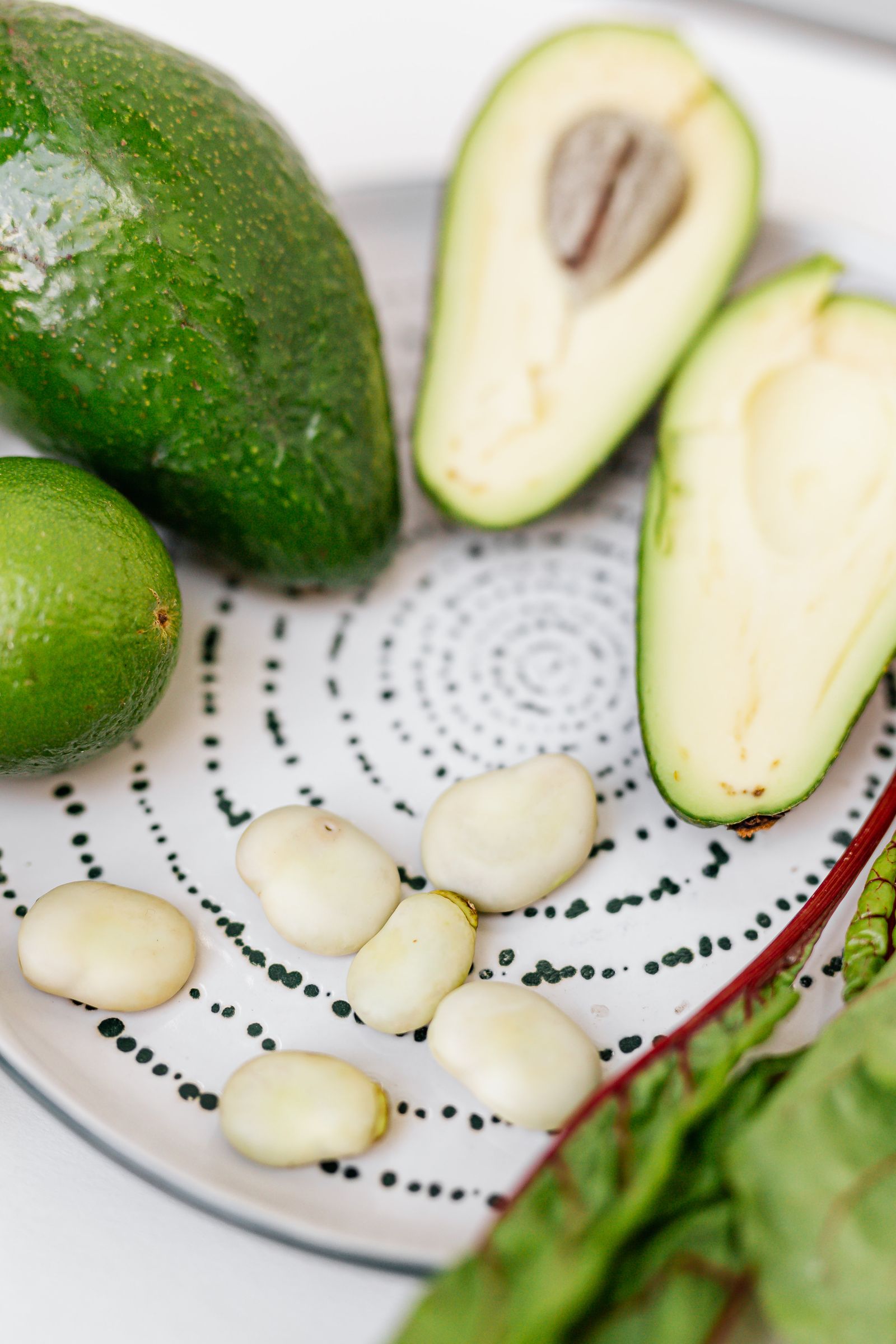
Grams are abstract, so here is what real food delivers. Aim to spread fiber across the day rather than loading it all at once.
| Food | Serving | Fiber |
|---|---|---|
| Split peas or lentils (cooked) | 1 cup | ~15 g |
| Black beans (cooked) | 1 cup | ~15 g |
| Chia seeds | 2 tbsp | ~10 g |
| Avocado | 1 whole | ~10 g |
| Raspberries | 1 cup | ~8 g |
| Oats (dry) | 1 cup | ~8 g |
| Pear or apple (with skin) | 1 medium | ~5 g |
| Broccoli (cooked) | 1 cup | ~5 g |
Values are approximate and vary by ripeness and preparation (Mayo Clinic high-fiber foods chart). To make the target concrete: a single serving of Full Fiber gives you 6 grams, about as much fiber as half an avocado or a medium pear.
A sample day that hits about 28 grams
- Breakfast: oatmeal (dry 1/2 cup, ~4 g) with raspberries (1/2 cup, ~4 g) = 8 g
- Lunch: salad with 3/4 cup chickpeas (~9 g) plus veg (~3 g) = 12 g
- Snack: a pear with skin = 5 g
- Dinner: broccoli (1 cup, ~5 g) plus a whole grain = 6 to 8 g
That lands around 28 to 30 grams without anything exotic. On days that fall short, a fiber supplement can help cover the gap.
How to add fiber without the bloating
Adding a lot of fiber overnight is the fastest way to feel gassy and give up. Do it gradually:
- Go slow. Add about 5 grams to start, then increase by 2 to 3 grams every week or two so your gut bacteria adjust.
- Drink water. Fiber needs water to move smoothly. More fiber with too little fluid can backfire.
- Expect a short adjustment. A little gas in the first week is normal as your microbiome adapts. It settles. This is one reason to avoid products loaded with sugar alcohols, which cause gas that does not settle.
Signs you are getting too little, or too much
Too little: hard or infrequent bowel movements, feeling hungry soon after meals, and energy that swings through the day. Too much, too fast: gas, bloating, cramping, or loose stools. The fix for "too much" is usually to ease off, spread fiber across the day, and drink more water, not to quit.
Do you need a fiber supplement?
Food first, always. Whole foods bring fiber plus vitamins, minerals, and water together. But real life is busy, and most women fall short even when they try. On the days your plate does not get you to your number, a supplement is a sensible way to close the gap. The type matters: you want real, named fermentable fibers that feed your gut, no sugar alcohols (they cause the very bloating you are trying to avoid), and a dose big enough to count.
That is exactly how we built Full Fiber: three fibers in one, plant-based with no gelatin, no sugar alcohols, and 6 grams per serving to help close the fiber gap, about as much fiber as half an avocado in three gummies. It is one simple way to get closer to your target on the days food does not, made for a woman's body specifically. See Full Fiber.
Special situations
- On a GLP-1 medication (like Ozempic or Wegovy): constipation is a common side effect, and fiber plus fluid is a standard way to help. Increase gradually.
- High-protein or keto eating: these patterns often crowd out fiber. Be deliberate about low-carb fiber sources like chia, flax, avocado, and non-starchy vegetables.
- IBS: fiber helps many people but can aggravate others depending on type. Soluble fiber is usually better tolerated than insoluble. Work with your clinician.
- Over 50: your target drops slightly to about 22 grams, but the benefits for blood sugar, gut, and comfort are as important as ever.
Frequently asked questions
How much fiber does a woman need per day?
About 22 to 28 grams, depending on age: ~28 g for ages 19 to 30, ~25 g for 31 to 50, and ~22 g for 51 and older (Dietary Guidelines).
Is 38 grams of fiber a day too much for a woman?
38 grams is the target for younger men, not women. It is not dangerous, but most women do well in the mid-20s. Very high intakes added quickly can cause gas and bloating.
Why do women need less fiber than men?
Fiber targets track roughly with calorie needs, and men eat more on average. The guideline is about 14 grams per 1,000 calories for everyone.
Does fiber help with menopause symptoms?
Higher fiber intake is associated with fewer and less severe hot flashes in population studies, likely through steadier blood sugar and estrogen handling. It supports comfort rather than treating menopause.
Can I get enough fiber from a supplement alone?
A supplement helps close a gap, but food first is best because whole foods bring other nutrients and water along with fiber.
Sources
- Dietary Guidelines for Americans, 2020-2025 (fiber recommendations by age and sex).
- American Society for Nutrition, Most Americans are not getting enough fiber.
- Gut Microbes (2023), Gut microbial beta-glucuronidase: a vital regulator in female estrogen metabolism.
- Sex, BMI, and dietary fiber intake influence the human gut microbiome (2015).
- Mayo Clinic, Chart of high-fiber foods.
This article is general information, not medical advice. Talk to your clinician about your individual needs, especially during pregnancy, with a health condition, or on medication.
Keep reading
fiber
Can a Multivitamin Replace Vegetables? What Supplements Can't Do for Your Gut

constipation
The Best Way to Beat Constipation in Your 30s (and Where Fiber Gummies Fit)
fiber
The Gut-Skin Axis: Does Your Gut Health Affect Your Skin?
The gut-skin axis, explained: how your gut bacteria and blood sugar affect your skin, w...