Home/ The Journal/ black cohosh
black cohosh
Botanical supplements for menopause symptoms: what the evidence actually shows

Short version: Most botanical supplements for menopause have not beaten a dummy pill. Black cohosh, the top seller, was no better than placebo across 16 trials with 2,027 women. A few herbs, like a rhubarb root extract, have small positive trials. None comes close to hormone therapy.
- Weak but positive: rhapontic rhubarb extract (ERr 731), pine bark extract, ginseng.
- No clear benefit: black cohosh, St. John's wort, evening primrose oil.
- Too little data: sage, hops.
- Safety first: St. John's wort weakens many medicines. Black cohosh has rare liver injury reports.
Last updated November 2026.
The menopause shelf is full of plants. Black cohosh, red clover, sage, rhubarb root, pine bark. Each bottle has a story about how women have used it for centuries.
Old use is not proof. So this guide goes herb by herb and asks two questions. Did it beat a placebo in a fair trial? And is it safe to mix with your other medicines, including hormone therapy?
Do botanical supplements for menopause actually help?
Mostly, no. The Menopause Society reviewed the research in 2023. It put "supplements/herbal remedies" on its list of options it does not recommend for hot flashes. See The Menopause Society nonhormone position statement (Menopause, 2023).
That same statement calls hormone therapy the most effective option for hot flashes. It also backs several non-hormone choices, like cognitive behavioral therapy and some prescription drugs.
Still, "not recommended" is a summary. Some herbs have a few hopeful trials. Others have clear negative ones. The details matter if you are deciding what to try.
How do the main menopause herbs compare?
Here is the best placebo-controlled evidence we found for each herb. Trials mostly tracked hot flashes or a total symptom score.
| Herb | Best evidence | What it showed |
|---|---|---|
| Black cohosh | Review of 16 trials, 2,027 women | No better than placebo for hot flashes |
| Rhapontic rhubarb (ERr 731) | 4 trials pooled, 390 women | Lower symptom scores than control |
| French maritime pine bark | 1 trial, 170 women, 3 months | Scores fell 56% vs 39% on placebo |
| Ginseng | 15 trials reviewed, most with bias concerns | Small drop in hot flashes in 3 trials |
| St. John's wort | 1 trial, 47 women | Hot flash drop not significant; fewer sleep problems |
| Evening primrose oil | 6 trials pooled, 450 women | Hot flash count not significant; shorter flashes |
| Hops | 1 trial, 120 women | Positive, but never repeated |
| Sage | 1 study, 71 women, no placebo | Cannot tell apart from placebo |
Soy, red clover, flaxseed, and dong quai are covered in our guide to the best menopause supplements.
Does black cohosh work for hot flashes?
Not in the fair tests. A Cochrane review pooled 16 randomized trials with 2,027 women. The median dose was 40 mg a day, for about 23 weeks.
In the 3 trials that counted hot flashes, black cohosh and placebo differed by 0.07 flashes a day. That is no real difference. The reviewers said there is not enough evidence to support it. See Leach and Moore (Cochrane, 2012).
The review also found that hormone therapy cut hot flashes more than black cohosh did.
Which herbs have the strongest positive trials?
Rhapontic rhubarb root (ERr 731). This extract has been sold in Germany for decades. A 2024 analysis pooled 4 trials with 390 women. Symptom scores fell by about 15 points more than in the control groups. See the ERr 731 meta-analysis (J Biomed Res, 2024).
French maritime pine bark. In one trial, 170 women in perimenopause took 30 mg twice a day or a placebo for 3 months. Symptom scores fell 56% on the extract and 39% on placebo. Hot flashes and sleep improved most. See Kohama and Negami (J Reprod Med, 2013).
Notice the placebo group improved by 39% too. That is normal in menopause research, and it is why trials without a placebo group mislead.
Does ginseng help menopause symptoms?
A little, maybe. A 2022 review found 15 placebo-controlled trials of ginseng in women at menopause. Most had a risk of bias.
In 3 of those trials, with 515 women, ginseng lowered hot flashes and symptom scores by a small amount. It had no clear effect on sexual function, hormone levels, or the lining of the uterus. See Lee, Ang, and Lee (Complement Ther Clin Pract, 2022).
The authors asked for better trials before firm advice can be given.
What about St. John's wort, evening primrose oil, hops, and sage?
St. John's wort. A pilot trial gave 47 women 900 mg three times a day or a placebo for 12 weeks. Hot flashes fell by 2.3 a day on the herb and 1.0 on placebo, a gap that could be chance. Women on the herb did report better sleep and quality of life. See Al-Akoum et al. (Menopause, 2009).
Evening primrose oil. A 2025 review pooled 6 trials with 450 women. The drop in daily hot flashes was not significant. The flashes were shorter. See Larki et al. (J Caring Sci, 2025).
Hops. One 120-woman trial from Iran reported fewer hot flashes over 12 weeks. See Aghamiri et al. (2016). One trial is a start, not an answer.
Sage. In a study of 71 women, hot flash scores fell 64% in 8 weeks. But there was no placebo group, and the lead author worked for the company that makes the tablet. See Bommer et al. (Adv Ther, 2011).

Are herbal menopause supplements safe with hormone therapy?
Some are not. Talk to your doctor or pharmacist before you mix them. Few studies have tested herbs taken alongside hormone therapy, so the safe move is to ask.
St. John's wort is the biggest worry. The National Center for Complementary and Integrative Health (NCCIH) says it can "interact in dangerous, sometimes life-threatening ways with a variety of medicines." It can weaken birth control pills, warfarin, some heart drugs, and some cancer drugs. See the NCCIH St. John's wort page.
Other cautions:
- Black cohosh: NCCIH notes cases of liver damage in people taking products labeled as black cohosh. Some products held the wrong herb. See the NCCIH black cohosh page.
- Dong quai: a case report found it boosted the effect of warfarin. See Page and Lawrence (Pharmacotherapy, 1999).
- After breast or uterine cancer: NCCIH says it is uncertain whether black cohosh is safe for you. Ask your oncologist before any plant estrogen.
Call your doctor about dark urine, yellow skin, or unusual tiredness on any herb.
Can you buy herbal menopause supplements with an FSA or HSA?
Usually not on their own. The IRS counts supplements as general health products unless a provider recommends them for a diagnosed condition. See the IRS nutrition and wellness FAQ.
Our guide to whether supplements are FSA or HSA eligible walks through the rules and the paperwork.
How should you choose, if you still want to try one?
- Pick a herb with a placebo-controlled trial. Rhubarb extract and pine bark are the strongest of a weak field.
- Match the trial product and dose. The pine bark trial used 30 mg twice a day.
- Log your symptoms first. Count hot flashes for a week, then again after 8 to 12 weeks.
- One at a time. Blends make side effects hard to trace.
- Show the bottle to a pharmacist, especially if you take hormone therapy or a blood thinner.
If symptoms are hurting your sleep or work, see the full menu in perimenopause treatment options.
Where Seya fits, honestly
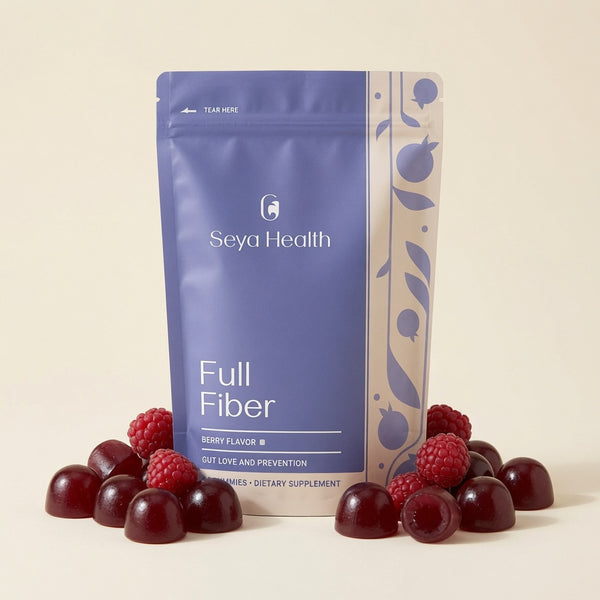
Seya sells one product today: a vegan fiber gummy that supports regularity. It is not a botanical, and it is not a hot flash product.
Gut changes are common around menopause. Our post on menopause and your gut covers where fiber fits. A Seya creatine gummy is coming January 2027. We will not share its dose or price until it launches.
This is education, not medical advice.
These statements have not been evaluated by the Food and Drug Administration. This product is not intended to diagnose, treat, cure, or prevent any disease.
Frequently asked questions
Do botanical and dietary supplements help menopausal symptoms?
Rarely by much. The Menopause Society does not recommend herbal remedies for hot flashes. A few, like rhubarb root extract ERr 731 and pine bark extract, have small positive trials.
Does black cohosh work for hot flashes?
Not in placebo-controlled trials. A Cochrane review of 16 trials and 2,027 women found a gap of 0.07 hot flashes a day versus placebo, which is no real difference.
Are herbal menopause supplements safe to take with hormone therapy?
Some are not. St. John's wort weakens many medicines, including birth control pills. Few studies test herbs with hormone therapy, so ask your doctor or pharmacist first.
Which herbal menopause supplement has the best evidence?
Rhapontic rhubarb extract (ERr 731) has the most pooled support, with 4 trials and 390 women. Pine bark extract has one solid 170-woman trial. Both effects are modest.
Does ginseng help hot flashes?
Maybe a little. In 3 trials with 515 women, ginseng lowered hot flashes by a small amount, but most of the 15 trials reviewed had a risk of bias.
Can I use my FSA or HSA for herbal menopause supplements?
Usually only with a provider's recommendation for a diagnosed condition. Keep the note and receipt, and check with your plan.
Seya Full Fiber
La plupart des femmes n'atteignent pas leur apport en fibres. Seya Full Fiber vous apporte 6 grammes de trois fibres dans trois petites gommes véganes. À base de plantes, sans gélatine, sans polyols.
Acheter Full Fiber