
Home/ The Journal/ constipation
constipation
Foods to Avoid When Constipated: The "Slow-Down" List
We’ve all been there: that heavy, uncomfortable feeling where your digestive system feels like it’s come to a complete standstill. When you're constipated, every meal feels like a risk. You want relief, but if you're reaching for the wrong snacks, you might be accidentally making the "traffic jam" in your gut even worse.

Short version: The foods to avoid when constipated are the low-fiber, high-fat, low-water ones: cheese, red meat, fried and fast food, white bread and white rice, unripe bananas, and too much caffeine or alcohol. They give your gut nothing to push and less water to work with, so waste sits longer and dries out.
- Most women eat about 15 grams of fiber a day. Adults need 22 to 34. That gap is what backs you up.
- Cheese, red meat, and fried food carry almost no fiber and a lot of fat, which slows the whole system down.
- Food already moves slower through a woman's gut, about 42 hours versus 30 for men, so these foods cost you more.
Last updated July 2026.
When you are backed up, the fastest thing you can change is what is on your plate. Some foods keep things moving. Others slow the whole line down.
The main foods to avoid when constipated are the ones with little to no fiber and a lot of fat: cheese, red meat, fried and fast food, white bread and white rice, unripe bananas, and too much caffeine or alcohol. Fiber is the part of food that gives stool bulk and helps it move. The average woman gets about 15 grams a day, when adults need 22 to 34 (NIDDK).
Here is the part most lists skip. That heavy, stuck feeling is not a character flaw or proof you did something wrong. It is a signal that your gut is short on the two things it needs most: fiber and water.
The foods to avoid when constipated: the slow-down list
These are the repeat offenders. Each one is low in fiber, high in fat, or low in water. Most are all three.
| Food | Why it slows you down |
|---|---|
| Cheese and heavy dairy | High in fat, almost no fiber. Adds nothing for your gut to push. |
| Red meat (beef, pork, lamb) | High fat, zero fiber. Takes longer to digest and sits longer. |
| Fried and fast food | High fat and high salt, low fiber. Fat slows motility, salt pulls water out. |
| White bread, white rice, refined pasta | The bran and fiber are stripped out during processing. |
| Unripe, green bananas | Packed with resistant starch, which is harder to move and can firm stool. |
| Too much caffeine or alcohol | Both pull water out of your body, so the stool dries and hardens. |
The government's own diet guidance for constipation names most of this list. It tells you to eat less of the foods with little to no fiber, like chips, fast food, meat, and processed meals (NIDDK).
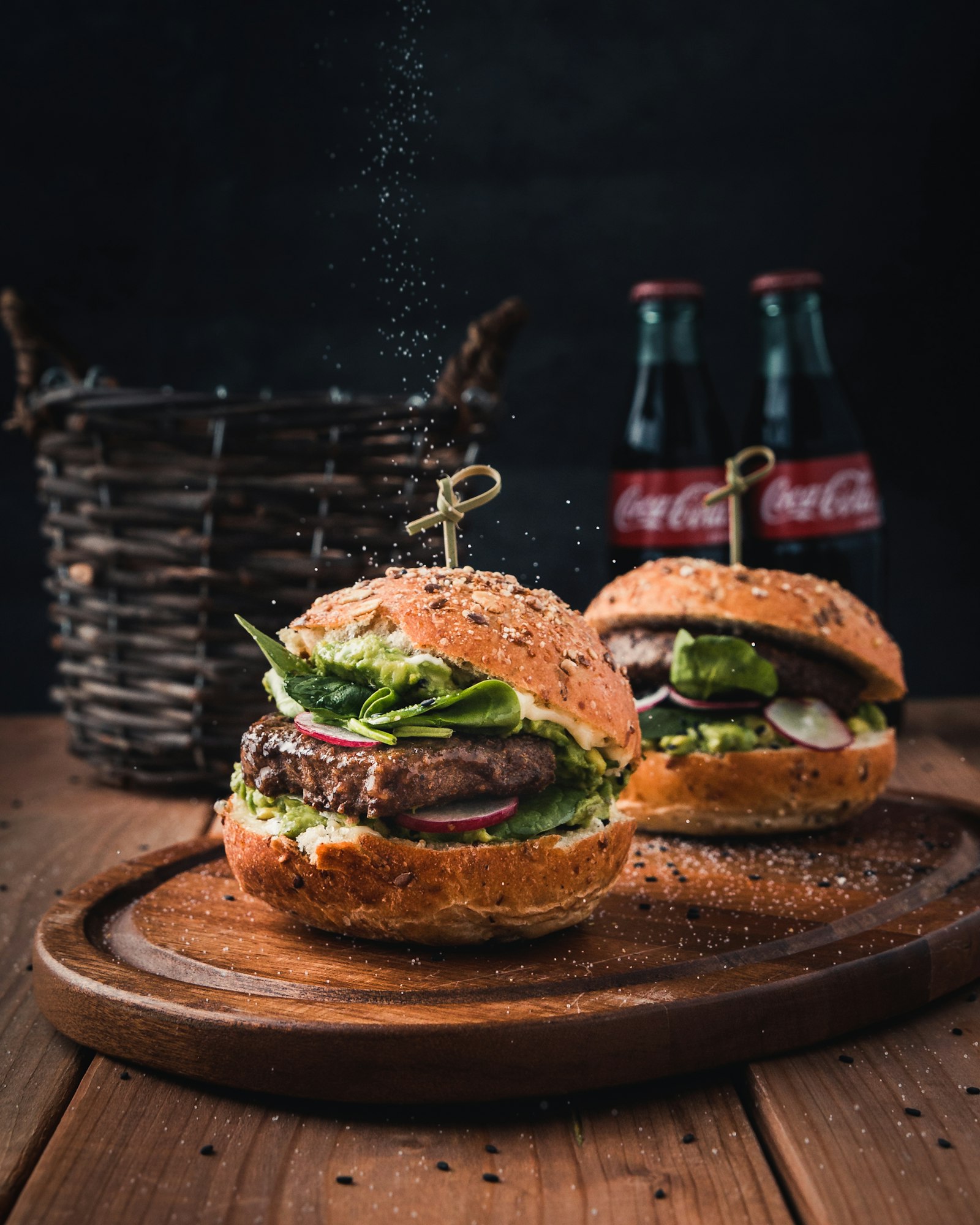
Why do these foods back you up?
Your gut moves waste with a slow, wave-like squeeze. Fiber and water are what it squeezes.
Fiber adds bulk and holds water, so stool stays soft and easy to move. The NIH MedlinePlus fiber guide lists better regularity as a core effect of eating enough of it. When your day is built from cheese, meat, and white bread, that bulk is missing. There is nothing to push.
Fat is the second problem. High-fat meals digest slowly, so everything behind them waits. Salt is the third. Salty fried food pulls water back into your body and away from your stool, which leaves it dry and hard to pass.
So the slow-down is not one villain food. It is a plate that is low on the two things your gut runs on.
How much does low fiber actually matter?
A lot, and the data is clear. In a national study of U.S. adults, the people eating the least fiber were the most likely to be constipated (Markland et al., NHANES analysis).
It lands harder on women. Food moves through a woman's colon in about 42 hours, versus about 30 for men (Meier et al.). That is why women report constipation close to twice as often. Same low-fiber plate, slower gut, heavier price.
None of that is a discipline problem. It is a mix of what is on the plate and how your body is built. You can change the first one today.
What should you eat and drink instead?
Swap the slow-down foods for high-fiber ones, and add water every time you add fiber.
Water matters more than people think. Even mild dehydration is a known trigger for constipation, because a dry gut makes hard stool (Arnaud, 2003). Drink through the day, and drink more as you eat more fiber.
Then trade up, slowly. White rice to brown. White bread to whole grain. Add beans, lentils, vegetables, and fruit with the skin on. Go a few grams at a time so your gut can adjust without gas. For the full playbook, see our guide on foods that ease constipation, and if you want the mechanics of why things stall, read why your system hits a standstill. To learn your daily number, see how much fiber women need per day.
Seya's job here is to stay specific. Fiber supports regularity. That is the claim, and nothing beyond it. Three vegan gummies with resistant tapioca fiber are an honest way to add about 5 grams a day, ingredients you can name. They are a daily fiber habit, not a fix for a medical problem, and they do not replace real food or water.
These statements have not been evaluated by the Food and Drug Administration. This product is not intended to diagnose, treat, cure, or prevent any disease.
When is constipation a reason to call a doctor?
Most constipation eases with more fiber, more water, and a little time. Some does not. Call your doctor if:
- You go 3 or more days with no bowel movement and food changes do not help.
- You see blood in your stool. This always needs a real medical look.
- You have sharp, severe belly pain, or constipation that is new and will not let up.
Diet is the lever you control day to day. A doctor rules out the rest.
Frequently asked questions
What foods make constipation worse?
The main ones are cheese and heavy dairy, red meat, fried and fast food, white bread and white rice, unripe bananas, and too much caffeine or alcohol. They are low in fiber, high in fat, or pull water out of your body, so stool stays dry and slow. Government diet guidance for constipation names most of this list (NIDDK).
Does cheese cause constipation?
Cheese can make it worse. It is high in fat and has almost no fiber, so it adds nothing for your gut to move and slows digestion down. NIDDK lists dairy and other low-fiber foods among the things to eat less of when you are constipated. A little cheese is fine. A plate built around it, with no fiber, is the problem.
Are bananas bad for constipation?
It depends on the banana. Ripe, spotted bananas add some fiber and are fine. Green, unripe ones are high in resistant starch, a type of starch that resists digestion and can firm up stool, which is why green banana is studied as a stool-firming food (green banana resistant starch research). If you are backed up, choose the ripe one.
What should you drink when constipated?
Water is the simplest fix. Even mild dehydration is a known trigger for constipation, and a dry gut makes hard stool (Arnaud, 2003). Drink water through the day, and add more whenever you add fiber. Go easy on caffeine and alcohol, since both pull water out of your body.
How fast do these foods slow you down?
There is no exact clock, but transit is slow to begin with. Food already takes about 42 hours to move through a woman's colon, versus about 30 for men (Meier et al.). A low-fiber, high-fat meal adds to that wait. Skip the slow-down foods for a day or two and add water, and most people notice the difference.
What foods get things moving again?
The opposite of the slow-down list. Beans, lentils, whole grains, vegetables, and fruit with the skin on, plus plenty of water. Add fiber a few grams at a time so your gut adjusts without gas. Our full guide walks through the best foods that ease constipation, and what healthy stool looks like tells you when it is working.
Related reading
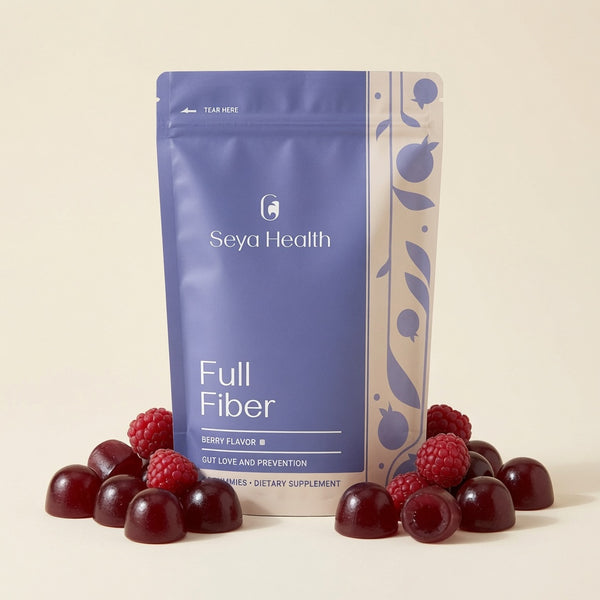
Seya Full Fiber
Your gut bacteria run on fiber. Seya Full Fiber delivers 6 grams from three fibers in one to feed the beneficial bacteria in your gut and support short-chain fatty acid production. Plant based, no gelatin, no sugar alcohols.
Shop Full FiberKeep reading
fiber
Can a Multivitamin Replace Vegetables? What Supplements Can't Do for Your Gut
constipation
The Best Way to Beat Constipation in Your 30s (and Where Fiber Gummies Fit)
fiber
The Gut-Skin Axis: Does Your Gut Health Affect Your Skin?
The gut-skin axis, explained: how your gut bacteria and blood sugar affect your skin, w...