
Home/ The Journal/ creatine
creatine
Creatine isn't just for men: what it does for women
The most-studied supplement in sports science has a growing body of research specific to female physiology.

Short version: Creatine for women is not a scaled-down version of the male protocol. Women store 70 to 80% less creatine than men to begin with, and eat less of it. The research that would sort out what that means barely included them.
- Across 1,826 sports supplement studies with 34,889 people, only 23% were women.
- In 29 studies covering 951 women, creatine produced no significant difference in body mass against placebo.
- In 7 trials of 608 postmenopausal women, creatine added 0.37 kg of lean mass. Real, and small.
Last updated August 2026.
You have probably been told creatine is a bulking powder for men in a gym.
Here is the number that ends that idea. Women carry 70 to 80% lower creatine stores in their bodies than men do.
So the one group starting from the biggest deficit is the group the marketing skipped.
Not because the science said no. Because the science mostly did not ask.
Creatine for women: what the research actually shows
Creatine is a compound your body makes. You store most of it in muscle. It helps rebuild ATP, the fastest fuel your cells have, during short hard effort. You also get some from food, mostly meat and fish.
Supplementing tops those stores up. That is the whole mechanism. There is nothing hormonal about it.
The review that pulled the female-specific evidence together is Creatine Supplementation in Women's Health: A Lifespan Perspective (Nutrients, 2021). It reports the 70 to 80% gap in stored creatine. It also notes that women eat much less creatine than men do.
Lower baseline. Lower intake. Less study. That is the shape of the problem.
Was creatine even studied in women?
Barely, and the audit numbers are blunt.
Researchers went through the literature behind the evidence-backed performance supplements, creatine among them. They found 1,826 studies covering 34,889 people. Women were 23% of them. Depending on the supplement, 0 to 8% of studies looked at women only. Just 0 to 2% were built to compare the sexes at all.
Studies on women alone came out about 8 times less often than studies on men alone. Of the ones that did include women, only 14% tracked where they were in their cycle. The audit is Auditing the Representation of Female Versus Male Athletes in Sports Science (Nutrients, 2022).
This is the same pattern we trace in the research gap and in the way drug doses get set.
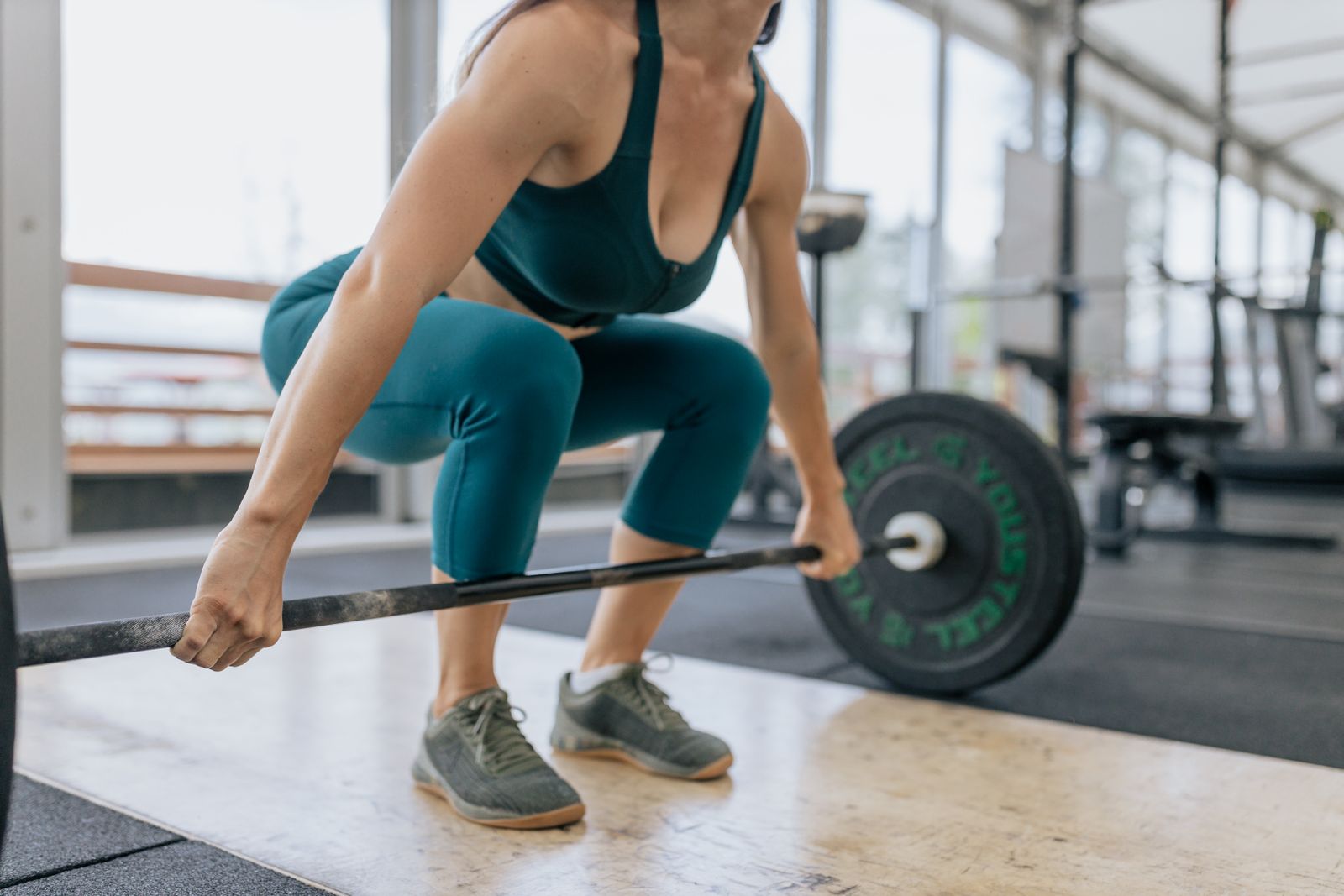
Will creatine make you bulky or puffy?
This is the fear that keeps most women away from it. The data does not support it.
One review pooled 29 studies covering 951 women. It looked only at what goes wrong.
Body mass showed no real difference between creatine and placebo. The average gap was 1.37 kg. The range around it runs from minus 0.50 to 3.23, so the true effect could be zero.
Side effects overall were no different either, at a risk ratio of 1.24. Gut symptoms were the same story, at 1.09. No deaths. No serious harms. See Risk of Adverse Outcomes in Females Taking Oral Creatine Monohydrate (Nutrients, 2020).
The fast jump on the scale that some people describe comes from a loading dose. It is water inside the cell, not fat. And it shows up mostly in men.
If you have kept away from this molecule over a body-shape worry, that worry was handed to you. Nobody measured it.
What happens after menopause?
Something real, and smaller than the internet says.
A 2026 review pooled 7 randomized trials in 608 women past menopause. Average age, 62. The trials ran 12 to 104 weeks.
Creatine added 0.37 kg of lean mass over placebo. Leg-press one-rep max went up by 7.5 kg.
The conditions matter more than the headline. Gains showed up when 5 g a day or more was paired with lifting. Trials using 3 g a day or less, with no lifting, showed nothing at all.
Bone density did not move. Side effects were mild and matched placebo. Kidney markers did not change. The review is Creatine monohydrate for lean mass, strength, and bone density in postmenopausal women.
So it is a lifting supplement that happens to be well studied in older women. It does not replace the lifting. If perimenopause is where you are, start with the early signs of menopause.
What about mood and the brain?
Interesting, early, and worth naming as early.
The lifespan review notes that 8 weeks of creatine eased depression symptoms in girls and women with major depression. In one study the average depression score fell from 69 to 30.6. That is a 56% drop.
It also reports that the brain seems to need far more creatine than muscle does to fill up. The doses described run 15 to 20 g a day, split up, for 3 to 7 days. Then 5 to 10 g a day.
That is a thin evidence base. Specific clinical groups. Doses well above the usual 3 to 5 g. Read it as a direction worth watching, not a reason to start.
Is creatine safe?
It is one of the most examined supplements in existence.
The ISSN position stand on creatine (2017) found no harm from up to 30 g a day, for as long as 5 years, in healthy and sick groups alike. It also calls creatine monohydrate the most effective sports supplement we have for hard efforts and lean mass.
It also puts two persistent myths to rest. The claims that creatine causes dehydration and muscle cramping are not supported by the evidence.
None of that makes it universal. Kidney disease, pregnancy, breastfeeding, or any drug you take. All reasons to ask your own doctor first. Safe on average is not the same as safe for you.
Where Seya fits, honestly
Seya sells one product. A fiber gummy.
Creatine is on our roadmap, not on our shelf. We will not sell you the idea before we sell you the formula. When the panel is locked we will publish it in full, dose included.
Why write it at all, then. Because creatine is the cleanest example of the thing we exist to argue about. A molecule women start lower in. Eat less of. And got left out of the research on.
Dosed for women, not smaller men, has to mean something before there is a product attached to it.
What we sell today supports regularity, and the reason women fall short on fiber in the first place is in the fiber gap.
This is education, not medical advice. Talk to a qualified clinician before adding any supplement.
These statements have not been evaluated by the Food and Drug Administration. This product is not intended to diagnose, treat, cure, or prevent any disease.
Frequently asked questions
Is creatine good for women?
The evidence in women is positive but modest, and it is strongest alongside resistance training. A review of 7 randomized trials in 608 postmenopausal women found creatine added 0.37 kg of lean mass and 7.5 kg to leg-press one-rep max compared with placebo, with benefits appearing at 5 g a day or more combined with training. Women also start with 70 to 80% lower stored creatine than men, which is part of why researchers became interested in the female response at all.
Does creatine make women gain weight or look bloated?
Pooled data says no. Across 29 studies covering 951 female participants, body mass showed no statistically significant difference between creatine and placebo, with a mean difference of 1.37 kg and a confidence interval spanning zero. The rapid gain some people report reflects cellular water during a high-dose loading phase and is more common in men. Creatine is not a hormone and does not act like one.
How much creatine do studies use in women?
Most maintenance research uses 3 to 5 g a day of creatine monohydrate. Loading protocols use about 20 g a day, split into 4 doses, for 5 days. Postmenopausal trials that produced measurable gains used at least 5 g a day alongside resistance training, while trials at 3 g a day or less without training showed no effect. Brain-focused protocols run far higher, at 15 to 20 g a day for several days and then 5 to 10 g. Ask your clinician before choosing a dose.
Is creatine safe for women long term?
The International Society of Sports Nutrition reports no adverse effects at up to 30 g a day for up to 5 years in healthy and clinical populations, and the female-specific review of 29 studies found no deaths, no serious adverse outcomes, and no significant increase in gut, kidney, or liver problems. Claims about dehydration and cramping are not supported by the evidence. People with kidney disease, and anyone pregnant or breastfeeding, should speak to a clinician first.
Does creatine help with menopause symptoms?
Not directly. What the trials measure in postmenopausal women is lean mass and strength, and the gains are small and dependent on resistance training. Bone mineral density did not improve in the pooled analysis. Creatine is best understood as support for the muscle and strength side of midlife, not as a hormonal intervention.
Why was creatine barely studied in women?
The same reason most performance research skews male. An audit of 1,826 supplement studies covering 34,889 participants found women were only 23% of participants, between 0 and 8% of studies were female-only, and female-specific work appeared about 8 times less often than male-only work. Just 14% of the studies that included women defined their menstrual status, which makes hormonal effects nearly impossible to read.
Related reading
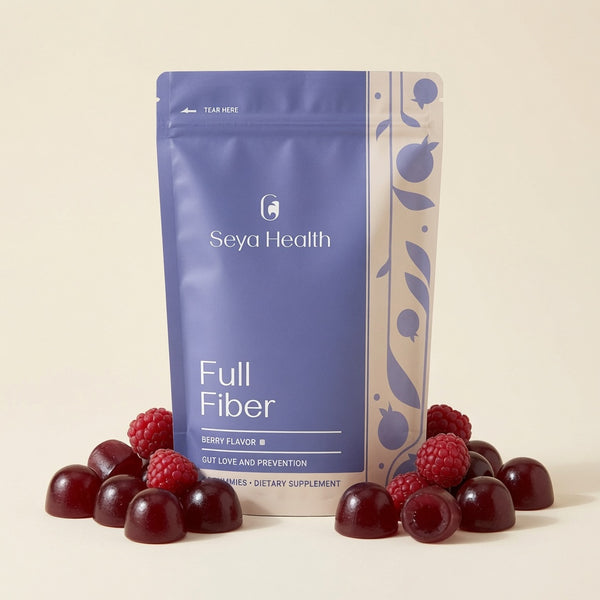
Seya Full Fiber
Getting enough fiber from food every day is hard. Seya Full Fiber is 6 grams from three fibers in one, in three small gummies, so you have a reliable daily floor. Plant based, no gelatin, no sugar alcohols, 60 gummies per pouch.
Shop Full FiberKeep reading

fiber
Can a Multivitamin Replace Vegetables? What Supplements Can't Do for Your Gut

constipation
The Best Way to Beat Constipation in Your 30s (and Where Fiber Gummies Fit)
fiber
The Gut-Skin Axis: Does Your Gut Health Affect Your Skin?
The gut-skin axis, explained: how your gut bacteria and blood sugar affect your skin, w...