
Home/ The Journal/ constipation
constipation
Eat to Move: The Ultimate Guide to Foods That Ease Constipation
If you’ve ever dealt with the discomfort of being "backed up," you know that what you put on your plate is the first line of defense. While we often reach for quick fixes, the most sustainable way to keep your digestive system on track is through strategic, biology-backed nutrition.

Short version: The foods that ease constipation with real randomized evidence behind them are a short list, and they win by small, honest margins. Prunes and kiwifruit lead it. Everything else on the usual internet list is sensible, but softer.
- 2 green kiwifruits a day added 1.53 complete bowel movements per week in functional constipation, and 1.73 in constipation-predominant IBS.
- Prunes moved complete bowel movements from 1.7 to 3.5 per week, against 2.8 on psyllium, at the same 6 grams of fiber.
- A review of 23 studies and 1,714 adults found fruits and rye bread improved stool frequency. Most other foods had thin evidence.
- Adults need 22 to 34 grams of fiber a day. Add it a few grams at a time, with fluid.
Last updated August 2026.
The internet has a list. Prunes, kiwi, oats, beans, flax, greens, water, olive oil.
Most of that list has never been tested. Some of it has.
That gap matters, because when the generic advice does nothing you assume you did it wrong. Usually you did not. You just ate the untested half of the list and gave it four days.
So here are the foods that ease constipation sorted by what was actually measured in trials, with the numbers attached and the weak spots named.
Which foods that ease constipation have real trial evidence?
Four, roughly. And the margins are modest.
| Food | Dose tested | What the trial found |
|---|---|---|
| Green kiwifruit | 2 per day, 4 weeks | +1.53 complete bowel movements per week in functional constipation |
| Prunes | 100 g per day, 4 weeks | Improved stool consistency and straining; 3.5 complete movements per week in a separate crossover trial |
| Rye bread | Daily, versus white bread | +0.43 bowel movements per week, in 48 people |
| High-mineral water | Daily, versus low-mineral | 47% more likely to respond, in 539 people |
Read that table twice. These are half a bowel movement to one and a half bowel movements per week. Useful. Not dramatic.
Anything promising more than that from a single food is selling something.
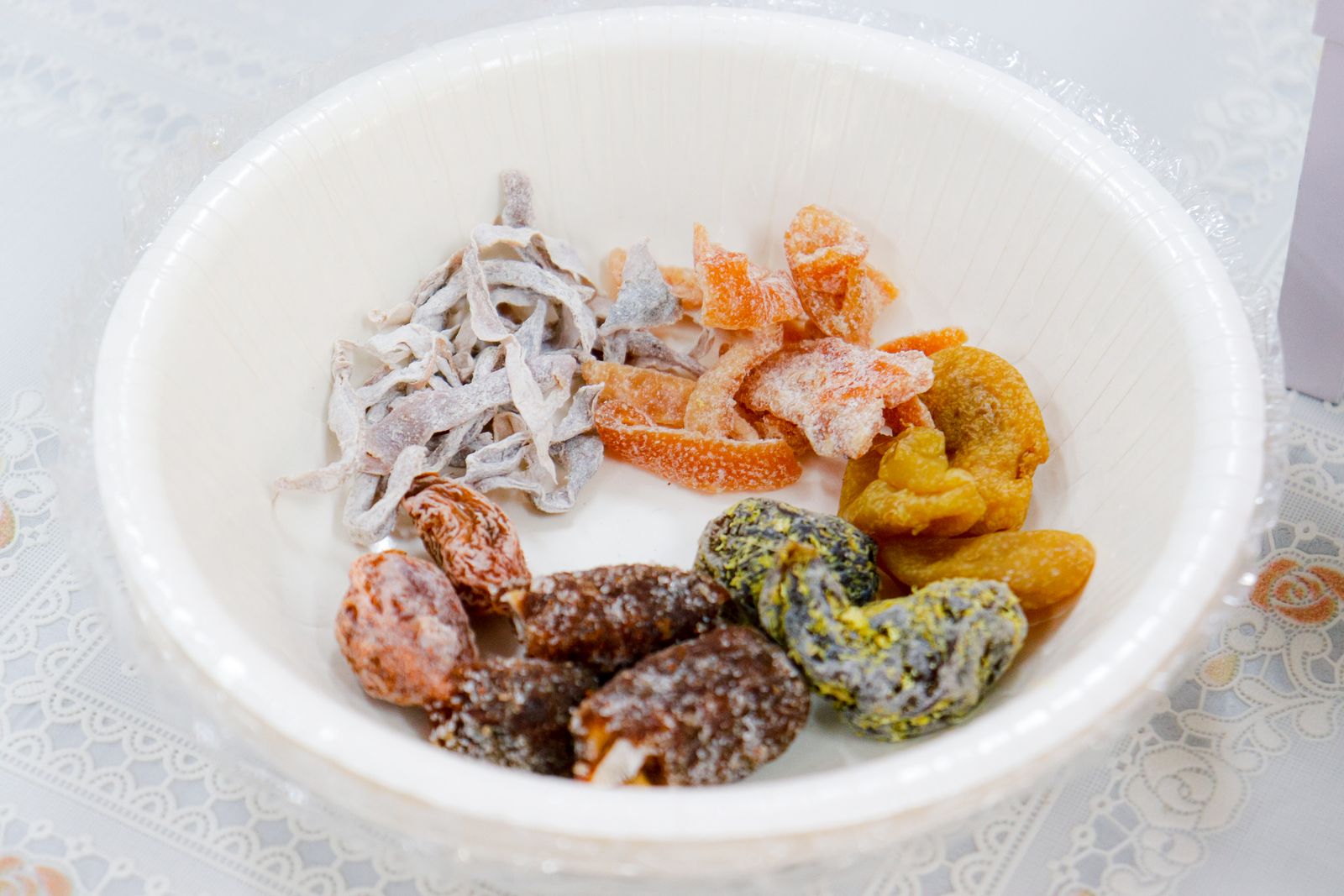
Why do prunes have the strongest track record?
Because they were tested head to head against the standard fiber supplement, and held their own.
In an 8-week single-blind crossover trial, 40 adults with constipation took either 50 grams of dried plums twice daily or 11 grams of psyllium twice daily. Both arms delivered 6 grams of fiber a day. Complete spontaneous bowel movements rose from about 1.7 a week at baseline to 3.5 a week on prunes, against 2.8 a week on psyllium. Straining and overall symptom scores came out similar. The trial is Attaluri et al., dried plums versus psyllium for constipation.
Prunes carry both fiber and sorbitol, a sugar alcohol that pulls water into the intestine. That is the mechanism, and it is also why a large handful can leave you gassy.
Start at a few, not a bowl.
Do kiwifruit really help constipation?
This one has the cleanest recent data of anything on the list.
An international multicenter randomized trial enrolled 63 healthy controls, 60 people with functional constipation, and 61 with constipation-predominant IBS. Each person took 2 green kiwifruits or 7.5 grams of psyllium daily for 4 weeks, washed out for 4 weeks, then swapped to the other.
Kiwifruit produced a clinically relevant gain of at least 1.5 complete spontaneous bowel movements per week: 1.53 in functional constipation and 1.73 in IBS-C, both statistically significant. Gut comfort scores improved too, and no significant adverse events turned up. See Gearry et al., 2 green kiwifruits daily, American Journal of Gastroenterology.
A separate US trial compared kiwifruit, prunes, and psyllium in 79 adults with chronic constipation over 4 weeks. All three raised weekly bowel movement rates. Kiwifruit and prunes both improved stool consistency, kiwifruit alone improved bloating scores, and side effects were least common with kiwifruit. That comparison is Chey et al., comparative effectiveness of kiwifruit, psyllium, or prunes.
Two kiwifruit. Skin on if you can manage it. That is the whole intervention.
What did the biggest review of food and constipation find?
Mostly that we have less evidence than the listicles imply.
A 2024 systematic review in Alimentary Pharmacology and Therapeutics pulled together 23 studies, 17 of them randomized, covering 1,714 adults. Fruits raised stool frequency relative to comparators by 0.36 bowel movements a week. Kiwifruit specifically came in at the same 0.36 across 192 people. Rye bread beat white bread by 0.43 movements a week in 48 people. High-mineral water beat low-mineral water on treatment response, at a risk ratio of 1.47 across 539 people.
The authors' own conclusion was blunt about the state of the field: fruits and rye bread may improve some constipation outcomes, and there is a scarcity of evidence on foods, drinks and diets overall. The review is Van Der Schoot et al., foods, drinks and diets in chronic constipation.
So build the plate around the tested foods, and treat the rest of the list as reasonable rather than proven.
Soluble or insoluble fiber, which one do you need?
Both, and they do different jobs.
- Soluble fiber absorbs water and forms a gel. It softens stool. Oats, beans, lentils, barley, apples, and the flesh of most fruit.
- Insoluble fiber adds bulk and speeds transit. Wheat bran, whole grains, nuts, seeds, and the skins you keep peeling off.
You do not need to count the split. Eating a range of plants gets you both without any math.
What you do need is a total. The National Institute of Diabetes and Digestive and Kidney Diseases puts adults at 22 to 34 grams a day, and its food list is the same one above: whole grains, legumes, fruit with the skin, vegetables, and nuts.
Why does water decide whether any of it works?
Because every food on this page needs fluid to do its job. Fiber that cannot absorb water turns into a dry mass, and a dry mass in a slow gut is the thing you were trying to avoid.
The NIDDK is direct about it: drink water and other liquids "to help the fiber work better," and add fiber "a little at a time so your body gets used to the change."
That second rule is the one people break. A single 30-gram fiber day after years at 15 will make you feel worse, and then you blame the food. Ramp over about a month instead. We laid out the week-by-week version in the fiber-first relief plan.
What belongs in the cart?
A working list, ordered by how much evidence sits behind it.
- Tested first: green kiwifruit, prunes, rye bread.
- Fruit: pears, apples with the skin, raspberries, oranges.
- Vegetables: broccoli, carrots, green peas, collard greens.
- Pantry: lentils, black beans, chickpeas, rolled oats, chia and flaxseed.
- Nuts: almonds, pecans, walnuts.
The other half of the job is subtraction. For what to pull back on, see the foods to avoid when you are backed up, and if you want to know what "working" is supposed to look like, start with what healthy stool actually looks like.
Seya sells one product, and we will keep the claim inside the evidence. 3 vegan gummies with resistant tapioca fiber deliver about 5 grams of fiber. That helps close a daily gap. It supports regularity. It is not a fix for a medical problem, and food is still where most of your fiber should come from.
These statements have not been evaluated by the Food and Drug Administration. This product is not intended to diagnose, treat, cure, or prevent any disease.
Related reading: our daily fiber gummy for women, the full list of high-fiber foods for women, and more from the Seya journal.
Frequently asked questions
What is the best food to eat for constipation?
Green kiwifruit and prunes have the strongest randomized evidence. Two green kiwifruits a day raised complete spontaneous bowel movements by 1.53 per week in people with functional constipation and 1.73 per week in constipation-predominant IBS. In a separate crossover trial, prunes moved complete bowel movements from about 1.7 to 3.5 per week. Both effects are real and modest, and both take about 4 weeks to judge.
How quickly do foods that ease constipation start working?
Judge them at 4 weeks, which is the window nearly every trial used. Stool consistency and straining tend to improve before frequency does. A single high-fiber meal will not reset a slow gut, and quitting after a few days is the most common reason people conclude that food does not help.
Do I need soluble or insoluble fiber for constipation?
Both. Soluble fiber from oats, beans, lentils, and fruit flesh absorbs water and softens stool. Insoluble fiber from whole grains, nuts, seeds, and fruit skins adds bulk and speeds transit. Eating a range of plants supplies both without tracking the split. The total is what matters, and the NIDDK sets that at 22 to 34 grams a day for adults.
Can eating more fiber make constipation worse?
It can, in two situations. Adding a large amount all at once commonly causes gas, bloating, and cramping, which is why the NIDDK advises adding fiber a little at a time. Adding fiber without adding fluid can also harden stool rather than soften it, because fiber needs water to work. Ramp over about a month and drink more as you go.
How many prunes should you eat for constipation?
The trials used real doses: 100 grams a day in one comparative study, and 50 grams twice daily in a crossover trial that delivered 6 grams of fiber. That is more than most people expect. Prunes contain sorbitol, which draws water into the intestine, so starting with a few and building up avoids the gas that makes people quit.
Does drinking more water help constipation on its own?
Water works best paired with fiber rather than alone. In the pooled food and drink review, high-mineral water was more likely than low-mineral water to produce a treatment response, at a risk ratio of 1.47 across 539 people. The practical rule is to raise fluid whenever you raise fiber, since fiber needs water to soften stool instead of hardening it.
Related reading
- How Much Fiber Do Women Actually Need? Grams by Age, and Why It's More Than You Think
- Leafy Greens for Period Bloating: The Fiber and Potassium That Ease Pre-Period Puffiness
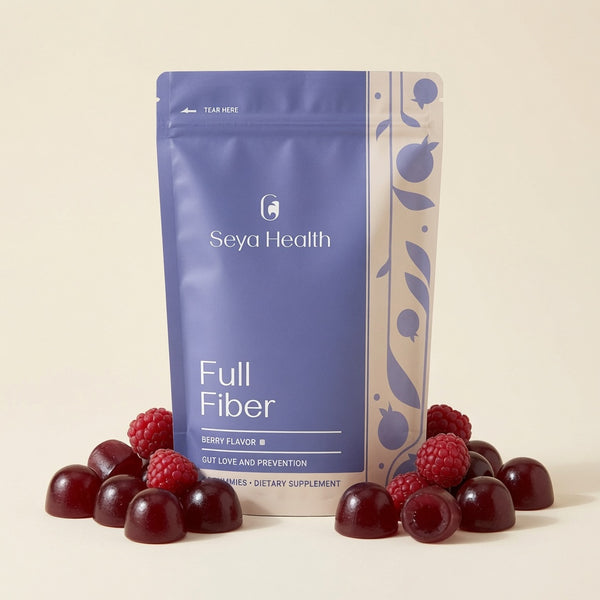
Seya Full Fiber
Your gut bacteria run on fiber. Seya Full Fiber delivers 6 grams from three fibers in one to feed the beneficial bacteria in your gut and support short-chain fatty acid production. Plant based, no gelatin, no sugar alcohols.
Shop Full FiberKeep reading
fiber
Can a Multivitamin Replace Vegetables? What Supplements Can't Do for Your Gut

constipation
The Best Way to Beat Constipation in Your 30s (and Where Fiber Gummies Fit)
fiber
The Gut-Skin Axis: Does Your Gut Health Affect Your Skin?
The gut-skin axis, explained: how your gut bacteria and blood sugar affect your skin, w...