
Home/ The Journal/ bloating
bloating
Best Foods for Bloating: What to Eat for Real Bloat Relief
When you're feeling like a balloon, your first instinct might be to stop eating altogether. However, the right nutrients can actually help your body flush out excess sodium and move trapped gas through your system. By choosing "pro-motility" foods, you can encourage your digestive tract to find its rhythm again.

Short version: The best foods for bloating do two jobs. They flush the water your body holds, and they get a slow gut moving. Reach for potassium-rich foods like bananas and avocado, pro-motility foods like ginger and kiwifruit, and plain water instead of fizzy drinks.
- Potassium balances sodium. Most women fall short of the 2,600 mg daily target while eating 3,397 mg of sodium.
- Ginger sped gastric emptying to 12.3 minutes versus 16.1 on placebo in one trial.
- A woman's gut is slower, near 42 hours of transit against 30 for men, so gas lingers.
Last updated July 2026.
Your jeans fit at breakfast. By 2pm the waistband digs in.
That balloon feeling is real, and it is almost never fat. It is usually water your body is holding, plus gas that got stuck. The average American eats 3,397 mg of sodium a day, well past the 2,300 mg limit, and extra sodium makes you hold water (CDC).
The best foods for bloating do two jobs. They flush that water, and they get a slow gut moving.
Here is the part most lists skip. That tight, two-sizes-too-small belly is not proof you overate. It is trapped gas and held water. And the right plate can shift both.
What are the best foods for bloating?
Pick foods that flush water or keep things moving. Each food below either offsets sodium with potassium or helps a stuck gut find its rhythm. Here is the short list, why each one helps, and how to use it.
| Food | Why it eases bloat | How to use it |
|---|---|---|
| Bananas | High in potassium, which balances sodium and helps you release held water. | One with breakfast, or blended into a smoothie. |
| Avocado | Potassium plus gentle fat, filling without heaviness. | A quarter to half, on toast or in a salad. |
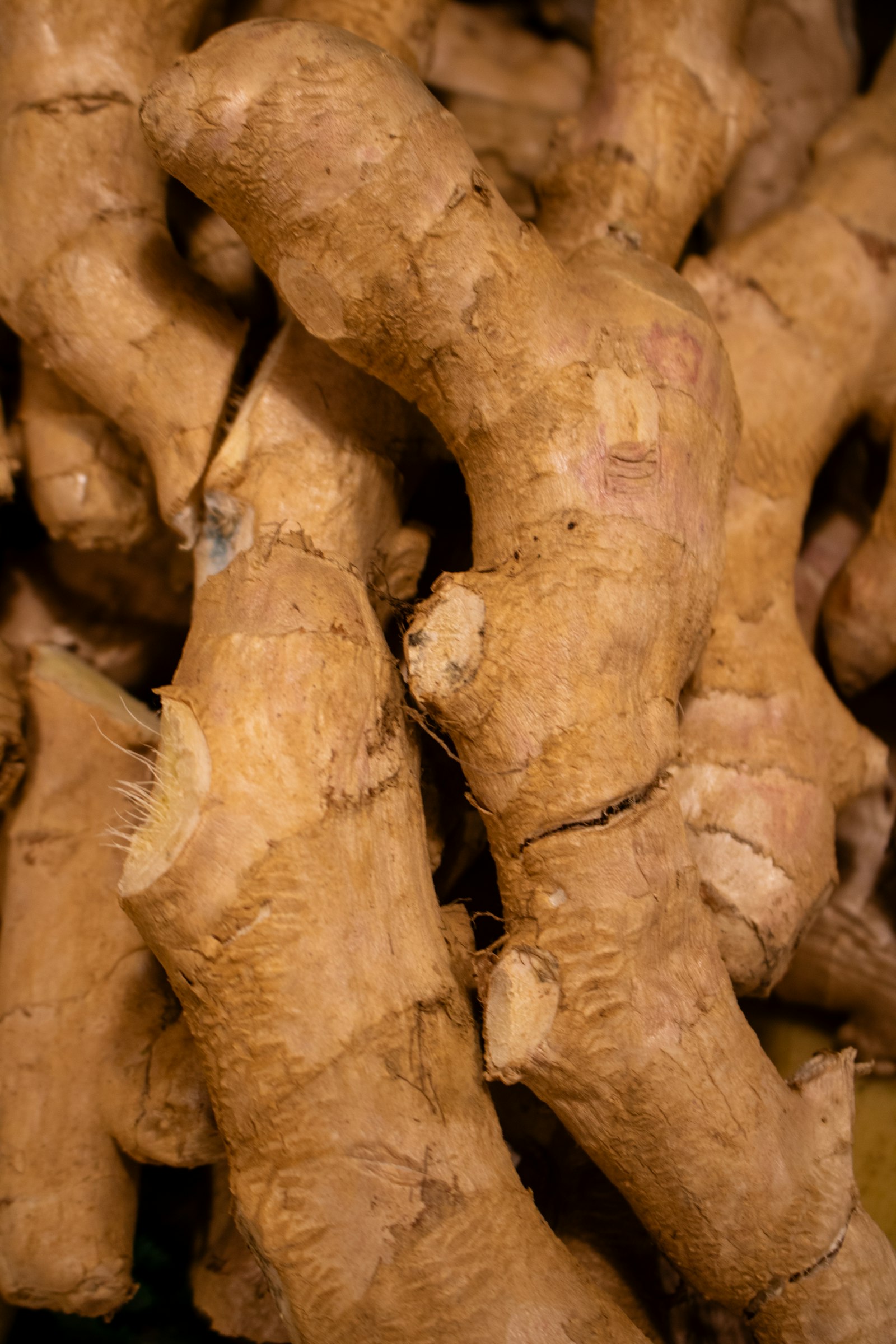
| Ginger | Gingerols relax gut muscle and speed stomach emptying. | Grated into food, or steeped as tea. |
| Kiwifruit | Water, fiber, and enzymes that support regularity. | Two green kiwifruit a day. |
| Papaya | Carries papain, an enzyme that helps break down protein. | Fresh, a few slices after a heavy meal. |
| Fennel and peppermint tea | Both relax the muscle that traps gas. | A warm cup after eating. |
| Water | Moves fiber through and helps settle held fluid. | Still, not fizzy. Sip through the day. |
How do potassium-rich foods flush bloat?
They offset sodium, and sodium is what makes you hold water. Eat a salty meal and your body keeps extra fluid to balance it. Potassium tells your kidneys to let some of that fluid go.
The gap is real. The Adequate Intake for women is 2,600 mg of potassium a day, but the average woman gets closer to 2,496 mg while taking in far more sodium than she needs (NIH Office of Dietary Supplements). Bananas, avocado, and cooked spinach are easy ways to close it.
"Potassium has a strong relationship with sodium, the main regulator of extracellular fluid volume, including plasma volume." — NIH Office of Dietary Supplements
So the swap is simple. Less salt, more potassium, and the puffy, tight feeling has less water to run on.
Which foods get a stuck gut moving?
The pro-motility ones: ginger, kiwifruit, and papaya. When gas is trapped behind slow-moving food, these help the gut push it along.
Ginger has the clearest data. In a small crossover trial, 11 people took 1.2 grams of ginger or a placebo. Their stomachs emptied in a median of 12.3 minutes on ginger versus 16.1 minutes on placebo (Hu et al., 2011, PMID 21218090). Faster emptying means less time for food to sit and ferment.
Kiwifruit works on the other end. In an international trial across three countries, 2 green kiwifruit a day eased constipation and belly discomfort (Gearry et al., 2023). Papaya adds papain, an enzyme that helps break down protein so a heavy meal weighs on you less.
What should you sip when you are bloated?
Warm, still, and calming. Skip the fizzy stuff, where the carbonation adds gas straight to your gut (NIDDK).
Peppermint is the standout. Its active compound relaxes the smooth muscle in your gut, which is why it eases cramping and trapped gas. A meta-analysis of 12 trials in 835 people found peppermint clearly beat placebo for overall gut symptoms (Alammar et al., 2019, PMID 30654773). A warm cup of peppermint tea is the everyday version.
Fennel tea does something similar and has been used for gas for centuries. And plain water matters more than any of them. It moves fiber through and helps held fluid settle.
Where does fiber fit if it can also cause gas?
Fiber is a long game, not a rescue. It keeps you regular across weeks, but a big dose during a puffy afternoon can backfire.
The catch is timing. Add fiber faster than your gut can adapt and the extra fermentation arrives as gas (NIH MedlinePlus). So this is not the food you reach for mid-bloat.
Still, the shortfall is worth fixing on calm days. Most women land near 15 grams a day. The goal sits around 25. Ramp toward it by a few grams every few days, water each time.
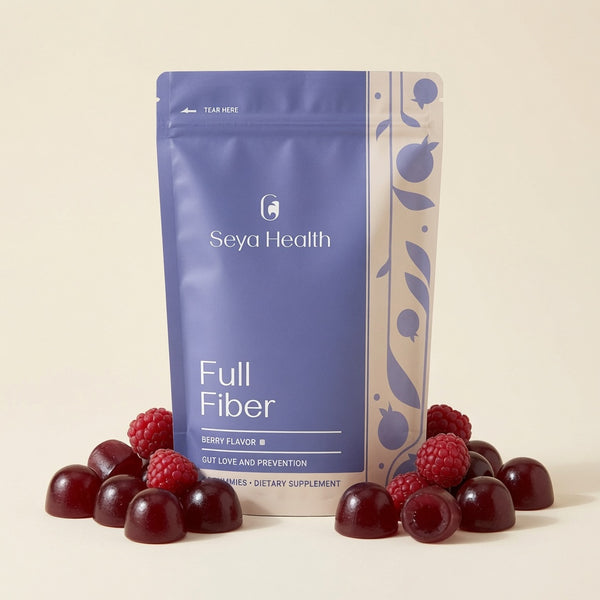
Seya makes a single product for that daily habit: a vegan fiber gummy, roughly 5 grams across 3 gummies, resistant tapioca fiber you can pronounce. The honest limit is narrow. Fiber supports regularity. It will not flatten a bloated belly on the spot, and nothing that promises to is being straight with you. For the full picture, see why most women fall short on fiber.
These statements have not been evaluated by the Food and Drug Administration. This product is not intended to diagnose, treat, cure, or prevent any disease.
Why does the same meal bloat you more than it bloats him?
Your gut is simply slower. Transit runs near 42 hours in women against about 30 in men (Meier et al.). Slower transit means whatever you eat has longer to ferment, and the gas it makes has longer to sit.
That is biology, not a lack of willpower. Pro-motility foods and steady water give a slow system a nudge. For the mechanism behind the swelling, read the balloon effect, and for the other half of the plate, see the foods to avoid when bloated.
When is bloating a reason to call your doctor?
Food bloat usually clears within a day or two, once the water flushes and the gas moves on. A pattern that sticks around deserves a professional look. Reach out if:
- The bloating rides with sharp or lasting stomach pain.
- You spot blood in your stool, or a change in bowel habits that will not settle.
- It shows up with every meal, or drags on for weeks with no let-up.
What you eat is the part you steer day to day. A doctor rules out everything else.
Frequently asked questions
What foods help reduce bloating fast?
Reach for potassium-rich foods and pro-motility foods. Bananas and avocado offset the sodium that makes you hold water, while ginger, kiwifruit, and papaya help a slow gut keep moving. In one trial, 1.2 grams of ginger sped stomach emptying to 12.3 minutes versus 16.1 on placebo. Sip still water and warm peppermint or fennel tea, and skip fizzy drinks that add swallowed gas.
Do bananas help with bloating?
Yes, mainly through potassium. Bananas are high in potassium, which balances sodium and helps your kidneys release held water. The Adequate Intake for women is 2,600 mg of potassium a day, and most fall short while eating far more sodium than they need. A banana with breakfast is an easy way to shift that balance.
Is ginger good for bloating and gas?
Ginger has the clearest evidence of the pro-motility foods. Its gingerols relax gut muscle and speed stomach emptying, so food spends less time sitting and fermenting. In a small crossover trial, stomachs emptied in a median of 12.3 minutes on ginger versus 16.1 on placebo. Grate it into food or steep it as tea.
What drinks reduce bloating?
Still water first, then warm peppermint or fennel tea. A meta-analysis of 12 trials in 835 people found peppermint clearly beat placebo for overall gut symptoms. Water moves fiber through and helps held fluid settle. Steer clear of soda and sparkling water, where the carbonation is swallowed gas that can get trapped.
Related reading: our daily fiber gummy for women and more from the Seya journal.
Related reading
Seya Full Fiber
Getting enough fiber from food every day is hard. Seya Full Fiber is 6 grams from three fibers in one, in three small gummies, so you have a reliable daily floor. Plant based, no gelatin, no sugar alcohols, 60 gummies per pouch.
Shop Full FiberKeep reading
fiber
Can a Multivitamin Replace Vegetables? What Supplements Can't Do for Your Gut

constipation
The Best Way to Beat Constipation in Your 30s (and Where Fiber Gummies Fit)
fiber
The Gut-Skin Axis: Does Your Gut Health Affect Your Skin?
The gut-skin axis, explained: how your gut bacteria and blood sugar affect your skin, w...