
Home/ The Journal/ fiber
fiber
Can You Use FSA or HSA Funds for Fiber Supplements? A Guide to Reimbursement
Can you use FSA or HSA funds for fiber supplements? A clear, sourced guide to eligibility, the Letter of Medical Necessity, and how to get reimbursed.

The short answer
Often, yes. It depends on how the product is sold and what your health plan allows. Fiber that is sold to relieve constipation, like Metamucil, is usually FSA and HSA eligible on its own. Fiber that is sold as a regular supplement, which includes most fiber gummies, is usually eligible only when a doctor or other licensed provider writes a short note called a Letter of Medical Necessity.
This guide covers what FSA and HSA accounts pay for, where fiber falls, how a Letter of Medical Necessity works, and the steps to get reimbursed. It is general information, not tax or medical advice, so check your own plan's rules before you buy.
FSA vs HSA: what they are and how they are different
Both accounts let you set aside money before taxes and spend it on qualified health costs. They are not the same thing.
An FSA (Flexible Spending Account) comes through an employer. You pick an amount for the year, it comes out of your paychecks before tax, and you spend it on eligible care. FSAs are mostly "use it or lose it," though many plans let you carry a small amount into the next year or give you a short grace period to spend it.
An HSA (Health Savings Account) is yours to keep. You can open one only if you have a health plan with a high deductible (called an HDHP). The money rolls over every year, follows you if you change jobs, and can even be invested. Both accounts follow the same basic rules about what you can spend the money on.
| FSA (2026) | HSA (2026) | |
|---|---|---|
| Who owns it | Employer plan | You do, personally |
| Contribution limit | $3,400 per employee | $4,400 self-only / $8,750 family |
| Catch-up (age 55+) | Not applicable | Extra $1,000 |
| Rolls over? | Limited. Up to $680 carryover, or a short grace period | Yes, fully, every year |
| Needs an HDHP? | No | Yes |
These are the 2026 IRS limits (Rev. Proc. 2025-32 for FSA; Rev. Proc. 2025-19 for HSA). Limits change every year, so check the current figure before you plan.
Why most supplements do not qualify (and what changes that)
The rules come from the government. You can use FSA and HSA money to treat or prevent a health problem, but not for things that are just good for your health in general. In its own words, the IRS (the tax agency) covers the "diagnosis, cure, mitigation, treatment, or prevention of disease," and it does not cover items that are "merely beneficial to general health, such as vitamins" (IRS Publication 502). The key word is medical. This all comes from one part of the tax law, Section 213(d).
That one idea explains most of the confusion. It helps to split health products into two groups:
- Over-the-counter medicines (things like pain relievers or allergy pills you buy without a prescription) are covered, and you no longer need a prescription for them. A 2020 law called the CARES Act made that change, and it does not expire (Pharmacy Times).
- Vitamins and supplements work differently. The IRS is clear: "You can't include in medical expenses the cost of nutritional supplements, vitamins, herbal supplements, 'natural medicines,' etc., unless they are recommended by a medical practitioner as treatment for a specific medical condition diagnosed by a physician" (IRS Publication 502). In plain words: a supplement counts only when a doctor says you need it for a real, diagnosed health problem.
So a supplement is not automatically covered, and it is not automatically banned. It becomes eligible when a licensed provider ties it to a real health need. That is where fiber gets interesting.
Are fiber supplements FSA or HSA eligible?
Fiber falls into two groups. The group it is in decides how much paperwork you need.

Which fiber products are more likely to qualify
Some fiber is sold to treat a health problem. Psyllium powders like Metamucil are sold to relieve constipation, so they usually count with no extra paperwork. Big benefits stores list them as FSA and HSA eligible because their job is to treat a digestive problem (buyFSA, FSA Store).
Fiber products that usually need documentation
Other fiber is sold as a regular supplement. Most fiber gummies are in this group, because they are sold as a supplement, not as a medicine. For these, the IRS rule above applies: they count only when a licensed provider recommends the product for a health condition you have been diagnosed with. That recommendation is written down in a Letter of Medical Necessity (Optum).
Whether a specific fiber supplement is covered is decided by your plan and your own provider, not by the brand. The safe path for a fiber gummy is to get a Letter of Medical Necessity and then follow your plan's normal steps. If you see a product simply labeled "HSA eligible," treat it with a little caution and check it against your plan's rules first.
What is a Letter of Medical Necessity, and how do you get one?
A Letter of Medical Necessity, often shortened to LMN, is a short note from a licensed provider. It explains why a product is right for your health. A good LMN lists your health problem (the diagnosis), the product being recommended, how it helps, and the dates you will use it. Those are the exact boxes on the standard form (Optum's Statement of Medical Necessity). The person who fills it out has to be a licensed medical provider, such as a doctor, nurse practitioner, or physician assistant. They sign to say the product is medically necessary for your condition (Optum).
You can get an LMN from your own doctor. You can also use a service that handles it for you: you answer a few health questions, a licensed clinician reviews them, and if it fits, they write the LMN. For example, on a service called Truemed, the letter "is valid for 12 months from the date of issue," and you can pay with your HSA or FSA card at checkout or pay first and get paid back later (Truemed). One thing to know: these services look at each case one by one, and they do not promise that every purchase will qualify (Truemed).
How to get reimbursed, step by step
"Reimbursed" just means getting your money back. Here is the process, start to finish.

- Confirm eligibility, and get an LMN if you need one. If the product is a general dietary supplement, ask your provider for a Letter of Medical Necessity or use a service that arranges one. It certifies that the product is medically necessary for your condition (Optum).
- Save the detailed receipt. Keep the receipt that shows the store, the date, the item, and the price. This is called an itemized receipt. A credit card statement by itself is usually not enough (Flex).
- Check your plan's rules. Coverage details vary by plan, so confirm what your specific FSA or HSA accepts and what documents it wants (Flex).
- Pay one of two ways. Use your HSA or FSA debit card directly, or pay with a regular card and pay yourself back later (Truemed).
- Submit to your administrator. Your plan administrator is the company that manages the account, not your employer and not your insurer. Upload the receipt and the LMN, and enter the details they ask for (Flex).
- Track it and keep your records. Save the confirmation, then keep the receipt and LMN on file. You do not send them to the IRS with your return, but you need them if you are ever asked to prove an expense (Flex).
Common mistakes to avoid
- Assuming a supplement is automatically covered. For a dietary supplement, the answer is no by default, until an LMN ties it to a medical need (IRS).
- Keeping only a card statement. Administrators usually want an itemized receipt, not just a charge line (Flex).
- Letting FSA money expire. Because FSAs are mostly use-it-or-lose-it, buy before your plan's deadline, not after it.
- Forgetting the LMN clock. A Letter of Medical Necessity expires, and a new one is generally required every 12 months for ongoing purchases (Optum).
Using FSA or HSA funds for Full Fiber (coming soon)
We are working on an easy way to use pre-tax money for Full Fiber. The plan is a checkout option where you answer a few health questions and, if a licensed provider agrees it is right for you, you get a Letter of Medical Necessity so eligible funds can be used. This would run through an outside provider.
This option is not live yet. Full Fiber is a dietary supplement, so we cannot say it is currently approved or guaranteed to be covered. Whether it is covered always depends on your plan and your own provider. We will update this page when the checkout option is ready. For now, the steps above are open to anyone whose provider supports the purchase.
Frequently asked questions
Are vitamins and supplements FSA or HSA eligible?
Usually not on their own. The IRS allows supplements and vitamins only when a licensed provider recommends them to treat a health problem you have been diagnosed with, written down in a Letter of Medical Necessity (IRS).
Is fiber FSA eligible?
Fiber sold to treat constipation, like psyllium laxatives, is generally eligible on its own. Fiber sold as a general dietary supplement usually needs a Letter of Medical Necessity first (buyFSA).
Is Metamucil FSA or HSA eligible?
Yes. Major benefits retailers list Metamucil as FSA and HSA eligible because it is sold to relieve occasional constipation (FSA Store).
Do I need a prescription?
Not for a supplement. You need a Letter of Medical Necessity from a licensed provider, which is different from a prescription. Over-the-counter medicines, by contrast, no longer need a prescription after the 2020 CARES Act (Pharmacy Times).
Can I use my HSA card for supplements at checkout?
Sometimes, through services that attach a Letter of Medical Necessity at checkout. Otherwise, pay normally and submit for reimbursement with your receipt and LMN (Truemed).
Can I buy fiber supplements with FSA or HSA funds on Amazon?
Amazon flags some FSA and HSA eligible items, but dietary supplements are usually not among them, and we cannot promise eligibility there. The dependable route for a supplement is a Letter of Medical Necessity and your plan's reimbursement process.
What happens if I am audited?
You do not file receipts with the IRS, but you keep the itemized receipt and the Letter of Medical Necessity so you can prove the expense if asked (Flex).
Sources
- IRS, Publication 502, Medical and Dental Expenses.
- Cornell Law School, 26 U.S. Code Section 213.
- Pharmacy Times, CARES Act Covers OTC Medications, Menstrual Products.
- buyFSA, Is Metamucil FSA/HSA Eligible?, and FSA Store, Metamucil.
- Optum Financial, Medical Practitioner Statement of Medical Necessity.
- Truemed, How Truemed Works and How to submit your HSA/FSA reimbursement.
- Flex, HSA Reimbursement Rules, Timelines & How It Works.
- Thomson Reuters, IRS Announces 2026 HSA and HDHP Limits; Newfront, 2026 Health FSA Limit.
This article is general information, not tax, legal, or medical advice. Rules and limits change and vary by plan. Confirm details with your plan administrator and a qualified professional.
Related reading
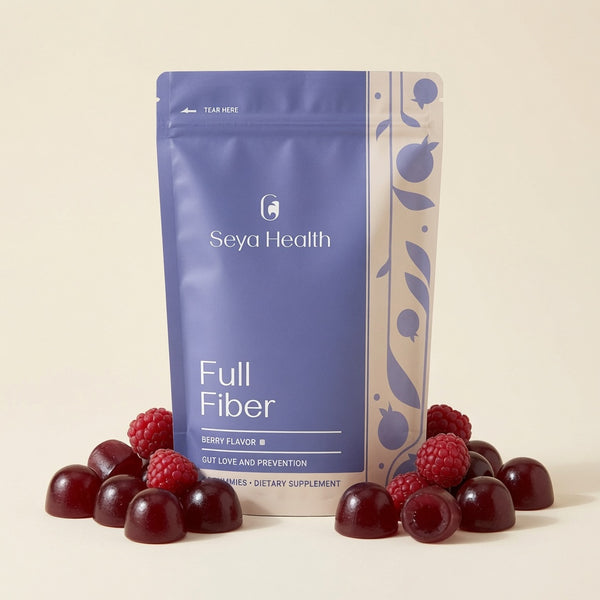
Seya Full Fiber
Your gut bacteria run on fiber. Seya Full Fiber delivers 6 grams from three fibers in one to feed the beneficial bacteria in your gut and support short-chain fatty acid production. Plant based, no gelatin, no sugar alcohols.
Shop Full FiberKeep reading

fiber
Can a Multivitamin Replace Vegetables? What Supplements Can't Do for Your Gut

constipation
The Best Way to Beat Constipation in Your 30s (and Where Fiber Gummies Fit)

fiber
The Gut-Skin Axis: Does Your Gut Health Affect Your Skin?
The gut-skin axis, explained: how your gut bacteria and blood sugar affect your skin, w...