
Home/ The Journal/ constipation
constipation
GLP-1s for Women, Beyond Diabetes: What They Are, Who They're For & the Benefits

Short version: GLP-1s for women are a class of drugs first approved for type 2 diabetes. 12% of US adults have now taken one, and women use them at nearly twice the rate of men. They do more than manage blood sugar. They also slow digestion, which is why constipation is common on them.
- 12% of US adults have taken a GLP-1. Among women, 15% are on one now, versus 9% of men.
- They started as a diabetes drug. They are now approved for weight and, since 2024, for heart risk too.
- Slowed digestion is part of how they work. That is also why up to 24.2% of users report constipation. Fiber supports regularity.
Last updated July 2026.
You keep hearing about them. Ozempic. Wegovy. Mounjaro.
Here is the plain version. GLP-1s for women are a family of drugs that copy a gut hormone your body already makes. 12% of US adults have taken one, and women take them at nearly twice the rate of men, per KFF polling.
They started as a diabetes drug. That is not where the story ends now.
What are GLP-1s for women, beyond diabetes?
GLP-1 stands for glucagon-like peptide-1. It is a hormone your gut releases when you eat. It tells your pancreas to make insulin, and it tells your brain you are full.
The drugs copy that signal. The first, semaglutide, was approved for type 2 diabetes in 2017.
Then the same drug, at a higher dose, was approved for weight in 2021. In 2024, the FDA cleared it to lower heart risk in adults with obesity. So the reach keeps growing past blood sugar.
"This patient population now has a treatment option that can lower the risk of a heart attack, stroke, or cardiovascular death in addition to helping with weight management." — John Sharretts, M.D., U.S. Food and Drug Administration
Who are GLP-1 medications for?
Not only people with diabetes, and not only people with obesity. That is the short answer.
A doctor may prescribe one for type 2 diabetes. Or for weight, when your BMI is 30 or higher, or 27 with a weight-related condition. Since 2024, also to lower heart risk in some adults who carry extra weight.
Women are the bigger group by far. 15% of women say they are on a GLP-1 now, next to 9% of men. Some research puts women at close to 70% of all users. You are not an outlier here. You are the norm.
What are the benefits of GLP-1 medications?
The benefits go past the number on a scale. Blood sugar control was the first one. Then steady appetite, so the constant food noise quiets down. Since 2024, lower odds of a heart attack or stroke for some people with obesity.
Here is how the main FDA approvals line up.
| Year | What it was approved for | Who it is for |
|---|---|---|
| 2017 | Type 2 diabetes (blood sugar) | Adults with type 2 diabetes |
| 2021 | Chronic weight management | BMI 30+, or 27+ with a related condition |
| 2024 | Lower risk of heart attack and stroke | Adults with obesity and heart disease |
One drug, three jobs. That is why "just a diabetes shot" no longer fits.

Why do GLP-1s cause constipation, and what helps?
Because slowing your gut is part of how they work. The drug tells your stomach to empty slower. That is what keeps you full for hours. It also means food sits longer, and things back up.
So if you started a GLP-1 and got constipated, read this next part. You did not do anything wrong. You are not lazy about water or veggies. It is the mechanism. The same slowed stomach that curbs your appetite also slows the exit.
It is common. In pooled data from three trials of 2,117 people on semaglutide, 24.2% reported constipation, versus 11.1% on placebo. Nausea hit 43.9%. Women feel these gut effects harder: one analysis found roughly 2.5 times the rate of ongoing nausea and vomiting in women, per Truveta research.
What actually helps a backed-up gut? Move more. Drink water. And get steady fiber, because fiber supports regularity. Most women get about 17 grams of fiber a day. The target is 25, and about 94% of Americans fall short, per the NIH StatPearls fiber review. That gap is real, and it is easy to close.
This is where Seya Health fits, and only here. Seya makes one product: a daily fiber gummy for women. 3 vegan gummies with resistant tapioca fiber, ingredients you can name. The honest claim is that fiber supports regularity, graded C at about 5 grams. It will not replace your medication or fix a medical problem. It is a daily fiber habit, nothing louder.
This statement has not been evaluated by the Food and Drug Administration. This product is not intended to diagnose, treat, cure, or prevent any disease.
Related reading: our daily fiber gummy for women, plus how much fiber women need per day from the Seya journal.
Frequently asked questions
Are GLP-1 medications only used for diabetes treatment?
No. GLP-1s started as a type 2 diabetes drug in 2017, but the same medicine was later approved for chronic weight management in 2021, and in 2024 to lower the risk of a heart attack or stroke in some adults with obesity. So their use now reaches well past blood sugar.
What are the benefits of GLP-1?
GLP-1 drugs steady your blood sugar, quiet appetite so you eat less, and, for some adults with obesity and heart disease, lower the odds of a heart attack or stroke. They work by copying a gut hormone that signals fullness and prompts insulin. The benefit depends on why your doctor prescribed it.
Are GLP-1 medications only for people with obesity?
No. A GLP-1 may be prescribed for type 2 diabetes regardless of weight, for chronic weight management at a BMI of 30 or higher (or 27 with a related condition), or to lower heart risk in some adults who carry extra weight. Your doctor decides based on your health, not weight alone.
Are GLP-1 medications considered a new treatment?
Not really. The first GLP-1 drug reached the US market in 2005, and semaglutide, the one behind Ozempic and Wegovy, was approved for type 2 diabetes in 2017. What is newer is how widely they are used: 12% of US adults now report having taken one.
Can you gain weight on GLP-1 medications?
It can happen, especially after stopping. Research shows people often regain much of the weight once they come off a GLP-1, because appetite returns to where it was. While on the drug, most people see their weight go down, not up. Talk to your doctor before starting or stopping.
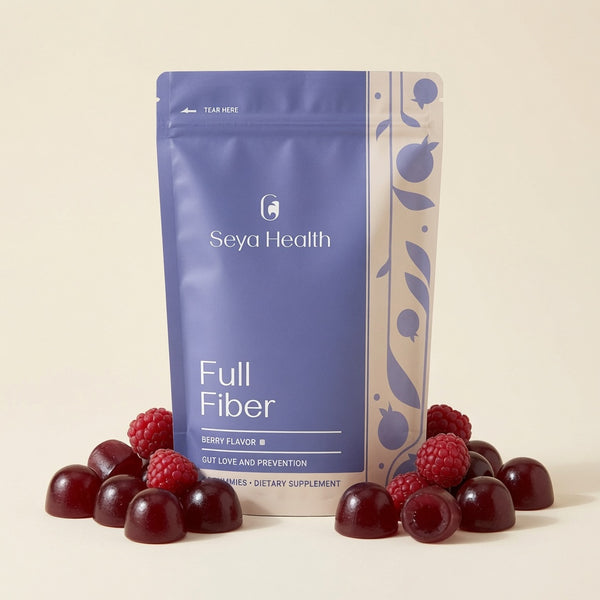
Seya Full Fiber
Getting enough fiber from food every day is hard. Seya Full Fiber is 6 grams from three fibers in one, in three small gummies, so you have a reliable daily floor. Plant based, no gelatin, no sugar alcohols, 60 gummies per pouch.
Shop Full FiberKeep reading

fiber
Can a Multivitamin Replace Vegetables? What Supplements Can't Do for Your Gut

constipation
The Best Way to Beat Constipation in Your 30s (and Where Fiber Gummies Fit)
fiber
The Gut-Skin Axis: Does Your Gut Health Affect Your Skin?
The gut-skin axis, explained: how your gut bacteria and blood sugar affect your skin, w...