Home/ The Journal/ cold and flu season
cold and flu season
Gut Health During Cold and Flu Season: What Helps

The short answer: Only 10.3% of US adults get enough fiber. Your gut sits right next to a huge share of your immune cells. A few boring habits around diet, sleep, and hygiene do more for gut health during cold and flu season than anything in a bottle.
- Average adult fiber intake is 16.1 grams a day. The target for women 19 to 50 is 25 grams.
- Adults who slept under 6 hours a night were about 4 times more likely to catch a cold than adults sleeping 7-plus hours, in a 164-person study.
- Handwashing cuts your risk of a respiratory infection by about 16%, based on a pooled review of 8 studies.
As of October 2026.
Cold and flu season starts earlier than most people plan for. Cases climb in October. Everyone moves indoors. Windows shut. Gut health during cold and flu season doesn't get much airtime in that conversation. It should. Your gut sits next to a huge share of your immune tissue. The two talk to each other constantly.
This isn't about one pill doing the work for you. It's about a few plain habits. Fiber. Sleep. Handwashing. A flu shot. Together they keep your gut, and the immune system next to it, running the way it's built to.
Gut health during cold and flu season: how are they connected?
Your gut lining sits next to a dense bed of immune tissue. The two stay in constant contact. Stanford researchers tested this directly. In a trial funded by the National Institute of Allergy and Infectious Diseases, 33 healthy adults took a 5-day course of broad-spectrum antibiotics around their annual flu shot. The antibiotics cut their gut bacteria by roughly 10,000-fold. A gut-made compound called bile acid dropped about 1,000-fold too.
In adults who started with low existing immunity, that gut disruption weakened their antibody response to the vaccine. Their immune system didn't build the same defenses it normally would. Bali Pulendran, the Stanford microbiologist who led the work, called it the first human evidence that wiping out gut bacteria can blunt a person's response to a vaccine (Hagan et al., Cell, 2019). That's a measured, controlled link between gut health and your immune system. Not a guess.
Why do colds and flu spike every fall?
Three things stack up every October. Everyone moves indoors. Windows stay shut. Heating systems recirculate the same air for hours at a stretch. Crowded, poorly ventilated rooms are exactly where viruses pass from person to person. That's why a whole office floor starts coughing in sync by Halloween.
A cold and the flu feel similar at first. They aren't the same fight. Here's how the CDC tells them apart.
| Feature | Common cold | Flu | Typical course |
|---|---|---|---|
| Onset | Gradual, over 1-2 days | Sudden, within hours | - |
| Fever | Rare, usually mild | Common, often 100-102°F | 3-4 days |
| Body aches | Mild | Often severe | 2-3 days |
| Overall course | 7-10 days | 5-7 days, fatigue can linger 2 weeks | varies |
Fix the fiber and sleep gap first
None of this is about willpower. It's about closing a few specific gaps most people are running every day.
- Close the fiber gap. The average US adult eats 16.1 grams of fiber a day. The Adequate Intake for women 19 to 50 is 25 grams, and 21 grams for women 51 and up. Only 10.3% of adults studied, 2,565 out of 24,807, actually hit that mark (McGill et al., Food & Nutrition Research, 2016). Fiber supports regularity. It keeps the gut environment next to your immune tissue running well. It is not a fix for a virus.
- Protect your sleep. In a 164-adult study, people sleeping under 6 hours a night were about 4 times more likely to come down with a cold after direct virus exposure, versus people sleeping 7-plus hours (Prather et al., Sleep, 2015). Seven hours is the floor worth protecting in October.
Then layer on hygiene and your flu shot
- Wash your hands like it's your job. A pooled review of 8 studies found handwashing cuts the risk of a respiratory infection by about 16%, with a range of 11% to 21% across studies (Rabie & Curtis, Tropical Medicine & International Health, 2006). Wipe down shared surfaces too. Doorknobs. Counters. Phone screens.
- Get your flu shot before Halloween. In the 2024-2025 season, the flu vaccine ran 42% to 56% effective at keeping adults 18-plus out of the doctor's office with flu symptoms, depending on which CDC network measured it (CDC, Flu Vaccine Effectiveness Studies). Not a perfect number. Still the single biggest lever on this list.

You did everything right and got sick anyway. Now what?
You ran the checklist. You still got sick. That's not a verdict on your discipline. It's a signal, not a character flaw. Your immune system flagged a virus it hadn't met before. No amount of fiber or sleep makes a person unreachable. Most people who hit every target above still catch something most years.
Once symptoms start, plain self-care holds up. Fluids. Rest. A humidifier for a dry throat. Over-the-counter options for fever or congestion if you want them. Keep your normal fiber intake going if your stomach tolerates it. It supports regularity while you're laid up. Nothing more dramatic than that.
See a doctor if you have trouble breathing, chest pain, a fever that won't come down, or symptoms that worsen after a week instead of easing up. The same goes if you're 65 or older, pregnant, or managing a chronic condition. Those groups carry a higher risk of complications. Call sooner, not later.
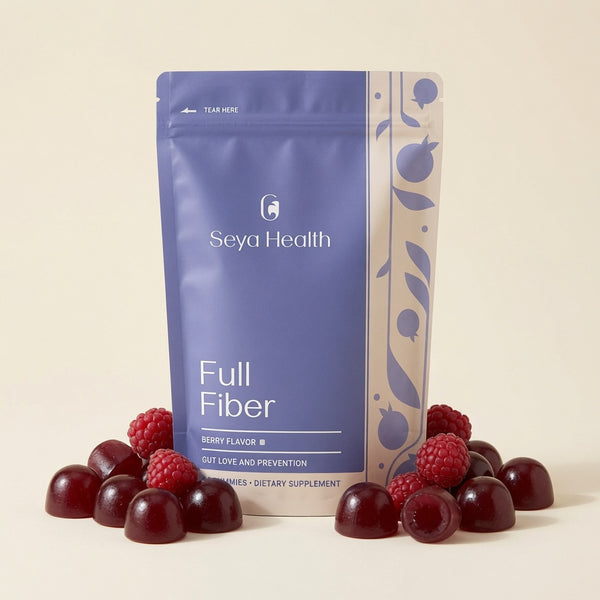
Related: Seya's fiber gummies are 3 vegan gummies a day, built around the fiber gap above. One lever among several. Not a stand-in for sleep, handwashing, or a flu shot. For more on how that fiber works day to day, see what prebiotic fiber actually does in your gut.
Frequently asked questions
Does fiber help with colds or the flu?
Not directly. Fiber supports regularity and a gut environment next to a large share of your immune tissue. No fiber gummy or food fights a virus for you. Sleep, handwashing, ventilation, and vaccination do the heavy lifting on colds and flu. Fiber is a supporting piece of the gut side of that picture, not a stand-in for any of them.
How much sleep lowers your cold risk?
Aim for 7 hours or more a night. Short sleepers in a Carnegie Mellon-led trial faced roughly 4 times the odds of getting sick once exposed to a cold virus, compared with well-rested volunteers (Prather et al., 2015).
When should you see a doctor for a cold or the flu?
Call a doctor for trouble breathing, chest pain, a fever that won't break, or symptoms that worsen after a week instead of improving. Adults 65 and older, pregnant women, and anyone managing a chronic condition should call sooner rather than later.
These statements have not been evaluated by the Food and Drug Administration. This product is not intended to diagnose, treat, cure, or prevent any disease.
Seya Full Fiber
Most women fall short on fiber. Seya Full Fiber gives you 6 grams from three fibers in three small vegan gummies. Plant based, no gelatin, no sugar alcohols.
Shop Full Fiber