Home/ The Journal/ bone health
bone health
Best Fiber Gummies for White Women: Celiac Disease and Bone Health

Short version: Fiber needs do not change by race. What differs is health context. In U.S. data, celiac disease was found in 1.0% of non-Hispanic white adults, and white women are at the highest risk of osteoporosis. For the best fiber gummies for white women, that means two checks: gluten and calcium timing.
- Celiac disease: read the label for wheat, barley, and rye, or look for "gluten-free."
- Bone health: keep fiber away from the dose time of any bone medicine.
- These are population averages, not facts about you.
Last updated October 2026.
A woman's fiber needs are the same whatever her race. Age and gut health matter far more.
So why this page? Health data does differ by group, and two differences touch fiber gummies. This guide covers only those two. The general buying rules live in our hub on the best fiber gummies for women.
Is celiac disease more common in white women?
In U.S. survey data, yes, on average. In 2009 to 2012, celiac disease was found in 1.0% of non-Hispanic white adults. That compared with 0.2% of Black adults and 0.3% of Hispanic adults, per a national survey study of celiac blood tests.
Most white women do not have it. A rate is not a trait, and only a clinician can test for celiac disease.
Celiac disease is an immune reaction to gluten that harms the small intestine and can block nutrient absorption, per MedlinePlus. If you have unexplained bloating or irregularity, our guide on when bloating isn't normal covers the red flags.
Are fiber gummies gluten-free?
Some are, but you cannot assume it. Gluten is a protein in wheat, barley, and rye. MedlinePlus notes it can also hide in vitamins and supplements. That makes the label your first stop.
The FDA lets a food say "gluten-free" only if it has less than 20 parts per million of gluten, per its gluten-free labeling update. So look for that exact claim.
Seya Full Fiber is plant based, with no gelatin. Its product page makes no gluten-free claim, so check the pouch label before you buy if you have celiac disease.
What are good gluten-free fiber choices?
Start with whole foods that are naturally free of gluten: beans, lentils, vegetables, fruit, nuts, and quinoa. Use a gummy as a top-up, not a swap for the plate.

Be careful with packaged gluten-free breads and snacks. In a Spanish study of 206 gluten-free products against 289 matching foods with gluten, the nutrition differed in fiber, sodium, and calories. A "gluten-free" label tells you about gluten. It does not tell you about fiber.
Add fiber slowly and drink water. Fiber types differ, as how fiber supplements work explains.
Are white women at higher risk of osteoporosis?
On average, yes. MedlinePlus lists race as a risk factor: "White and Asian women are at highest risk." A national study of adults 50 and older estimated 10.2 million people had osteoporosis, and 7.7 million of them were non-Hispanic white.
The two can overlap. In a Manitoba study of 376 women, positive celiac blood tests went with a higher osteoporosis rate, 67.7% versus 44.8%. Risk is not a diagnosis. Only a bone density test tells you where you stand.
Does fiber block calcium?
The evidence is mixed, and it depends on the fiber. In a small crossover trial of 14 postmenopausal women, soluble corn fiber at 10 and 20 g a day raised bone calcium retention by 4.8% and 7%. That is one fiber in one small trial, not Seya's.
We found no study that sets a spacing rule for gummy fiber and calcium. Our plain habit, not a proven rule: take fiber at a different meal from your calcium pill.
If you take a bone medicine, the timing is strict. For alendronate, MedlinePlus says to wait at least 30 minutes before any other medicine, vitamins, or antacids. Calcium supplements are on its interaction list. Our guide to fiber and your medications covers timing in general.
What to look for in the best fiber gummies for white women with celiac disease or thin bones
- A "gluten-free" claim on the label, which means under 20 ppm.
- No wheat, barley, or rye in the ingredients.
- A fiber dose you can take at a different time than calcium or bone medicine.
This is education, not medical advice. Ask your clinician about testing and timing if you take medicine for bones or have a gut condition.
These statements have not been evaluated by the Food and Drug Administration. This product is not intended to diagnose, treat, cure, or prevent any disease.
Frequently asked questions
Do white women need more fiber than other women?
No. Fiber needs depend on age and health, not race. The group differences in the data are about risk context, like celiac disease and osteoporosis. They can change which product you pick, not how much fiber you need.
Can I take a fiber gummy if I have celiac disease?
Only if the label supports it. Look for a gluten-free claim, which the FDA defines as under 20 ppm, and check for wheat, barley, and rye. Ask your clinician first.
Should I take fiber and calcium at the same time?
There is no firm rule. A simple habit is to take them at different meals. If you take a bone medicine like alendronate, follow its timing first and ask your pharmacist.
Is a gluten-free label enough to pick a fiber gummy?
It covers gluten only. Check the grams per serving, sugar, and fiber type too. The hub post lays out that checklist.
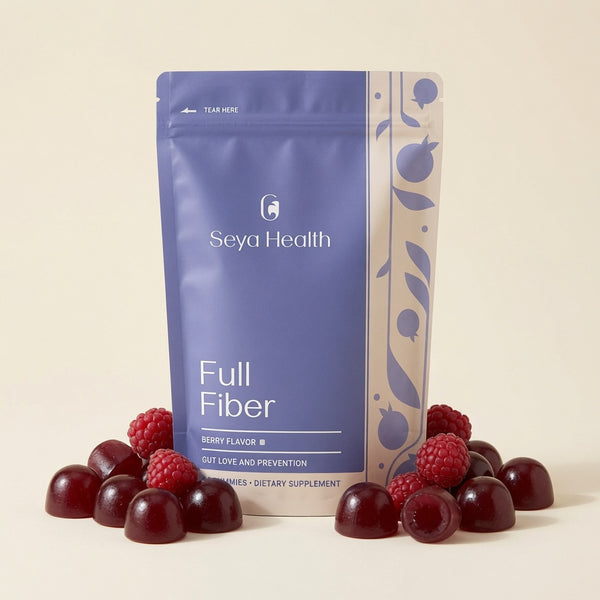
Seya Full Fiber
Most women fall short on fiber. Seya Full Fiber gives you 6 grams from three fibers in three small vegan gummies. Plant based, no gelatin, no sugar alcohols.
Shop Full Fiber