
Home/ The Journal/ digestive health
digestive health
How Fiber Supplements Actually Work (and Whether They're Safe to Take Every Day)

Short version: Fiber supplements add concentrated fiber to a day that is usually short on it. The FDA target is 28 g a day, and most women get about half. Taken daily, with water, they are safe for most people. The two real cautions are timing around medications and a slow build-up.
- The FDA Daily Value for fiber is 28 g. Only about 5% of Americans hit their target.
- In 16 trials of 1,251 adults, 66% responded to a fiber supplement, versus control.
- Keep fiber at least 3 hours apart from certain medications, per MedlinePlus.
Last updated August 2026.
You eat what looks like a healthy diet. You still feel backed up, heavy, a little off.
Here is the number that explains most of it. The FDA says you need 28 g of fiber a day, and the average American woman gets closer to 15 g.
That gap is not a willpower problem. It is a grams problem.
Fiber supplements exist to close it. So how do fiber supplements actually work, and is it safe to take one every single day? Short answer: they add concentrated fiber your food left out, and yes, for most people, daily is fine. The details are below.
How do fiber supplements actually work in your body?
They do not get digested. That is the whole trick.
Fiber is the part of a plant your gut cannot break down. A supplement just delivers a concentrated dose of it, without the meal attached.
Once it is inside you, it works two ways. Soluble fiber pulls in water and turns into a gel. That gel slows digestion, which is how it softens stool and blunts a blood-sugar spike. Insoluble fiber does the opposite job. It adds bulk and moves things along faster. The MedlinePlus medical encyclopedia lays out both mechanisms plainly.
That is the mechanism in miniature. If you want the full walk-through of what fiber does from mouth to gut, we cover it in how fiber actually works.
Does the supplement version deliver? For regularity, the evidence says yes, with limits. A 2022 meta-analysis in the American Journal of Clinical Nutrition pooled 16 randomized trials in 1,251 adults. 66% of people responded to fiber, and fiber clearly beat control, at a risk ratio of 1.48. The catch: it worked best above 10 g a day, and it took 4 weeks or more. See the updated meta-analysis of fiber supplementation for chronic constipation.
Which is better for women, soluble or insoluble fiber, and why?
Neither wins. They do different jobs, and you want both.
Think of it like this.
- Soluble fiber is the gel-former. It is the one with a heart benefit and the steadier-blood-sugar effect.
- Insoluble fiber is the bulk. It is the one that keeps things moving and eases that stuck, heavy feeling.
Here is where the heart part comes in, because it hangs on the soluble type. The FDA authorizes a health claim that soluble fiber from certain foods may lower heart-disease risk, at 7 g a day from psyllium or 3 g from oat and barley beta-glucan. That rule is written into federal regulation, 21 CFR 101.81. In a review of 28 trials, roughly 10 g of psyllium a day lowered LDL cholesterol by about 13 mg/dL, per a 2018 meta-analysis in the American Journal of Clinical Nutrition.
Real, but modest. Fiber is one lever, not a statin. We go deeper in fiber and heart health for women.
The takeaway for women is not to pick a team. It is to close the gap, which most of us do not. Only about 5% of Americans meet the fiber recommendation at all, per a fiber-intake review in the American Journal of Lifestyle Medicine.
Is it better to take fiber in the morning or at night?
The clock barely matters. What you take it with matters a lot.
There is no strong trial showing morning beats night or the other way around. So stop optimizing the hour. Optimize these instead.
- Take it with a full glass of water. Fiber needs fluid to form its gel and move. Dry, it can make things harder, literally.
- Time it to a meal, not the sunrise. If steadier blood sugar or fullness is your goal, take it with or just before a meal, when the gel can do its work.
- Keep it away from your pills. This is the real timing rule, and it is the next question.
- Be consistent. The trials that worked ran daily for a month. A dose you skip is a dose that does nothing.
Pick the time you will actually remember. Morning with breakfast, night with dinner. The best time is the one that becomes a habit.
Can fiber supplements interfere with your medications?
Yes. This is the one caution to take seriously.
Because fiber forms a gel and slows things down, it can slow how your body absorbs some drugs taken at the same moment. MedlinePlus advises keeping psyllium at least 3 hours apart from certain medications, including digoxin, aspirin, and nitrofurantoin.
The simple rule is a buffer.
Take your fiber, then wait a couple of hours before your medication, or take the medication first and the fiber later. If you take a daily prescription, especially a thyroid pill, a heart drug, or anything with a narrow dose window, ask your pharmacist where fiber fits. That conversation takes two minutes and settles it.
Is fiber good for your kidneys?
Early evidence points that way, and it is thin. Do not oversell it to yourself.
A 2015 meta-analysis in the European Journal of Clinical Nutrition pooled 14 controlled feeding trials in people with chronic kidney disease. More dietary fiber lowered two waste markers, serum urea and creatinine, that the kidneys clear. Read the systematic review of dietary fiber in chronic kidney disease.
Honest framing: that was 143 people across old, small trials, and it measured blood markers, not whether anyone lived longer or felt better. It is a promising signal, not a treatment.
And a real caveat. If you already have kidney disease, some high-fiber foods are also high in potassium or phosphorus, which your care team may be limiting. That makes fiber a question for your doctor, not a free-for-all.
So is it safe to take fiber every day?
For most healthy people, yes.
There is no Tolerable Upper Intake Level for fiber, the ceiling health authorities set for nutrients that get toxic in excess. Fiber does not have one. The National Academies set an Adequate Intake, not an upper limit.
That does not mean more is always better. Ramp up too fast and you buy gas, bloating, and cramps. Go very high and you can start blocking the absorption of minerals and medications.
So build slowly. Add about 3 to 5 g at a time, hold it a few days, and drink more water than feels necessary.
Where Seya fits, honestly
Seya makes one product at launch. A fiber gummy.
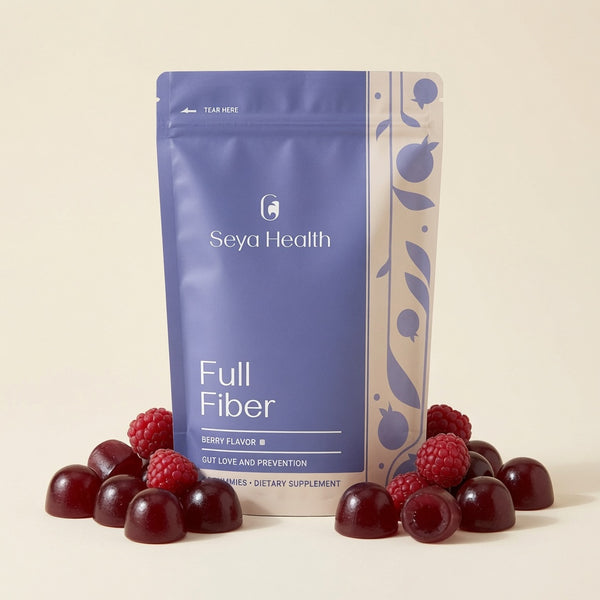
Three vegan gummies deliver about 5 g of resistant tapioca fiber. That is real fiber toward your 28 g day, and it is honest to call it half of the 10 g dose the constipation trials leaned on. So we grade our own evidence a C and make one claim. It supports regularity.
It is not a cholesterol drug, and it is not a fix for a kidney condition. It is a daily nudge toward a target most women miss.
Where that daily gap comes from, and why it is so common, is in the fiber gap. Where fiber sits among the rest is in the best supplements for women's health.
The heavy, stuck feeling you have been blaming on yourself is usually just that gap. Not a character flaw. A number you can move.
This is education, not medical advice. Talk to your clinician before adding a supplement, especially if you take daily medication or have a kidney condition.
These statements have not been evaluated by the Food and Drug Administration. This product is not intended to diagnose, treat, cure, or prevent any disease.
Frequently asked questions
How do fiber supplements actually work in your body?
Fiber is the part of a plant your gut cannot digest, and a supplement delivers a concentrated dose of it without a meal attached. Once inside, soluble fiber pulls in water and forms a gel that slows digestion, softening stool and blunting blood-sugar spikes, while insoluble fiber adds bulk and speeds transit.
For regularity the supplement form has real evidence. A 2022 meta-analysis of 16 trials in 1,251 adults found 66% of people responded to fiber, at a risk ratio of 1.48 versus control, working best above 10 g a day over 4 weeks or more.
Is it better to take fiber in the morning or at night?
Time of day barely matters. No strong trial shows morning beats night. What matters is taking fiber with a full glass of water so it can form its gel, timing it to a meal if your goal is steadier blood sugar or fullness, keeping it at least a couple of hours from your medications, and being consistent every day. The best time is simply the one you will remember, because the trials that worked ran daily for a month or longer.
Can fiber supplements interfere with your medications?
Yes, and this is the caution to take seriously. Because fiber forms a gel and slows digestion, it can slow how your body absorbs some drugs taken at the same time. MedlinePlus advises keeping psyllium at least 3 hours apart from certain medications, including digoxin, aspirin, and nitrofurantoin. The simple rule is a buffer of a couple of hours in either direction. If you take a daily prescription, especially a thyroid pill or a heart drug, ask your pharmacist exactly where fiber should fit.
Is fiber good for your kidneys?
The early evidence is promising but thin. A 2015 meta-analysis of 14 controlled feeding trials in people with chronic kidney disease found that more dietary fiber lowered serum urea and creatinine, two waste markers the kidneys clear. But that was only 143 people across small, older trials, and it measured blood markers rather than whether anyone lived longer. If you already have kidney disease, some high-fiber foods are also high in potassium or phosphorus, so fiber becomes a question for your care team, not a free-for-all.
Which is better for women, soluble or insoluble fiber, and why?
Neither is better; they do different jobs and you want both. Soluble fiber forms a gel and carries the heart and blood-sugar benefits, with an FDA-authorized claim that 7 g a day of soluble fiber from psyllium may lower heart-disease risk. Insoluble fiber adds bulk and keeps things moving, easing that stuck feeling.
Since only about 5% of Americans meet the fiber recommendation, and the average woman gets around 15 g against a 28 g target, the real goal for women is not choosing a type but closing the overall gap.
Related reading
- How Much Fiber Do Women Actually Need? Grams by Age, and Why It's More Than You Think
- Fiber Supplements for Women Over 40: How They Work and How to Choose One
- What's Actually in a Fiber Gummy? Sweeteners, Prebiotics, and Label Red Flags
Seya Full Fiber
Getting enough fiber from food every day is hard. Seya Full Fiber is 6 grams from three fibers in one, in three small gummies, so you have a reliable daily floor. Plant based, no gelatin, no sugar alcohols, 60 gummies per pouch.
Shop Full FiberKeep reading

fiber
Can a Multivitamin Replace Vegetables? What Supplements Can't Do for Your Gut

constipation
The Best Way to Beat Constipation in Your 30s (and Where Fiber Gummies Fit)
fiber
The Gut-Skin Axis: Does Your Gut Health Affect Your Skin?
The gut-skin axis, explained: how your gut bacteria and blood sugar affect your skin, w...