
Home/ The Journal/ fsa hsa
fsa hsa
What Is a Letter of Medical Necessity? (And How to Get One)
What is a Letter of Medical Necessity (LMN)? A plain-English guide with a sample letter, what it must include, how to get one, and how to use it with your FSA or HSA.

The short answer
A Letter of Medical Necessity (often shortened to LMN) is a short note from a licensed health provider. It says that a specific product or service is medically necessary for you, so you can pay for it with FSA or HSA money even when it would not normally be covered. You get the letter, and you keep it with your receipt to support your claim.
This guide explains what an LMN is, what has to be in it, shows a sample, and walks through how to get one and use it. It is general information, not tax or medical advice, so check your own plan's rules before you buy.
What is a Letter of Medical Necessity?
An LMN is written by a licensed provider (a doctor, nurse practitioner, or physician assistant) for you, the patient. It connects a real, diagnosed health need to a specific purchase. That matters because the IRS only lets FSA and HSA money pay for costs that treat or prevent a health problem, not for things that are simply good for your health in general (IRS Publication 502). Many everyday supplements, and some services, are not covered on their own. An LMN is what can move them into the "covered" column.
How it is different from a prescription
They are not the same thing. A prescription tells a pharmacy to dispense a specific drug. An LMN is broader: it explains why a product or service that is not automatically covered, like a dietary supplement, a piece of equipment, or even a gym membership, is medically necessary for your care so your health account will pay for it (Truemed).
What an LMN must include
Plans want the same core details on every letter. A complete LMN generally has:
- Your information: name and date of birth.
- The provider's information: name, credentials, license or NPI number, practice, and the date, on official letterhead.
- Your diagnosis: the medical condition (often with its ICD-10 code) and how it affects you.
- The recommended product or service: the specific item, how much, and for how long.
- The medical reason: why this helps your condition.
- Start and end dates, and the provider's signature.
Those are the exact fields on the standard administrator form (Optum's Statement of Medical Necessity) and the same elements clinical services list for a valid letter (Truemed).
A sample Letter of Medical Necessity
Here is a simple example so you know what to expect. This is for illustration only, not a real letter, and your provider will use their own words.
[Provider or clinic letterhead] · Date: [date]
To whom it may concern,
Patient: [Full name], DOB [date]
Diagnosis: Chronic constipation (ICD-10 K59.00)
I am the treating provider for the patient above. Based on my evaluation, this patient has chronic constipation that has not improved with diet changes alone and is affecting daily comfort.
As part of the treatment plan, I recommend a daily fiber supplement (three servings per day) to help manage this condition. In my clinical judgment this is medically necessary for the patient's care.
Recommended duration: 12 months.
[Provider name, credentials] · [NPI or license number]
[Practice name, address, phone] · [Signature]
What an LMN can cover
An LMN is not only for supplements. It can support a range of purchases when a provider ties them to a diagnosed condition:
- Supplements and vitamins. These are covered only when a provider recommends them to treat a specific diagnosed condition (IRS Publication 502).
- Dual-purpose items that have both a health use and an everyday use, which is why they need the letter.
- Fitness, including a gym membership. A gym is not automatically covered, but an LMN can make it eligible when a provider recommends regular exercise to treat a diagnosed condition such as a heart condition, type 2 diabetes, or obesity (Flex, GoodRx).
Timing matters. Get the letter before you buy. The medical-necessity decision has to come first, so a purchase made before the letter's date usually cannot be claimed (Flex).
How to get a Letter of Medical Necessity

There are two common ways:
- Ask your own provider. At a visit, explain the product or service and why it helps your condition, and ask them to write the letter on their letterhead.
- Use a service that arranges it. You answer a few health questions online, a licensed clinician reviews them, and if it fits, they issue the letter, often the same day. Truemed is one example (Truemed).
Either way, the person who signs it must be a licensed medical provider certifying that the item is medically necessary for your condition (Optum). Keep in mind that a letter, or a service, does not guarantee your plan will approve the claim. Each case is reviewed on its own (Truemed).
How to use your LMN with an FSA or HSA
Once you have the letter, using it is straightforward:
- Keep the itemized receipt for the purchase (store, date, item, price) together with the LMN.
- Submit both to your plan administrator, the company that manages your account, not your employer and not your insurer.
- Keep copies on file. You do not send them to the IRS, but you need them if you are ever asked to prove the expense (Flex).
For the full step-by-step, including how eligibility works for fiber specifically, see our guide: Can You Use FSA or HSA Funds for Fiber Supplements?
Does a Letter of Medical Necessity expire?
Yes. An LMN is not permanent. A new letter is generally required every 12 months for ongoing purchases (Optum). If you plan to keep buying the item, set a reminder to renew before the year is up.
If you take a fiber supplement like Full Fiber for a diagnosed condition, an LMN is the route to putting FSA or HSA money toward it. We are working on a checkout option that makes getting a letter simple. It is not live yet, and whether it is covered always depends on your plan and your own provider.
Frequently asked questions
What is a Letter of Medical Necessity?
A short note from a licensed provider stating that a product or service is medically necessary for you, so you can pay for it with FSA or HSA funds when it would not otherwise be covered (IRS).
Is an LMN the same as a prescription?
No. A prescription tells a pharmacy to dispense a drug. An LMN justifies why a product or service that is not automatically covered, like a supplement or a gym membership, is medically necessary (Truemed).
Who can write one?
A licensed medical provider, such as a doctor, nurse practitioner, or physician assistant, who certifies the item is medically necessary for your condition (Optum).
Does an LMN expire?
Usually after 12 months. A new letter is generally needed each year for ongoing purchases (Optum).
Can I get one for a gym membership?
Sometimes. A provider can recommend a gym membership in an LMN when regular exercise treats a diagnosed condition like heart disease, diabetes, or obesity (Flex).
Does a letter guarantee I will be reimbursed?
No. Your plan reviews each claim on its own, so a letter supports the claim but does not guarantee approval (Truemed).
Sources
- IRS, Publication 502, Medical and Dental Expenses.
- Optum Financial, Medical Practitioner Statement of Medical Necessity.
- Truemed, Letter of Medical Necessity: Key Components & Examples and How Truemed Works.
- Flex, Letter of Medical Necessity for Gym Memberships and HSA Reimbursement Rules.
- GoodRx, Can You Use an HSA or FSA for a Gym Membership?
This article is general information, not tax, legal, or medical advice. Rules vary by plan and change over time. Confirm details with your plan administrator and a qualified professional.
Related reading
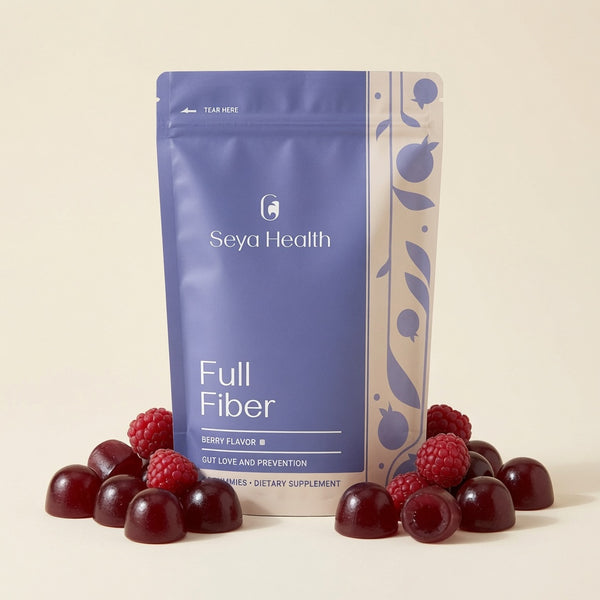
Seya Full Fiber
Your gut bacteria run on fiber. Seya Full Fiber delivers 6 grams from three fibers in one to feed the beneficial bacteria in your gut and support short-chain fatty acid production. Plant based, no gelatin, no sugar alcohols.
Shop Full FiberKeep reading

fiber
Can a Multivitamin Replace Vegetables? What Supplements Can't Do for Your Gut

constipation
The Best Way to Beat Constipation in Your 30s (and Where Fiber Gummies Fit)

fiber
The Gut-Skin Axis: Does Your Gut Health Affect Your Skin?
The gut-skin axis, explained: how your gut bacteria and blood sugar affect your skin, w...