
Home/ The Journal/ brown rice
brown rice
Brown Rice vs. White Rice vs. Bread: Which Carbs Give Women the Most Fiber?

Short version: On brown rice vs white rice vs bread, fiber picks a clear winner. Brown rice beats white rice, and whole grain bread beats white bread. It is not close. Brown rice has about 3.5 g of fiber a cup. White rice has about 0.6 g. The FDA target is 28 g a day, and most women get about half.
- 1 cup of cooked brown rice has about 3.5 g of fiber. The same cup of white rice has about 0.6 g, roughly 6 times less.
- 1 slice of whole grain bread has about 2 g of fiber. A slice of white bread has about 0.8 g.
- The FDA Daily Value is 28 g a day. The average American woman gets about 15 g, and only about 5% of Americans hit the target at all.
Last updated August 2026.
The brown rice vs white rice vs bread question has one clear answer for fiber. Brown rice wins over white rice, and whole grain bread wins over white bread, and honestly it is not close.
One cup of cooked brown rice carries about 3.5 g of fiber. The same cup of white rice gives you about 0.6 g. That is roughly 6 times less.
Here is why it matters. The FDA sets the fiber Daily Value at 28 g a day, written into the FDA labeling rule, 21 CFR 101.9. The average American woman gets about 15 g. You are already short. The carb you pick can widen that gap or close it.
Brown rice vs white rice vs bread: which has the most fiber?
Whole grains carry the most. Refined grains carry the least. That is the whole rule.
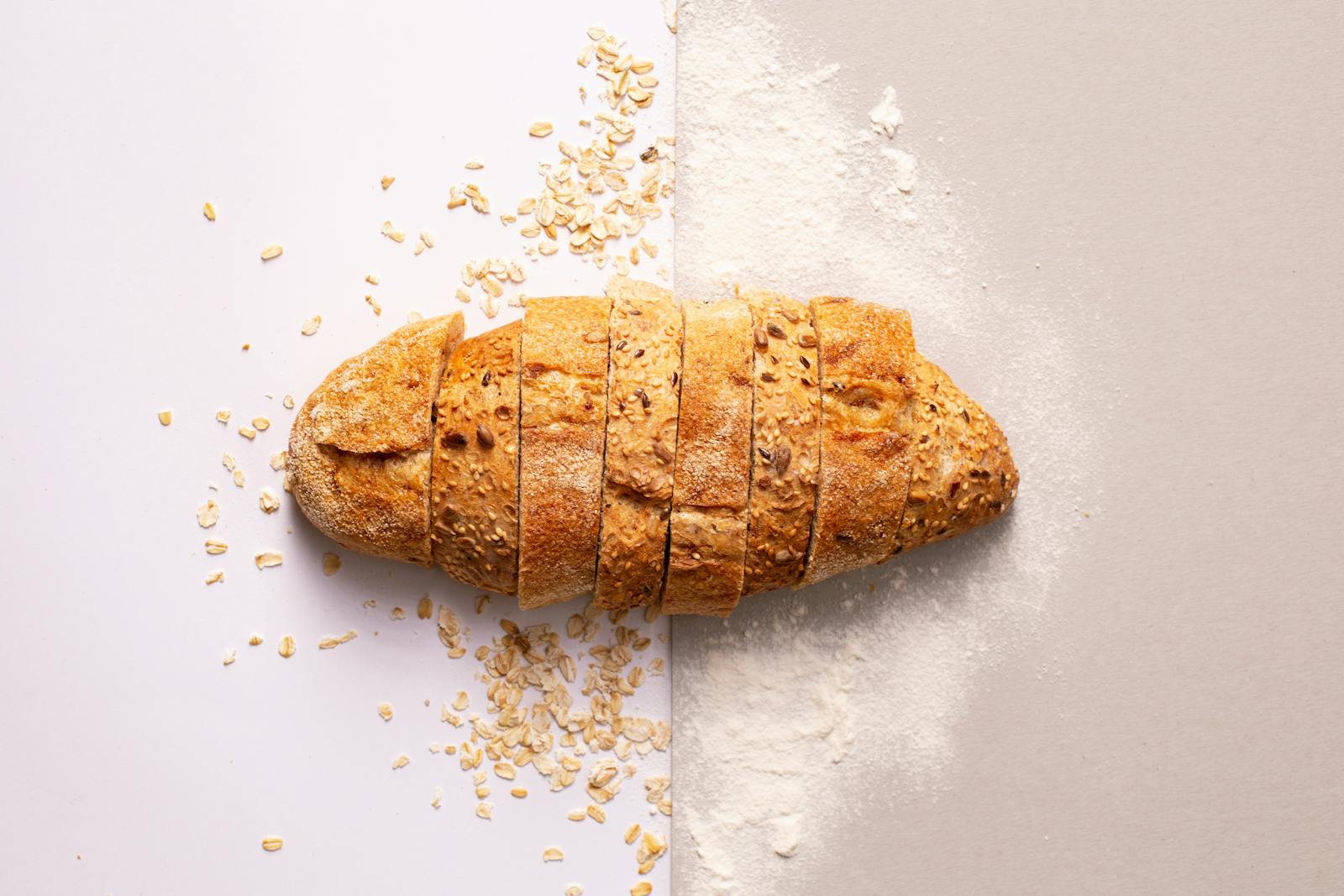
A whole grain keeps all three parts of the seed: the bran, the germ, and the starchy center. The bran and germ hold most of the fiber. Brown rice and whole grain bread keep them. White rice and white bread have them milled out. The values below come from the USDA FoodData Central nutrient database and the Harvard T.H. Chan School of Public Health fiber guide.
| Food | Serving | Fiber |
|---|---|---|
| Brown rice, cooked | 1 cup | ~3.5 g |
| White rice, cooked | 1 cup | ~0.6 g |
| Whole grain bread | 1 slice | ~2 g |
| White bread | 1 slice | ~0.8 g |
It is the same food group, yet the fiber is very different, because the word on the label decides how much of the bran actually survives.
What happens to the fiber in white rice?
It gets milled off before the grain ever reaches your kitchen. That is the short version.
You bought white rice thinking rice is rice. That was never a willpower thing. Milling strips the bran and the germ, and the fiber leaves with them. What is left is mostly starch and a little protein. So the pull toward a beige plate is not a character flaw. It is a food that had its fiber removed before you ever cooked it.
White bread works the same way. The whole wheat berry gets refined down to white flour, and the bran goes with it. The MedlinePlus fiber guide from the National Library of Medicine lays out how whole grains hold their fiber and refined grains lose it. Same grain, stripped down.
Is whole grain bread really better than white bread?
Yes, but read the label, because the words matter.
A slice of true whole grain bread has about 2 g of fiber. A slice of white bread has about 0.8 g. So two slices of whole grain instead of white adds roughly 2.4 g of fiber to your day, with no extra effort.
The catch is the label. "Wheat bread" and "multigrain" are not the same as whole grain. Look for "100% whole wheat" or "100% whole grain" as the first ingredient. If the first word is "enriched" flour, the bran was already taken out.
How much fiber do these carbs add to a woman's day?
Enough to matter, once you stack the swaps.
Say you need 28 g and you land near 15 g. That is a gap of about 13 g. Watch what the whole grain versions do:
- Brown rice instead of white at dinner: about +3 g.
- Two slices of whole grain bread instead of white: about +2.4 g.
- Together that is more than 5 g, from two swaps you barely notice.
No single carb closes the gap alone. Only about 5% of Americans meet the fiber target, per a fiber-intake review in the American Journal of Lifestyle Medicine. This is not a you problem. It is a food-supply built on refined grains. The full picture is in the fiber gap and why most women fall short, and the daily number is in how much fiber women need per day.
Where does Seya fit, honestly?
Seya makes one product. A fiber gummy.
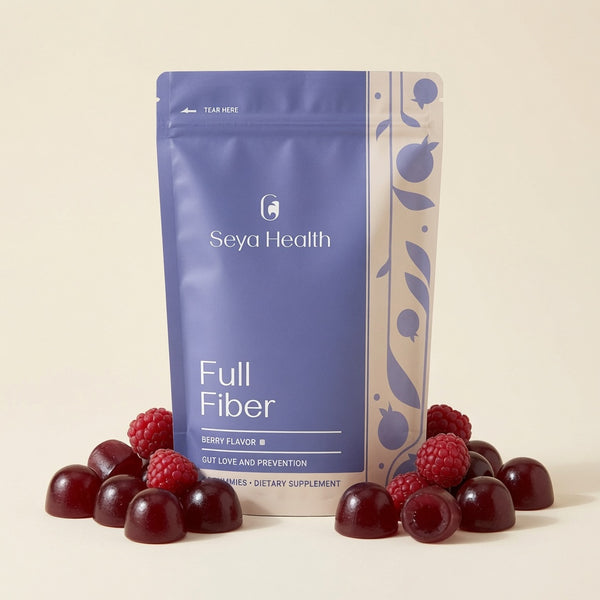
Three vegan gummies give you about 5 g of resistant tapioca fiber, a soluble, prebiotic-type fiber. That is real fiber toward your 28 g day, and it is honest to grade its evidence a C, since 5 g is about half the 10 g dose most studies leaned on. So we make one plain claim. It supports regularity.
It does not replace brown rice, whole grain bread, beans, or greens. It is not a full day of fiber on its own. It is one more nudge toward a target most women miss. If you want the food-first version, we keep a full list in high fiber foods for women.
This is education, not medical advice. Talk to your clinician before adding a supplement, especially if you have a gut condition or take daily medication.
These statements have not been evaluated by the Food and Drug Administration. This product is not intended to diagnose, treat, cure, or prevent any disease.
Frequently asked questions
Does brown rice have more fiber than white rice?
Yes, by a wide margin. One cup of cooked brown rice has about 3.5 g of fiber, while the same cup of white rice has about 0.6 g, roughly 6 times less. Brown rice keeps the bran and germ of the grain, where most of the fiber sits. White rice has them milled off, leaving mostly starch. Both are carbs, but only brown rice makes a real dent in your 28 g daily fiber target.
Is whole grain bread higher in fiber than white bread?
Yes. A slice of true whole grain bread has about 2 g of fiber, versus about 0.8 g in a slice of white bread. The difference is the bran and germ, which whole grain keeps and refined white flour loses. Watch the label, though: "wheat" or "multigrain" is not the same as whole grain. Look for "100% whole wheat" or "100% whole grain" as the first ingredient, not "enriched" flour.
How much fiber is in a serving of rice or bread?
Roughly: 1 cup of cooked brown rice has about 3.5 g of fiber, 1 cup of white rice about 0.6 g, 1 slice of whole grain bread about 2 g, and 1 slice of white bread about 0.8 g. These are round numbers from USDA nutrient data and can shift by brand and portion. The pattern holds every time: the whole grain version carries several times more fiber than the refined one.
Can carbs alone close the fiber gap for women?
Usually not on their own, but they help a lot. Most women get about 15 g of fiber a day against a 28 g target, a gap of about 13 g. Swapping white rice for brown and white bread for whole grain can add more than 5 g without much effort. Beans, lentils, fruit, and vegetables carry the rest. Only about 5% of Americans hit the target, so stacking small swaps matters more than any single food.
Is white rice bad for you?
No, white rice is not bad, it is just low in fiber, with about 0.6 g a cup versus about 3.5 g in brown. If you like white rice, you can keep it and get your fiber elsewhere, from beans, whole grain bread, vegetables, and fruit. The goal is not to ban a food. It is to close the gap between the 15 g most women eat and the 28 g Daily Value.
Seya Full Fiber
Your gut bacteria run on fiber. Seya Full Fiber delivers 6 grams from three fibers in one to feed the beneficial bacteria in your gut and support short-chain fatty acid production. Plant based, no gelatin, no sugar alcohols.
Shop Full FiberKeep reading
fiber
Can a Multivitamin Replace Vegetables? What Supplements Can't Do for Your Gut

constipation
The Best Way to Beat Constipation in Your 30s (and Where Fiber Gummies Fit)
fiber
The Gut-Skin Axis: Does Your Gut Health Affect Your Skin?
The gut-skin axis, explained: how your gut bacteria and blood sugar affect your skin, w...