
Home/ The Journal/ daily fiber
daily fiber
High-Fiber Foods for Women: The Best Sources to Hit Your Daily Target

Short version: The best high fiber foods for women are mostly beans, seeds, and fruit you eat with the skin on. The gap between the top of that list and the bottom is enormous, and almost nobody is told the numbers. Chia seeds carry 34.4 grams of fiber per 100 grams. A raw pear carries 3.1.
- Chia seeds are the densest common source, at 34.4 grams of fiber per 100 grams, per USDA FoodData Central.
- Cooked black beans (8.7 g), split peas (8.3 g), and lentils (7.9 g) per 100 grams are the everyday workhorses.
- The recommended intake is 25 grams a day for women aged 19 to 50. Average US intake sits around 16 grams.
- More than 90% of US women miss the recommendation, by roughly 50%.
- 100 g of black beans, 100 g of raspberries, and 30 g of chia comes to about 25.5 grams. That is a full day, in three items.
Last updated July 2026.
The best high fiber foods for women are not a mystery. The list is short. It is mostly beans, seeds, and fruit with the skin left on.
Here is the number nobody gives you. Chia seeds carry 34.4 grams of fiber per 100 grams, per USDA FoodData Central. A raw pear carries 3.1 grams per 100 grams. Both get filed under "healthy." One has about 11 times the fiber of the other.
You have probably tried to close this gap with salad.
Lettuce is mostly water. It was never going to work.
So if you have been eating what you thought were the right things and your gut still feels stuck, that is not a discipline problem. You were aiming at the wrong foods, with no numbers to aim by. Here are the numbers.
Which foods are highest in fiber?
Seeds first, then legumes, then fruit with skin. Leafy vegetables come last, which surprises most people.
Every figure below is grams of dietary fiber per 100 grams of the food as you would actually eat it, straight from USDA FoodData Central. Legumes are measured cooked, not dry.
| Food (as eaten) | Fiber per 100 g |
|---|---|
| Chia seeds, dried | 34.4 g |
| Black beans, cooked | 8.7 g |
| Split peas, cooked | 8.3 g |
| Lentils, cooked | 7.9 g |
| Avocado, raw | 6.8 g |
| Raspberries, raw | 6.5 g |
| Artichoke, cooked | 5.7 g |
| Sweet potato, baked in skin | 3.3 g |
| Pear, raw | 3.1 g |
Read that table twice. The distance from chia to pear is not a rounding error. One of those foods can close most of a day's gap in a single spoonful. The other barely dents it.
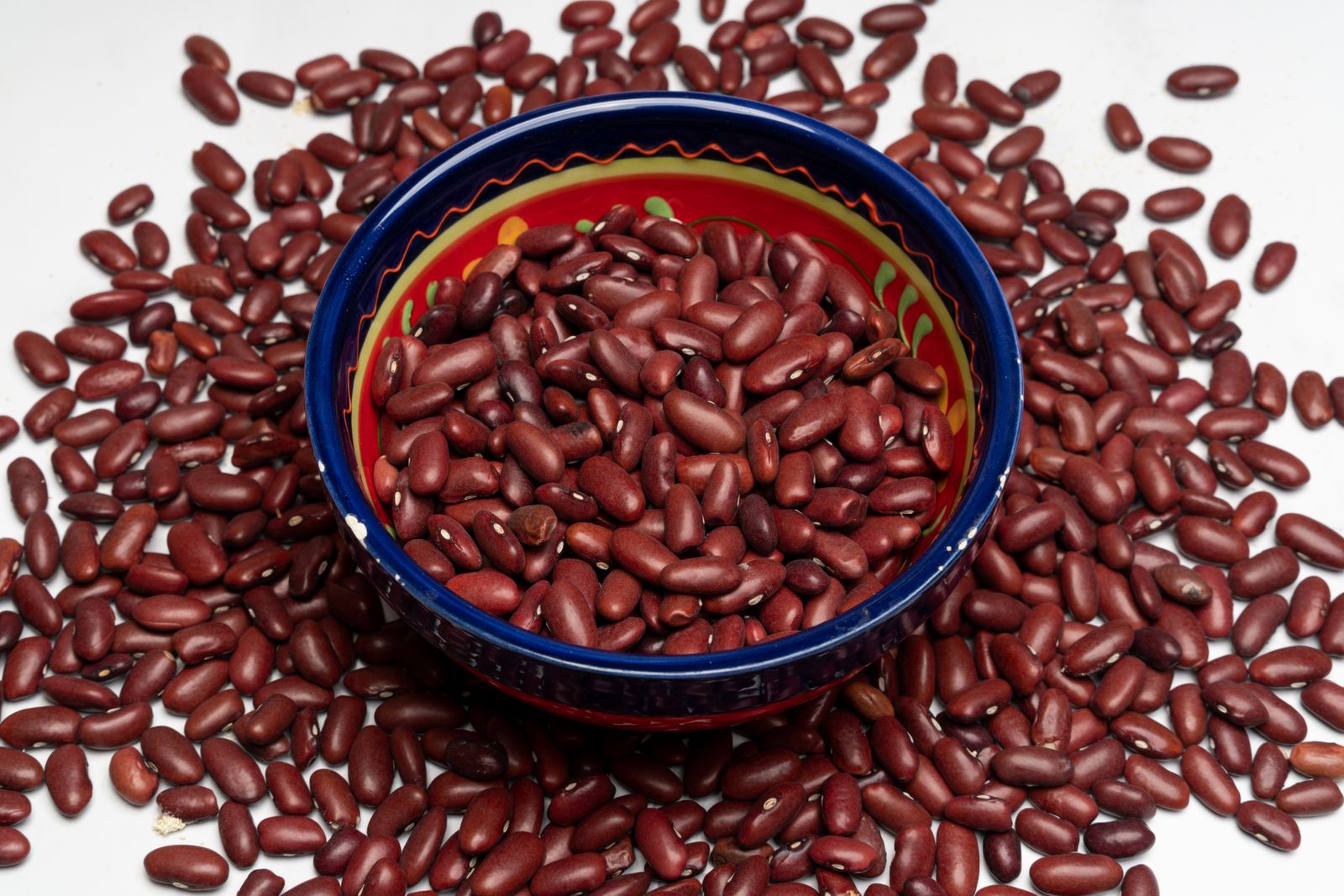
What are the best high fiber foods for women on a normal day?
Legumes. It is not close.
Chia wins per gram, but you are not eating 100 grams of chia. You are eating a spoonful. Beans and lentils are the ones you can eat a real portion of, which is what actually moves your daily total.
100 grams of cooked black beans is 8.7 grams of fiber. That is a side, not a challenge.
Split peas land at 8.3 grams. Lentils at 7.9. Any one of those, twice a day, puts about 16 grams on the board before you count anything else.
Fruit fills the rest, as long as you leave the skin on. Raspberries are the outlier at 6.5 grams per 100 grams, roughly double most other fruit.
How much fiber do women actually need?
25 grams a day, if you are 19 to 50.
MedlinePlus, from the National Library of Medicine, puts the recommended intake at "38 grams (g) a day for men and 25 g a day for women." The National Institute of Diabetes and Digestive and Kidney Diseases gives the broader adult range as 22 to 34 grams a day.
Average US intake is about 16 grams a day, per MedlinePlus.
So the gap is roughly 9 grams a day for most women. One serving of beans. That is the whole ask, and it is smaller than the internet makes it sound. We break the target down by age in how much fiber women need per day.
Where does fiber go in your body?
Through. That is the point of it.
Fiber is the part of a plant your body does not break down and absorb. It arrives in your colon more or less intact, and it does its work on the way.
There are two kinds, and they do opposite jobs. Per MedlinePlus, "soluble fiber attracts water and turns to gel during digestion. This slows digestion." That is the oats-and-beans type.
Insoluble fiber does the other thing. MedlinePlus again: it "appears to speed the passage of foods through the stomach and intestines and adds bulk to the stool." That is wheat bran and vegetable skins.
Most real foods carry both. You do not need to track which is which.
What does a 25-gram day actually look like?
Three items. Here is the math, using the USDA numbers above.
- 100 g cooked black beans: 8.7 g
- 100 g raspberries: 6.5 g
- 30 g chia seeds, stirred into anything: 10.3 g
Total: about 25.5 grams. Done, before you count the bread, the vegetables, or the coffee.
That is the version nobody shows you. The target sounds impossible because it gets presented as a lifestyle. It is three portions.
What low-calorie foods are high in fiber?
Raspberries and artichokes, mostly.
Raspberries carry 6.5 grams of fiber per 100 grams and are one of the lowest-calorie fruits per gram of fiber you can buy. Cooked artichoke sits at 5.7 grams per 100 grams and is almost entirely water and fiber.
Sweet potato baked in its skin comes in lower, at 3.3 grams per 100 grams, but the skin is doing most of that work. Peel it and you lose the best part.
Beans are denser in calories than any of those. They are also the reason your daily number gets hit, so this is a trade worth making.
How can you get more fiber at breakfast?
Add 30 grams of chia to something you already eat. That is 10.3 grams of fiber, roughly 40% of the daily target, before 9am.
It stirs into yogurt, oatmeal, or a smoothie without changing the taste. It gels in liquid, so give it a few minutes and drink water with it.
Raspberries on top add another 6.5 grams per 100 grams.
Front-loading matters more than most people think. A fiber deficit is easier to fix at 8am than at 10pm, when you have three hours of eating left and 20 grams to find.
How do you get enough fiber on a vegan diet?
Easily. Every food in the table above is a plant.
That is the quiet advantage here. Fiber only exists in plants, so a vegan day starts closer to the target than most. Legumes do the heavy lifting: black beans at 8.7 grams, split peas at 8.3, lentils at 7.9, all per 100 grams cooked.
The failure mode is not missing meat. It is a plant-based day built on refined grains and processed substitutes, which have had most of the fiber stripped out.
Whole plants, with skins, most days. That is the entire rule.
How do you add fiber without the gas?
Slowly, and with more water.
NIDDK is blunt about it: "Be sure to add fiber to your diet a little at a time so your body gets used to the change."
Going from 16 grams to 25 overnight will make you bloated for a week. Add a few grams at a time over two or three weeks instead, and drink more water while you do.
Gas in the first week is your gut bacteria adjusting to more to eat. It settles. If it does not, that is worth a conversation with your doctor rather than quitting fiber. We go deeper on why the shortfall persists in the fiber gap.
Why do most women still fall short?
Because the deficit is structural, not personal.
"In the U.S. more than 90% of women and 97% of men do not meet the recommended intakes for dietary fiber." — Thompson, Nutrients 2021 (PMID 34836289)
That same paper puts the size of the shortfall at roughly 50%. Half of what you need, on an average day, for nine women out of ten.
When 90% of a population misses a target, the target is not being missed by 90% of people through personal failure. The food supply changed. The number did not.
What can Seya honestly promise here?
Regularity. Nothing past it.
Seya's gummies deliver about 5 grams of resistant tapioca fiber a day. That is a meaningful piece of a 9-gram daily gap, and it is not a replacement for the beans. At 5 grams the evidence for supporting regularity earns a grade of C, so regularity is the claim we make and the only one.
3 vegan gummies. Ingredients you can name. For the ingredient itself, read what resistant tapioca starch is.
Talk to your doctor before adding fiber if you are pregnant, have inflammatory bowel disease, have had bowel surgery, or take medication that affects digestion.
These statements have not been evaluated by the Food and Drug Administration. This product is not intended to diagnose, treat, cure, or prevent any disease.
Related reading: our daily fiber gummy for women, how fullness actually works, and more from the Seya journal.
Frequently asked questions
Which foods are highest in fiber?
Chia seeds top the list of common foods, at 34.4 grams of dietary fiber per 100 grams according to USDA FoodData Central. Cooked legumes come next and are the realistic everyday sources: black beans at 8.7 grams, split peas at 8.3 grams, and lentils at 7.9 grams per 100 grams.
Raw avocado provides 6.8 grams and raspberries 6.5 grams per 100 grams. Cooked artichoke gives 5.7 grams. Lower down, sweet potato baked in its skin gives 3.3 grams and a raw pear 3.1 grams per 100 grams. Leafy salad vegetables are near the bottom because they are mostly water.
What low-calorie foods are high in fiber?
Raspberries and artichokes give the most fiber for the fewest calories. Raspberries carry 6.5 grams of fiber per 100 grams and artichokes 5.7 grams, and both are largely water by weight.
Sweet potato baked in its skin contributes 3.3 grams per 100 grams, with much of that fiber in the skin, so peeling removes it. Legumes such as black beans at 8.7 grams per 100 grams carry more calories, but they are the foods that realistically close a daily gap of about 9 grams, so most women get further by including them than by avoiding them.
How can I get more fiber at breakfast?
Stir 30 grams of chia seeds into yogurt, oatmeal, or a smoothie. At 34.4 grams of fiber per 100 grams, that single addition supplies about 10.3 grams, which is roughly 40% of the 25-gram daily recommendation for women aged 19 to 50.
Adding 100 grams of raspberries brings another 6.5 grams. Chia gels in liquid, so let it sit for a few minutes and drink water alongside it. Front-loading fiber early in the day is easier than trying to make up a 20-gram shortfall at night.
How do I get enough fiber on a vegan diet?
Build the day on whole legumes, seeds, and fruit with the skin on. Fiber occurs only in plants, so a vegan diet starts with an advantage: cooked black beans give 8.7 grams per 100 grams, split peas 8.3 grams, and lentils 7.9 grams.
The common mistake is building a plant-based day around refined grains and processed meat substitutes, which have had most of their fiber removed. The recommended intake is 25 grams a day for women aged 19 to 50, and average US intake is about 16 grams, so the target is reachable with two servings of legumes plus fruit.
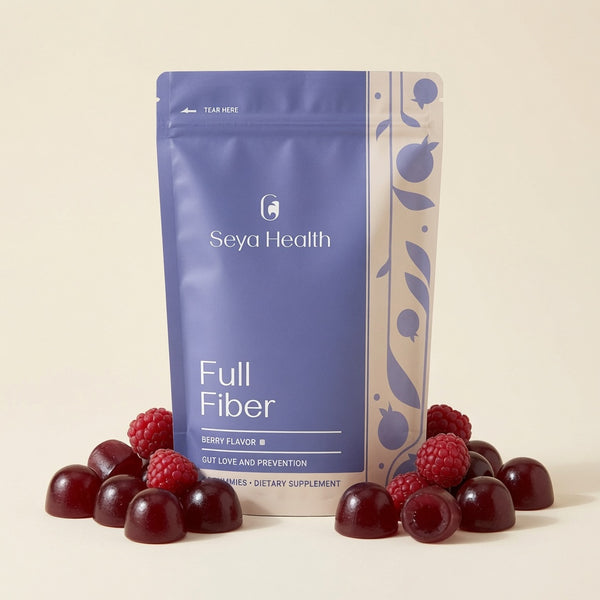
Seya Full Fiber
Your gut bacteria run on fiber. Seya Full Fiber delivers 6 grams from three fibers in one to feed the beneficial bacteria in your gut and support short-chain fatty acid production. Plant based, no gelatin, no sugar alcohols.
Shop Full FiberKeep reading
fiber
Can a Multivitamin Replace Vegetables? What Supplements Can't Do for Your Gut

constipation
The Best Way to Beat Constipation in Your 30s (and Where Fiber Gummies Fit)
fiber
The Gut-Skin Axis: Does Your Gut Health Affect Your Skin?
The gut-skin axis, explained: how your gut bacteria and blood sugar affect your skin, w...