
Home/ The Journal/ creatine
creatine
Creatine and medications: GLP-1s, antidepressants, ADHD meds, and more

Short version: For creatine and medications, the honest answer is that no known drug clashes with it in a serious way, but almost nothing has been tested. A 2026 review searched 270 records and found zero human studies of creatine taken with a prescription drug. Drug databases list only minor or theoretical risks, mostly tied to the kidneys.
- GLP-1s (Ozempic, Wegovy, Zepbound): no known clash. Drink enough water if nausea or vomiting hit.
- Antidepressants (Zoloft, Lexapro): one trial in women paired creatine with an SSRI and saw faster mood gains. Ask first if you have bipolar disorder.
- ADHD meds (Adderall, Ritalin): never studied together. Watch for caffeine in "creatine" pre-workouts.
- Blood pressure pills, diuretics, daily ibuprofen: these can strain the kidneys. Get your doctor's OK first.
Last updated November 2026.
You take a pill every morning. Maybe two. Now you want to add creatine, and the label says "ask your doctor." So you search it, and the internet gives you a shrug.
Here is what the research actually shows, drug by drug. We will be clear about what is known, what is a guess, and when a call to your doctor or pharmacist is the right move.
Seya does not sell a creatine product yet, so no brand paid for this view.
Creatine and medications: are there any known interactions?
No serious interaction has been found. But that is mostly because no one has looked.
In 2026, a researcher searched three medical databases for human studies of creatine taken with prescription drugs. Of 132 unique papers, not one met the bar. The review also checked seven drug-interaction tools, including UpToDate, Drugs.com, DrugBank, and the FDA's resource. None listed a creatine interaction of moderate or high severity. See Ostojic (Curr Ther Res Clin Exp, 2026).
The signals that do exist are rated minor or theoretical. Most come from one fact: your kidneys clear both creatine waste and many drugs. The author also warns that "no evidence" is not the same as "safe," especially for people with kidney problems.
So the fair summary is this. Creatine looks low-risk with most medicines, and the gaps are real.
Is creatine safe with a GLP-1 like Ozempic or Zepbound?
No interaction is known, and creatine does not change how a GLP-1 works. No trial has tested the two together yet. See Ostojic and Galyean (Clin Nutr, 2026).
The reason people ask is muscle. In some GLP-1 studies, 40% to 60% of the weight lost was lean mass. Other studies found 15% or less. See Neeland et al. (Diabetes Obes Metab, 2024). We cover that side in creatine on a GLP-1.
The one real watch-out is water. The Wegovy label warns of kidney injury in people who got dehydrated from nausea, vomiting, or diarrhea. See the Wegovy prescribing label (DailyMed). If you are sick to your stomach, pause the creatine and focus on fluids. For timing with slow digestion, see taking creatine on a GLP-1.

Is creatine safe with antidepressants like Zoloft or Lexapro?
For SSRIs, it is the one pairing that has been tested on purpose, and it looked safe.
In an 8-week trial, 52 women with depression took escitalopram (Lexapro). Half also took 5 g of creatine a day. The creatine group improved more on a depression scale, starting as early as week 2. Side effects were no more common: 36 reported events with creatine vs 45 with placebo. See Lyoo et al. (Am J Psychiatry, 2012).
That is one small trial. It does not make creatine a depression fix, and it is no reason to change your dose or stop your medicine. Zoloft (sertraline) has not been tested with creatine, but it is in the same drug family.
What if you have bipolar disorder?
Talk to your psychiatrist before you start. This is the clearest caution in the research.
A 2026 review pooled 5 trials of creatine in mental health conditions. Creatine was mostly well tolerated. But 2 of 17 people taking it in the trials had hypomania or mania, a high-energy mood episode. See Jeryous Fares et al. (Can J Psychiatry, 2026).
The numbers are tiny. Still, if you have bipolar disorder or a past manic episode, creatine is a "check first" supplement, not a "just add it" one.
Is creatine safe with ADHD medication like Adderall?
No study has tested creatine with Adderall, Vyvanse, or Ritalin. The 2026 review found no human data for any drug pairing. See Ostojic (2026).
The bigger watch-out is what comes in the tub. Many pre-workout powders sell creatine mixed with caffeine. Stimulant meds and caffeine both rev you up, so read the label and ask your prescriber how much caffeine is OK for you.
Caffeine may also cancel out the creatine. In one small trial, creatine raised muscle power by 10% to 23%. Adding a large daily dose of caffeine wiped out that gain. See Vandenberghe et al. (J Appl Physiol, 1996). Plain creatine monohydrate skips the problem.
Is creatine safe with blood pressure meds?
Probably, for most people. But this is the group where your doctor should weigh in.
Many blood pressure drugs work through the kidneys. Water pills (diuretics) and ACE inhibitors like lisinopril change how your kidneys handle fluid. Daily NSAID pain relievers, like ibuprofen or naproxen, can strain them too. The theoretical creatine signals in drug databases all point to this kidney pathway. See Ostojic (2026).
In healthy people, creatine has not harmed the kidneys at normal doses. The rare case reports of trouble involved people who already had kidney disease or took other medicines. See Antonio et al. (JISSN, 2021). If you have high blood pressure, diabetes, or kidney disease, ask for a kidney check before you start.
Will creatine mess up my lab results?
It can nudge one number. That matters if you take a medicine your doctor doses by kidney labs.
Creatine breaks down into creatinine, the waste product labs use to estimate kidney function. Across 19 trials, creatine raised blood creatinine by about 0.13 mg/dL. The kidney filtering rate itself did not change. See Tsiaras et al. (2026).
That small bump can look like a kidney problem on paper. Some drugs are dosed by those labs, so tell your doctor you take creatine before any blood work. Our creatine vs creatinine guide explains how to read the result.
Is creatine safe on Accutane?
No study has tested creatine with isotretinoin (Accutane). Ask your dermatologist before you add it.
The reason is a muscle lab, not a known clash. Isotretinoin can raise creatine kinase, an enzyme that leaks from stressed muscle. Hard exercise can raise it too. A review called the link between the drug, exercise, and high readings "tenuous," but doctors do watch it. See Marson and Baldwin (Int J Dermatol, 2020).
Creatine often goes with a new, harder workout plan. That is the part to plan around with your doctor.
What about metformin, insulin, and other daily meds?
Creatine has been studied with exercise in adults with type 2 diabetes. In one 12-week trial of 25 adults, side effects were similar to placebo. See Gualano et al. (Med Sci Sports Exerc, 2011). If you take insulin or a drug that lowers blood sugar, see our creatine and blood sugar guide first.
For most other daily meds, the picture is the same as above: no tested interaction, low theoretical risk. Healthy adults have taken up to 30 g a day for 5 years without good evidence of harm. See Kreider et al. (JISSN, 2017). The usual dose is far lower, at 3 to 5 g a day. See Antonio et al. (2021).
Taking a fiber supplement too? Fiber can slow how some pills absorb, so spacing matters there. See fiber and medication timing.
What to tell your doctor or pharmacist
A pharmacist can check your full list in five minutes, for free. Bring this:
- The product and dose. "Creatine monohydrate, 3 to 5 g a day," plus anything else in the scoop or gummy.
- Every medicine you take, including pain relievers you use most days.
- Your kidney history. Any past high creatinine, kidney disease, or diabetes.
- Your mood history, if you have bipolar disorder or a past manic episode.
- Your next blood test date, so they know creatine may bump your creatinine.
For the bigger safety picture, read is creatine safe for women and creatine side effects in women.
Where Seya fits, honestly
Seya sells one product today: a fiber gummy that supports regularity. Our creatine gummy is coming January 2027. It is not on sale yet, and we will not share its dose, price, or ingredients until the formula is final.
No supplement, ours included, should replace or change a medicine your doctor prescribed. This is education, not medical advice.
These statements have not been evaluated by the Food and Drug Administration. This product is not intended to diagnose, treat, cure, or prevent any disease.
Frequently asked questions
Is creatine safe with a GLP-1?
No interaction is known, though no trial has tested the pair. Stay well hydrated, and pause creatine if nausea or vomiting leave you dehydrated.
Is creatine safe to take with Zepbound?
Zepbound (tirzepatide) has no known interaction with creatine. The same advice applies as for other GLP-1 drugs: fluids first, and tell your doctor.
Is creatine safe with Zoloft?
Zoloft has not been tested with creatine. A similar SSRI, Lexapro, was paired with 5 g a day in an 8-week trial in women with no extra side effects.
Is creatine safe with Adderall?
No study has tested the pair. Choose plain creatine without caffeine, and ask your prescriber about any pre-workout product.
Is creatine safe with blood pressure meds?
Likely for most people, but diuretics and ACE inhibitors work through the kidneys. Get a doctor's OK and a kidney check first.
Is creatine safe on Accutane?
It has not been studied. Isotretinoin can raise a muscle enzyme called creatine kinase, so ask your dermatologist before starting creatine or a hard new workout.
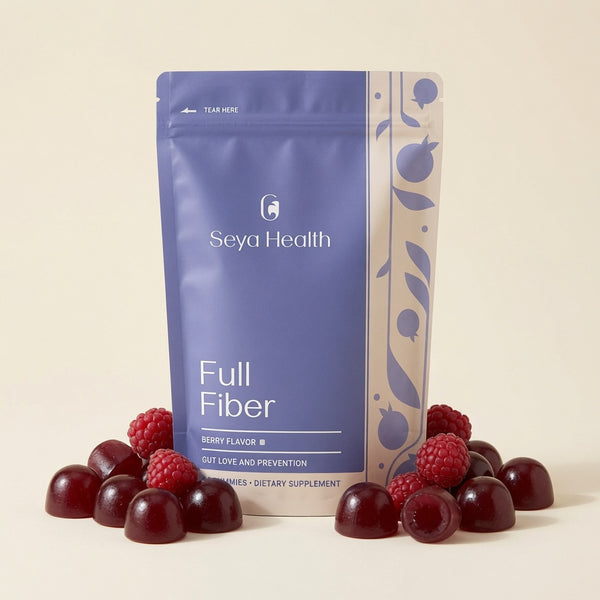
Seya Full Fiber
Most women fall short on fiber. Seya Full Fiber gives you 6 grams from three fibers in three small vegan gummies. Plant based, no gelatin, no sugar alcohols.
Shop Full FiberKeep reading

bone health
Best supplements for women over 40: what the evidence supports for heart, bones and muscles (and what's hype)

creatine
How long does creatine take to work? A realistic timeline for women

constipation