Home/ The Journal/ blood sugar
blood sugar
Creatine, blood sugar, and type 2 diabetes: what GLP-1 users should know

Short version: Creatine and blood sugar: creatine does not spike your glucose, and it may help lower it a little when you also exercise. In one small trial of 25 adults with type 2 diabetes, creatine plus exercise dropped HbA1c from 7.4% to 6.4% in 12 weeks, while the placebo group stayed flat. But a review of 9 studies found no clear effect on fasting blood sugar overall.
- Blood sugar: plain creatine has no sugar and no carbs.
- Type 2 diabetes: the promising data all pair creatine with exercise.
- Kidneys: diabetes is the top cause of kidney disease, so get a kidney check first.
- GLP-1 users: if you also take insulin or a sulfonylurea, ask your doctor before you add anything that may lower glucose.
Last updated October 2026.
You keep a close eye on your numbers. Maybe you check a meter every morning. Maybe you wear a sensor.
So when a friend says creatine helped her keep muscle on Ozempic, your first thought is fair: what will it do to my blood sugar?
Here is what the research shows, where it falls short, and what to ask before you try it.
Creatine and blood sugar: does it raise your glucose?
Not in a way that should worry most people. Creatine monohydrate powder has no sugar and no carbs, so it will not spike your glucose the way a snack does.
If anything, the effect points the other way. Several small trials found that creatine helped the body clear sugar from the blood after a meal. The catch: it mostly worked when people also exercised.
Your muscles soak up most of the sugar from a meal. Creatine seems to help muscle pull in more of it, through a sugar "door" called GLUT-4. Exercise opens that same door, which may be why the two work better together.
What did the type 2 diabetes trial find?
The best study so far is a 2011 randomized, placebo-controlled trial. See Gualano et al. (Med Sci Sports Exerc, 2011).
Here is how it worked:
- Who: 25 adults with type 2 diabetes.
- What: 5 g of creatine a day, or a placebo, for 12 weeks.
- Plus: everyone joined the same exercise program.
The results were striking for such a short study:
| Group | HbA1c at start | HbA1c at 12 weeks |
|---|---|---|
| Creatine + exercise | 7.4% | 6.4% |
| Placebo + exercise | 7.5% | 7.6% |
HbA1c is your average blood sugar over about 3 months. A drop of 1 point is a lot. The creatine group also had lower glucose at the start, at 30 minutes, and at 60 minutes of a meal test.
Side effects were the same in both groups. Insulin levels and insulin sensitivity did not differ.
Still, keep it in proportion. Only 25 people finished, and it ran for just 12 weeks. One trial is a lead, not a verdict.

Why does exercise seem to matter so much?
Look at the studies side by side and a pattern shows up.
- With training: 22 healthy, inactive men took about 10 g of creatine a day for 3 months while they did aerobic exercise. Their glucose curve after a sugar drink came down more than with placebo. See Gualano et al. (Amino Acids, 2008).
- Without training: untrained men took creatine for about a month, with no new exercise. Their glucose tolerance did not change at all. See Newman et al. (Med Sci Sports Exerc, 2003).
- Back to training: in people retraining a leg after a cast, creatine raised GLUT-4 in the muscle by 24%. It did nothing in the leg that was not trained. See Derave et al. (J Appl Physiol, 2003).
So creatine is not a stand-in for moving your body. Think of it as a possible boost to what exercise already does.
What do the bigger reviews say?
They are more cautious, and that matters.
A 2022 meta-analysis pooled 9 studies. Five showed a benefit on at least one blood sugar measure. But overall, creatine had no significant effect on fasting blood sugar or insulin resistance. The authors said there is not enough evidence yet to say creatine helps diabetes. See Delpino and Figueiredo (Clin Nutr ESPEN, 2022).
An earlier review added a key warning. Most trials used fairly fit people with decent control. The results may not apply to people who are older, less active, have poorer control, or use insulin. See Pinto et al. (Amino Acids, 2016).
The honest summary: creatine looks safe for blood sugar, and it may help a little alongside exercise. It is not a diabetes medicine, and it should never replace one.
Is creatine safe with type 2 diabetes?
For many adults with well-managed type 2 diabetes, creatine is likely low risk. But your kidneys are the big question.
The NIH says diabetes is the leading cause of kidney disease. About 1 out of 3 adults with diabetes has kidney disease. See the NIDDK page on diabetic kidney disease.
In healthy people, a major review found no compelling evidence of harm at up to 30 g a day for 5 years. That same review notes that some experts advise people with kidney disease to talk to a doctor first. See Kreider et al. (JISSN, 2017).
There is also a lab quirk. Creatine can raise creatinine, a blood marker doctors use to judge kidney function. A 2021 expert review says these rises are unlikely to mean real kidney damage, but doctors should read the test with care. See Antonio et al. (JISSN, 2021).
With diabetes, you likely get kidney labs often. So tell your care team you take creatine, every time. Our guide on what to ask your doctor about creatine walks through that talk.
Can you take creatine with a GLP-1 medication?
We found no reported interaction between creatine and semaglutide or tirzepatide. But no trial has tested the two together either, so nobody can promise it is fine for you.
The real issue is the rest of your medicine list. The Ozempic label warns that people who take it with insulin or a sulfonylurea, such as glipizide, have a higher risk of low blood sugar, including severe lows. See the Ozempic prescribing information on DailyMed.
Creatine has not been tested in people on insulin or sulfonylureas. If it nudges glucose down even a bit, that could stack on top. So if you take either one, get your doctor's OK first and check your numbers more often for the first few weeks.
Why do GLP-1 users ask about creatine at all? Muscle. Some of the weight you lose on a GLP-1 can be lean mass. Our post on creatine on a GLP-1 covers that side. For how these medicines lower glucose, see how GLP-1 works.
Check the label on creatine gummies
Plain powder has zero sugar. Gummies are a different story. Many use sugar or syrup to hold their shape and taste good.
If you watch your glucose, flip the jar over before you buy:
- Total sugars and added sugars per serving, in grams.
- Serving size. Some brands need several gummies to reach a full dose, so the sugar adds up.
- Sugar alcohols, which can upset your stomach, a real concern if a GLP-1 already makes you queasy.
- Creatine per serving in grams. The 2021 expert review recommends 3 to 5 g a day.
Questions to ask your doctor
- Are my kidney numbers normal enough for creatine?
- I take insulin or a sulfonylurea. Should I check my glucose more often if I start?
- Should the lab know I take creatine before my next creatinine test?
- Is 3 to 5 g a day a sensible dose for me?
- Would a strength program help my blood sugar more than a supplement would?
Fiber is another tool with strong data on blood sugar. See our guide to fiber and blood sugar after 40.
Where Seya fits, honestly
Right now, the only Seya product you can buy is our fiber gummy, which supports regularity.
A Seya creatine gummy is coming January 2027. Until it launches, we will not share its dose, price, or ingredients.
New to creatine? Start with what creatine does for women. This page is education, not medical advice. Never change a diabetes medicine without your doctor.
These statements have not been evaluated by the Food and Drug Administration. This product is not intended to diagnose, treat, cure, or prevent any disease.
Frequently asked questions
Does creatine affect blood sugar?
Creatine does not raise blood sugar. Plain creatine has no sugar or carbs. Small trials suggest it may help lower glucose after meals when paired with exercise, but a 9-study review found no clear effect on fasting blood sugar.
Is creatine safe with type 2 diabetes?
It is likely low risk for many adults with well-managed type 2 diabetes. A 12-week trial at 5 g a day found no extra side effects. Diabetes is the top cause of kidney disease, so check your kidney function with your doctor first.
Can you take creatine with a GLP-1 medication?
No interaction is known, but no trial has tested the pair. If you also take insulin or a sulfonylurea, ask your doctor first, since GLP-1 labels already warn about low blood sugar with those drugs.
Does creatine lower A1C?
In one small trial, creatine plus exercise lowered HbA1c from 7.4% to 6.4% over 12 weeks, while placebo stayed near 7.5%. Larger studies are needed before anyone can count on that result.
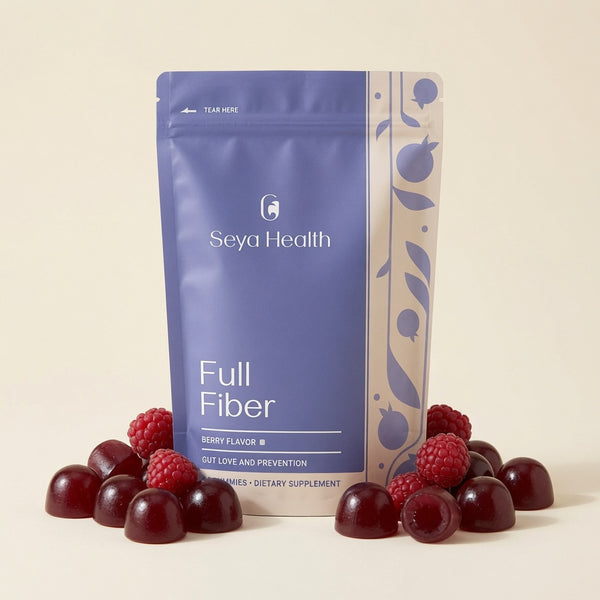
Seya Full Fiber
Most women fall short on fiber. Seya Full Fiber gives you 6 grams from three fibers in three small vegan gummies. Plant based, no gelatin, no sugar alcohols.
Shop Full Fiber