
Home/ The Journal/ blood sugar
blood sugar
Fiber and Blood Sugar: How Women Over 40 Can Flatten the Glucose Curve

Short version: Fiber and blood sugar are linked by one mechanism. Fiber slows how fast sugar from a meal reaches your blood, so the post-meal spike is smaller. After 40, as estrogen drops, that spike gets harder to control, so the fiber lever counts for more.
- Most women eat about 15 grams of fiber a day. The target is closer to 25.
- In trials, viscous soluble fiber cut fasting blood glucose by about 0.93 mmol/L, roughly 17 mg/dL.
- A fasting reading below 100 mg/dL is normal. From 100 to 125 mg/dL is prediabetes.
Last updated July 2026.
Fiber and blood sugar are tied together by one plain mechanism. Fiber slows how fast sugar from a meal reaches your bloodstream. That flattens the spike after you eat.
Here is the number that makes it real. In pooled trials, viscous soluble fiber dropped fasting blood glucose by about 0.93 mmol/L, roughly 17 mg/dL, in people with type 2 diabetes.
And after 40, this matters more, not less. Your blood sugar gets harder to steady in your forties, for reasons that have nothing to do with how hard you are trying.
That afternoon slump an hour after lunch? Often it is not a willpower gap. It is a glucose curve that rose fast and fell fast. Fiber is one of the few daily levers that softens it.
How does fiber and blood sugar actually connect?
Soluble fiber turns to a gel in your gut. That gel slows digestion, so the sugar in your meal trickles into your blood instead of flooding it.
Smaller flood, smaller spike. Less insulin needed to clear it.
Over time the pattern shows up in the numbers. A meta-analysis of randomized trials found viscous soluble fiber lowered HbA1c by about 0.47% and fasting glucose by about 0.93 mmol/L, at a dose of roughly 8 to 10 grams a day. You can read it in the viscous soluble fiber meta-analysis in Frontiers in Nutrition (2023).
Fiber also lowers long-term risk. In a dose-response analysis of prospective studies, each step up toward 25 grams of total fiber a day tracked with about 11% lower odds of type 2 diabetes, a relative risk of 0.89. That comes from the dietary fiber and diabetes dose-response analysis (Yao et al., 2014).
Most women never get there. The average intake sits near 15 grams a day against a target near 25. See why the fiber gap in women exists for the full picture.
What happens to blood sugar control after 40?
Estrogen drops, and estrogen is part of how your body handles glucose.
Before menopause, women tend to clear glucose more easily than men the same age. That edge fades as estrogen falls. Cells get more resistant to insulin, so the same meal leaves a bigger mark.
"The reduction of estrogen in postmenopausal women accelerates the development of insulin resistance." — The Role of Estrogen in Insulin Resistance, The American Journal of Pathology (2021)
So a woman at 45 can eat the exact meal she ate at 30 and see a higher spike. Nothing about her effort changed. The hormone math did.
This is the reframe worth keeping. A harder glucose curve after 40 is a signal, not a character flaw. And fiber is one lever you can actually pull on it. If bloat and blood sugar both climb around your cycle, the same slowdown is at work in luteal phase bloating.
Does fiber blunt an insulin spike?
Yes, indirectly. Fiber does not touch insulin itself. It slows the glucose that triggers insulin.
When sugar enters your blood slowly, your pancreas releases insulin in a gentler wave instead of a hard surge. Smaller glucose spike, smaller insulin response. Over months, that eases the load on the whole system.
The catch is dose. The trials that moved the numbers used about 8 to 10 grams of viscous fiber a day, on top of a real diet. That is well above what a single food usually delivers, which is why the daily habit matters more than any one "superfood" meal.
Women on GLP-1 medications feel this overlap directly, since both fiber and the drug slow digestion. We cover that in fiber and GLP-1 support for women.
Which high-fiber foods steady blood sugar best?
The ones with the most soluble, viscous fiber per serving. Beans, oats, lentils, chia, and berries lead the pack.
| Food | Serving | Fiber |
|---|---|---|
| Chia seeds | 2 tbsp | ~10 g |
| Lentils, cooked | 1/2 cup | ~7.8 g |
| Black beans, cooked | 1/2 cup | ~7.5 g |
| Raspberries | 1 cup | ~8 g |
| Avocado | 1/2 fruit | ~5 g |
| Rolled oats, dry | 1/2 cup | ~4 g |
Oats earn their spot through beta-glucan, a viscous fiber that forms the gel most linked to a flatter curve. Pair any of these with protein, and the meal lands even slower. The NIH MedlinePlus fiber guide lists steadier blood sugar among fiber's core effects. For the exact daily number for your age, see how much fiber women need per day.

Can fiber offset too much added sugar?
It softens the hit. It does not cancel it.
Fiber eaten in the same meal slows how fast that added sugar reaches your blood, so the spike is lower and slower. That is real. But a fiber gummy is not a permission slip for a soda. The added sugar still counts, and the smarter move is less of it plus more fiber, not fiber as a coverall.
Think of fiber as the brake, not the eraser. The Dietary Guidelines for Americans put added sugar under 10% of daily calories and name fiber a nutrient most people underconsume. Both levers pull the same direction.
Seya's job here is to stay specific, not loud. The evidence that fiber supports healthy blood sugar and regularity earns a grade of C at about 5 grams, roughly half the dose used in the bigger trials, so that is exactly what we claim and nothing more. 3 vegan gummies with resistant tapioca fiber, ingredients you can name, are an honest daily fiber habit. They are not a treatment for diabetes, and they do not replace a whole-food diet or your doctor.
These statements have not been evaluated by the Food and Drug Administration. This product is not intended to diagnose, treat, cure, or prevent any disease.
Frequently asked questions
What role does fiber play in blood sugar and diabetes?
Fiber slows how fast sugar from a meal reaches your blood, so the post-meal spike is smaller and insulin has less work to do. In randomized trials, viscous soluble fiber lowered HbA1c by about 0.47% and fasting glucose by about 0.93 mmol/L. Higher fiber intake also tracks with roughly 11% lower odds of type 2 diabetes at 25 grams a day.
How does fiber stop an insulin spike?
Fiber does not act on insulin directly. Soluble fiber forms a gel that slows digestion, so glucose enters your blood gradually instead of all at once. A gentler glucose rise means your pancreas releases insulin in a smaller wave rather than a hard surge.
Which high-fiber foods help control blood sugar best?
Foods rich in soluble, viscous fiber work best: oats (beta-glucan), beans, lentils, chia seeds, and berries. For example, 1/2 cup of cooked lentils has about 7.8 grams of fiber and 2 tablespoons of chia about 10 grams. Pairing them with protein slows the meal further.
What are the best foods for managing blood sugar after 40?
The same high-fiber, protein-paired meals, eaten consistently. After 40, falling estrogen raises insulin resistance, so steady habits matter more than any single food. Build meals around beans, oats, lentils, non-starchy vegetables, and berries, and keep added sugar under about 10% of daily calories.
Does fiber counteract the effects of too much sugar?
It softens the effect but does not erase it. Fiber eaten in the same meal slows how fast added sugar reaches your blood, lowering the spike. The added sugar still counts, so the better approach is less added sugar plus more fiber, not fiber as a free pass.
What is a normal blood sugar range at age 40?
By American Diabetes Association criteria, a normal fasting blood glucose is below 100 mg/dL at any adult age, including 40. A fasting reading of 100 to 125 mg/dL is prediabetes, and 126 mg/dL or higher on two tests indicates diabetes. Confirm your own numbers with your doctor.
Related reading: our daily fiber gummy for women, the fiber gap in women, and more from the Seya journal.
Related reading
Seya Full Fiber
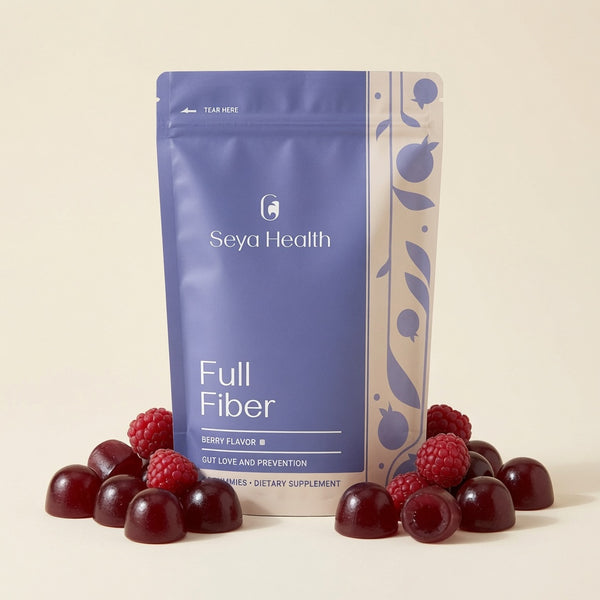
Getting enough fiber from food every day is hard. Seya Full Fiber is 6 grams from three fibers in one, in three small gummies, so you have a reliable daily floor. Plant based, no gelatin, no sugar alcohols, 60 gummies per pouch.
Shop Full FiberKeep reading
Fiber
Can You Take Fiber With Your Medications? A Safety Guide
Yes, but timing matters. How to take fiber safely with medications, which drugs to watc...

fiber
Antidepressants and Your Gut: Digestion, Weight, and What Actually Helps
How antidepressants affect digestion and weight, why SSRIs and older drugs differ, what...
fiber
What Supplements Should You Take on a GLP-1?
On a GLP-1 like Ozempic or Wegovy? What supplements actually matter (protein, key nutri...