Home/ The Journal/ bloating
bloating
Creatine loading side effects: bloating, stomach upset and weight gain

Short version: Creatine loading side effects are mostly short and mild. Loading means about 20 g a day for 5 to 7 days. The common ones are an upset stomach and a quick gain of water weight. In one trial, a single 10 g dose caused diarrhea in 55.6% of athletes. Two 5 g doses cut that to 28.6%.
- Stomach: the dose size per serving matters more than the daily total.
- Weight: often 1 to 3 kg, mostly water, in the loading week.
- Kidneys: a blood test may show higher creatinine. That is not the same as kidney damage.
- Skip it: loading is optional. A small daily dose gets you to the same place in about 4 weeks.
Last updated October 2026.
You bought creatine. The label says to "load" it for a week first.
That means four scoops a day instead of one. And a quick search turns up stories of upset stomachs, a puffy feeling, and a jump on the scale.
So is loading the problem? Partly. Here is what happens to your body in that first week, and how to make it easier.
What is a creatine loading phase?
Loading is a short burst of high doses. The goal is to fill your muscles with creatine fast.
The International Society of Sports Nutrition describes the classic plan as 5 g four times a day, or about 0.3 g per kg of body weight, for 5 to 7 days. See Kreider et al. (JISSN, 2017).
After that, people drop to a daily dose of about 3 to 5 g.
That loading week is four times the usual amount. So it makes sense that most side effects show up then.
Creatine loading side effects: the list
| Side effect | How common | Main cause | What helps |
|---|---|---|---|
| Upset stomach, loose stools | Common with big single doses | 10 g or more at once | Split into 5 g servings |
| Bloated, full feeling | Common in the first week | Water moving into muscle, plus gut upset | Smaller doses, or skip loading |
| Weight gain | The most reported effect | Water held in muscle | Low daily dose instead of loading |
| Higher creatinine on a blood test | Likely during loading | More creatine breaking down | Tell your doctor before lab work |
| Tiredness | Not shown in trials | Unclear; often something else | Look at sleep, food, and your stomach |
The ISSN review says the "only consistently reported side effect" in the research is weight gain. Stomach trouble is real too, but it depends on how you split the dose.
Does the creatine loading phase cause bloating?
It can. Loading is the most likely time to feel bloated on creatine.
Two things are going on. Water follows creatine into your muscles, so you may feel heavier. And big servings can upset your gut.
A 2021 expert review puts it simply: holding extra water is the most common side effect, and it mostly happens in the first few days. See Antonio et al. (JISSN, 2021).
We break down the gut type versus the water type in our post on whether creatine causes bloating.
Does the creatine loading phase cause diarrhea?
It can, if you take a lot in one go. The best trial on this looked at serving size.
In a 28-day trial, 59 soccer players got creatine or a dummy pill. Some took their 10 g in one serving. Others split it into two 5 g servings. See Ostojic and Ahmetovic (Res Sports Med, 2008).
- 10 g at once: 55.6% had diarrhea.
- Two 5 g servings: 28.6% had diarrhea.
- Placebo: 35.0% had diarrhea.
The split group did no worse than placebo. This matters most during loading, when the daily total is 20 g.
The 2021 review gives the same advice for loaders. Keep each serving at 10 g or less, since bigger doses "may potentially lead to gastrointestinal distress."
A small newer study points the same way. In 24 adults, 20 g a day for two weeks led to more stomach complaints than 5 g a day. Some people still had them on 5 g. The gap was not big enough to be sure, and there was no placebo group. It is also a preprint, so other scientists have not reviewed it yet. See Wagner et al. (medRxiv, 2025).

Does the creatine loading phase make you gain weight?
Usually, yes, and it is mostly water.
Per the 2021 review, a 5 to 7 day load usually adds 1 to 3 kg on the scale. That is about 2 to 7 pounds. Most of it is water stored in muscle, not fat.
Women may see less. In a 2023 trial, 30 women took 5 g four times a day for 5 days. Their weight did not change more than on placebo, even though body water rose in the second half of their cycle. See Moore et al. (Nutrients, 2023).
For the week-by-week numbers, see our creatine weight gain timeline.
Does the creatine loading phase make you tired?
We found no trial that lists tiredness as a side effect of loading.
In the 2025 preprint, the most common complaints were bloating, water retention, puffiness, and stomach discomfort. Tiredness was not among them.
If you feel wiped out during a loading week, look at the usual suspects first. A rough stomach, poor sleep, eating less, or a hard training block can all do it.
Still tired after you stop loading? That is a reason to check in with your doctor, not to push through.
Does the creatine loading phase affect your kidneys?
In healthy people, short-term studies have not found kidney harm. But loading can change a lab number your doctor watches.
Here is why. Your body breaks creatine down into a waste product called creatinine. Doctors use blood creatinine to estimate how well your kidneys filter. More creatine in, more creatinine out.
A 2025 review pooled 21 studies. Blood creatinine rose a little with creatine, and the rise was clearest in studies of one week or less. That is loading territory. Kidney filtering rate did not differ from controls. See Naeini et al. (BMC Nephrol, 2025).
An older study tested loading head on. Five healthy men took 20 g a day for 5 days. Their filtering rate and urine protein stayed normal. See Poortmans et al. (Eur J Appl Physiol, 1997).
Two practical points:
- Blood work coming up? Tell your doctor you take creatine, especially if you just loaded.
- Kidney disease? Ask your doctor before any creatine. These studies were in healthy people.
Is the creatine loading phase bad for you?
For most healthy adults, the research does not show it is harmful. It is just harder on your stomach than a small daily dose.
The ISSN found no evidence that creatine raises rates of gut upset or kidney problems in controlled studies. Weight gain was the one effect that kept showing up.
A few honest limits:
- Most loading trials are short, small, and in young men.
- Women are underrepresented, though that is slowly changing.
- Check with a doctor first if you are pregnant, nursing, or take medicine for your kidneys or blood pressure.
Do you have to load at all?
No. Loading is a shortcut, not a requirement.
A classic 1996 study compared the two paths. Men taking 3 g daily for 4 weeks ended up with the same muscle creatine as men loading 20 g daily for 6 days. The slow path simply took longer. See Hultman et al. (J Appl Physiol, 1996).
The 2021 review says the same: "you do not have to 'load' creatine." Lower daily doses work over time.
So the trade is simple. Loading gets you there in about a week, with more chance of side effects. A daily dose gets you there in about a month, with fewer.
How to load creatine with fewer side effects
If you want to load anyway, these steps follow the research:
- Split the dose. Four 5 g servings, not one or two big ones.
- Spread them out. Space servings across the day, such as breakfast, lunch, a snack, and dinner.
- Take it with food. Many people find it sits better with a meal.
- Size it to you. The ISSN's 0.3 g per kg works out to under 20 g a day if you weigh less than about 66 kg (145 pounds).
- Keep it short. 5 to 7 days is the studied window. Then drop to 3 to 5 g a day.
- Check the label. Some sugar-free gummies and mixes use sugar alcohols that can upset your gut on their own.
- Drink water as usual. You do not need to force extra, but do not skimp.
Choosing a product? Our guide to creatine gummies vs powder vs capsules compares the forms side by side.
When to stop and call a doctor
Stop creatine and get care for severe belly pain, vomiting, blood in your stool, or swelling in your legs or face.
The same goes for peeing much less than normal, or dark urine. Those are not normal loading effects.
For the full picture on what is real and what is myth, read our guide to creatine side effects in women.
Where Seya fits, honestly
Right now, the only Seya product you can buy is our fiber gummy, which supports regularity.
A Seya creatine gummy is coming January 2027. Until it launches, we will not share its dose, price, or ingredients.
If you are still deciding whether creatine is for you, our overview of what creatine does for women is a good place to begin. This is education, not medical advice.
These statements have not been evaluated by the Food and Drug Administration. This product is not intended to diagnose, treat, cure, or prevent any disease.
Frequently asked questions
Does the creatine loading phase cause bloating?
It can. Loading is when bloating is most likely, from water moving into muscle and from large servings. Splitting doses or skipping loading usually helps.
Does the creatine loading phase cause diarrhea?
Big single doses can. In a soccer trial, one 10 g serving led to diarrhea in 55.6% of players. Two 5 g servings: 28.6%. Placebo: 35.0%.
Does the creatine loading phase make you gain weight?
Often, yes. A 5 to 7 day load typically adds 1 to 3 kg, mostly water in muscle. A 2023 trial in 30 women found no weight change versus placebo.
Does the creatine loading phase make you tired?
We found no trial that lists tiredness as a loading side effect. If you feel tired, look at sleep, food, and stomach upset first.
Does the creatine loading phase affect kidneys?
Short-term studies in healthy people found no kidney harm. Blood creatinine can rise, especially in the first week, so tell your doctor before lab work.
Is the creatine loading phase bad for you?
Not for most healthy adults, based on current research. It is optional, though. About 3 g a day fills your muscles just as well over about 4 weeks.
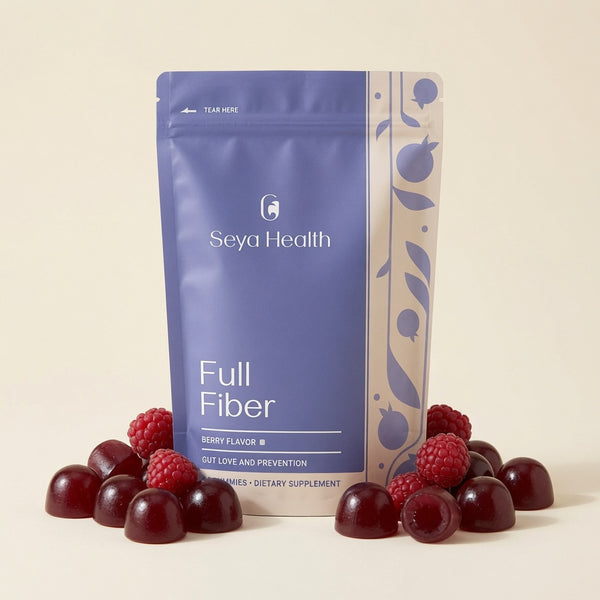
Seya Full Fiber
Most women fall short on fiber. Seya Full Fiber gives you 6 grams from three fibers in three small vegan gummies. Plant based, no gelatin, no sugar alcohols.
Shop Full Fiber