

Short version: The best fiber gummies for Hispanic women are the same ones that work for any woman. Fiber needs do not change by ethnicity. The health context does. In one large study of US Latinos, diabetes prevalence ran from 10.2% to 18.3% by background, so added sugar is worth a look.
- Latina is not one group. Diabetes prevalence ranged from 10.2% in South Americans to 18.3% in Mexicans.
- A larger US exposure tracked with fewer beans and whole grains in one study.
- Check the added sugar line on a gummy label, and keep eating beans.
Last updated October 2026.
Looking for the best fiber gummies for Hispanic women? Start here. Your fiber target is the same as any woman's. Your body is not different. The data around you is.
Population studies of US Latinos show higher rates of blood sugar problems and shifts in eating after moving to the US. Those are averages, not a verdict on you. This guide covers what the data says and what to check on a label. For the full roundup, read our guide to the best fiber gummies for women.
What are the best fiber gummies for Hispanic women?
The same ones that work for any woman. Fiber needs do not change by ethnicity. A Latina woman and a white woman of the same age have the same fiber target and the same basic gut. The hub post covers that target and how gummies fit in.
So why a guide for this group? Because health risks in the data are not spread evenly. Knowing them can change what you check on a label.
Why does blood sugar come up so often for Latinas?
Because the numbers are high, and they vary a lot. The CDC lists Hispanic or Latino people among the groups with higher risk of prediabetes and type 2 diabetes.
The HCHS/SOL study followed 16,415 Hispanic and Latino adults. Diabetes prevalence was 10.2% in South Americans and 13.4% in Cubans. It was 17.7% in Central Americans, 18.0% in Dominicans and Puerto Ricans, and 18.3% in Mexicans.
Two more findings matter. Prevalence rose with years living in the US. And only 58.7% of people with diabetes were aware they had it.
Many people simply were never tested. A fiber gummy is not a test, so ask your clinician about a blood sugar check. Our guide on whether fiber gummies help blood sugar explains what a gummy can and cannot do.
What happens to fiber intake after moving to the US?
In one large study, it shifted. Researchers looked at 14,172 Hispanic and Latino adults in HCHS/SOL. They built a diet pattern that grew stronger with more years in the US.
That pattern was driven by lower intakes of whole grains, beans, and fruits and higher intakes of refined grains. It was also linked to fewer fiber-using gut bacteria. It is an average across thousands of people, not a picture of your kitchen.

Do beans and lentils still matter if I take a gummy?
Yes. Beans and lentils are pulses. One HCHS/SOL analysis of 6,958 Latino adults aged 50 and older looked at them directly. The authors call pulses fiber-rich plant proteins common in Latino diets.
About 53.1% of the group had metabolic syndrome. People with a moderate or high daily pulse intake had a lower prevalence. Moderate meant half a cup to three-quarters of a cup. This is an association, not proof.
A second HCHS/SOL paper found that higher dietary fiber was linked to a healthier gut and blood profile tied to type 2 diabetes. Food first. A gummy fills gaps, it does not replace beans. For food ideas, see high-fiber foods for women.
What to look for in a fiber gummy if you're Latina
- Read the added sugars line. "Sugar free" on the front and "added sugars" on the back can differ. The Dietary Guidelines say to keep added sugars under 10% of daily calories.
- Count the whole day. One low-sugar gummy matters less than the soda and juice around it.
- Match the gummy to the job. Gummy fibers support regularity. They are not a meal-time blood sugar tool.
Seya Full Fiber has 3 g of added sugar and no sugar alcohols. It is low sugar, not sugar free. Each serving is three plant-based gummies, with no gelatin. They give about 6 g of fiber from three fibers. A pouch holds 60 gummies.
This is education, not medical advice. Talk to your clinician before starting a fiber supplement if you take diabetes medicine or have a gut condition.
These statements have not been evaluated by the Food and Drug Administration. This product is not intended to diagnose, treat, cure, or prevent any disease.
Frequently asked questions
Do Latina women need more fiber than other women?
No. Fiber needs are the same across ethnic groups. What differs in population data is the health context, such as diabetes prevalence. Your target depends on your age and sex, not your background.
Are fiber gummies okay with prediabetes?
Ask your clinician first. A gummy with low added sugar can fit into many eating plans. But a gummy does not lower blood sugar the way a medicine does. Read the added sugars line and count it in your day.
Can a fiber gummy replace beans and lentils?
No. Beans bring protein and several kinds of fiber. In HCHS/SOL, moderate or high pulse intake was linked to lower metabolic syndrome prevalence among Latino adults aged 50 and older. A gummy can fill a gap on busy days.
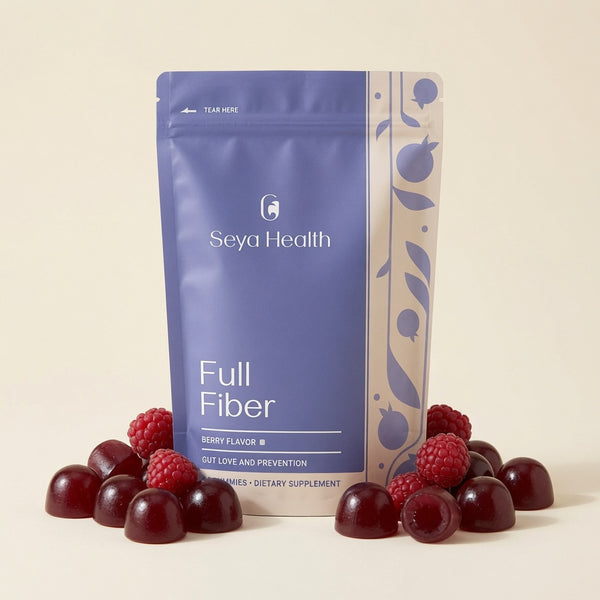
Seya Full Fiber
Most women fall short on fiber. Seya Full Fiber gives you 6 grams from three fibers in three small vegan gummies. Plant based, no gelatin, no sugar alcohols.
Shop Full FiberKeep reading

bone health
Best supplements for women over 40: what the evidence supports for heart, bones and muscles (and what's hype)

creatine
How long does creatine take to work? A realistic timeline for women

constipation