
Home/ The Journal/ blood sugar
blood sugar
Do Fiber Gummies Help Blood Sugar? What Women Should Know About Fiber and Glucose

Short version: Do fiber gummies help blood sugar? Mostly no. The fiber and blood sugar evidence is real, but it belongs to viscous, gel-forming fibers at around 13 g a day, taken with meals, in people whose glucose already runs high. Most gummy fibers are not viscous, and a gummy serving is about 5 g. A fiber gummy earns its place on regularity, not glucose.
- In 28 trials with 1,394 people with type 2 diabetes, viscous fiber at a median 13.1 g a day lowered HbA1c by 0.58 points.
- Psyllium cut fasting glucose by 37 mg/dL in people with type 2 diabetes, and moved nothing significant in people with normal blood sugar.
- Across 22 resistant starch trials in 670 people, fasting glucose, insulin, and HbA1c did not change significantly.
- Most US women get about 15 g of fiber a day against a 25 g target. Closing that gap is the job a gummy can honestly do.
Last updated August 2026.
Do fiber gummies help blood sugar? The straight answer: mostly no, not at the dose and fiber type inside a typical gummy jar.
That is not the answer a supplement brand is supposed to give. We sell a fiber gummy. We are giving it anyway.
The evidence connecting fiber to glucose is genuine. But it belongs to a specific kind of fiber, at a specific dose, taken a specific way. Most gummies check none of those boxes. Ours included.
So this article does two jobs. It shows you what fiber can really do to a glucose spike. And it draws an honest line around what a 5 g gummy does instead.
How does fiber blunt a glucose spike after eating?
One mechanism does almost all the work here. Gel.
Certain soluble fibers thicken when they meet water. In your stomach and small intestine, that gel slows everything down. The meal leaves your stomach later. The sugar in it crosses into your blood more slowly. Same carbs, smaller spike.
The catch is that only viscous, gel-forming fibers do this. Psyllium does. The beta-glucan in oats does. Fibers that dissolve thin, like inulin from chicory root, do not. In a widely cited review, McRorie and McKeown lay it out plainly: the glucose effect rises and falls with viscosity. Read the functional fiber physics review in the Journal of the Academy of Nutrition and Dietetics. No gel, no blunted spike.
We walk through the full machinery in how fiber actually works, and the food-side glucose story in fiber and blood sugar for women over 40.
What does the strongest evidence actually say?
The numbers are worth seeing, because they are specific about who benefits and how.
A meta-analysis in Diabetes Care pooled 28 trials with 1,394 people, all with type 2 diabetes. Viscous fiber at a median of 13.1 g a day lowered HbA1c by 0.58 points and fasting glucose by roughly 15 mg/dL. See the viscous fiber meta-analysis in Diabetes Care (2019).
Psyllium alone has an even sharper record. Pooled across trials, people treated for type 2 diabetes dropped 37 mg/dL of fasting glucose and 0.97 points of HbA1c. People with normal blood sugar dropped nothing significant. The authors' own framing: it works in proportion to how far glucose has drifted. Read the psyllium glycemic meta-analysis in the American Journal of Clinical Nutrition (2015).
Read the shape of that evidence again. Viscous fiber. Around 13 g a day. Taken with meals. In people whose glucose already ran high. Every word of that matters for the gummy question.
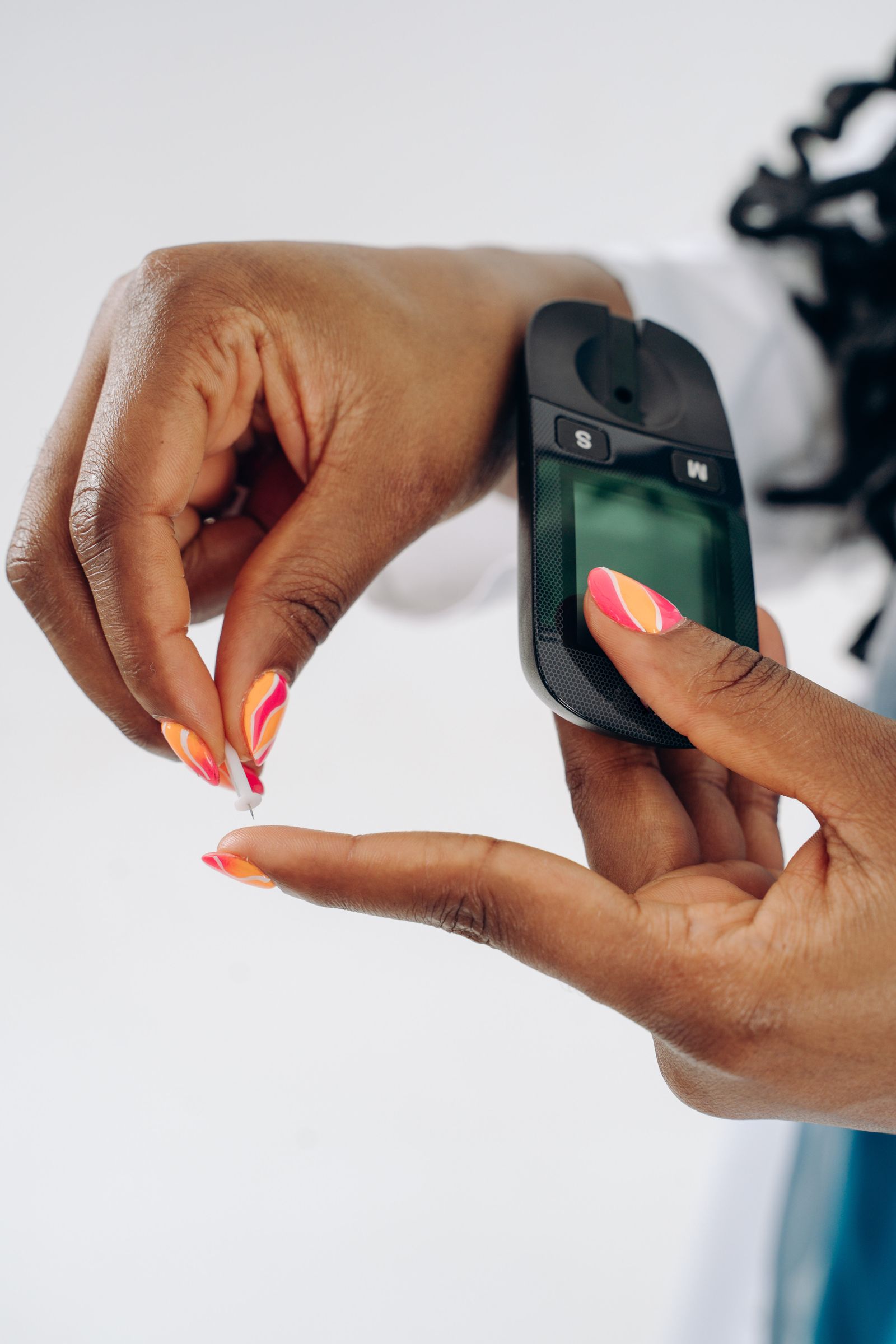
Do fiber gummies help blood sugar at 5 g a day?
Hold a gummy jar up against that evidence. It misses on three counts.
Type. A true gel-former would set the candy like glue, so gummy makers use fibers that stay thin: inulin, chicory root, and resistant starches. Those are exactly the fibers with the weakest glucose record. In a review of 22 resistant starch trials covering 670 people, fasting glucose, insulin, and HbA1c did not change significantly. See the resistant starch metabolic meta-analysis in Nutrients (2019).
Dose. The trials that moved glucose used a median of 13.1 g a day. A typical gummy serving carries 4 g to 6 g. Ours carries about 5 g. Under half the studied dose.
Timing. The glucose trials dosed fiber with meals, so the gel meets the food it is supposed to slow. A gummy eaten on its own at 3pm meets no meal at all.
So if you bought fiber gummies for your glucose and the meter never budged, hear this clearly. You did not fail the habit. The habit was pointed at the wrong outcome. It was the wrong tool wearing the right label, and that is a product problem, never a discipline problem.
Why does this matter for women in particular?
Because for women, the fiber and glucose connection plays out over years, and it is strongest as prevention.
The Nurses' Health Study followed 65,173 women for 6 years. Women eating a high glycemic load with little cereal fiber had 2.5 times the risk of developing type 2 diabetes compared with women eating the reverse pattern. Read the dietary fiber and diabetes risk study in JAMA.
And the everyday gap is real. Most US women average about 15 g of fiber a day. The target is 25 g. Only about 5% of adults reach it at all, per the USDA fiber intake data brief.
That 10 g shortfall, running for years, is the honest problem worth solving. It is also the one problem in this article a gummy can actually help with.
Where does a fiber gummy honestly fit?
Seya makes one product. A fiber gummy. 3 vegan gummies a day carry about 5 g of resistant tapioca fiber.
We grade our own evidence a C, and we make one claim for it: it supports regularity. We do not claim it lowers blood sugar, and after everything above, you know exactly why.
What it does is close part of that 10 g gap on the days your food does not, in a form you will still be taking in March. What resistant tapioca fiber is and how it behaves is covered in what resistant tapioca starch is, and your daily target by age in how much fiber women actually need.
If steadier glucose is your real goal, start where the evidence is strongest. Fiber from food, eaten with your meals: oats, beans, lentils, whole grains. If your fasting numbers are already drifting, that conversation belongs with your clinician, who can tell you whether a viscous fiber with meals makes sense for you.
This is education, not medical advice. Talk to your clinician before adding anything, especially if you take medication for blood sugar, since fiber can change how some medicines absorb.
These statements have not been evaluated by the Food and Drug Administration. This product is not intended to diagnose, treat, cure, or prevent any disease.
Frequently asked questions
Do fiber gummies actually help control blood sugar?
The evidence does not support it. The trials that lowered glucose used viscous, gel-forming fibers at a median of 13.1 g a day, taken with meals, mostly in people with type 2 diabetes. Gummies use non-viscous fibers like inulin and resistant starch, at around 4 g to 6 g a serving, and are rarely eaten with food. Each of those three differences cuts against a glucose effect. Fiber gummies can help you close a daily fiber gap and support regularity, but a glucose fix is not what the research shows.
How does fiber blunt a glucose spike after eating?
Viscous soluble fiber thickens into a gel in your stomach and small intestine. That gel slows how fast the meal leaves your stomach and how fast its sugar crosses into your blood, so the same meal produces a lower, slower rise instead of a sharp spike. The effect depends on viscosity: gel-formers like psyllium and oat beta-glucan produce it, while thin-dissolving fibers like inulin do not. The fiber also has to be present when the food is, which is why studies dose it with meals.
Which type of fiber in a gummy matters most for blood sugar?
Honestly, none of the common ones. Gummies are built from fibers that stay thin in liquid, such as inulin from chicory root and resistant starches, because a gel-forming fiber would set the gummy solid. Those thin fibers are the ones with the weakest glucose evidence: pooled resistant starch trials showed no significant change in fasting glucose, insulin, or HbA1c. Gummy fibers still count toward your daily fiber total and feed gut bacteria. They just are not the viscous kind the glucose research used.
Are fiber gummies enough on their own, or do you still need food fiber for glucose?
You still need food fiber. A gummy tops you up by about 5 g, and most US women start from about 15 g a day against a 25 g target, so food has to carry most of the load. Food fiber also arrives with your meals, which is exactly when the glucose evidence says fiber has to be present, and long-run data in 65,173 women tied low-fiber, high-glycemic diets to 2.5 times the diabetes risk. Use food first for glucose. Use a gummy to patch the gap for regularity.
What dose of fiber actually moved blood sugar in studies?
The pooled viscous fiber trials used a median of 13.1 g a day, split around meals, and lowered HbA1c by 0.58 points in type 2 diabetes. The psyllium trials that cut fasting glucose by 37 mg/dL dosed it before meals in people being treated for type 2 diabetes, and found no significant change in people with normal glucose. A typical fiber gummy serving is about 5 g, under half the studied amount, which is one reason gummies and glucose results rarely meet.
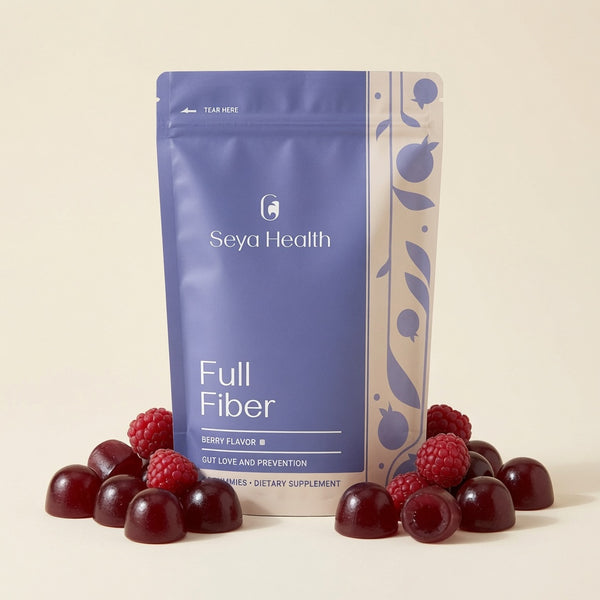
Seya Full Fiber
Getting enough fiber from food every day is hard. Seya Full Fiber is 6 grams from three fibers in one, in three small gummies, so you have a reliable daily floor. Plant based, no gelatin, no sugar alcohols, 60 gummies per pouch.
Shop Full FiberKeep reading

fiber
Can a Multivitamin Replace Vegetables? What Supplements Can't Do for Your Gut

constipation
The Best Way to Beat Constipation in Your 30s (and Where Fiber Gummies Fit)
fiber
The Gut-Skin Axis: Does Your Gut Health Affect Your Skin?
The gut-skin axis, explained: how your gut bacteria and blood sugar affect your skin, w...