
Home/ The Journal/ digestive health
digestive health
What Is Resistant Tapioca Starch? The Prebiotic Fiber Behind Smoother Digestion

Short version: Resistant tapioca starch is tapioca starch your small intestine cannot break down. It reaches your colon intact and feeds the bacteria living there. That is why it counts as fiber, and why plain tapioca does not.
- Plain dry tapioca pearls carry 0.9 grams of fiber per 100 grams, against 88.7 grams of carbohydrate.
- FDA lists cross-linked phosphorylated RS4, the main type of resistant tapioca starch, among the carbohydrates it counts as dietary fiber.
- In a meta-analysis of randomized trials, resistant starch raised fecal wet weight by 35.51 grams a day. Bowel movement frequency did not move.
- Most people eat 3 to 10 grams of resistant starch a day. The total fiber target is 22 to 34 grams.
Last updated July 2026.
Resistant tapioca starch is tapioca starch your body cannot digest.
It passes through your small intestine untouched. It arrives in your colon whole. Your gut bacteria eat it there.
That is the entire difference, and it is a big one. Plain dry tapioca pearls hold 0.9 grams of fiber per 100 grams, against 88.7 grams of carbohydrate, per USDA FoodData Central (FDC ID 169717). Same plant. Different behavior in your gut.
Here is the part worth sitting with. You added oats. You drink the water. You still go every third day.
Most women file that under personal failure. It is usually arithmetic instead. Most women land near 15 grams of fiber a day, and the adult range is 22 to 34 grams, per the National Institute of Diabetes and Digestive and Kidney Diseases. A slow gut is a math problem before it is a character problem.
What is resistant tapioca starch?
It is starch from the cassava root that has been changed so digestive enzymes cannot open it.
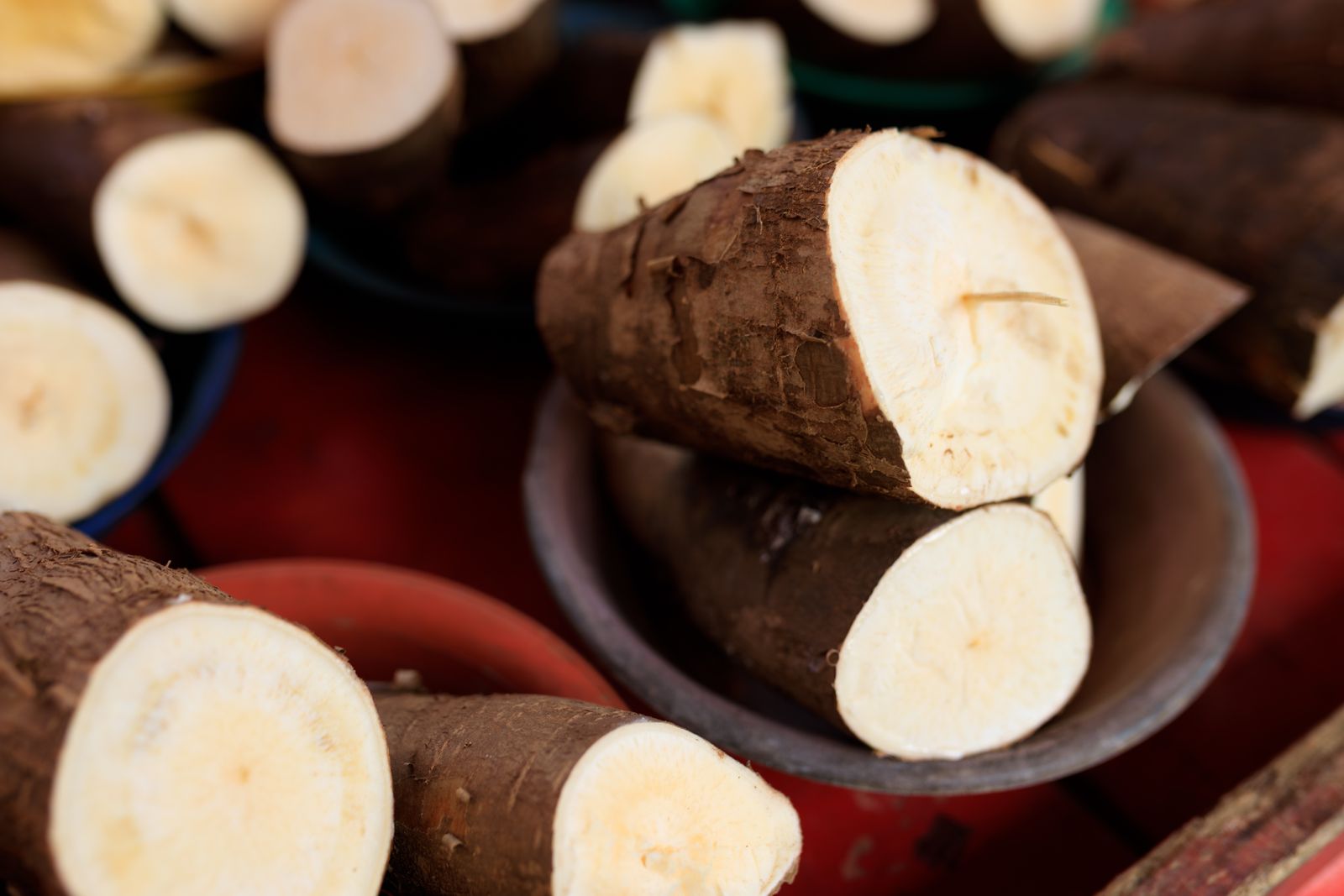
Tapioca is the starch pulled out of cassava, a root crop grown across Brazil, West Africa, and Southeast Asia. On its own that starch digests fast. It is close to pure carbohydrate.
Resistant tapioca starch is that same starch after modification. The starch granules get cross-linked, which locks the structure tight. Amylase, the enzyme that normally chops starch into sugar, cannot get in.
Scientists sort resistant starch into five types. A 2024 review in Food Science and Biotechnology lays them out: RS1 is starch trapped in whole grains and seeds, RS2 is raw granules in green bananas and raw potato, RS3 is retrograded starch in cooked and cooled potatoes, RS4 is "chemically modified starches due to cross-linking with chemical reagents," and RS5 is starch bound to fat. Read the full breakdown in the narrative review of resistant starch and health.
Resistant tapioca starch is an RS4. Made, not grown. That is not a knock on it. It is just what it is.
How is it different from regular tapioca starch?
One feeds you. The other feeds your bacteria.
| Plain tapioca starch | Resistant tapioca starch | |
|---|---|---|
| Source | Cassava root | Cassava root |
| Digested in the small intestine | Yes, quickly | Mostly no |
| Fiber per 100g | 0.9 grams | Counted as dietary fiber by FDA |
| Reaches the colon | Little of it | Most of it |
| Feeds gut bacteria | No | Yes, it ferments |
The label word matters here. Tapioca flour and tapioca starch are the same thing sold under two names, and neither one is a fiber. Resistant tapioca starch is a third thing.
If a label just says tapioca starch, treat it as a carbohydrate.
Is resistant starch real, or is it made up?
It is real, and a federal agency has said so in writing.
FDA rewrote its dietary fiber rules in 2016. Under the new rule, an isolated fiber only counts as dietary fiber on a label if the agency agrees it has a beneficial physiological effect in people.
Two resistant starches cleared that bar. High amylose starch, which is RS2, and cross-linked phosphorylated RS4. Both sit on the agency's list of non-digestible carbohydrates that count as dietary fiber. The list is on the FDA page on dietary fiber.
The RS4 decision came in March 2019, after a citizen petition. FDA's finding was narrow and specific:
"The scientific evidence suggests that cross-linked phosphorylated RS4 can help reduce insulin levels following a meal containing a carbohydrate that raises blood glucose levels." — U.S. Food and Drug Administration
Read that quote closely. Post-meal insulin. Not weight. Not energy. Regulators write narrowly on purpose, and so do we.
What does it actually do in your gut?
It becomes food for the bacteria in your colon.
That process is fermentation. Your gut bacteria break the starch down and release short-chain fatty acids, mainly acetate, propionate, and butyrate. Butyrate is the one your colon cells burn for fuel.
This is what prebiotic means. Not a bacteria you swallow. A food that the bacteria you already have will eat.
The fermentation part is well documented. A 2022 systematic review in The American Journal of Clinical Nutrition pooled 39 randomized trials covering 2,263 people. Short-chain fatty acid production rose in 16 of 23 studies that measured it, about 70%. Seven studies saw no change. One saw a drop. The review is indexed at PMID 34871343.
Most of those trials used RS2 at 20 to 40 grams a day. Tapioca-specific RS4 has far less human data behind it. Worth knowing before anyone sells you certainty.
Does resistant starch help you go?
It helps with bulk. The frequency evidence is thinner, and we are not going to pretend otherwise.
A meta-analysis of randomized trials pooled the bowel data in healthy adults. Resistant starch raised fecal wet weight by 35.51 grams a day. Butyrate went up. Fecal pH went down.
Then the honest part. Defecation frequency did not reach significance, at a weighted mean difference of 0.04. The full result sits at PMID 27593182.
Bigger, softer, easier stool is a real mechanical change. More trips to the bathroom is a separate claim, and that one has not landed cleanly in healthy adults.
In people who are already constipated, the picture looks better. A 2024 randomized, double-blind, placebo-controlled trial in Thai adults with chronic constipation gave RS3 for 12 weeks. The authors reported "a significantly increased frequency of bowel movements" against placebo, alongside rises in Bifidobacterium and Akkermansia. It ran in Scientific Reports.
Different starch type, different population. Suggestive, not settled. For the broader picture, start with why most women fall short on fiber.
How much resistant starch do you actually get?
Less than you would guess.
Global intake runs between 3 and 10 grams a day. In Europe it lands nearer 3 to 6 grams. Compare that to the 22 to 34 grams of total fiber an adult needs, and to the 20 to 40 grams used in most of the trials above.
So the research doses and the real-world doses are not the same number. Anything you add sits at the low end of what was studied.
Two rules keep it comfortable. Add fiber a few grams at a time over a couple of weeks. Drink more water while you do it. NIDDK says the same thing: "Be sure to add fiber to your diet a little at a time so your body gets used to the change." For your own target, see how much fiber women actually need.
Is it safe to take every day?
The trial record says yes for healthy adults, at the doses studied.
Across those 39 randomized trials and 2,263 people, every study that reported on tolerability found resistant starch was tolerated. That included 20 to 40 grams a day for more than 4 weeks in people with obesity and prediabetes.
Gas and bloating in the first week or two are common with any fermentable fiber. That is bacteria adjusting, not damage. Go slower if it happens.
Talk to a doctor before you start if you are pregnant, if you have inflammatory bowel disease, or if you are on medication that affects your gut. And book an appointment rather than experimenting if constipation is new, if there is blood, or if nothing shifts after a month.
Seya's job here is to stay specific. The evidence that fiber supports regularity earns a grade of C at about 5 grams, roughly half the dose used in the larger trials, so that is exactly what we claim and nothing past it. 3 vegan gummies a day with resistant tapioca fiber, ingredients you can name, are an honest daily fiber habit. They are not medicine, and they are not a fix for a medical problem.
These statements have not been evaluated by the Food and Drug Administration. This product is not intended to diagnose, treat, cure, or prevent any disease.
Related reading: our daily fiber gummy for women, perimenopause and constipation, and more from the Seya journal.
Frequently asked questions
Is tapioca a good source of fiber?
Plain tapioca is not. Dry tapioca pearls carry 0.9 grams of fiber per 100 grams against 88.7 grams of carbohydrate, per USDA FoodData Central, so they behave as a fast carbohydrate. Resistant tapioca starch is a different ingredient. It is tapioca starch modified so digestive enzymes cannot break it down, which lets it reach the colon and act as dietary fiber. FDA lists cross-linked phosphorylated RS4, the main form, among the non-digestible carbohydrates that count as dietary fiber on a label.
Is tapioca starch the same thing as tapioca flour?
Yes. Tapioca starch and tapioca flour are two names for the same product, the purified starch extracted from the cassava root. Neither is a meaningful source of fiber. Resistant tapioca starch is the separate, modified version, and it is the only one of the three that behaves like fiber in your gut. If a label says only tapioca starch or tapioca flour, read it as a carbohydrate.
What are the health benefits of resistant tapioca starch?
The best-supported effects are fermentation and stool bulk. In a systematic review of 39 randomized trials covering 2,263 people, short-chain fatty acid production rose in about 70% of the studies measuring it. A separate meta-analysis found fecal wet weight climbed by 35.51 grams a day.
FDA's own finding for cross-linked phosphorylated RS4 is narrower: it can help reduce insulin levels after a carbohydrate-containing meal. Bowel movement frequency did not rise significantly in healthy adults, so the honest claim is that fiber supports regularity, not that it repairs a stalled gut.
Related reading
- Baking With Tapioca Starch: Chewy Crusts, Clear Sauces, and the Fiber It Doesn't Have
- Is Resistant Tapioca Starch Keto-Friendly? Fiber Without the Blood-Sugar Spike
Seya Full Fiber
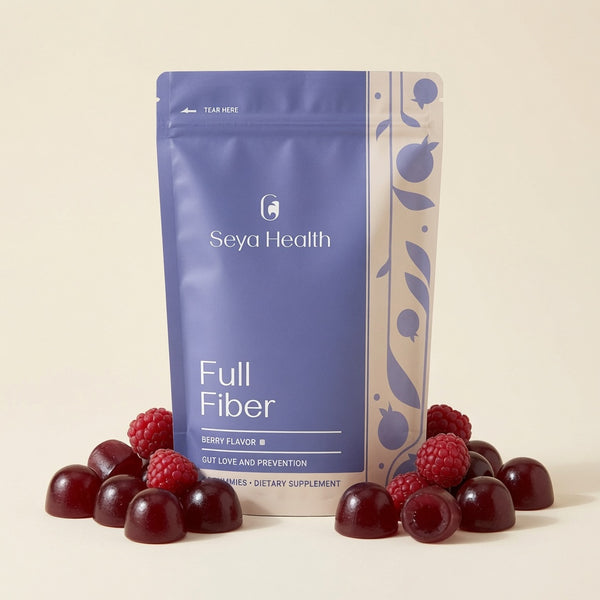
Your gut bacteria run on fiber. Seya Full Fiber delivers 6 grams from three fibers in one to feed the beneficial bacteria in your gut and support short-chain fatty acid production. Plant based, no gelatin, no sugar alcohols.
Shop Full FiberKeep reading
fiber
Can a Multivitamin Replace Vegetables? What Supplements Can't Do for Your Gut

constipation
The Best Way to Beat Constipation in Your 30s (and Where Fiber Gummies Fit)
fiber
The Gut-Skin Axis: Does Your Gut Health Affect Your Skin?
The gut-skin axis, explained: how your gut bacteria and blood sugar affect your skin, w...