

Short version: Fiber and satiety are linked, and the link is real. It is also smaller and messier than the internet says. Fiber slows your stomach down and feeds the cells that release your fullness hormones. What it does not do is override appetite.
- In a meta-analysis of 10 randomized trials covering 453 adults, guar gum had the largest pooled effect on next-meal calories at −0.90. The confidence interval still crossed zero, at −1.83 to 0.03.
- A 2026 scoping review found beta-glucans raised reported fullness in 6 of 9 studies. Resistant starch, the most-studied fiber of the group, raised GLP-1 in 1 of 12.
- Doses in those trials ran from 2.5 to 50 grams. Most were single-dose, one-day tests.
- More than 90% of US women miss the recommended fiber intake. The adult range is 22 to 34 grams a day.
Last updated July 2026.
Fiber and satiety are real. The size of the effect is not what you have been told.
Here is the number nobody puts in the headline. In a meta-analysis of 10 randomized trials covering 453 adults, the fiber with the biggest pull on next-meal calories was guar gum, at a pooled effect size of −0.90. The confidence interval ran from −1.83 to 0.03. It crossed zero. That result did not reach significance, and the researchers said so plainly. The full analysis is published in Foods (PMID 30621363).
Now the part that matters more.
You ate lunch. You are standing in the kitchen at 4pm anyway. You have probably filed that under willpower, or under something being wrong with you.
It is a signal, not a character flaw. And one of the things that makes the signal louder is a day with almost no fiber in it.
What is satiety, and how is it different from hunger?
Hunger is what starts a meal. Satiety is what keeps you from starting the next one.
Two different systems. They feel the same from the inside, which is the whole problem.
Researchers split it further. Satiation is the brake that ends a meal. Satiety is the gap that follows, the hours before food gets interesting again. Fiber is studied mostly on the second one.
So when a label promises fullness, ask which fullness it means. Feeling stuffed at dinner and still eating at 10pm are not in conflict. They are two separate measurements.
How does fiber make you feel full?
Three ways, and only one of them is fast. All three are mapped in the 2026 Frontiers in Endocrinology review of fiber and GLP-1.
First, bulk and viscosity. Soluble fiber pulls in water and thickens what is in your stomach. That slows gastric emptying, so food leaves your stomach at a lower rate and nutrients hit your small intestine over a longer stretch.
Second, gut hormones. Stretched-out nutrient delivery reaches the L-cells further down your intestine. Those cells release GLP-1 and PYY, the two hormones that tell your brain the meal landed.
Third, fermentation. Fiber that survives to your colon gets eaten by your bacteria, which release short-chain fatty acids. Those also nudge the same L-cells.
That third route takes days to weeks, not minutes. Your bacteria have to adapt first. Most of the research never waits that long.
What does the research on fiber and satiety actually show?
Directionally positive. Statistically thin.
The Foods meta-analysis pooled randomized trials by fiber type. Every pooled estimate pointed the same way, toward eating less at the next meal. Almost none of them cleared significance.
| Fiber type | Pooled effect on next-meal energy intake | 95% CI |
|---|---|---|
| Guar gum | −0.90 | −1.83 to 0.03 |
| Beta-glucan | −0.44 | −0.91 to 0.04 |
| Alginate | −0.42 | −0.84 to 0.01 |
| Pectin | −0.26 | −0.53 to 0.02 |
Single studies did better than the pools. Five grams of guar gum in a milk drink cut energy intake with an effect size of −3.55 at p less than 0.001. Twenty-five grams of polydextrose landed at −0.81, also significant.
Read those doses again. 25 grams of one isolated fiber is close to an entire day's total fiber target.
That is the honest shape of this evidence. Big doses, single meals, small rooms full of volunteers.
Does fiber raise GLP-1 the way the drugs do?
It raises it. Not on that scale, and not reliably.
A 2026 scoping review in Frontiers in Endocrinology sorted the human trials by fiber family. Dextrins looked best, raising GLP-1 in 4 of 8 studies and fullness in 5 of 8. Beta-glucans raised fullness in 6 of 9. Mannans raised circulating GLP-1 in 3 of 4.
Resistant starch was the most-studied fiber in the whole review, with 12 trials. It raised GLP-1 in 1 of them.
Studies that found more GLP-1 did tend to find more fullness, at an odds ratio of 2.95. That estimate ran from 0.87 to 9.98, so it did not reach significance either.
"The current evidence base remains limited by small sample sizes, heterogeneous study designs, and a predominance of short-term, acute trials that do not allow for microbiota adaptation." — de Jong et al., Frontiers in Endocrinology, 2026
Doses across that review ran from 2.5 to 50 grams. If you want the drug side of this picture, we wrote it up separately in how GLP-1 works. Food and medication are different tools. One is not a version of the other.
How much fiber do women actually get?
Not enough, and the gap is not close.
The adult range is 22 to 34 grams a day, per the National Institute of Diabetes and Digestive and Kidney Diseases. Almost nobody lands there.
"In the U.S. more than 90% of women and 97% of men do not meet the recommended intakes for dietary fiber." — Thompson, Nutrients 2021 (PMID 34836289)
That same paper puts the shortfall at roughly 50%. Half of what you need, on an average day.
Which reframes the whole question. Most women are not asking whether an extra 25 grams of isolated fiber suppresses appetite in a lab. They are running a daily deficit of about half their target and wondering why nothing feels steady. For your own number, see how much fiber women need per day.
Will more fiber change the number on the scale?
We are not going to tell you that.
The trials above measured calories at one following meal and hunger ratings on a scale. They did not follow people for a year. Effect sizes that cannot clear significance in a single-meal test are not a basis for promising anything about body composition.
What the evidence supports is narrower and more useful. Fiber slows your stomach. It feeds the bacteria that make short-chain fatty acids. It supports regularity. Those are mechanical, measurable, and worth having on their own.
Anyone selling you fiber as an appetite switch is selling past the data.
How do you use fiber for fullness without wrecking your gut?
Slowly. That is most of the advice.
Add a few grams at a time over a couple of weeks and drink more water while you do it. NIDDK puts it this way: "Be sure to add fiber to your diet a little at a time so your body gets used to the change."
Gas and bloating in week one are normal with any fermentable fiber. That is bacteria adjusting, not damage.
Front-load it. The fibers that slow gastric emptying only help if they arrive with food, so breakfast and lunch do more work than a late-night correction.
What can Seya honestly promise here?
Regularity. Nothing beyond it.
Seya's gummies deliver about 5 grams of resistant tapioca fiber daily, roughly half the amount the larger appetite trials used. At that quantity the evidence for supporting regularity earns a grade of C, so regularity is the claim we make. We do not say it blunts appetite, because 5 grams cannot carry that promise.
3 vegan gummies. Ingredients you can name. For the ingredient itself, read what resistant tapioca starch is.
Book an appointment instead of experimenting if your appetite shifts suddenly or disappears, or if you are pregnant, taking medication that affects digestion, or living with inflammatory bowel disease.
These statements have not been evaluated by the Food and Drug Administration. This product is not intended to diagnose, treat, cure, or prevent any disease.
Related reading: our daily fiber gummy for women, why most women fall short on fiber, and more from the Seya journal.
Frequently asked questions
Does fiber actually keep you full?
Somewhat, and less than most marketing implies. In a meta-analysis of 10 randomized trials covering 453 adults, every fiber type pointed toward lower energy intake at the next meal, but almost none of the pooled estimates reached statistical significance.
Guar gum was the largest at −0.90, with a 95% confidence interval of −1.83 to 0.03. Individual trials using large doses did better, such as 25 grams of polydextrose at an effect size of −0.81. Fiber slows gastric emptying and supports the release of GLP-1 and PYY, so the mechanism is real. The measured effect on how much you eat next is modest.
How much fiber should you eat a day for fullness?
Aim for the general adult target rather than a special appetite dose. NIDDK puts the adult range at 22 to 34 grams a day, and more than 90% of US women fall short of the recommendation, by roughly 50%.
The appetite trials often used 25 to 50 grams of a single isolated fiber in one sitting, which is not a realistic daily habit. Closing your normal daily gap is the higher-value move, and it is the one with the better evidence behind it. Add fiber a few grams at a time and increase water alongside it.
Which fiber is best for appetite and satiety?
Viscous and fermentable fibers have the most supporting data, though none of it is decisive. A 2026 scoping review in Frontiers in Endocrinology found beta-glucans increased reported fullness in 6 of 9 studies and dextrins in 5 of 8, while resistant starch, the most-studied fiber in the review with 12 trials, raised GLP-1 in only 1.
Doses ranged from 2.5 to 50 grams, and most trials were single-dose and acute, which the authors flag as a limitation because gut bacteria need weeks to adapt. There is no fiber with a settled appetite claim behind it.
Does fiber raise GLP-1 like GLP-1 medication does?
No. Fiber can raise your own GLP-1 through slower nutrient delivery to intestinal L-cells and through short-chain fatty acids made by gut bacteria, but the size and consistency are nothing like a prescription GLP-1 receptor agonist.
In the 2026 review, studies showing higher GLP-1 tended to show higher fullness at an odds ratio of 2.95, with a confidence interval from 0.87 to 9.98 that includes no effect. Fiber is not a substitute for medication, and it is not marketed here as one.
Related reading
Seya Full Fiber
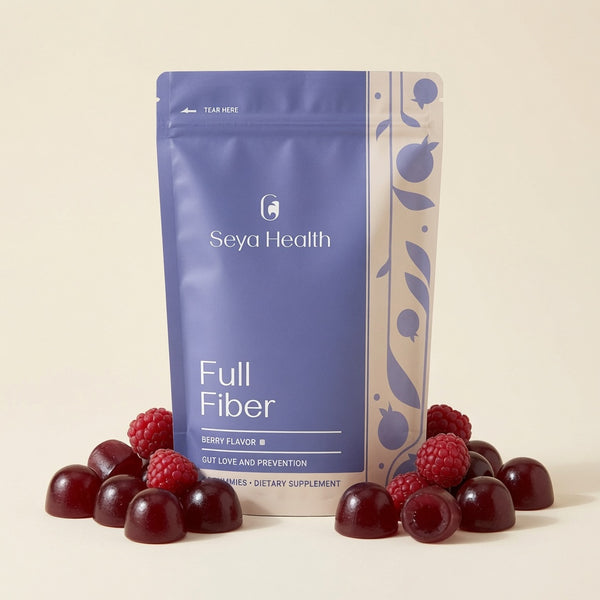
Your gut bacteria run on fiber. Seya Full Fiber delivers 6 grams from three fibers in one to feed the beneficial bacteria in your gut and support short-chain fatty acid production. Plant based, no gelatin, no sugar alcohols.
Shop Full FiberKeep reading

fiber
Can a Multivitamin Replace Vegetables? What Supplements Can't Do for Your Gut

constipation
The Best Way to Beat Constipation in Your 30s (and Where Fiber Gummies Fit)
fiber
The Gut-Skin Axis: Does Your Gut Health Affect Your Skin?
The gut-skin axis, explained: how your gut bacteria and blood sugar affect your skin, w...