
Home/ The Journal/ fiber
fiber
Fibermaxxing: What the Trend Gets Right (and Where It Goes Wrong)
Fibermaxxing is trending, but is it healthy? The direction is right, most women need more fiber, but the execution is often wrong. What the trend gets right, where it goes wrong, and how to do it the smart way.

Fibermaxxing is the trend of eating as much fiber as you can, sometimes 40, 50, even 90 grams a day. Here is the honest verdict. The direction is right: most women really are short on fiber, so eating more is genuinely smart. The execution is where it goes sideways. Maxing out by piling on 70 or 90 grams overnight tends to backfire with gas, bloating, and cramps. The win is not the maximum. It is hitting the amount you actually need, adding it slowly, drinking water, and keeping it steady.
What fibermaxxing actually is
Fibermaxxing is exactly what it sounds like: maxing out your fiber. The trend took off on social media when people started loading their plates with beans, vegetables, fruit, and whole grains, then sharing how much better they felt.1 The routines vary, but the common thread is aiming to meet, and usually blow past, the daily fiber recommendation, with some people chasing 40, 50, or more grams a day.2
Unlike most wellness trends, this one is built on something real. Fiber is genuinely one of the most underrated things in the average diet. The question is not whether fiber is good for you. It is whether "more, as fast as possible" is the right way to get it.
Why the trend gets the direction right
Give fibermaxxing this much: it is pointing at a real problem. Most people are not getting enough fiber, and women are no exception. More than 90% of women fall short of the daily target, and the average adult gets only about 17 grams a day, roughly half of what is recommended.34 So the core message, eat more fiber, is advice most of us actually need to hear.
The payoff is real too. Fiber adds bulk and helps keep things moving, feeds the good bacteria in your gut, and helps steady your blood sugar and energy across the day.1 Over the long run, diets higher in fiber are linked with better heart and metabolic health. In other words, the benefits people are chasing on TikTok are backed by decades of nutrition research.
The trend is right that you probably need more fiber. It is wrong that the goal is a number as high as possible.
Does fibermaxxing actually work?
People who try it often report real things: smoother digestion, steadier energy, and feeling fuller between meals. Those line up with what fiber genuinely does, so that part is not just hype. Fiber slows how fast food leaves your stomach, which can help you feel satisfied, and it helps flatten the blood-sugar swings that leave you tired and reaching for a snack.
A few of the flashier claims are shakier. Some of the fast "results" people post in week one are really just more regular bathroom trips and less water weight, not a big change in body fat. And fiber is not a detox. Your liver and kidneys handle that. So the honest read is that fibermaxxing tends to deliver on digestion, fullness, and blood sugar, while the dramatic before-and-after promises deserve a raised eyebrow.
Where fibermaxxing goes wrong
The problem is the word "max." More fiber is better only up to a point, and past it the returns turn negative.
When you jump from a low-fiber diet to 70 or 90 grams a day, your gut cannot keep up. The most common result is gas, bloating, and cramping, and if you are not drinking enough water, it can actually leave you more backed up, not less.2 Push it further and other issues show up. Very high fiber intakes can interfere with how well you absorb some minerals like iron and calcium, can be genuinely rough for people with conditions like IBS or Crohn's, and in rare cases can contribute to a blockage.5
There is also a quieter problem. Ramping fiber up too fast can shift your gut bacteria too quickly, which is not the smooth, steady change you are actually after. The goal was a healthier gut, and overdoing it works against that. We cover the warning signs in detail in can you eat too much fiber.
How much fiber you actually need
Here is the number the trend skips. Most adults do well at roughly 25 to 38 grams of fiber a day, and the honest truth is that simply getting to that range would be a win for almost everyone, because so few people hit it.1 You do not need to "max." You need to close the gap between what you eat now and what your body is actually asking for. For your target by age and life stage, see how much fiber women need per day.
Aiming for enough, rather than maximum, is not a downgrade. It is the version of this trend that works and that you can keep up.
The smart way to get more fiber
If you want the benefits of fibermaxxing without the misery, the method matters more than the number:
- Add slowly. Bump your fiber up by about 5 grams every few days, not all at once, so your gut has time to adjust.
- Drink water. Fiber needs water to do its job. Think of water as the other half of the dose.
- Favor variety. Different fibers feed different bacteria, so a mix of beans, oats, berries, greens, and flax does more than one big source.
- Be consistent, not extreme. A steady amount every day beats a giant fiber blowout on Monday that leaves you bloated through Wednesday.
To picture what a real serving looks like, 6 grams of fiber is about half an avocado, or three quarters of a cup of chickpeas, or one medium pear. Small, repeatable amounts add up.
A gentle day can get you most of the way there without any drama. A bowl of oatmeal with berries at breakfast, a handful of nuts or a pear as a snack, half an avocado and some beans at lunch, and a couple of vegetables at dinner will land most people comfortably in the target range. Notice that this is not extreme. It is just a normal day that happens to include fiber at every meal, which is the quiet version of fibermaxxing that actually sticks.
Where a daily fiber supplement fits
This is the part fibermaxxing usually gets backwards. The goal is not the biggest possible dose. It is a reliable one you can actually keep up. That is exactly what a measured daily fiber source is for.
Seya Full Fiber gives you 6 grams of fiber from three fibers in one, in three small gummies. You know exactly how much you are getting, which makes it easy to raise your intake slowly instead of guessing. The fermentable fibers feed the beneficial bacteria in your gut, and it is plant based with no gelatin, no sugar alcohols, and 60 gummies per pouch. It is the opposite of a chaotic fiber blowout: a steady, known amount, every day.
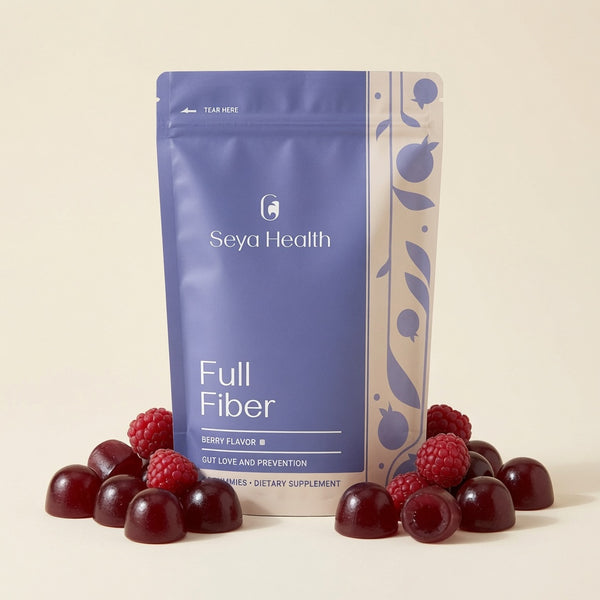
Seya Full Fiber
6 grams of fiber in three gummies, a known daily amount you can raise slowly. Three fibers in one, plant based, no gelatin, no sugar alcohols.
Shop Full FiberFor more on the foods that get you there, see high-fiber foods for women, and if your interest in fiber is really about staying full, read fiber and satiety.
When to check with a doctor
If you have a digestive condition like IBS, Crohn's, or ulcerative colitis, talk to your doctor before making big changes to your fiber intake, because more is not automatically better for you. And if you get persistent bloating, pain, or changes in your bathroom habits when you add fiber, that is worth a conversation rather than pushing through. Fiber is a tool, and like any tool, the right amount beats the maximum amount.
Frequently asked questions
Is fibermaxxing safe?
For most people, eating more fiber is safe and helpful, as long as you build up gradually and drink enough water. The risk comes from doing it too fast or pushing intake to extremes, which can cause gas, bloating, and other issues.2
How much fiber is too much?
There is no single cutoff, but most people do well around 25 to 38 grams a day. Going far beyond that, especially quickly, is where side effects and absorption problems start to show up.5 More detail is in can you eat too much fiber.
Is fibermaxxing good for weight loss?
Fiber can help you feel fuller and can steady your blood sugar, which some people find helpful as part of an overall healthy pattern. But maxing out is not a weight-loss shortcut, and overdoing it can backfire. Focus on the health benefits and a sustainable amount.
How do I start fibermaxxing safely?
Add about 5 grams of fiber every few days, drink water with it, spread it across the day, and choose a variety of sources. Consistency matters more than any single big day.
What are signs I am getting too much fiber?
Ongoing gas, bloating, cramping, or constipation despite drinking water can be signs you have added too much too fast. Easing back and building up more slowly usually helps.2
Sources
- 1 Mayo Clinic Press. Fibermaxxing: Is this TikTok trend good for you?
- 2 UCLA Health. Is "fibermaxxing" a sound nutrition trend?
- 3 American Society for Nutrition. Most Americans are not getting enough fiber in our diets.
- 4 USDA Economic Research Service. Dietary fiber consumption data.
- 5 University of Utah Health. Fibermaxxing: Can You Have Too Much Fiber?
This article is general information, not medical advice. Seya Full Fiber is a dietary supplement and is not intended to diagnose, treat, cure, or prevent any disease. If you have a digestive condition or take medications, talk to your healthcare provider before making large changes to your fiber intake.
Keep reading

fiber
Can a Multivitamin Replace Vegetables? What Supplements Can't Do for Your Gut

constipation
The Best Way to Beat Constipation in Your 30s (and Where Fiber Gummies Fit)
fiber
The Gut-Skin Axis: Does Your Gut Health Affect Your Skin?
The gut-skin axis, explained: how your gut bacteria and blood sugar affect your skin, w...