
Home/ The Journal/ fiber
fiber
The Gut-Skin Axis: Does Your Gut Health Affect Your Skin?
The gut-skin axis, explained: how your gut bacteria and blood sugar affect your skin, why fiber is the overlooked lever, and how to support your skin from the inside.

Yes, and the science behind it has a name: the gut-skin axis. Your gut and your skin are in constant, two-way conversation, mostly through your immune system and the bacteria living in your gut. When your gut is out of balance, the low-grade inflammation it creates can show up on your face. Two food levers matter most here, and both are quiet ones: fiber feeds the bacteria that calm inflammation, and steady blood sugar limits the process that ages skin. Neither is a magic fix, and no supplement is a skincare shortcut.
What the gut-skin axis actually is
For a long time, skin was treated as something you only fix from the outside, with creams and serums. That is changing. Researchers now describe a clear, two-way link between your digestive system and your skin, and they call it the gut-skin axis.1
Here is the simple version of how they talk to each other. Most of your immune system, around 70 to 80%, lives in and around your gut. The trillions of bacteria in there are constantly interacting with those immune cells and releasing tiny compounds that travel through your body.1 When the mix of bacteria is healthy, that conversation tends to be calm. When it is out of balance, a state called dysbiosis, it can turn up inflammation body-wide, and skin is one of the places that inflammation becomes visible.2
The key players in the calm version are short-chain fatty acids. These are anti-inflammatory compounds your gut bacteria make when they ferment fiber, and they help keep both your gut lining and your immune responses steady.1 Hold onto that word "fiber." It comes back, because it is the part of this story most articles skip. If you want the deeper version of how the gut wall itself fits in, see leaky gut and the gut barrier.
Skin conditions linked to the gut
Research is not saying your gut causes every skin problem. But the associations are real enough that dermatology now takes them seriously. Imbalances in the gut microbiome have been linked with several common skin conditions, including:2
- Acne, where inflammation and, separately, blood-sugar patterns are both being studied.
- Eczema (atopic dermatitis), which shows up often in the gut-microbiome research.
- Rosacea, which has notable links to digestive issues.
- Psoriasis, where gut inflammation and barrier changes are part of the picture.
To be clear about what this means: these are medical conditions, and the gut is one contributing factor among several, not a switch you can flip. If you are dealing with any of them, a dermatologist is the right call. What the gut-skin axis gives the rest of us is a useful, everyday insight: the way you eat shapes the inflammation your skin has to deal with. And that is where you actually have some control.
You cannot cream your way out of an inflammation problem that starts in your gut. That part is an inside job.
Route one: fiber feeds the bacteria that calm inflammation
This is the piece almost every gut-skin article underplays. They will tell you to "support your gut," then talk only about probiotics. But there is a step before that, and it matters more for most people.
Your gut bacteria have to eat, and their favorite food is fiber. When they ferment it, they produce those anti-inflammatory short-chain fatty acids we mentioned, the ones that help keep the whole system calm.3 No fiber, not much fuel, fewer of those helpful compounds. So fiber is not a side note in gut health. It is the input the whole thing runs on.
Prebiotics versus probiotics, in plain English
This trips people up, so here is the difference. Probiotics are live bacteria you add, usually in a pill or a yogurt. Prebiotics are the food that feeds the beneficial bacteria you already have, and fiber is the main one. Both have a place, but for most people the foundation is prebiotic fiber, because there is no point adding more bacteria if you are not feeding the ones already living there. That is the part most diets are missing, and it is the part a probiotic pill does not fix. For a closer look at one well-studied prebiotic fiber, see what resistant tapioca starch is.
Route two: the sugar and skin connection
There is a second way food shows up on your skin, and it runs through your blood sugar. You may have heard that sugar is bad for your skin. The real mechanism has a name: glycation.
When your blood sugar spikes, extra sugar molecules latch onto proteins in your body, including the collagen and elastin that keep skin firm and springy. This forms compounds called advanced glycation end products, and they make collagen stiff and brittle instead of bouncy. Over years, that is linked with more visible aging, less elasticity, and sagging.45 High-sugar, high-glycemic eating patterns are also being actively studied in acne.6
Here is where fiber comes back in. Soluble fiber slows how fast sugar from a meal reaches your bloodstream, which softens those spikes.3 Fewer sharp spikes means less of the glycation pressure that stiffens collagen. We go deep on that mechanism in fiber and blood sugar.
One honest note, because it matters. The glycation chain is real at every step, but no one has run a study that gives people a fiber supplement and then measures their wrinkles. So the right way to think about fiber here is as support for steadier blood sugar, which is a genuine, measurable thing, rather than as a proven wrinkle treatment. Anyone promising the second one is getting ahead of the science.
"But wait, don't fiber gummies have sugar?"
Fair question, and exactly the one you should ask after reading the section above. Yes, Seya Full Fiber has 3 grams of sugar per serving. Here is the honest math. Each serving pairs that 3 grams of sugar with 6 grams of fiber, at just 25 calories, and the fiber is the thing that slows sugar absorption in the first place. It is a very different situation from a soda or a pastry that is sugar with nothing to buffer it.
The bigger reason we use a little real sugar comes down to what the alternative is. Most "zero sugar" gummies hit that number using sugar alcohols, and sugar alcohols are a leading cause of the exact gas, bloating, and cramping a gut product is supposed to help. We would rather use 3 grams of real sugar than trade your comfort for a cleaner-looking label.
The fiber gap makes this worse than it should be
So fiber sits underneath both routes to healthier-looking skin: it feeds the calming bacteria, and it steadies the blood sugar that drives glycation. Now the frustrating part. More than 90% of women do not get enough fiber, and the average adult eats only about 15 to 17 grams a day, roughly half of what is recommended.7
Read that next to everything above. The single food doing the most quiet work for your skin from the inside is the one most of us are shortest on. Closing that gap will not give you a new face, but it removes a real, daily source of pressure your skin has been dealing with. To find your own target, see how much fiber women need per day, and for why the shortfall is so common, the fiber gap in women.
What actually helps your skin from the inside
No supplement replaces good skincare, sleep, or a dermatologist when you need one. But if you want to support your skin from the inside, the levers that have real science behind them are simple:
- Feed your gut bacteria. Eat a variety of fiber-rich plants: beans, oats, berries, greens, and flax. Different fibers feed different bacteria, so variety beats one big source. For ideas, see fiber and gut health.
- Steady your blood sugar. Pair carbs with fiber, protein, or fat instead of eating them alone, so the sugar arrives slowly.
- Go easy on the sugar spikes. You do not need to fear sugar, just the big, frequent spikes that push glycation.
- Drink water, sleep, and manage stress. All three feed back into both your gut and your skin.
To picture a fiber serving, 6 grams is about half an avocado, or three quarters of a cup of chickpeas, or one medium pear. Small, repeatable amounts, most days, add up.
Where a daily fiber supplement fits
Getting enough fiber from food every single day is genuinely hard, which is why so few people manage it. A measured daily fiber is a simple way to put a reliable floor under your intake so your gut bacteria stay fed and your blood sugar stays steadier, on the busy days too.
Seya Full Fiber gives you 6 grams of fiber from three fibers in one, in three small gummies. The fermentable fibers feed the beneficial bacteria in your gut and support the production of short-chain fatty acids, and the soluble fiber supports healthy blood sugar already within the normal range. It is plant based with no gelatin, no sugar alcohols, and 60 gummies per pouch. It will not clear your skin or erase a wrinkle, and nothing you swallow will do that on its own. What it does is support the internal environment, gut and blood sugar, that your skin has to live in.
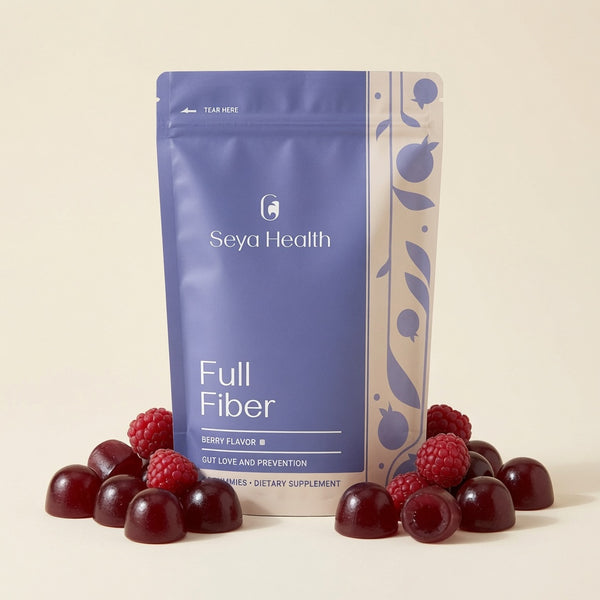
Seya Full Fiber
6 grams of fiber in three gummies. Feeds your gut bacteria, supports short-chain fatty acid production, and supports healthy blood sugar already within the normal range. Plant based, no gelatin, no sugar alcohols.
Shop Full FiberThe honest bottom line
The gut-skin axis is real, and it hands you a genuinely useful idea: your skin reflects the inflammation and blood-sugar environment inside you, and food shapes both. Fiber is the most overlooked lever in that picture, feeding the bacteria that calm inflammation and steadying the blood sugar that drives glycation. It is not a skincare product, and it will not replace one. But most women are getting half the fiber they need, so for a lot of us, closing that gap is the most obvious inside-out win available, for the gut and, quietly, for the skin it supports.
Frequently asked questions
Does gut health affect skin?
Yes. Research increasingly supports a two-way link called the gut-skin axis. When your gut bacteria are out of balance, the resulting inflammation can show up on your skin, and it is associated with conditions like acne, eczema, and rosacea. It is an area of active research rather than a cure-all, but the connection is real.12
Can fiber improve my skin?
Fiber is not a skincare product, and no fiber supplement is proven to clear skin or reduce wrinkles. What fiber does is support two things linked to skin health from the inside: it feeds the gut bacteria that make anti-inflammatory short-chain fatty acids, and it helps steady blood sugar. Most women do not get enough fiber, so closing that gap supports the internal environment, even though skin itself has many inputs.
Is sugar really bad for your skin?
High blood sugar drives a process called glycation, where sugar attaches to collagen and stiffens it, which is linked with skin aging over time. High-glycemic eating patterns are also being studied in acne. Fiber helps by slowing how fast sugar from a meal reaches your blood.46
Probiotics or prebiotics for skin?
They work differently. Probiotics add live bacteria; prebiotics, like fiber, feed the beneficial bacteria you already have. For most people, feeding your existing microbiome with fiber is the foundation, and it is the piece most diets are missing. Neither is a proven skin treatment on its own.
How long before gut changes show on my skin?
There is no set timeline, and skin has many inputs, so give any dietary change several weeks to a few months and keep your expectations realistic. Persistent or severe skin issues deserve a dermatologist rather than a wait-and-see.
Sources
- 1 Mahmud MR, et al. Impact of gut microbiome on skin health: gut-skin axis observed through the lenses of therapeutics and skin diseases. Gut Microbes. 2022. PMC.
- 2 Unraveling the Gut-Skin Axis: The Role of Microbiota in Skin Health and Disease. Cosmetics. 2025. MDPI.
- 3 Harvard T.H. Chan School of Public Health, The Nutrition Source. Fiber.
- 4 Danby FW. Nutrition and aging skin: sugar and glycation. Clinics in Dermatology. 2010. ScienceDirect.
- 5 Skin Therapy Letter. Sugar Sag: Glycation and the Role of Diet in Aging Skin.
- 6 American Academy of Dermatology. Can the right diet get rid of acne?
- 7 American Society for Nutrition. Most Americans are not getting enough fiber in our diets.
This article is general information, not medical advice. Seya Full Fiber is a dietary supplement and is not intended to diagnose, treat, cure, or prevent any disease, including any skin condition. If you have a persistent skin concern, see a dermatologist. If you have a medical condition or take medications, talk to your healthcare provider before making changes.
Related reading
Keep reading

fiber
Can a Multivitamin Replace Vegetables? What Supplements Can't Do for Your Gut

constipation
The Best Way to Beat Constipation in Your 30s (and Where Fiber Gummies Fit)

fiber
Menopause Belly: Why It Happens and What Actually Helps
The menopause belly is real and hormone-driven. Why fat shifts to your middle, why you ...