
Home/ The Journal/ constipation
constipation
How to Relieve GLP-1 Constipation: A Fiber-First Guide for Women on Ozempic and Zepbound

Short version: GLP-1 constipation is common, and if you got backed up on a drug like Ozempic or Zepbound, it is the medicine, not you. These drugs slow your gut on purpose. That slowdown is how they work. Fiber and water are the two levers that keep things moving, so add fiber slowly, drink more, and give it time.
- Constipation hit 24.2% of people on semaglutide 2.4 mg in trials, versus 11.1% on placebo.
- GLP-1 drugs slow gastric emptying by design. A slower gut means drier, slower stool.
- Most women get about 15 grams of fiber a day. Adults need 22 to 34. Fiber supports regularity.
Last updated July 2026.
You started a GLP-1 drug. A few weeks in, you are backed up.
Here is the direct answer. GLP-1 constipation is common, and it is a side effect of the medicine, not a failure of yours. In pooled trials, constipation showed up in 24.2% of people on semaglutide 2.4 mg, compared to 11.1% on a placebo (Wharton et al., STEP trials). The fix is not more willpower. It is more of the two things your slowed gut is short on: fiber and water.
You did not lose your discipline. The drug slowed your gut on purpose. That is the whole reason it works, and it is also why the bathroom got quiet.
Why does Ozempic or Zepbound make you constipated?
Because these drugs slow your gut down. That is the point of them.
GLP-1 drugs copy a gut hormone that tells your stomach to empty slower. As one clinical review puts it, GLP-1 "slows gastric emptying profoundly and dose-dependently," with a relaxed stomach and slower squeezing further down the line (Jalleh et al., Journal of Clinical Endocrinology and Metabolism, 2025). Food sits longer. You feel full longer. That is the effect people take the drug for.
But the same slowdown reaches your whole gut. When waste moves slower, your body pulls more water out of it, so the stool that finally arrives is dry and hard.
| What the drug does | Why it backs you up |
|---|---|
| Slows gastric emptying | Food sits in your stomach longer, so the whole line moves slower. |
| Cuts how much you eat | Less food in means less fiber and less bulk for your gut to push. |
| Lowers your thirst | You drink less without noticing, so stool dries out and hardens. |
| Slows the small intestine | The longer waste sits, the more water gets pulled back out of it. |
How common is constipation on GLP-1 drugs?
Common enough that you should expect it, not be surprised by it.
In the pooled semaglutide 2.4 mg trials, 24.2% of people reported constipation, more than double the 11.1% on placebo (Wharton et al.). Most of it was mild to moderate and showed up while the dose was climbing.
It also lands harder on women to begin with. Food already moves through a woman's colon in about 42 hours, versus about 30 for men (Meier et al.). A drug that slows the gut is adding to a system that was already slower. Same medicine, heavier price.
How do you relieve GLP-1 constipation?
Start with fiber and water, and go slow. Both are things you can change today.
Fiber is the part of food that gives stool bulk and holds water in it, so it stays soft and easy to move. The NIH MedlinePlus fiber guide lists better regularity as a core effect of getting enough. Most women get about 15 grams a day when the target is 22 to 34 (NIDDK). On a GLP-1 drug you are eating less, so closing that gap takes intent.
Add fiber a few grams at a time, not all at once, or you trade constipation for gas. Drink more water every time you add fiber, because fiber needs water to work. And move your body a little each day, since walking helps the gut squeeze. For your daily number, see how much fiber women need per day, and for why the gap exists at all, read the fiber gap.
Does fiber help with GLP-1 constipation?
Yes, within honest limits. Fiber supports regularity. It does not cancel the medication, and it fixes nothing on its own.
Because you are eating less on the drug, food alone often will not get you to 22 to 34 grams. That is the honest case for a daily fiber habit. Three vegan gummies with resistant tapioca fiber are one way to add about 5 grams a day, with ingredients you can name.
That is roughly half the studied dose, so the claim stays where the evidence sits: fiber supports regularity, nothing more. It is a daily habit, not a rescue for a medical problem, and it does not replace food, water, or your prescription.
What foods do the same job? Whole grains, beans, lentils, vegetables, and fruit with the skin on. Our guides on foods that ease constipation and foods to avoid when constipated walk through both sides of the plate.
These statements have not been evaluated by the Food and Drug Administration. This product is not intended to diagnose, treat, cure, or prevent any disease.
When is GLP-1 constipation a reason to call your doctor?
Most of it eases with more fiber, more water, and time. Some does not. Call your doctor if:
- You go 3 or more days with no bowel movement and food and water changes do not help.
- You have sharp or severe belly pain, bloating that keeps building, or vomiting.
- You see blood in your stool. That always needs a real medical look.
Never stop or change your prescription on your own. Fiber and water are the levers you control day to day. Your prescriber handles the dose and rules out the rest.
Frequently asked questions
Why does Ozempic make you constipated?
Ozempic and other GLP-1 drugs slow your gut on purpose. They copy a gut hormone that makes your stomach empty slower, which "slows gastric emptying profoundly and dose-dependently" (Jalleh et al., 2025). Food sits longer, waste moves slower, and your body pulls more water out of it, so stool turns dry and hard. It is a side effect of how the drug works, not something you did wrong.
How common is constipation on GLP-1 drugs?
Common. In pooled trials of semaglutide 2.4 mg, constipation was reported by 24.2% of people, versus 11.1% on placebo (Wharton et al.). Most cases were mild to moderate and showed up while the dose was going up. Women tend to feel it more, since a woman's colon already moves waste slower, about 42 hours versus 30 for men.
Does fiber help with GLP-1 constipation?
Fiber supports regularity, so it helps within limits. It adds bulk and holds water in the stool so it stays soft and easy to move. It will not cancel the drug or make constipation vanish. On a GLP-1 drug you are eating less, so getting to the 22 to 34 grams adults need takes intent. Add fiber slowly and drink more water as you do.
How much fiber should you get on a GLP-1 drug?
The same target as anyone: 22 to 34 grams a day for adults (NIDDK). Most women land near 15 grams, and eating less on the drug makes that gap wider. Build up a few grams at a time from whole grains, beans, vegetables, and fruit with the skin on. A daily fiber habit of about 5 grams can help close the gap, but food and water come first.
How much water do you need on Ozempic or Zepbound?
More than you think, because these drugs quietly lower your thirst. A slowed gut also pulls extra water out of waste, so dry stool is easy to end up with. Drink through the day, and add a glass every time you add fiber, since fiber needs water to soften stool instead of hardening it. There is no single magic number, but steady sips beat waiting until you feel thirsty.
When is GLP-1 constipation serious enough to call a doctor?
Call your doctor if you go 3 or more days with no bowel movement and food and water changes do not help, if you have severe belly pain, building bloat, or vomiting, or if you see blood in your stool. Never stop or change your prescription on your own. Diet and water are the day-to-day levers; your prescriber handles the dose.
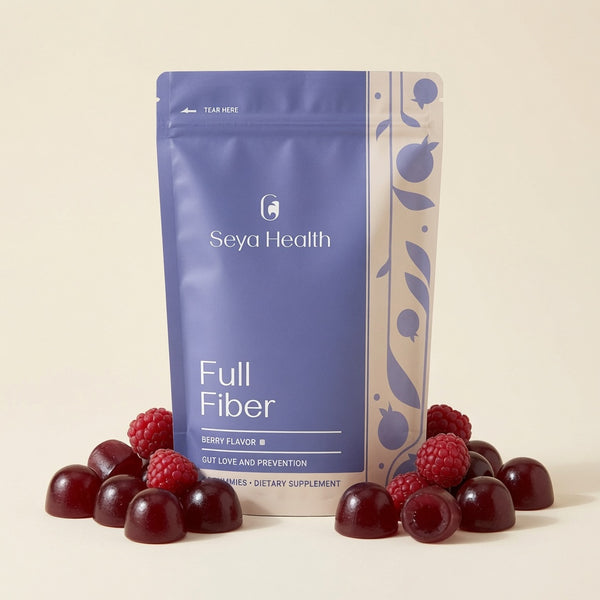
Seya Full Fiber
Your gut bacteria run on fiber. Seya Full Fiber delivers 6 grams from three fibers in one to feed the beneficial bacteria in your gut and support short-chain fatty acid production. Plant based, no gelatin, no sugar alcohols.
Shop Full FiberKeep reading
fiber
Can a Multivitamin Replace Vegetables? What Supplements Can't Do for Your Gut
constipation
The Best Way to Beat Constipation in Your 30s (and Where Fiber Gummies Fit)
fiber
The Gut-Skin Axis: Does Your Gut Health Affect Your Skin?
The gut-skin axis, explained: how your gut bacteria and blood sugar affect your skin, w...