Short version: Jerusalem artichoke is a knobby root that is a rich source of inulin, a prebiotic fiber that feeds your gut bacteria. In a randomized trial of 66 healthy adults, 5 g a day of Jerusalem artichoke inulin raised bifidobacteria compared with placebo. It also causes gas in a lot of people, so go slow.
- Jerusalem artichoke, also called sunchoke, is a tuber known for its high inulin content. It is not an artichoke and it does not come from Jerusalem.
- Inulin is a prebiotic. Your gut bacteria ferment it, and that supports regularity. The evidence is real but modest, and certainty is low.
- Gas and bloating are the common catch. In a 4-week inulin trial, flatulence was the top side effect, reported by 8 of 40 people.
- Women need about 25 g of fiber a day, per the National Academies. Sunchokes can help, but they are one food, not a plan.
Last updated October 2026.
Jerusalem artichoke is a prebiotic root. It is packed with inulin, a fiber your gut bacteria like to eat.
That is why people keep asking about it. It sounds like a gut-health hack. And it sort of is, with a catch.
The catch is gas. Sunchokes are famous for it. That is not a flaw in your gut. It is fermentation doing exactly what it does. This guide covers what the root is, what the research shows, and how to eat it without regret.
What is Jerusalem artichoke?
It is the knobby tuber of a sunflower plant, Helianthus tuberosus. Many stores sell it as sunchoke.
The name is a mix-up. It is not an artichoke. It is a close relative of the sunflower, and it is native to North America, not Jerusalem.
What makes it special is what the tuber stores. Instead of starch, it stores inulin, per a 2026 review of the plant in Current Issues in Molecular Biology, which calls it well known for its high inulin content. That puts it in the same club as chicory root and agave.
Raw, it tastes sweet and nutty. Cooked, it turns soft, a bit like a potato.

What is inulin, and why does it matter for your gut?
Inulin is a fiber your body cannot digest. So it travels to the colon intact.
There, your gut bacteria eat it. That is the idea behind the word prebiotic. The International Scientific Association for Probiotics and Prebiotics defines a prebiotic as a substrate that is selectively used by host microorganisms to give a health benefit.
Not every fiber qualifies. Inulin is one of the best studied that does. We cover the wider picture in prebiotic fiber and your immune system.
Does Jerusalem artichoke feed good gut bacteria?
In one randomized trial, yes. The effect showed up in bifidobacteria, a group of bacteria linked to a healthy gut.
The study ran with 66 healthy adults aged 18 to 50. Each person got fruit and vegetable shots with 5 g a day of Jerusalem artichoke inulin, or a placebo. Bifidobacteria were significantly higher on the inulin shots, at about 10.0 and 9.8 log10 cells per gram of stool, versus 9.3 on placebo, per Ramnani et al., British Journal of Nutrition, 2010 (PMID 20187995).
Read that for what it is. A change in bacteria counts in healthy people. It does not show that sunchokes fix any condition. It shows the fiber reaches the colon and the bacteria respond.
Does inulin help with regularity?
It can, a little. Do not expect a big swing.
A 2025 meta-analysis pooled 20 randomized trials, 1,786 people, on non-digestible oligosaccharides like inulin. They modestly raised stool frequency, with bigger gains in people who were constipated. But the authors rate the certainty of the evidence as low, per Chen et al., Nutrients, 2025 (PMID 41156499).
A separate 4-week trial gave 39 adults with functional constipation 12 g of chicory inulin a day. Stool frequency and abdominal symptoms improved more than on placebo, per Puhlmann et al., 2025 (PMID 41233756). That used chicory inulin, not sunchoke. The two are close cousins, but it is not a direct test of the tuber.
So the honest line is this. Inulin supports regularity for many people. How much depends on you.
What makes Jerusalem artichoke cause gas?
Because your gut bacteria are busy. Fermentation makes gas.
It is the same reason beans do it. Inulin is a low-digestible carbohydrate, and these can cause gas, discomfort, and loose stools, especially at higher intakes. Those effects are usually temporary, per Grabitske and Slavin, Critical Reviews in Food Science and Nutrition, 2009 (PMID 19234944).
The numbers from the constipation trial above are a fair picture. Among 40 people on inulin, flatulence was the most common complaint at 8 people, followed by bloating at 5 and cramps at 4. Nobody quit, and nothing serious was reported, per Puhlmann et al., 2025.
It is a signal, not a character flaw. Your gut is just not used to the fiber yet.
How do you eat Jerusalem artichoke without the bloat?
Start small. A few slices, not a plate.
- Start with a couple of tablespoons. Roasted or sauteed, mixed into a meal you already eat.
- Wait two or three days. Give your gut bacteria time to adjust before you add more.
- Drink water. Fiber needs fluid to move.
- Cook it. Roasting or simmering makes it soft and easier to eat in volume.
- Pair it with other fiber foods. Variety spreads the load. See our list of high-fiber foods for women.
If gas hits hard, you ate too much too fast. Pull back and try again next week. If you have a gut condition or take medication that affects digestion, talk to a qualified clinician first.
Where does Jerusalem artichoke fit in your daily fiber?
Women need about 25 g of fiber a day, per the National Academies. After 50, the target drops to about 21 g.
Sunchokes can add a few grams, but they are a seasonal root, hard to find, and hard on the gut in large amounts. Most women will not eat them every day. That is fine.
Fiber works best when it is steady. A daily routine you keep beats a big dose you skip. For ideas on getting there with food, see high-fiber foods for women over 40.
Where does Seya fit, honestly?
Seya sells one product. A vegan fiber gummy.
It is not made from Jerusalem artichoke. It uses resistant tapioca fiber, another fermentable prebiotic, with about 6 g of fiber from three gummies. At that dose, the honest claim is that it supports regularity. Nothing louder. You can read how it works in what resistant tapioca starch is, and what to check on any label in what is actually in a fiber gummy.
If you like sunchokes, eat them. If you want a steady daily fiber without the hunt, a fiber gummy is one way to cover the gap. Either way, start low and build up.
This is education, not medical advice.
These statements have not been evaluated by the Food and Drug Administration. This product is not intended to diagnose, treat, cure, or prevent any disease.
Frequently asked questions
What is Jerusalem artichoke good for?
Jerusalem artichoke is mainly a food source of inulin, a prebiotic fiber that feeds gut bacteria. In a randomized trial of 66 healthy adults, 5 g a day of Jerusalem artichoke inulin raised bifidobacteria compared with placebo. Inulin in general supports regularity for many people, though the evidence is modest. It is a food, not a treatment for any condition.
Does Jerusalem artichoke give you gas?
Your body cannot digest inulin, so it reaches the colon, where gut bacteria ferment it and make gas. Low-digestible carbohydrates like inulin can cause gas, discomfort, and loose stools, especially at higher intakes, and these effects are usually temporary. In a 4-week inulin trial, flatulence was the most common complaint, reported by 8 of 40 people. Start with a small portion and build up slowly.
Is Jerusalem artichoke a prebiotic?
Yes, it is a food source of a well-known prebiotic. Its tubers store inulin, a fiber that resists digestion and is selectively used by gut bacteria such as bifidobacteria. A randomized trial found higher bifidobacteria on Jerusalem artichoke inulin than on placebo. That shows a prebiotic effect on gut bacteria in healthy people, not a fix for any gut problem.
How much Jerusalem artichoke should you eat?
There is no official serving. Start with a couple of tablespoons of cooked sunchoke, wait two or three days, then add more if you feel fine. The research on Jerusalem artichoke inulin used 5 g a day, and a chicory inulin trial used 12 g a day, but those were measured supplements, not whole roots. Drink water as you go, and talk to a clinician if you have a gut condition.
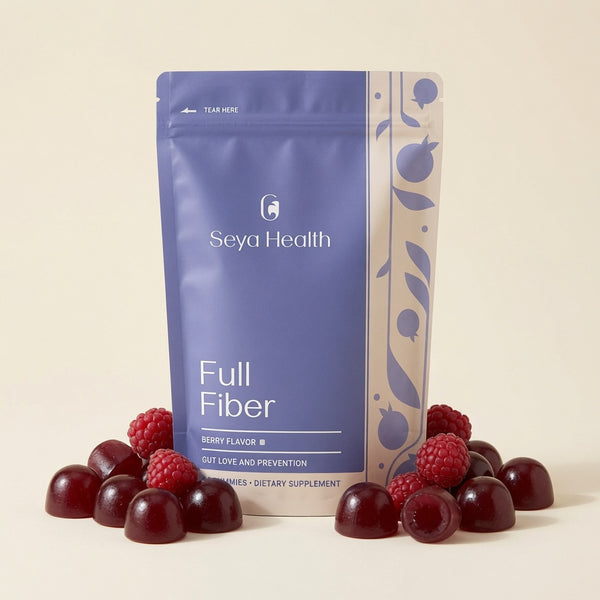
Seya Full Fiber
Most women fall short on fiber. Seya Full Fiber gives you 6 grams from three fibers in three small vegan gummies. Plant based, no gelatin, no sugar alcohols.
Shop Full Fiber