

Short version: The best high-fiber foods for women over 40 are beans, nuts and seeds, and fruit you eat with the skin. Bought by the real serving, a half cup of navy beans gives you 9.6 g of fiber and an ounce of chia gives 10 g. That is a grocery-cart problem, not a willpower one.
- A half cup of cooked navy beans has 9.6 g of fiber, split peas 8.1 g, and lentils 7.8 g, per USDA FoodData Central.
- One ounce of chia seeds carries 10 g of fiber. An ounce of almonds carries 3.5 g.
- The target after 40 is about 25 g a day, dropping to about 22 g after 50. More than 90% of US women miss it.
Last updated August 2026.
You keep getting told to eat more fiber. Nobody hands you the shopping list.
So here it is. The best high-fiber foods for women over 40 are not exotic. They are mostly beans, a few nuts and seeds, and fruit with the skin left on. The trick is buying them by the serving you actually eat, not by some lab weight.
One number to anchor on. A half cup of cooked navy beans, the kind of side you would spoon onto a plate, gives you 9.6 g of fiber, per USDA FoodData Central. Your whole day sits around 25 g. So one bean side is more than a third of the target, from a can that costs about a dollar.
If you have been trying to fix this with salad and coming up short, that is not a discipline problem. You were aiming at the wrong shelf.
What are the best high-fiber foods for women over 40?
Beans first, then nuts and seeds, then fruit with the skin on. Below is the short list, measured by the serving you would actually put in your cart, not by 100 grams in a lab.
Every figure is grams of dietary fiber per common serving, from USDA FoodData Central and the Dietary Guidelines food sources of fiber list. Beans are measured cooked.
| Food (grocery serving) | Fiber per serving |
|---|---|
| Chia seeds, 1 oz | 10 g |
| Navy beans, cooked, ½ cup | 9.6 g |
| Split peas, cooked, ½ cup | 8.1 g |
| Raspberries, 1 cup | 8 g |
| Lentils, cooked, ½ cup | 7.8 g |
| Pinto beans, cooked, ½ cup | 7.7 g |
| Black beans, cooked, ½ cup | 7.5 g |
| Chickpeas, cooked, ½ cup | 6.3 g |
| Pear, 1 medium with skin | 5.5 g |
| Almonds, 1 oz | 3.5 g |
Read the top of that list twice. A single bean serving does the work of a whole bag of raw greens.
Why does fiber matter more after 40?
Because three things you feel in midlife all run partly on fiber. Fullness, blood sugar, and staying regular.
Fullness first. In a trial of overweight women, a soluble-fiber preload cut hunger more than a low-fiber one, and the women ate about 23% less the next day. The effect was strongest in the postmenopausal group. See Burton-Freeman et al., Nutrition and Healthy Aging, 2017 (PMID 28447070).
Blood sugar next. Soluble fiber slows how fast food leaves your stomach. As the National Library of Medicine puts it plainly:
"Soluble fiber attracts water and turns to gel during digestion. This slows digestion." — MedlinePlus, National Library of Medicine
And regularity. A 6-week study fed men and postmenopausal women either 40 g or 21 g of fiber a day. The higher-fiber group ended up with a 92-calorie larger daily energy loss, part of it through stool. That is Karl et al., American Journal of Clinical Nutrition, 2017 (PMID 28179223). We go deeper on the body side in what fiber actually does in a woman's body.
What should be in your cart from the bean aisle?
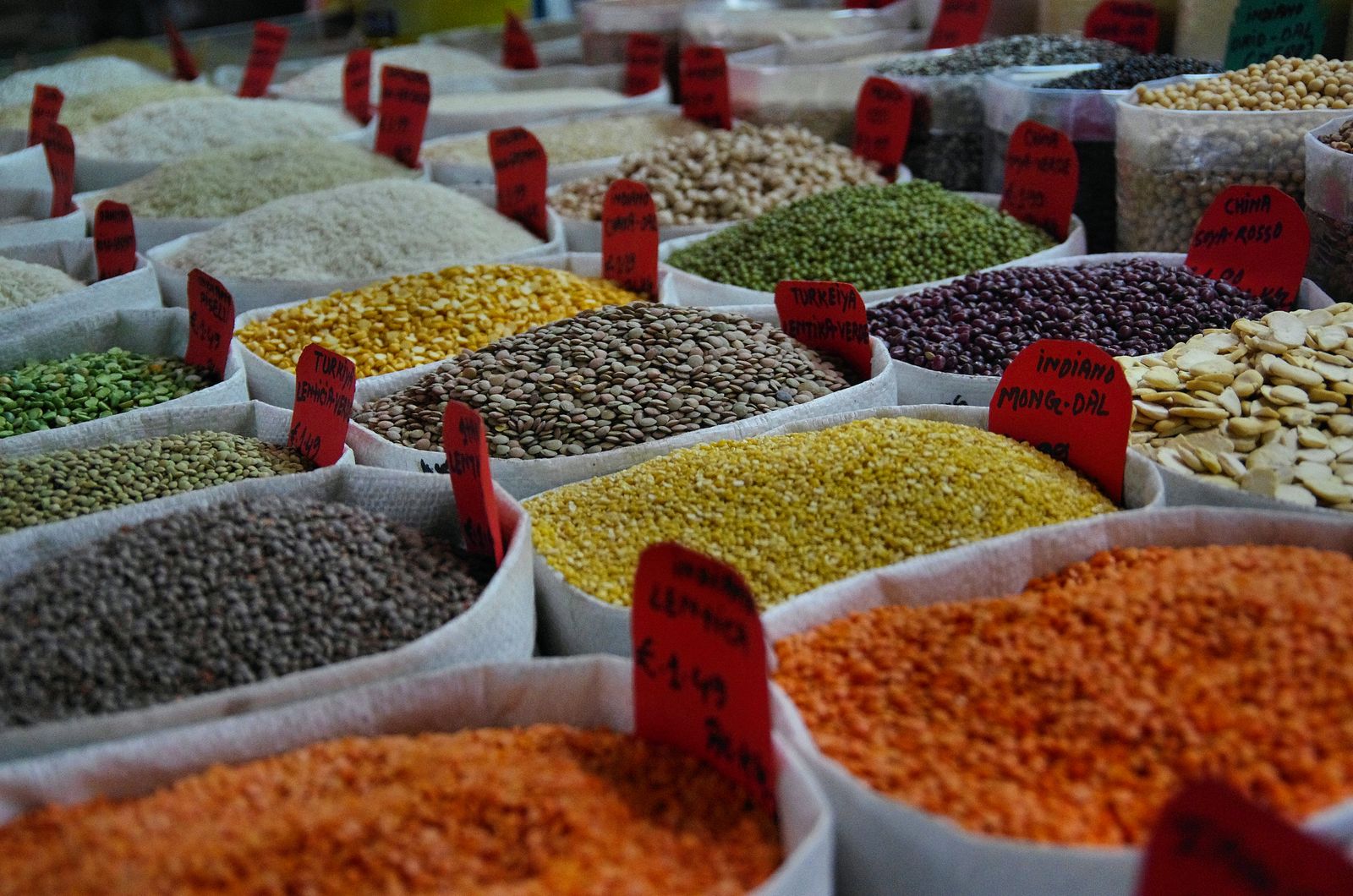
Two cans, minimum. This is the aisle that closes the gap.
Navy beans lead at 9.6 g of fiber per cooked half cup. Split peas follow at 8.1 g, lentils at 7.8 g, pinto beans at 7.7 g, and black beans at 7.5 g. Chickpeas come in at 6.3 g and make an easy roasted snack or a hummus base.
Here is why beans beat the seed at the very top of the table. You eat a real half cup of beans. You do not eat a half cup of chia. So beans put far more grams on your plate in a normal meal, even though chia wins gram for gram.
One bean side, twice a day, is roughly 15 g of fiber before you count anything else.
Which nuts and seeds add the most fiber?
Chia first, then almonds. Both stir into food you already eat.
One ounce of chia seeds, about two tablespoons, carries 10 g of fiber. Stir it into yogurt or oatmeal and it disappears. An ounce of almonds, roughly a small handful, adds 3.5 g and travels well in a bag. An ounce of pistachios gives about 3 g.
Nuts and seeds are the "add-on" tier. On their own they will not hit your number. Sprinkled across a day, they quietly add 6 to 10 g without a single extra meal.
Buy them raw or dry-roasted, not candied. The coating adds sugar, not fiber.
What fruit and produce should you actually buy?
Berries and any fruit you can eat with the skin on.
Raspberries lead the produce section at about 8 g of fiber per cup, roughly double most other fruit. A medium pear with the skin gives 5.5 g. An apple with the skin is close behind.
The skin is the point. Peel the pear or the apple and you throw out most of the fiber you paid for. Same with a baked potato.
Lettuce and cucumber are near the bottom. They are mostly water, which is why a big salad can feel virtuous and still leave your daily fiber almost untouched.
How do you build a 25-gram day from this list?
Three items. Here is the math, straight from the USDA numbers above.
- 1 oz chia stirred into breakfast: 10 g
- ½ cup navy beans at lunch: 9.6 g
- 1 medium pear with skin in the afternoon: 5.5 g
That is 25.1 g. A full day, from three cheap things, before you count your bread, your coffee, or your dinner vegetables.
The target sounds impossible because it gets sold as a lifestyle. It is three portions. For the exact number by age, see how much fiber women over 40 need.
How do you add these foods without the bloat?
Slowly, and with more water.
Going from a low-fiber week to a bean at every meal will make you gassy for a few days. That bloat is not a sign your gut is broken or that you did it wrong. It is fermentation. Your gut bacteria are eating the new fiber, and gas is what that reaction makes. It is a signal, not a character flaw.
So build up. Add one high-fiber serving every few days rather than all at once. Drink more water as you climb, because fiber pulls water into the gut and needs it to move. Give any change 2 to 4 weeks before you judge it.
If most women fall short, the reason is structural, not personal. In US data, more than 90% of women miss the fiber target, most of them by roughly half, per Thompson, Nutrients, 2021 (PMID 34836289). We unpack why in the fiber gap.
Where Seya fits, honestly
Seya sells one product. A fiber gummy.
It delivers about 5 g of fiber a day from resistant tapioca fiber. That is a real slice of a 25 g target, not a stand-in for the beans. We say that plainly, because at 5 g the evidence supports regularity and nothing louder.
Food does the heavy lifting on this list. A supplement helps close the last few grams on the days the food does not.
The gummy follows the same rule as everything else here. Start low, go up slowly, drink water. Being a supplement does not exempt it from fermentation.
This is education, not medical advice. Talk to a qualified clinician before changing your fiber intake, especially if you have a gut condition or take medication that affects digestion.
These statements have not been evaluated by the Food and Drug Administration. This product is not intended to diagnose, treat, cure, or prevent any disease.
Frequently asked questions
What are the highest-fiber foods for women over 40?
By the serving you actually eat, chia seeds and beans lead. One ounce of chia seeds has 10 g of dietary fiber, and a cooked half cup of navy beans has 9.6 g, per USDA FoodData Central. Split peas give 8.1 g, lentils 7.8 g, pinto beans 7.7 g, and black beans 7.5 g per cooked half cup. Raspberries add about 8 g per cup and a medium pear with the skin gives 5.5 g.
How much fiber does a woman over 40 need per day?
About 25 g a day for women in their 40s, dropping to about 22 g after 50, because the goal is tied to calories and calorie needs fall with age. More than 90% of US women fall short of the target, most of them by roughly half. Reaching it takes about two bean servings plus a serving of fruit or seeds, not a full diet overhaul.
Which beans have the most fiber?
Navy beans top the list at 9.6 g of fiber per cooked half cup, per USDA FoodData Central. Split peas follow at 8.1 g, lentils at 7.8 g, pinto beans at 7.7 g, and black beans at 7.5 g per cooked half cup. Chickpeas give 6.3 g. Any of these, eaten twice a day, supplies roughly 15 g of fiber before you count other foods.
Do nuts have enough fiber to count?
Nuts are an add-on rather than a main source. One ounce of almonds carries 3.5 g of fiber and an ounce of pistachios about 3 g, so a small handful will not hit your daily number on its own. Sprinkled across a day alongside beans and fruit, nuts and seeds quietly add 6 to 10 g. Chia is the exception, at 10 g of fiber per ounce.
How do you eat more fiber after 40 without bloating?
Add it gradually and drink more water. Introduce one high-fiber serving every few days rather than all at once, so your gut bacteria have time to adjust. Bloating after a sudden increase is fermentation, a normal reaction, not a sign of harm. Increase fluid as you raise fiber, since fiber pulls water into the gut, and give any change 2 to 4 weeks before judging it.
Related reading
- High-Fiber Foods for Women: The Best Sources to Hit Your Daily Target
- How Much Fiber Do Women Actually Need? Grams by Age, and Why It's More Than You Think
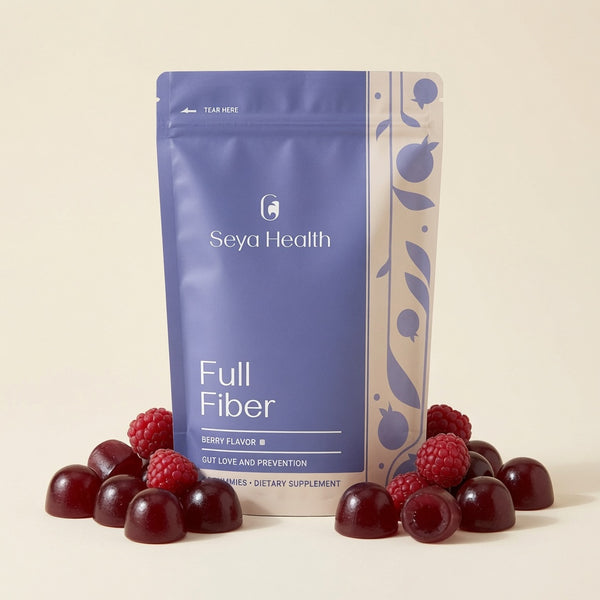
Seya Full Fiber
More than 90% of women fall short on fiber. Seya Full Fiber gives you 6 grams from three fibers in one, in three small gummies that feed the beneficial bacteria in your gut. Plant based, no gelatin, no sugar alcohols.
Shop Full FiberKeep reading
fiber
Can a Multivitamin Replace Vegetables? What Supplements Can't Do for Your Gut

constipation
The Best Way to Beat Constipation in Your 30s (and Where Fiber Gummies Fit)
fiber
The Gut-Skin Axis: Does Your Gut Health Affect Your Skin?
The gut-skin axis, explained: how your gut bacteria and blood sugar affect your skin, w...