
Home/ The Journal/ fiber
fiber
Leafy Greens for Period Bloating: The Fiber and Potassium That Ease Pre-Period Puffiness

Short version: Do leafy greens help with period bloating? Yes, on two fronts. One cup of cooked spinach carries 4.3 g of fiber and 839 mg of potassium. The fiber keeps a slowed gut moving, and the potassium helps your body clear some of the sodium that holds water.
- In one study of 156 healthy women, 62% felt bloated before their period.
- Pre-period bloat has two engines: slower digestion and held water. Greens push on both.
- Cooked beet greens top the list at 1,309 mg of potassium and 4.2 g of fiber per cup.
- Most US women get about 2,320 mg of potassium a day, under the 2,600 mg target.
Last updated August 2026.
Do leafy greens help with period bloating? Yes, on two fronts. Leafy greens for period bloating work because one cup of cooked spinach carries 4.3 g of fiber and 839 mg of potassium in a single serving.
Pre-period bloat runs on two engines. A gut that slows down, and a body that holds water. Leafy greens work on both at once.
You did not eat wrong. That tight waistband the week before your period is a hormone shift, not a willpower problem. In one study of 156 healthy women, 62% felt bloated in the days before their period.
Why do you bloat the week before your period?
Blame the luteal phase, the roughly two weeks between ovulation and your period. Progesterone runs high in that window. Two knock-on effects follow: your gut empties more slowly, and your kidneys hang onto extra sodium and the water that trails it. A sluggish gut plus a few days of held fluid is what pushes on your waistband.
The pattern is well documented. In that study of 156 women, bloating was the single most common gut symptom, reported by 62% before their period. Read the full breakdown in the BMC Women's Health study on gut symptoms around menstruation. The water side is real too: one year-long study of 62 women found fluid holding peaks on the first day of bleeding, then drops, per the research on fluid retention across the menstrual cycle.
"More than 90% of women say they get some premenstrual symptoms, such as bloating, headaches, and moodiness." — U.S. Office on Women's Health
How do leafy greens for period bloating work?
They help with both engines, and it is worth being precise about how. Leafy greens carry two things your body can use here: fiber and potassium. Each one works on a different side of the swelling.
Fiber handles the slow-gut side. When progesterone slows digestion, food and gas back up. Steady fiber keeps that traffic moving. The NIH Office of Dietary Supplements lists better regularity as one of the things fiber does.
Potassium works on the water side. It helps your body let go of some of the sodium it is holding, and sodium is what pulls water in. The NIH potassium fact sheet puts the target at 2,600 mg a day for women and notes that more potassium, paired with less sodium, counters sodium's pull. Most US women get only about 2,320 mg a day, short of that mark, per USDA data on potassium intake. Greens are one of the richest food sources.
Which leafy greens have the most fiber and potassium?
All leafy greens count, but they are not equal. Here is what one cooked cup gives you, using values from USDA FoodData Central. Beet greens lead on both numbers. Kale is the lightest.
| Cooked, 1 cup | Fiber | Potassium |
|---|---|---|
| Beet greens | 4.2 g | 1,309 mg |
| Swiss chard | 3.7 g | 961 mg |
| Spinach | 4.3 g | 839 mg |
| Kale | 2.6 g | 684 mg |
Read the numbers together. A cup of cooked beet greens covers about half the daily potassium gap most women carry, and a real chunk of the day's fiber, in one bowl. Raw greens shrink a lot when cooked, so a cooked cup packs far more than a raw handful.
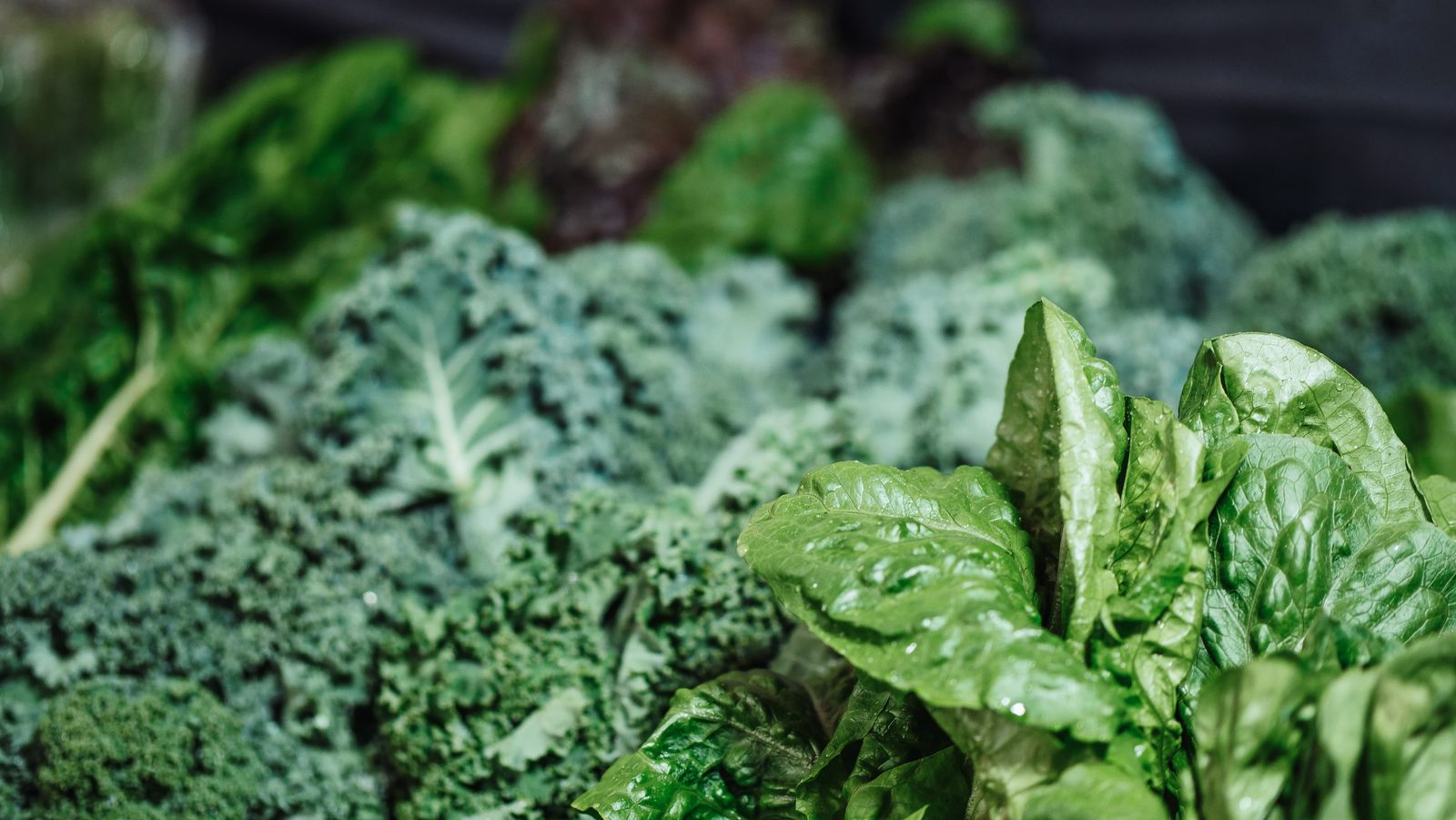
How to eat leafy greens through your luteal phase
The trick is steady, not heroic. A big salad the day your jeans pinch will not undo a slow week. Here is a simple, cycle-aware routine.
- Aim for about 2 cups of cooked greens most days, not just the bad ones. Cooked shrinks them, so 2 cups is easy.
- Build up slowly if greens are new to you, a little more every few days, so you do not trade bloat for gas.
- Drink more water as you add fiber. Fiber needs water to move, and the water helps the potassium do its job.
- Keep it up all month. Both levers work on a habit, not a rescue. Most US women sit near 15 g of fiber a day against a 25 g target, so the daily gap is the real problem to close.
Rotate the greens so it does not get boring. Beet greens and chard sauteed in olive oil, spinach folded into eggs or soup, kale roasted crisp. Different plants, same two nutrients.
What leafy greens can't do for bloating
Here is the honest line. No food drains water out of you on command. That fluid rides your hormones and eases once your period starts, whatever you eat. Greens help your body hold a little less sodium, but they do not flip a switch.
So if you loaded up on salad and still felt puffy, hear this clearly. You did not fail. The water side answers to progesterone, not to your grocery list. Greens soften the edge. They do not erase it, and anyone selling a pill that promises to is selling you something.
Fiber is where the steadier, provable help lives, and it is graded honestly. The evidence that fiber supports regularity is grade C at about 5 g, roughly half the dose used in the bigger trials, so that is exactly what we claim and nothing more.
Seya makes one product. A fiber gummy. 3 vegan gummies carry about 5 g of resistant tapioca fiber, ingredients you can name. It is an honest daily fiber habit for the days your plate comes up short, not a debloat promise and not a fix for held water. Food comes first here: the greens above carry both fiber and potassium, and a gummy only tops up the fiber side.
More on the daily target in the fiber gap, the full food list in high-fiber foods for women, and the mechanism behind the swelling in luteal phase bloating. You can also see our daily fiber gummy for women.
This is education, not medical advice. Bloating that lasts well past your cycle, or comes with pain or other new symptoms, is worth raising with your clinician. Talk to a doctor before big diet changes if you take medication, since potassium and fiber can affect how some medicines work.
These statements have not been evaluated by the Food and Drug Administration. This product is not intended to diagnose, treat, cure, or prevent any disease.
Frequently asked questions
Do leafy greens help with period bloating?
Yes, on two sides of it. Leafy greens carry fiber, which keeps a slowed gut moving when progesterone backs things up, and potassium, which helps your body clear some of the sodium that holds water. One cup of cooked spinach gives 4.3 g of fiber and 839 mg of potassium. They soften pre-period bloat, but they do not drain water on command, because that fluid rides your hormones and eases once your period starts.
Which greens are best for pre-period bloating?
Cooked beet greens lead, at 1,309 mg of potassium and 4.2 g of fiber per cup, per USDA FoodData Central. Swiss chard follows at 961 mg and 3.7 g, spinach at 839 mg and 4.3 g, and kale at 684 mg and 2.6 g. All of them count. Cooking shrinks greens, so a cooked cup delivers far more of both nutrients than a raw handful. Rotate them so the habit sticks.
How much potassium do women need for water balance?
The target is about 2,600 mg a day for adult women, per the NIH potassium fact sheet. Most US women get around 2,320 mg, which is under the mark, which is why potassium is listed as an under-consumed nutrient in the Dietary Guidelines. Potassium works with sodium: more potassium and less salt help your body hold less water. Food is the best source, and leafy greens are among the richest.
Does fiber get rid of bloating before your period?
Fiber helps one side of it. It supports regularity, so it eases the slow, backed-up feeling when progesterone slows your gut. It does not drain the water your body holds before your period. The fiber evidence is graded C at about 5 g, so the honest claim is that it supports regularity, not that it erases bloating. Keep fiber steady all month, aim for the roughly 25 g most adult women need, add it slowly, and drink more water alongside it.
Related reading
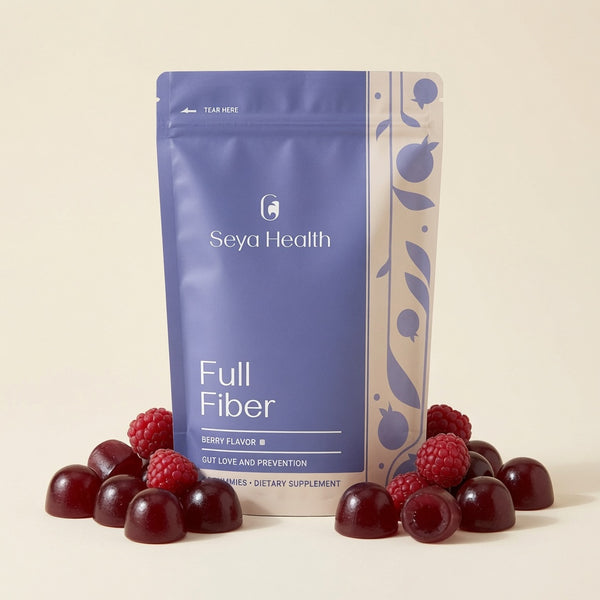
Seya Full Fiber
Your gut bacteria run on fiber. Seya Full Fiber delivers 6 grams from three fibers in one to feed the beneficial bacteria in your gut and support short-chain fatty acid production. Plant based, no gelatin, no sugar alcohols.
Shop Full FiberKeep reading
fiber
Can a Multivitamin Replace Vegetables? What Supplements Can't Do for Your Gut

constipation
The Best Way to Beat Constipation in Your 30s (and Where Fiber Gummies Fit)
fiber
The Gut-Skin Axis: Does Your Gut Health Affect Your Skin?
The gut-skin axis, explained: how your gut bacteria and blood sugar affect your skin, w...