
Home/ The Journal/ digestive health
digestive health
Luteal-Phase Bloating: Why Your Belly Blows Up Before Your Period (and How to Deflate It)

Short version: Luteal phase bloating is the swelling you feel in the two weeks before your period. In one study of 156 healthy women, 62% felt bloated beforehand. It is water and slower digestion, not fat, and it fades once your period starts.
- Bloating was the most common gut symptom before a period, hitting 62% of women in the study.
- The "weight gain" is mostly water. Fluid holding peaks on the first day of bleeding, then drops.
- Fiber, water, movement, and less salt are the honest levers. None of them erase it. They soften it.
Last updated July 2026.
Your jeans fit last week. Now they pinch. Same body, seven days later.
That puffed-up, tight belly before your period has a name. It is luteal phase bloating, and it is common. In one study of 156 healthy women, 62% felt bloated in the days before their period.
You are not imagining it. And you did not eat wrong.
The luteal phase is the roughly 14 days between ovulation and your period. Progesterone climbs. Your body holds more water, and food moves through you slower. That shows up right at your waistband. It is a hormone shift you cannot see, not a willpower problem.
What causes luteal phase bloating?
After ovulation, progesterone rises. That single change does two things: it makes your body hold onto salt and water, and it slows the muscles that move food through your gut. More water plus slower digestion equals a fuller, tighter belly.
The pattern is well documented. In the study of 156 healthy women, bloating was the single most common gut symptom, reported by 62% before their period and 51% during it. Abdominal pain came next at 58%. You can read the full breakdown in the BMC Women's Health study on gut symptoms around menstruation.
"More than 90% of women say they get some premenstrual symptoms, such as bloating, headaches, and moodiness." — U.S. Office on Women's Health
Why do you gain weight before your period?
Because it is water, not fat. Rising and falling hormones nudge aldosterone, the signal that controls salt and water balance, so your body holds extra fluid for a few days. The scale ticks up 1 to 5 pounds. Then it drops.
One year-long study tracked 62 women across 765 cycles. Fluid holding peaked on the first day of bleeding, then eased off fast. So the number on the scale before your period is real, but it is temporary and it is not fat. The details are in the study on fluid retention across the menstrual cycle.
Here is the part worth hearing. That heavier, swollen feeling is not proof you ate badly or lost control. It is your body holding water on a schedule set by your hormones.
How do you stop bloating during your period?
You cannot switch it off, but you can take the edge off. The levers are simple and boring, which is usually a good sign. Move a little, drink water, cut back on salt, and keep fiber steady so things keep moving. Here is how the common options stack up.
| What to try | What it targets | What the evidence says |
|---|---|---|
| Daily fiber | Slow digestion, backed-up feeling | Supports regularity, so it eases the sluggish, backed-up side |
| Water + movement | Water retention, sluggish gut | Widely advised; low risk, helps things move |
| Less salt | Water retention | Less sodium means less water held |
Notice what is missing: no pill that makes it vanish overnight. Anything promising that is selling you something.

Does fiber help with period bloating?
It helps with one side of it, and it is worth being clear about which. Fiber does not drain water out of you. What it does is keep things moving, and slow digestion is half of why you feel bloated in the luteal phase. When progesterone slows your gut, food and gas back up. Steady fiber keeps that traffic moving. The NIH MedlinePlus dietary fiber guide lists better regularity as one of the things fiber does.
The water-retention side is different, and here is the honest part: no food or supplement switches off fluid holding on command. That part rides your hormones and eases once your period starts. So the fiber claim stays narrow. It supports regularity, which takes the pressure off the sluggish, backed-up feeling. It will not deflate water weight, and anyone who tells you a pill does is selling you something.
A simple, cycle-aware routine:
- Keep fiber steady all month, not just on bad days. Aim for the 25 grams most adult women need.
- Build up fiber slowly, a few grams every few days, so you do not trade bloat for gas.
- Drink more water as you add fiber, and keep moving in the 14 days before your period.
Seya's job is to stay specific, not loud. The evidence that fiber supports regularity is graded C at about 5 grams, roughly half the dose used in the bigger trials, so that is exactly what we claim and nothing more. 3 vegan gummies with resistant tapioca fiber, ingredients you can actually name, are an honest daily fiber habit. They will not stop your period, drain water on command, or fix a medical problem.
This statement has not been evaluated by the Food and Drug Administration. This product is not intended to diagnose, treat, cure, or prevent any disease.
Related reading: our daily fiber gummy for women and more from the Seya journal.
Frequently asked questions
Why do you get a bloated belly during your period?
Rising progesterone after ovulation makes your body hold water and slows digestion, so your belly feels full and tight. In one study of 156 healthy women, 62% felt bloated before their period and 51% during it. It is water and slower gut movement, not fat, and it eases once your period ends.
Why have I been extremely bloated for over a week?
A week or so of bloating through the luteal phase is common, because progesterone stays high from ovulation until your period starts. But bloating that lasts well beyond your cycle, or comes with pain, weight change, or other new symptoms, is worth raising with a doctor, since ongoing bloating can have causes unrelated to your period.
Does fiber help with bloating before your period?
It helps with one side of it. Fiber supports regularity, so it eases the slow, backed-up feeling when progesterone slows your gut in the luteal phase. It does not drain the water your body holds before your period; that fluid rides your hormones and eases once bleeding starts. Keep fiber steady all month, aim for the roughly 25 grams most adult women need, add it slowly, and drink more water alongside it.
Related reading
- How Much Fiber Do Women Actually Need? Grams by Age, and Why It's More Than You Think
- Menopause Belly: Why It Happens and What Actually Helps
- Leafy Greens for Period Bloating: The Fiber and Potassium That Ease Pre-Period Puffiness
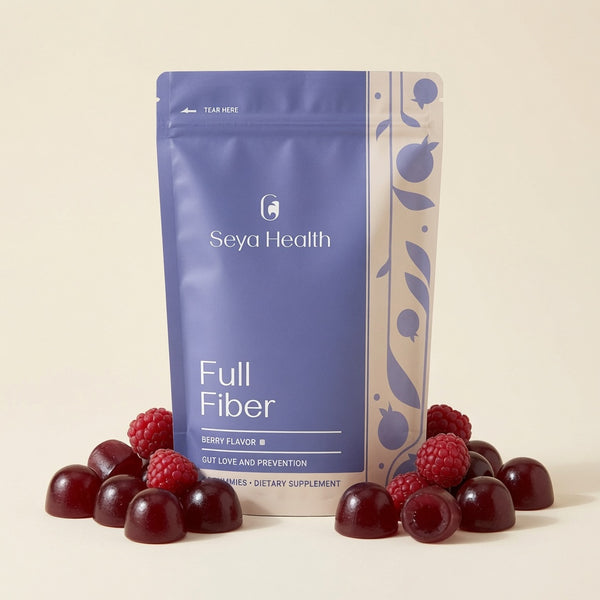
Seya Full Fiber
Getting enough fiber from food every day is hard. Seya Full Fiber is 6 grams from three fibers in one, in three small gummies, so you have a reliable daily floor. Plant based, no gelatin, no sugar alcohols, 60 gummies per pouch.
Shop Full FiberKeep reading
Fiber
Can You Take Fiber With Your Medications? A Safety Guide
Yes, but timing matters. How to take fiber safely with medications, which drugs to watc...
fiber
Antidepressants and Your Gut: Digestion, Weight, and What Actually Helps
How antidepressants affect digestion and weight, why SSRIs and older drugs differ, what...
fiber
What Supplements Should You Take on a GLP-1?
On a GLP-1 like Ozempic or Wegovy? What supplements actually matter (protein, key nutri...