
Home/ The Journal/ hormone therapy
hormone therapy
Perimenopause treatment options compared: hormone therapy, birth control, non-hormonal, and supplements

Short version: The main perimenopause treatment options are hormone therapy, birth control pills, non-hormonal prescriptions, and lifestyle or supplement approaches. Hormone therapy works best for hot flashes. For healthy women under 60, or within 10 years of menopause, the Menopause Society says its benefits outweigh its risks.
- Strongest relief: hormone therapy, for most healthy women under 60.
- Still having periods: low-dose birth control can steady cycles and prevent pregnancy.
- Can't take hormones: non-hormonal pills like fezolinetant or gabapentin.
- Weakest evidence: herbal supplements like black cohosh.
Last updated November 2026.
You wake up soaked at 3 a.m. Your period shows up when it feels like it. Your friend swears by her patch, your sister by her pill, and your feed is full of gummies.
So which perimenopause treatment actually fits you? It depends on your symptoms, your health history, and whether you still need birth control.
This guide puts the four main groups side by side. Every claim links to the study or guideline behind it, so you can bring it to your next appointment.
What are the main perimenopause treatment options?
There are four main groups. Most women end up using one, or a mix of two.
- Hormone therapy. Estrogen, usually paired with a progestogen if you still have a uterus. It comes as a pill, patch, gel, or spray.
- Hormonal birth control. Low-dose pills, rings, or hormonal IUDs. These suit women who still have periods and need to prevent pregnancy.
- Non-hormonal prescriptions. Newer drugs like fezolinetant and elinzanetant, plus older ones like low-dose antidepressants and gabapentin.
- Lifestyle and supplements. Talk therapy, weight loss, diet changes, and herbal products. The evidence here ranges from good to weak.
The Menopause Society reviewed all of these in two position statements, one in 2022 for hormones and one in 2023 for everything else. Those two papers are the backbone of this guide. See NAMS (Menopause, 2022) and NAMS (Menopause, 2023).
How do perimenopause treatment options compare?
Here is the short comparison. Each row is explained in its own section below.
| Option | Best fit | Hot flash relief | Main trade-offs |
|---|---|---|---|
| Hormone therapy | Healthy, under 60 | Strongest | Not for some cancer, clot, or stroke histories |
| Birth control pill | Still having periods | Helpful | Estrogen side effects rise with age |
| Fezolinetant or elinzanetant | Can't or won't take hormones | Good | Newer; fezolinetant needs liver blood tests |
| Low-dose SSRI or gabapentin | Can't take hormones | Modest | Drowsiness, dizziness, nausea |
| CBT or hypnosis | Anyone | Less bother, fewer wake-ups | Takes weekly practice |
| Herbal supplements | Not recommended | No better than placebo | Quality varies by brand |
Is hormone therapy safe for perimenopause symptoms?
For most healthy women under 60, yes. It is also the most effective treatment for hot flashes and night sweats.
The Menopause Society's 2022 statement found the benefits outweigh the risks for women under 60, or within 10 years of their last period, who have no reason to avoid it. The balance looks less favorable after 60, or more than 10 years out, because heart, stroke, and clot risks climb. See NAMS (2022).
Risk is not one number. It shifts with the type, the dose, how long you use it, and the route, such as a pill versus a skin patch.
In November 2025, the FDA removed the boxed warning that had sat on hormone therapy labels since the early 2000s. Reviewers say that warning scared off many women who were good candidates. See Menopause (2026) and Nursing (2026).
Hormone therapy is still not for everyone. A past breast cancer, blood clot, stroke, or heart disease changes the conversation, so share your full history with your clinician.

How does hormone therapy for menopause work?
In perimenopause, estrogen does not just drop. It swings up and down. Those swings unsettle the part of your brain that controls body heat, which sets off hot flashes.
Hormone therapy gives a steady, low dose of estrogen to smooth out those swings. If you still have a uterus, you also take a progestogen. That protects the uterine lining, which estrogen alone can thicken. See NAMS (2022).
The same statement notes hormone therapy also helps vaginal dryness and protects against bone loss and fractures.
One catch for perimenopause: you can still get pregnant. A 2025 review says contraception should continue until menopause is confirmed, which means 12 months with no period. See Menopause (2025). Ask your clinician whether your hormone plan also covers birth control.
Can birth control help during perimenopause?
Yes, for many women it does double duty. It prevents pregnancy and calms several perimenopause symptoms at once.
A 2022 review lists the extra benefits of hormonal birth control at this stage. They include steadier cycles, fewer hot flashes, fewer period migraines, and protection against bone loss. See Int J Womens Health (2022).
Age alone does not rule out any method, says a 2025 review. Still, estrogen side effects like blood clots become more likely as you get older. So the choice depends on your health, not just your birthday. See Semin Reprod Med (2025).
- Combined pill or ring. Contains estrogen. After 40, the review favors types made with natural estrogen.
- Progestin-only pill or hormonal IUD. No estrogen. A safer pick if you have heart risk factors, such as smoking or high blood pressure.
Many women later switch from birth control to hormone therapy once periods stop. Your clinician can help time that change.
Do non-hormonal options like gabapentin help hot flashes?
Yes, though most help less than hormones. The 2023 statement gives its top rating to five non-hormonal options. They are talk therapy (CBT), clinical hypnosis, low-dose SSRIs or SNRIs, gabapentin, and fezolinetant. See NAMS (2023).
- Gabapentin. A review of 7 trials with 901 women found it cut hot flashes by about 20% to 30% more than placebo. Dizziness and sleepiness were common. See Clin Ther (2009).
- Low-dose paroxetine. Two trials of 1,184 women tested a 7.5 mg daily dose. It reduced hot flashes, and the benefit lasted through 24 weeks. See Menopause (2013).
- Fezolinetant (Veozah). The FDA approved it in May 2023. It blocks the brain signal that sets off hot flashes. See the FDA announcement.
- Elinzanetant (Lynkuet). A newer drug in the same family, approved in late 2025. See Nurse Pract (2026).
Oxybutynin, a bladder medicine, and weight loss also made the recommended list, with weaker evidence.
How well do the newest non-hormonal drugs work?
Both drugs beat placebo in large trials. With fezolinetant, the benefit showed up after the first week.
In the SKYLIGHT 1 trial, women averaged 7 or more moderate to severe hot flashes a day at the start. The 45 mg dose of fezolinetant cut about 2.5 more hot flashes a day than placebo by week 12. See Lancet (2023).
In the OASIS 1 and 2 trials, elinzanetant cut about 3.2 more hot flashes a day than placebo by week 12. It also improved sleep. See JAMA (2024).
Two cautions apply here. First, these trials enrolled women after menopause, not during perimenopause. Second, fezolinetant now carries an FDA boxed warning about rare liver injury, so it requires regular liver blood tests. See Expert review (2026).
Do supplements work for perimenopause symptoms?
Not for hot flashes, based on the best reviews so far. The 2023 statement does not recommend herbal remedies or supplements for hot flashes. See NAMS (2023).
Black cohosh is the most studied. A Cochrane review pooled 16 trials with 2,027 women. Black cohosh did no better than placebo at reducing how often hot flashes happened. See Cochrane (2012).
Soy extracts and the soy compound equol also failed to earn a recommendation. The FDA does not approve supplements before they are sold, so strength can vary from bottle to bottle.
Some supplements do have a job in midlife, just not as a hot flash fix. Creatine supports muscle, and fiber supports regular digestion. Our guide to the best perimenopause supplements sorts the useful ones from the hype.
Can a dietary intervention reduce hot flashes?
Possibly, though the evidence is small. In the WAVS trial, 38 women after menopause either kept eating as usual or switched to a low-fat vegan diet with half a cup of cooked soybeans a day.
After 12 weeks, total hot flashes fell 79% in the diet group versus 49% in the comparison group. Moderate to severe hot flashes fell 84% versus 42%. See Menopause (2021).
That is a striking result, but the trial was small and not blinded. The 2023 statement still lists diet changes and soy foods as not recommended for hot flashes, since larger studies disagree.
A plant-heavy diet has other upsides, like more fiber. Read more in our post on fiber and menopause hot flashes.
How long will you need treatment?
Longer than many women expect. In the SWAN study of 1,449 women with frequent hot flashes, symptoms lasted a median of 7.4 years. See JAMA Intern Med (2015).
Women whose hot flashes started early in perimenopause had them the longest, often more than 11 years. That is one reason to review your plan with a clinician once a year rather than set it and forget it.
Not sure where you are in the transition? Start with how doctors tell if you are in perimenopause and how long perimenopause lasts.
How do you choose the right option?
Bring these five questions to your next appointment:
- What bothers me most? Hot flashes, sleep, mood, irregular bleeding, or brain fog each point to different options.
- Do I still need birth control? If yes, a hormonal method may cover both needs.
- What is in my history? Breast cancer, clots, stroke, migraines with aura, or liver disease all matter.
- Pill, patch, or gel? The route changes the risk.
- When do we check in again? Plan a yearly review.
Brain fog is common too. Our post on menopause brain fog covers what helps.
Where Seya fits, honestly
We sell a fiber gummy that supports regularity and gut health. It is not a treatment for hot flashes, and it is not a substitute for hormone therapy or any prescription.
Where fiber can help in midlife is digestion, which often slows down in perimenopause. Our guide to perimenopause constipation explains why. For the bigger picture, see how to support your hormones after 40.
Treat this page as education, not medical advice. Your clinician knows your history and can tailor these options to you.
These statements have not been evaluated by the Food and Drug Administration. This product is not intended to diagnose, treat, cure, or prevent any disease.
Frequently asked questions
Is hormone therapy safe for perimenopause symptoms?
For most healthy women under 60, or within 10 years of menopause, the benefits outweigh the risks. A history of breast cancer, clots, or stroke changes that.
Can birth control help during perimenopause?
Yes. Low-dose hormonal birth control can steady cycles, ease hot flashes, and prevent pregnancy, which is still possible until 12 months without a period.
Do non-hormonal options like gabapentin help hot flashes?
Yes, modestly. Gabapentin cut hot flashes about 20% to 30% more than placebo in trials, but dizziness and sleepiness are common.
How does hormone therapy for menopause work?
It gives a steady dose of estrogen to smooth out the swings that unsettle the brain's heat control. A progestogen protects the uterus.
Can a dietary intervention reduce hot flashes?
Maybe. In one small 12-week trial, a low-fat vegan diet with soybeans cut moderate to severe hot flashes by 84%. Larger studies are mixed.
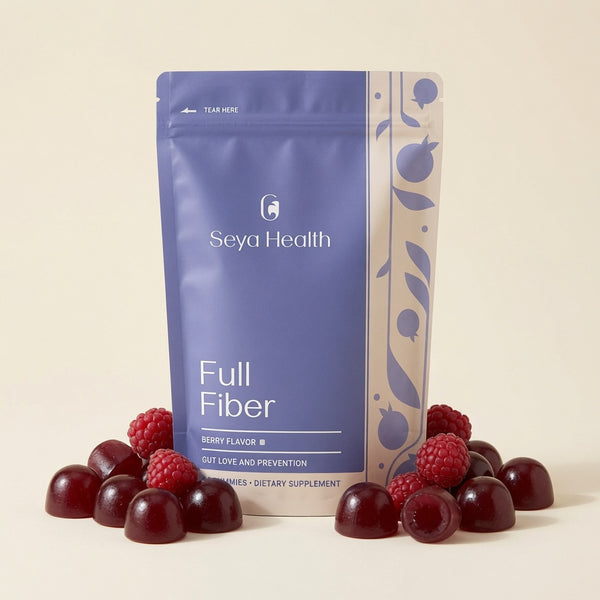
Seya Full Fiber
Most women fall short on fiber. Seya Full Fiber gives you 6 grams from three fibers in three small vegan gummies. Plant based, no gelatin, no sugar alcohols.
Shop Full FiberKeep reading

bone health
Best supplements for women over 40: what the evidence supports for heart, bones and muscles (and what's hype)

creatine
How long does creatine take to work? A realistic timeline for women

constipation