
Home/ The Journal/ constipation
constipation
Perimenopause and Constipation: Why Your Gut Slows Down at Midlife

Short version: Perimenopause constipation is real, and it is common. In the Women's Health Initiative, 34.7% of 73,047 postmenopausal women reported constipation. Estrogen and progesterone act on your gut, so when they start swinging and falling, food moves through you slower. Fiber, fluids, and movement are the honest levers.
- 34.7% of the 73,047 women in the Women's Health Initiative reported constipation.
- About 33 out of 100 adults ages 60 and older have constipation symptoms, versus 16 out of 100 adults overall.
- Estrogen and progesterone receptors sit inside your gut wall. When those hormones drop, gut transit slows.
- Adults need 22 to 34 grams of fiber a day. Add it a few grams at a time, with water.
Last updated July 2026.
You used to go every morning. Now it is every third day, if you are lucky.
Your food did not change. Your routine did not change. Something else did.
Perimenopause is the stretch of years before your last period. Per the Office on Women's Health, the average age of menopause in the United States is 52.
In those years, estrogen and progesterone stop running on a steady monthly schedule. They swing. Then they fall. Your gut feels all of it, because your gut wall is lined with receptors for both.
So the slowdown is not a discipline problem. It is a signal problem, and the signal changed on you.
Does perimenopause cause constipation?
It makes constipation more likely. The numbers back that up.
Constipation is already twice as common in women as in men. One population study put the rate at 19.7% in women and 10.6% in men. Women were more than twice as likely to be constipated, at an odds ratio of 2.08. See the full breakdown in the review of demographic factors in constipation symptoms.
Then age and hormones stack on top. In the Women's Health Initiative, 34.7% of 73,047 women aged 50 to 79 reported constipation. Most of it was mild, at 25.7%. Another 7.4% called it moderate and 1.6% called it severe. The data is in the Women's Health Initiative analysis of constipation in postmenopausal women.
"About 33 out of 100 adults ages 60 and older have symptoms of constipation." — National Institute of Diabetes and Digestive and Kidney Diseases
Compare that to 16 out of 100 adults overall. The rate roughly doubles with age.
Why does your gut slow down at midlife?
Because estrogen and progesterone are not just reproductive hormones. They are gut hormones too.
Receptors for both sit in the muscle and nerve cells of your gut. Those hormones help set how hard your gut squeezes and how fast things move.
In perimenopause the levels stop being steady, then trend down. Transit slows. Stool sits longer. Water gets pulled out of it. And it comes out harder.
A 2026 review in Frontiers in Endocrinology puts it plainly:
"After menopause, the levels of E and progesterone (P) decrease significantly, decreasing the protective effect of GI function." — Li et al., Frontiers in Endocrinology, 2026
The same review reports that menopausal women are 2.9 times more likely to have abnormal gut symptoms. So if your digestion suddenly feels like someone else's, that tracks.
Not sure you are in this stage yet? Start with the early signs of menopause.
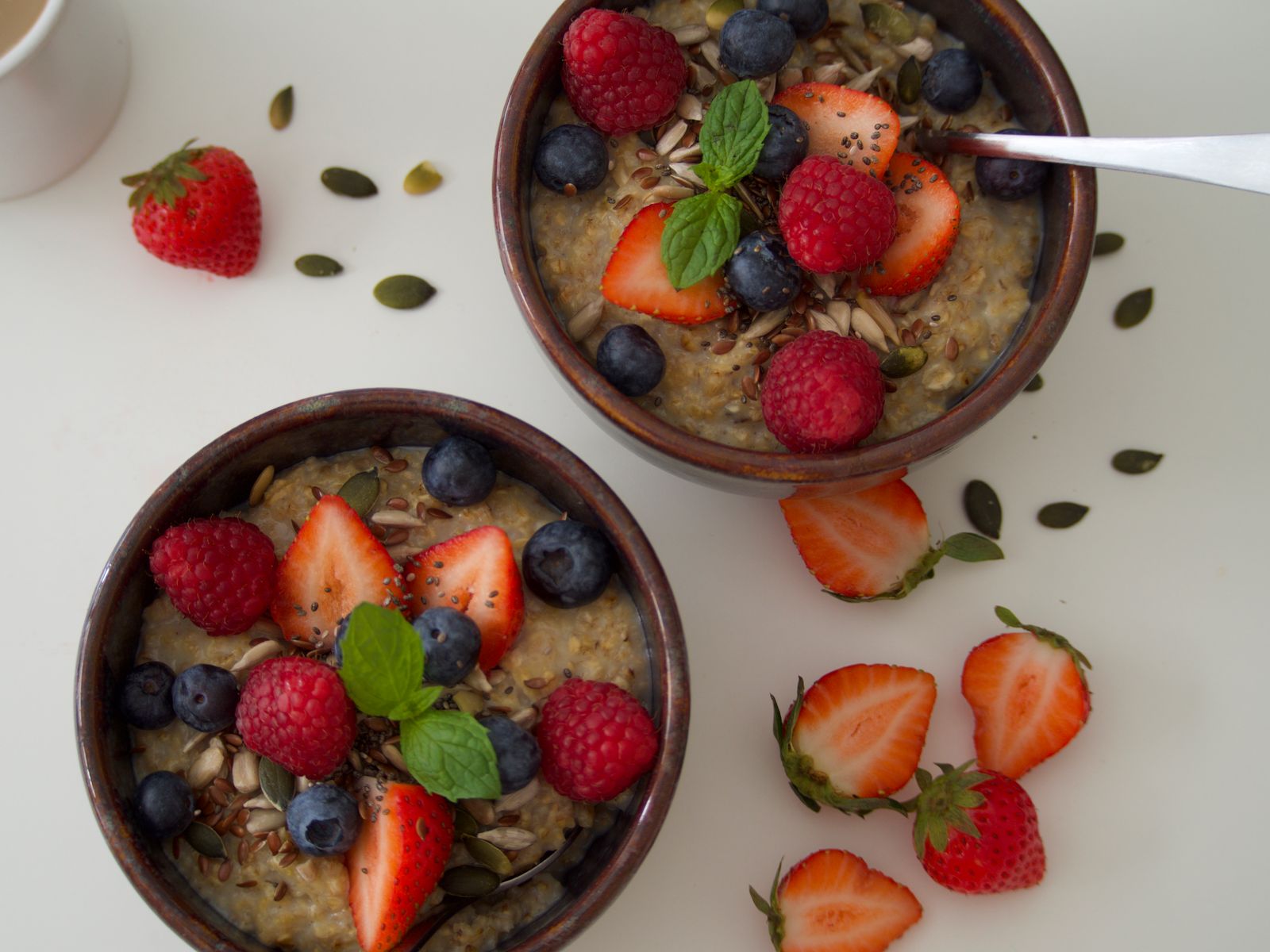
How much fiber do you need in perimenopause?
The same as any adult, and most women are not close.
The NIDDK sets the range at "22 to 34 grams of fiber a day," depending on age and sex. Most women land nearer 15.
That gap matters more once your gut is already slow. Fiber is one of the few levers that acts straight on transit and stool consistency.
Two rules make it work instead of backfiring:
- Add fiber a few grams at a time over a couple of weeks. Jumping from 12 grams to 30 overnight buys you gas, not relief.
- Drink more water as you add it. Fiber needs fluid to do its job.
The NIDDK says the same: "Be sure to add fiber to your diet a little at a time so your body gets used to the change." Its full guidance sits on the eating, diet, and nutrition page for constipation. For where the gap starts, see why most women fall short on fiber.
What helps perimenopause constipation?
Boring things, done daily. Here is how the common moves stack up.
| What to do | What it targets | What the evidence says |
|---|---|---|
| Steady daily fiber | Stool consistency, transit speed | In a meta-analysis of 16 trials, 66% of people responded to fiber versus 41% on control |
| More water | Hard, dry stool | Recommended alongside fiber by the NIDDK; fiber needs fluid to work |
| Daily movement | Sluggish gut, bloat | Widely advised, low risk, easy to keep up |
| A set bathroom time | Ignored urges | Standard clinical advice: go when your body signals, do not put it off |
That fiber row is worth reading closely. A 2022 meta-analysis in The American Journal of Clinical Nutrition pooled 16 randomized trials and 1,251 adults with chronic constipation.
Fiber beat control: 311 of 473 people responded, against 134 of 329. Psyllium raised stool frequency by 3.08 bowel movements a week. The authors were blunt about dose. The effect showed up above 10 grams a day, over at least 4 weeks. Read it in the AJCN meta-analysis of fiber supplementation for chronic constipation.
Note what that means. Fiber helps at a real dose, taken consistently, for weeks. Not overnight, and not from one good salad. If you want the other side of the plate, here is what to skip when you are backed up.
When should you talk to a doctor?
Sooner than most women do. A slower gut in perimenopause is common, and common is not the same as fine.
Book the appointment if it is new and lasts more than a few weeks. Book it if there is blood, vomiting, unexplained weight change, or pain that wakes you up. Book it if nothing shifts after a month of steady fiber and fluids.
Constipation is also a side effect of plenty of common medications. Worth checking rather than guessing.
Seya's job here is to stay specific, not loud. The evidence that fiber supports regularity earns a grade of C at about 5 grams. That is roughly half the dose used in the bigger trials, so that is exactly what we claim and nothing beyond it. 3 vegan gummies with resistant tapioca fiber, ingredients you can actually name, are an honest daily fiber habit. They will not change your hormones, and they are not a fix for a medical problem.
These statements have not been evaluated by the Food and Drug Administration. This product is not intended to diagnose, treat, cure, or prevent any disease.
Related reading: our daily fiber gummy for women and more from the Seya journal.
Frequently asked questions
Can perimenopause cause constipation?
Yes, it is a common change at this stage. Estrogen and progesterone act on receptors inside your gut wall and help set how fast food moves through you. As those hormones swing and fall in perimenopause, transit slows and stool gets harder. In the Women's Health Initiative, 34.7% of 73,047 women aged 50 to 79 reported constipation, and the NIDDK puts the rate at about 33 out of 100 adults ages 60 and older.
How do you fix perimenopause constipation naturally?
Start with fiber, fluids, and daily movement. The NIDDK recommends 22 to 34 grams of fiber a day, added a few grams at a time so your gut adjusts, with more water alongside it. In a meta-analysis of 16 randomized trials, 66% of people responded to fiber versus 41% on control, with the benefit showing up above 10 grams a day over at least 4 weeks. Give it a few weeks before you judge it, and see a doctor if nothing shifts.
Does fiber help with constipation during menopause?
It helps with the mechanical side, which is the side that changes at midlife. Fiber supports regularity by improving stool consistency and keeping things moving, and pooled trial data shows a real effect at doses above 10 grams a day for 4 weeks or more. It does not change your estrogen or progesterone levels, and it is not a substitute for medical care if your symptoms are new, severe, or persistent.
Related reading
- How Much Fiber Do Women Actually Need? Grams by Age, and Why It's More Than You Think
- How to Quiet Food Noise Naturally: Can Fiber and Nutrition Turn Down the Volume?
- The real reason you can't wind down at night
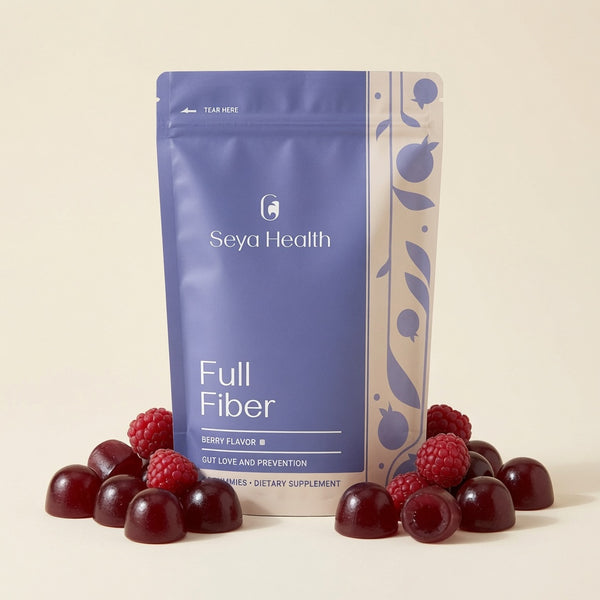
Seya Full Fiber
Your gut bacteria run on fiber. Seya Full Fiber delivers 6 grams from three fibers in one to feed the beneficial bacteria in your gut and support short-chain fatty acid production. Plant based, no gelatin, no sugar alcohols.
Shop Full FiberKeep reading

fiber
Can a Multivitamin Replace Vegetables? What Supplements Can't Do for Your Gut

constipation
The Best Way to Beat Constipation in Your 30s (and Where Fiber Gummies Fit)
fiber
The Gut-Skin Axis: Does Your Gut Health Affect Your Skin?
The gut-skin axis, explained: how your gut bacteria and blood sugar affect your skin, w...