
Home/ The Journal/ fiber
fiber
What to Eat on GLP-1: The Protein, Fiber, and Hydration Guide
What to eat on a GLP-1 like Ozempic or Wegovy: prioritize protein, fiber, and water when appetite is low. Why fiber is the half most people miss, and the foods that help.

GLP-1 medications like Ozempic and Wegovy turn your appetite down, so you eat less without trying. That changes the math on food. When every meal is smaller, what goes in it matters more. Prioritize three things: protein, to protect your muscle; fiber, to keep digestion moving and ease the constipation these drugs are known for; and water, so the fiber can do its job. Fiber is the half most people miss, because eating less food usually means getting less fiber, right when you need it most.
Why eating changes on a GLP-1
GLP-1 medications work by slowing how fast your stomach empties and telling your brain you are full sooner. You eat less and you stay full longer.1 That is the goal. But it comes with two knock-on effects that food can help with.
First, when you are eating much less, it is easy to come up short on the nutrients that matter most, especially protein and fiber. Research on GLP-1 users has flagged that many are not eating enough nutritious food.2 Second, slower digestion plus less food often adds up to constipation, one of the most common complaints on these drugs.3
So the goal is not simply to eat less. It is to make the little you eat count.
The three priorities: protein, fiber, and water
Protein, to protect your muscle
When weight comes off quickly, some of it can come from muscle instead of fat. Protein at each meal helps protect it, and muscle is worth protecting because it keeps you strong and steady as you get older. A common target is about 0.55 grams of protein per pound of body weight, which is roughly 80 grams a day for a 150-pound person.4 Easy sources: eggs, Greek yogurt, cottage cheese, fish, chicken, tofu, beans, or a protein shake on days when solid food is hard. A simple habit that helps: eat your protein first, while your appetite is still there, before you fill up.
Fiber, to keep things moving
Fiber does two big jobs here. It helps with the constipation these medications commonly cause, and it feeds the good bacteria in your gut. Most adults should aim for 25 to 38 grams a day.1 Good sources include berries, oats, chia and ground flax, beans and lentils, cooked vegetables, and avocado. Add fiber gradually, because too much too fast makes gas and bloating worse.
Water, so the fiber can work
This one gets skipped and it matters. Fiber needs water to soften stool and move it along. Without enough fluid, adding fiber can actually backfire and leave you more backed up.3 Sip steadily through the day rather than trying to catch up all at once.
The fiber problem most people miss on a GLP-1
Here is the trap, and it is the part generic advice glosses over. A GLP-1 turns your appetite down, so you eat less food overall. Less food usually means less fiber. And low fiber is one of the main reasons people get constipated on these medications.
So the fiber gap that most women already have gets wider at the exact moment your gut needs fiber the most. More than 90% of women fall short on fiber to begin with, and the average adult gets only about 17 grams a day, roughly half of what is recommended.56 On a GLP-1, hitting 25 to 38 grams from food while your appetite is gone takes real planning.
When you can only manage a few bites, a giant bowl of beans or a big salad is not realistic. That is what makes fiber the hard half.
Best fiber-rich foods on a GLP-1
Choose foods that are gentle on the stomach, nutrient dense, and naturally high in water:
- Berries. Raspberries and blackberries carry about 8 grams of fiber a cup and are easy to eat in small amounts.
- Oats and ground flax or chia. A small bowl of oats with a spoon of chia is fiber without much volume.
- Beans and lentils. Fiber and protein in one, so they cover two priorities at once.
- Cooked vegetables. Steamed or roasted is easier to digest than raw, which can help if you feel queasy.
- Avocado. Soft, filling, and fiber-rich in a small portion.
Go slow, and drink water alongside. To picture the amounts, 6 grams of fiber is about half an avocado, or three quarters of a cup of chickpeas, or one medium pear.
How to add fiber without the gas
The most common mistake is going from very little fiber to a lot overnight. On a GLP-1, where your gut is already moving slower, that is a recipe for gas and cramping. A gentler approach works better:
- Add roughly 5 grams of fiber every few days, not all at once, and notice how you feel before adding more.
- Drink water every time you add fiber. Think of water as the other half of the dose.
- Spread fiber across the day instead of loading it into one meal.
- Lean on cooked and soluble sources first, like oats, cooked carrots, and chia, which tend to be gentler than a big raw salad.
- Keep moving. Even a 15-minute walk helps your gut do its job.
This steady approach is also why a measured daily fiber source can be easier to manage than overhauling every meal at once. You know exactly how much you are getting, and you can raise it slowly.
What a realistic day can look like
You do not need a perfect plate. On a low-appetite day, a pattern like this covers the basics without asking your stomach for more than it wants:
- Morning: Greek yogurt with a spoon of chia and a handful of berries. Protein and fiber in a few bites.
- Midday: a small bowl of lentil soup, or eggs with half an avocado.
- Evening: a palm-sized portion of fish or tofu with a few roasted vegetables.
- Through the day: water, and a fiber supplement if you are still short.
Small, protein-and-fiber-forward, and spread out. That beats one large meal your stomach will fight.
When getting enough fiber is the hard part
If hitting your fiber target from food every day is the part that does not happen, especially on the days you can barely eat, a low-volume fiber option makes it doable. Seya Full Fiber gives you 6 grams of fiber from three fibers in one, in three small gummies. There is no big bowl to finish and no shake to blend. The fermentable fibers feed the beneficial bacteria in your gut and give you fiber that supports digestive comfort. It is plant based with no gelatin, has no sugar alcohols, and comes as 60 gummies per pouch.
A daily fiber supplement is a helper, not a substitute for a balanced plate. Check with your provider about timing, since fiber can affect how some medications are absorbed.
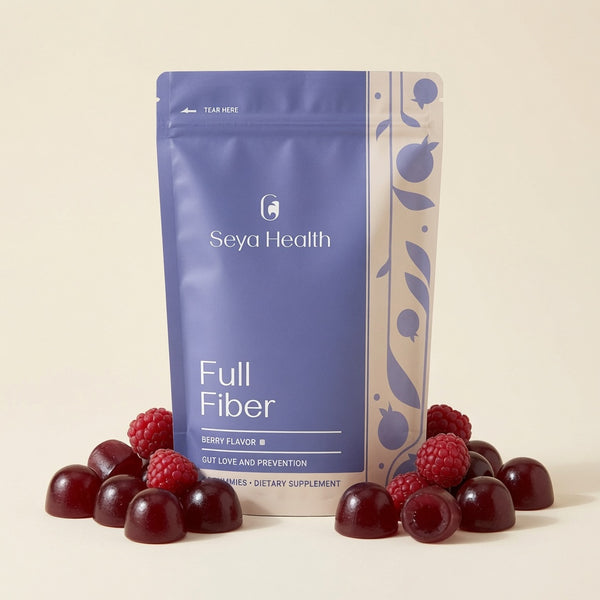
Seya Full Fiber
6 grams of fiber in three small gummies, for the days a big salad is not happening. Three fibers in one, plant based, no gelatin, no sugar alcohols.
Shop Full FiberIf constipation is your main struggle, our guide to relieving GLP-1 constipation goes deeper, and fiber vs laxatives for GLP-1 constipation covers what to reach for first. For the bigger picture on these medications, see GLP-1s for women. And for fiber basics, start with how much fiber women need per day and this list of high-fiber foods.
Foods to go easy on
A few foods tend to make GLP-1 side effects worse, especially nausea:1
- Greasy or fried foods, which sit heavy when digestion is already slow
- Very sugary foods and drinks
- Carbonated drinks, which add to bloating
- Alcohol
Smaller, more frequent meals usually sit better than a few large ones. If a food consistently makes you feel worse, that is useful information to bring to your care team.
When to talk to your provider
Do not stop your medication or change your dose on your own. If side effects are rough, or you are worried you are not getting enough protein or other nutrients, talk to your prescriber or a registered dietitian who works with people on GLP-1 therapy. Food supports your treatment. It does not replace medical guidance.
Frequently asked questions
How much fiber should I eat on a GLP-1?
Most adults should aim for 25 to 38 grams a day.1 If you are starting from a low amount, build up gradually and drink plenty of water so the extra fiber does not cause gas or leave you more backed up.
Does fiber help with GLP-1 constipation?
Fiber is one of the main ways to ease the constipation these medications commonly cause, alongside water and movement.3 It works best when you add it slowly and drink enough fluid.
Can I take a fiber supplement with a GLP-1?
Food comes first, but a fiber supplement can help you close the gap on days when your appetite is low. Ask your provider, and check on timing, since fiber can affect how some medications are absorbed.
What foods make GLP-1 side effects worse?
Greasy or fried foods, very sugary foods and drinks, carbonated drinks, and alcohol tend to be the worst offenders, and large meals are harder than small ones.1
Why am I so constipated on a GLP-1?
These drugs slow digestion, and eating less usually means getting less fiber and water, which together make constipation more likely.3
Sources
- 1 Cleveland Clinic. GLP-1 Diet: What To Eat & Avoid.
- 2 UCHealth. Many people using GLP-1 drugs may not be eating enough nutritious food.
- 3 GoodRx. Foods to Manage GLP-1 Side Effects.
- 4 Healthline. GLP-1 Diet: Foods to Eat and Foods to Avoid.
- 5 American Society for Nutrition. Most Americans are not getting enough fiber in our diets.
- 6 USDA Economic Research Service. Dietary fiber consumption data.
This article is general information, not medical advice. Do not start, stop, or change a prescription medication without talking to your healthcare provider. Seya Full Fiber is a dietary supplement, not a medication, and is not intended to diagnose, treat, cure, or prevent any disease or to treat the side effects of any drug. Talk to your provider or a registered dietitian about nutrition while on GLP-1 therapy.
Keep reading
fiber
Can a Multivitamin Replace Vegetables? What Supplements Can't Do for Your Gut

constipation
The Best Way to Beat Constipation in Your 30s (and Where Fiber Gummies Fit)
fiber
The Gut-Skin Axis: Does Your Gut Health Affect Your Skin?
The gut-skin axis, explained: how your gut bacteria and blood sugar affect your skin, w...