Home/ The Journal/ bloating
bloating
The best debloating supplements for women: what's worth buying (and what's just a diuretic)

Short version: The best debloating supplements for women match the kind of bloat you have. Soluble fiber helps when bloating comes with constipation. Peppermint oil helps crampy, gassy bloating. Food enzymes help with beans or dairy. Many debloat blends lean on diuretic herbs, which mostly make you pee out water.
- Best evidence: soluble fiber and peppermint oil, both backed by pooled trials.
- Weak link: probiotics. The AGA says not to use them to treat bloating.
- Just a diuretic: dandelion and similar herbs move water, not gas.
- Read the label: look for amounts per ingredient, and skip sweeteners ending in "-ol".
Last updated October 2026.
Bloating is common. In a survey of 88,795 Americans, 13.9% had bloated in the past week, and women were more likely to say so (Oh et al., 2023).
So the shelf is full of debloat gummies, powders, and teas. Some of them work for some kinds of bloat. Some just send you to the bathroom more often.
We sell a fiber gummy, so we have a point of view. We'll show you where fiber wins and where it doesn't. Nobody paid for a spot on this list.

Do debloating supplements work?
Some do, but only for the right kind of bloat. That is the part most labels skip.
"Bloated" can mean three different things:
- Gas bloat: pressure, fullness, and gas, often after meals.
- Backed-up bloat: a hard, full belly when you have not gone in a while.
- Water bloat: puffy fingers, tight rings, and a heavier scale, often before your period.
Each one has a different fix. A diuretic can shift water bloat for a few hours. It does nothing for gas. Fiber can help backed-up bloat. It won't drain water.
So start by naming your bloat. Our guide on why you might be bloated walks through the common causes.
Debloating supplements, sorted by evidence
| Ingredient | Best for | Evidence | Worth buying? |
|---|---|---|---|
| Soluble fiber (psyllium, other soluble fibers) | Bloat with constipation | Meta-analysis of 14 trials | Yes, if you start slow |
| Enteric-coated peppermint oil | Crampy, gassy bloat | Meta-analysis of 12 trials | Yes, for IBS-type bloat |
| Alpha-galactosidase | Gas after beans | One small trial | Yes, taken with that meal |
| Lactase | Gas after dairy | Standard NIDDK advice | Yes, if dairy is the trigger |
| Probiotics | Unclear | AGA advises against for bloating | Not as a first buy |
| Dandelion and other diuretic herbs | Water weight | One 17-person, one-day pilot | No, for gut bloat |
The pattern is simple. The ingredients with the best evidence are cheap and single-purpose. The weakest ones are often the stars of a blend.
Soluble fiber: best for bloating with constipation
When bloating comes from being backed up, getting things moving is the fix. The AGA advises treating the constipation when it is there (Moshiree et al., Gastroenterology, 2023).
Soluble fiber is the gentlest first step. A meta-analysis of 14 trials and 906 people with IBS found soluble fiber helped, with 1 extra person helped for every 7 treated. Bran, an insoluble fiber, did not help (Moayyedi et al., 2014).
The catch: fiber can cause more gas at first. Add it slowly over a couple of weeks and drink water with it.
See our post on fiber and IBS for a slow ramp plan.
Peppermint oil: best for crampy, gassy bloating
Peppermint oil is a long-used remedy for an upset gut. It has the strongest trial record of any herb on this list.
A 2019 meta-analysis pooled 12 trials with 835 adults with IBS. Peppermint oil more than doubled the odds of overall symptom relief. Only 3 people needed to take it for 1 to feel better. Side effects were no more common than with a placebo: 9.3% versus 6.1% (Alammar et al., 2019).
Look for enteric-coated capsules. Heartburn is a possible side effect, and the coating makes it less likely, per the NCCIH. If you have reflux, ask your doctor first.
Food enzymes: best when one food is the trigger
If beans or dairy set you off, an enzyme taken with that meal is a targeted fix.
Alpha-galactosidase breaks down the gassy sugars in beans. In a small trial, 8 healthy adults ate 420 g of beans. The higher dose, 1200 GalU, cut gas output and flatulence compared with a placebo (Di Stefano et al., 2007).
Lactase breaks down milk sugar. The NIDDK says lactase tablets taken before dairy can lower your chance of symptoms (NIDDK).
Enzymes only help with the food they match. Our post on digestive enzymes vs fiber goes deeper.
Probiotics: the most sold, the least proven for bloating
Probiotics are in almost every debloat blend. But the AGA's 2023 bloating guidance is blunt. Its Best Practice Advice 10 reads: "Probiotics should not be used to treat abdominal bloating and distention" (Moshiree et al., 2023).
That does not mean every strain is useless. It means the research is too mixed to count on.
If you still want to try one, pick a product that names the exact strain and lists a CFU count. Give it about 4 weeks, then stop if nothing changes. We compare the two side by side in fiber vs probiotics.
What's just a diuretic?
Many debloat products list herbs like dandelion leaf. These are diuretics. They make you pee more, so you lose some water.
How strong is the proof? The main human study gave 17 people dandelion leaf extract for one day. They peed more often in the 5 hours after the first dose. The third dose changed nothing (Clare et al., 2009).
That is a pilot, not a solid trial. And the result is water loss, not less gas.
So if your belly feels flatter after a "debloat" drink, you may just have lost a little water. It comes back when you drink and eat again.
Water bloat before your period is real. We cover it in luteal phase bloating.
How to read a debloat label
Turn the bottle around before you buy. Here is what to check:
- Amounts for each ingredient. A blend with one total weight hides how much of each herb or strain you get.
- Where diuretic herbs sit. If dandelion is near the top, much of the effect is water.
- Sweeteners ending in "-ol". Sorbitol, mannitol, xylitol, erythritol, and maltitol can cause gas, per the NIDDK. That's a bad trait in a bloat product.
- Strain names and CFU. "Probiotic blend" alone tells you very little.
- Big promises. No supplement should promise a flat belly by a date.
Want a real example? We ran one popular gummy through this test in our Lemme Debloat review.
When to skip supplements and see a doctor
About 58.5% of people with recent bloating never asked a doctor about it, per the same national survey. Most bloating is harmless. But some signs mean you should book a visit instead of buying another bottle.
The AGA reserves scans and scopes for people with alarm features or quickly worsening symptoms. Watch for:
- Bloating that is new, constant, or getting worse
- Weight loss you can't explain
- Blood in your stool, or vomiting
- Feeling full fast, or a change in your bowel habits that lasts
Our post on when bloating isn't normal has the full list.
Where Seya fits, honestly
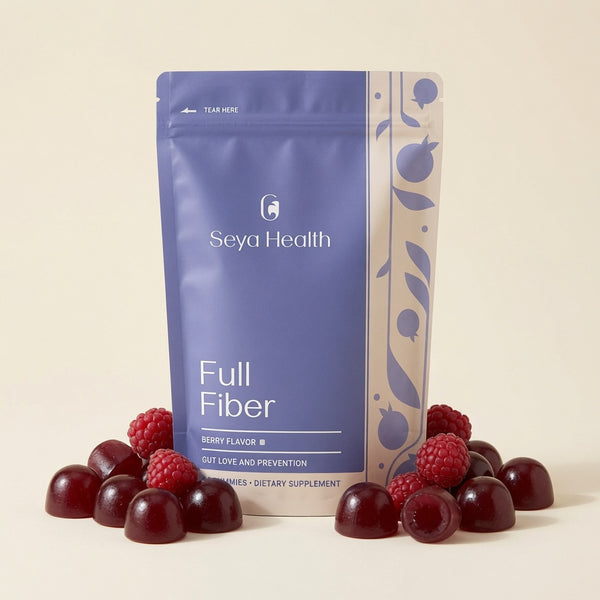
Seya makes a vegan fiber gummy made with resistant tapioca fiber. It supports regularity, which can help when bloating comes with being backed up.*
It is not a diuretic, a probiotic, or a quick fix. If your bloat is from beans, dairy, or water before your period, another tool on this list may suit you better.
Our creatine gummy is coming January 2027. It is not on sale yet.
*These statements have not been evaluated by the Food and Drug Administration. This product is not intended to diagnose, treat, cure, or prevent any disease.
Frequently asked questions
What is the best supplement for bloating?
It depends on your bloat. Soluble fiber has the best support when bloating comes with constipation. Enteric-coated peppermint oil has the best support for crampy, gassy bloating in IBS. Enzymes like lactase help only when one food is the trigger.
Do debloating supplements work?
Some ingredients do, for the right type of bloat. Many blends rely on diuretic herbs like dandelion, which mostly cause water loss for a few hours. Check the label for amounts of each ingredient.
Is fiber or a probiotic better for bloating?
For most people, fiber has stronger evidence. A meta-analysis of 14 trials found soluble fiber helped IBS symptoms, while the AGA advises against using probiotics to treat bloating. Start fiber slowly, since it can cause gas at first.
Are debloat gummies just diuretics?
Not all of them, but many include diuretic herbs. A diuretic can make your belly look a bit flatter by losing water. It does not reduce gas.
How long should I try a debloating supplement?
Build fiber up slowly over a couple of weeks before you judge it. If you try a probiotic, about 4 weeks is a fair test. Take enzymes with the trigger food. If nothing helps, talk to your doctor.
Seya Full Fiber
Most women fall short on fiber. Seya Full Fiber gives you 6 grams from three fibers in three small vegan gummies. Plant based, no gelatin, no sugar alcohols.
Shop Full Fiber