

Short version: Fiber vs. probiotics is not one tool doing the other's job. Probiotics are live bacteria you swallow. Fiber is the food your own gut bacteria live on. For everyday bloating and regularity, the higher-leverage move for most women is feeding the bacteria you already have, and that is a prebiotic-fiber job. Only about 5% of us hit the daily fiber target, so the gap is real. Build toward it slowly, with water.
- A prebiotic is food for your microbes. A probiotic is a dose of live microbes. Fiber is the prebiotic.
- Major gut doctors reviewed 287 trials and did not recommend probiotics for IBS or most common gut complaints.
- Fiber has clear, repeatable evidence for regularity — add about 5 g a week, with water, to keep bloating down.
Last updated August 2026.
You feel bloated and stuck. So you go looking for a fix.
And the internet points you straight at a probiotic pill.
Here is the honest answer on fiber vs. probiotics. They are not the same tool, and for everyday bloating and regularity most women get more from feeding the bacteria they already have than from swallowing new ones. Feeding them is a fiber job. A prebiotic is simply a food your gut microbes use, per the ISAPP scientific consensus, and fiber is the prebiotic.
And the gap is not small. National surveys show only about 5% of us actually hit the fiber target, per a review of America's fiber intake. Most women land near 15 g a day. That shortfall is a bigger, plainer lever than any pill.
Fiber vs. probiotics: which does your gut actually need?
Start with what each one is.
A probiotic is a dose of live bacteria. You swallow them, hoping they move in and set up shop.
Fiber is different. It is the food those bacteria eat. Feed the good bacteria you already have, and they do the work for you.
You have probably been told that a bloated, sluggish gut is "broken" and needs a probiotic to fix it. Most of the time it is not broken. It is underfed. That is a signal to feed it, not a character flaw or a sign something is wrong with you.
So the first question is not "which pill." It is "am I feeding the gut I have." For most women, the answer starts with fiber.
What is the difference between a prebiotic and a probiotic?
One word: direction.
A probiotic adds bacteria. A prebiotic feeds the bacteria already living in you. Fiber is a prebiotic, so fiber is the feeding side of that pair.
Your gut is home to trillions of bacteria. They ferment the fiber you eat and turn it into short-chain fatty acids, the fuel that keeps the gut lining and your regularity in better shape.
Not every fiber is a prebiotic, and that matters. Some fibers just add bulk. Others, like the resistant, soluble type, get fermented and actively feed your microbes. That is the difference between roughage that passes through and roughage that works. We break down one prebiotic type in what resistant tapioca fiber is.
Does fiber actually feed your good gut bacteria?
Yes. That is the whole point of a prebiotic.
When soluble fiber reaches your colon, your resident bacteria ferment it. That fermentation produces short-chain fatty acids and, in the process, supports the bacteria you want more of. You are not importing a stranger. You are feeding the locals.
This is also why a big, sudden jump backfires. When bulk hits the colon too fast, fermentation makes gas before your bacteria have adjusted. A review of how the body tolerates these carbs lists gas, distension, and cramping as the usual complaints when intake climbs too quickly.
So the trigger is speed, not the fiber itself. Give your bacteria a few days to catch up between steps.
Do probiotics fix bloating and gas?
The honest answer is that the evidence is thinner than the marketing.
Probiotic effects are strain-specific and often temporary, and the big-picture research has not backed routine use for everyday gut complaints. The American Gastroenterological Association reviewed 287 trials and, in its 2020 clinical guideline, did not recommend probiotics for IBS or most common conditions outside of a clinical trial.
That is not a knock on your gut. It is a reason to spend your effort where the evidence is steadier.
Fiber is that steadier place. For the reactive-gut version of this question, see fiber and IBS.
So which is the better everyday choice, and how much fiber do you need?
For a general woman with everyday bloat and irregularity, fiber is the higher-leverage everyday move. The evidence is clearer, and the gap is wider.
The FDA sets the daily target at 28 g, written into federal labeling rule 21 CFR 101.9. Most women get about 15 g. That is roughly half.
And fiber has repeatable results for regularity. A pooled analysis found about 66% of people responded to a fiber supplement, versus 41% on a placebo, with the wins showing up at doses over 10 g a day. Psyllium, a soluble source, led the pack.
The catch is the ramp. Add about 5 g a week, hold it a few days, and drink water with every dose so the gel stays soft. Slow and wet beats fast and dry. The after-40 version lives in fiber and gut health after 40.
Where Seya fits, honestly
Seya makes one product at launch. A fiber gummy.
Three vegan gummies deliver about 5 g of resistant tapioca fiber, a soluble, prebiotic-type fiber. That is the feeding side of your gut — the kind your bacteria ferment, not the coarse bulk that scratches a touchy bowel.
We grade the evidence plainly. At about 5 g, that is roughly half the 10 g the constipation studies leaned on, so fiber earns a C at this dose. So we make one claim, and only one. It supports regularity.
It does not fix a medical condition, and it is not a full day of fiber on its own. It is one prebiotic-side nudge toward a target most women miss, added slowly, with water, the way the science says to do it.
If your symptoms are severe, persistent, or new, that is a reason to see a clinician, not to double a dose. This is education, not medical advice. Talk to your clinician before adding a supplement, especially if you take daily medication.
These statements have not been evaluated by the Food and Drug Administration. This product is not intended to diagnose, treat, cure, or prevent any disease.
Frequently asked questions
What is the difference between fiber and probiotics?
Fiber is food for your gut bacteria; probiotics are live bacteria you swallow. A prebiotic like fiber feeds the microbes you already have, while a probiotic tries to add new ones. Your bacteria ferment soluble fiber into short-chain fatty acids that support the gut lining and regularity. For everyday bloating and irregularity, feeding your existing bacteria with fiber is usually the higher-leverage move, since only about 5% of people hit the daily fiber target.
Does fiber feed the good bacteria in your gut?
Yes, that is what makes it a prebiotic. When soluble, fermentable fiber reaches the colon, resident bacteria ferment it and produce short-chain fatty acids, which support the gut lining and healthy regularity. Not every fiber does this equally: coarse, insoluble bulk mostly passes through, while soluble and resistant types are the ones your microbes actually use. Introduce fiber slowly, because a sudden jump ferments too fast and makes gas before your bacteria adjust.
Is prebiotic fiber the same as regular dietary fiber?
Not exactly. All prebiotic fiber is dietary fiber, but not all dietary fiber is prebiotic. Prebiotic fibers are the fermentable, soluble types your gut bacteria selectively use, per the international scientific consensus definition. Resistant tapioca fiber is one prebiotic-type example. Coarse insoluble fiber still adds bulk and has value, but it does less of the bacteria-feeding work, so it is not classed as a prebiotic in the same way.
Do probiotics help with bloating, gas, or constipation?
The evidence is mixed and strain-specific. The American Gastroenterological Association reviewed 287 trials and did not recommend probiotics for IBS or most common gut conditions outside of a clinical trial. That does not mean your gut is broken; it means the effort is better spent where the evidence is steadier. Fiber has clearer, repeatable results for regularity, so for everyday complaints, feeding your own bacteria with fiber is the more reliable starting point.
How much fiber do women actually need for gut health?
The FDA Daily Value is 28 g a day, and most women get about 15 g, roughly half. In pooled trials about 66% of people responded to a fiber supplement versus 41% on placebo, with the benefit showing at doses over 10 g a day. Build up gradually, adding about 5 g a week, and drink water with every dose so the gel stays soft. A fast jump trades irregularity for gas, so slow and steady wins.
Related reading
- How Much Fiber Do Women Actually Need? Grams by Age, and Why It's More Than You Think
- The Gut-Skin Axis: Does Your Gut Health Affect Your Skin?
- Peptides for Gut Health: What's Hyped, What's Proven, and Where Fiber Fits
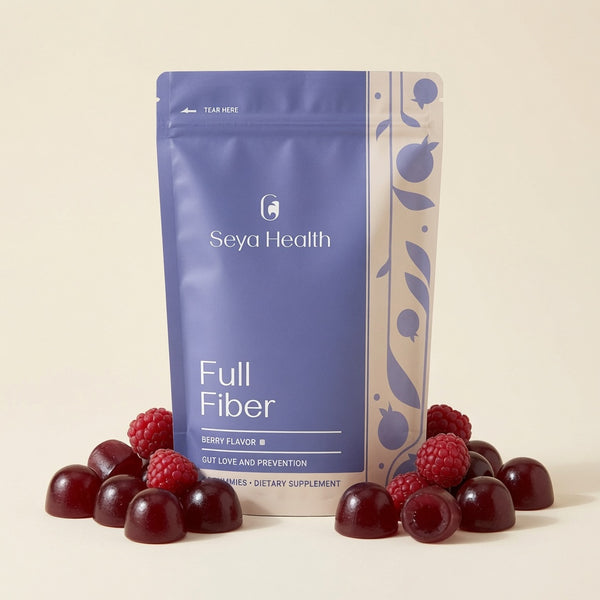
Seya Full Fiber
Your gut bacteria run on fiber. Seya Full Fiber delivers 6 grams from three fibers in one to feed the beneficial bacteria in your gut and support short-chain fatty acid production. Plant based, no gelatin, no sugar alcohols.
Shop Full FiberKeep reading
fiber
Can a Multivitamin Replace Vegetables? What Supplements Can't Do for Your Gut

constipation
The Best Way to Beat Constipation in Your 30s (and Where Fiber Gummies Fit)
fiber
The Gut-Skin Axis: Does Your Gut Health Affect Your Skin?
The gut-skin axis, explained: how your gut bacteria and blood sugar affect your skin, w...