Home/ The Journal/ comparisons
comparisons
The best menopause supplements for women: what placebo-controlled trials actually support

What are the best menopause supplements? Judged by placebo-controlled trials, the honest answer is very few. Soy isoflavones have the best data, and the effect is modest: about 20% fewer hot flashes than placebo across 13 trials (Taku, 2012). Black cohosh, red clover, flaxseed, and dong quai did no better than a dummy pill.
- The placebo is strong: one in three women on a dummy pill had half as many hot flashes by week 8.
- Best of a weak field: soy isoflavones, with a small and uneven effect.
- No better than placebo: black cohosh, red clover, flaxseed, dong quai, and herb blends.
- What works best: hormone therapy, plus several proven non-hormone drugs and CBT. Ask your doctor.
Last updated November 2026.
Most menopause supplements look good in the first study. A small group of women takes the pill. Their hot flashes drop by half. The bottle goes on sale.
Then a bigger trial adds a group that takes a dummy pill. Their hot flashes drop by half too. The supplement had nothing to do with it.
That pattern shows up again and again in menopause research. So this guide does one thing. It checks the popular menopause supplements against the only test that counts: did they beat a placebo?

Why does the placebo effect matter so much in menopause trials?
Because hot flashes respond to belief, to time, and to simply being watched. That makes any study without a placebo group easy to fool.
Researchers pooled the placebo groups from two large US trials, 247 women in all. By week 8, 33% of them had cut their hot flashes by half or more. Most of the women who improved on placebo were still better 3 weeks after the pills stopped (Freeman, 2015).
A Cochrane review of 43 plant-estrogen trials saw the same thing. Hot flashes fell by anywhere from 1% to 59% on placebo alone (Lethaby, 2013).
So a supplement that "cut hot flashes by 50%" has not shown much at all. The real question is how much better it did than a dummy pill.
The flaxseed lesson: how a 50% drop disappeared
Flaxseed is the clearest example. In a small pilot study, 30 women ate 40 g of crushed flaxseed a day for 6 weeks. Their daily hot flashes fell by 50%, from about 7 to under 4 (Pruthi, 2007). There was no placebo group.
The same team then ran a proper trial with 188 women. Half got flaxseed bars. Half got look-alike bars with no flaxseed. Hot flash scores fell by 4.9 points on flaxseed and by 3.5 on placebo. That gap was small enough to be chance. In both groups, about a third of the women halved their hot flash scores (Pruthi, 2012).
The flaxseed did not stop working. It never worked better than placebo to begin with. Keep this story in mind when a label quotes a "50% reduction."
The best menopause supplements in placebo-controlled trials: the scorecard
Here is how the best-known picks did when tested against a placebo, mostly for hot flashes and night sweats.
| Supplement | Best placebo-controlled evidence | Beat placebo? |
|---|---|---|
| Soy isoflavones | 13 trials pooled, median 54 mg a day | Yes, modestly (about 20% fewer hot flashes) |
| Black cohosh | Cochrane review of 16 trials, plus a 1-year trial | No |
| Red clover (Promensil) | 5 trials pooled in a Cochrane review | No |
| Flaxseed | 188-woman trial | No |
| Dong quai | 71-woman trial, 24 weeks | No |
| Multi-herb blends | 1-year trial, 10-herb formula | No |
| Pollen extract | 1 trial plus 4 studies with no placebo | Unclear; gains may be placebo |
For comparison, hormone therapy cut about 4 more hot flashes a day than placebo in the same 1-year trial that tested the herbs. No supplement came close.
Does black cohosh work for menopause symptoms?
Not in the trials that matter. A Cochrane review found 16 trials with 2,027 women. In the 3 trials that counted hot flashes, black cohosh and placebo differed by 0.07 flashes a day. That is no difference at all (Leach, 2012).
The HALT trial ran longer. It gave 351 women, ages 45 to 55, either 160 mg of black cohosh a day, a 10-herb blend, the blend plus more soy foods, hormone therapy, or a placebo. It lasted a full year.
None of the herb groups beat placebo at 3, 6, or 12 months. The gap was always less than 1 hot flash a day. At 12 months, the blend plus soy group rated their symptoms as worse than the placebo group. Hormone therapy cut about 4 more hot flashes a day than placebo (Newton, 2006).
There is a safety question too. The National Center for Complementary and Integrative Health notes rare reports of liver damage in people taking products sold as black cohosh. Some products also held the wrong herb. If you take it, call your doctor about dark urine or unusual tiredness.
Do soy and red clover help with hot flashes?
Soy helps a little. Red clover does not seem to.
A 2012 meta-analysis pooled 13 trials of soy isoflavone pills. At a median of 54 mg a day, taken for 6 weeks to a year, they cut hot flash frequency by about 20.6% more than placebo (Taku, 2012). The results varied a lot between trials.
The Cochrane review found a similar hint. In 4 trials, extracts with more than 30 mg a day of genistein, one of the main soy compounds, reduced hot flashes. But the 5 trials of Promensil, a red clover extract, showed no clear difference from placebo (Lethaby, 2013).
A 20% drop sounds fine until you remember the placebo. If you have 8 hot flashes a day, a 20% cut means about 1 to 2 fewer. Some women find that worth it. Others do not.
What about pollen extract, dong quai, and herb blends?
Pollen extract. It is sold in several popular menopause brands. A 2024 review found only 1 randomized trial and 4 studies without a placebo group. The authors wrote that the gains seen in the uncontrolled studies may have been due to the placebo effect (Acquarulo, 2024). It did not cause major side effects.
Dong quai. In a 24-week trial with 71 women past menopause, dong quai did no better than placebo for hot flashes. It also had no estrogen-like effect on the uterus or vagina (Hirata, 1997). One case report linked it to a dangerous rise in the effect of the blood thinner warfarin (Page, 1999).
Herb blends. More herbs is not better. The 10-herb formula in the HALT trial did no better than placebo for a full year. Blends also make it hard to know which herb caused a side effect.
What does the Menopause Society say about supplements?
It does not recommend them for hot flashes. In its 2023 position statement on non-hormone options, The Menopause Society reviewed the evidence and put "supplements/herbal remedies" on the not-recommended list. Soy foods, soy extracts, and the soy compound equol were on that list too (Menopause Society, 2023).
The same statement does recommend several options with strong trial data. Those include cognitive behavioral therapy (CBT), clinical hypnosis, certain antidepressants, gabapentin, and fezolinetant. It calls hormone therapy the most effective treatment for hot flashes. It says it should be considered for women within 10 years of their last period who are good candidates.
If hot flashes are wrecking your sleep, that list is a better place to start than the supplement aisle. Our guide to perimenopause treatment options compares them side by side.
Are menopause supplements safe?
Most are safe for most women at label doses. But "natural" does not mean checked. The FDA does not approve supplements before they are sold. The company is in charge of safety and of what the label says.
A few cautions are worth knowing:
- Black cohosh: rare liver injury reports, and some products held the wrong herb.
- Dong quai: may boost the effect of warfarin and other blood thinners.
- Plant estrogens: ask your doctor first if you have had breast or uterine cancer.
- Blends: more herbs means more chances for a drug clash.
Bring the bottle to your next visit and let your pharmacist check it against your other meds.
How do you use dietary supplements wisely after menopause?
Treat every bottle like a small experiment. These five steps keep it honest:
- Ask "compared with what?" A claim without a placebo group tells you very little.
- Match the trial dose. If the studies used 54 mg of isoflavones, a product with 10 mg is not the same thing.
- Count before you start. Log your hot flashes for a week, then compare after 8 to 12 weeks.
- Try one thing at a time. Start two at once and you will not know which one helped.
- Look for a third-party seal. USP or NSF marks mean the label was checked against what is inside.
Some needs after menopause are real and easy to measure, like calcium, vitamin D, protein, and fiber. Our guide to the best supplements for women over 40 covers those. For the years before your last period, see the best perimenopause supplements.
Where Seya fits, honestly
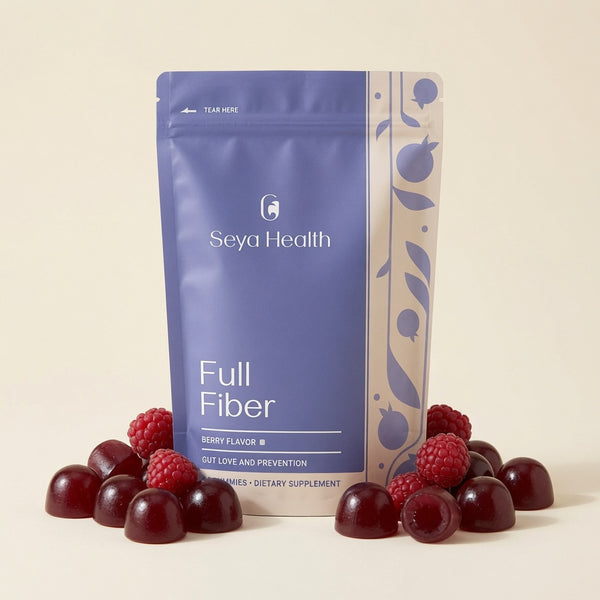
Seya sells one product today: a vegan fiber gummy that supports regularity and adds to your daily fiber. It is not a hot flash product, and we will not tell you it is. Constipation often gets worse around menopause, and that is where fiber can help. Our post on fiber and menopause looks at what the food research does and does not show. If you are short on fiber, see how much fiber women over 40 need.
Our creatine gummy is coming January 2027. It is not on sale yet, and we will not share its dose, price, or ingredients until the formula is final.
This is education, not medical advice. Talk to a qualified clinician before you start any supplement, especially if you take medicines or have had a hormone-sensitive cancer.
These statements have not been evaluated by the Food and Drug Administration. This product is not intended to diagnose, treat, cure, or prevent any disease.
Frequently asked questions
What are the most common menopause symptoms supplements target?
Mostly hot flashes and night sweats. Labels also promise better sleep, mood, energy, and "hormone balance." Hot flashes are the symptom with the most placebo-controlled trials.
Which menopause supplements have real evidence behind them?
Soy isoflavones are the best of a weak field. Across 13 trials, they cut hot flashes by about 20% more than placebo. Most other herbs did not beat a dummy pill.
Does black cohosh work for menopause symptoms?
Not in placebo-controlled trials. A Cochrane review of 16 trials and a 1-year trial of 351 women both found black cohosh did no better than placebo for hot flashes.
Do botanical supplements help menopausal symptoms?
Rarely. Black cohosh, red clover, flaxseed, dong quai, and a 10-herb blend all failed to beat placebo. Soy isoflavones showed a modest benefit.
Why does the placebo effect matter in menopause supplement trials?
Because it is large. In pooled US trials, 33% of women on placebo cut their hot flashes by half within 8 weeks. A study without a placebo group cannot tell that apart from a real effect.
What does the Menopause Society say about supplements?
Its 2023 statement does not recommend supplements or herbal remedies for hot flashes. It recommends CBT, hypnosis, some antidepressants, gabapentin, fezolinetant, and hormone therapy where suitable.
Are menopause supplements safe?
Most are at label doses, but the FDA does not approve them before sale. Black cohosh has rare liver injury reports, and dong quai may interact with blood thinners. Check with a pharmacist.
How do you use dietary supplements wisely?
Choose ones tested against placebo, match the trial dose, log symptoms before and after 8 to 12 weeks, start one at a time, and look for a USP or NSF seal.
How is perimenopause managed?
Options range from lifestyle changes and CBT to non-hormone drugs and hormone therapy. A clinician can match them to your symptoms and health history.
Seya Full Fiber
Most women fall short on fiber. Seya Full Fiber gives you 6 grams from three fibers in three small vegan gummies. Plant based, no gelatin, no sugar alcohols.
Shop Full Fiber