Is creatine safe for teenagers? For a healthy teen who trains hard, the research so far finds no sign of harm at normal doses. The International Society of Sports Nutrition found "no evidence" that recommended doses pose a health risk under age 18 (Kreider, 2017). But teen studies are small and short, so most doctors still say go slow.
- What studies show: no adverse events reported in trials of teen athletes.
- What they don't show: long-term safety data in teens. The trials ran days to weeks.
- The bigger risk: the product, not the creatine. Some supplements hold hidden drugs.
- Best first step: talk with your teen's doctor, and fix food, sleep, and training first.
Last updated November 2026.
Your 16-year-old wants creatine. Maybe a teammate takes it. Maybe a coach brought it up. Maybe it showed up in their feed next to a protein shake.
So you search, and you find two loud camps. One says creatine is the most studied supplement on earth. The other says no one under 18 should touch it.
Both have a point. Here is what the research actually says about teens, where the gaps are, and the questions we would ask before saying yes.

What is creatine, and do teens already get it?
Creatine is a compound your muscles use for short bursts of energy, like a sprint or a heavy lift. It is not a steroid or a hormone. We explain the basics in what creatine is and what it does.
Your teen already has creatine in their body. The body replaces about 1 to 3 g a day. About half comes from food like meat and fish, and the liver and kidneys make the rest (Kreider, 2017).
A study of US kids aged 2 to 19 found they ate about 1.07 g of creatine a day from food, on average (Korovljev, 2021). A supplement adds to what is already there.
Is creatine safe for teenagers? What the research says
The short answer from experts is "likely yes, with limits." A 2021 review by creatine researchers said that, based on the limited evidence, creatine "appears safe and potentially beneficial" for children and teens (Antonio, 2021).
A second 2021 review looked at trials in teen swimmers and soccer players. Those studies ran from 7 to 49 days. When the authors reported side effects, they found none (Jagim and Kerksick, 2021).
Some of the strongest safety data comes from kids with medical conditions. Children with Duchenne muscular dystrophy and lupus took creatine for months under close lab tracking. Kidney and liver markers did not get worse (Antonio, 2021). That was medical care with a doctor watching, not a teen buying a tub online.
What we don't know yet
This is the honest part. Most teen trials are small, short, and focused on sports scores. The same 2021 review noted that the performance studies did not check health markers like kidney or liver labs (Antonio, 2021).
There are no long-term trials of healthy teens taking creatine for years. The adult data is strong. Studies in adults have run up to 30 g a day for 5 years without harm (Kreider, 2017). But teens are still growing, and experts have not proven that adult results carry over.
One small study also raised a flag. In 19 elite young soccer players, there was a trend toward more airway swelling on creatine, though it fell just short of a clear result. The authors could not rule out an effect on the airways, mainly in players with allergies. One study is not proof, but it is a reason to ask your doctor if your teen has asthma or allergies (Jagim and Kerksick, 2021).
Why do some doctors say no creatine under 18?
The American Academy of Pediatrics (AAP) urges caution with all sports supplements for kids. Its 2016 report raised three worries (LaBotz and Griesemer, 2016):
- Contamination. Many sports supplements are not what the label says.
- A slippery slope. Using legal supplements is linked with later steroid use.
- Little extra gain. Puberty plus good food and training already bring big jumps in strength.
That last point matters most for parents. A 15-year-old who sleeps 8 hours, eats enough protein, and follows a smart plan will get stronger fast. Creatine is a small add-on to that, not a shortcut.
A 2001 study in Pediatrics also noted that creatine "is not recommended" under 18, yet many teens used it anyway (Metzl, 2001).
How many teens use creatine?
More than most parents think. In that 2001 study, 62 of 1,103 athletes aged 10 to 18 used creatine, or 5.6%. By 12th grade, 44% of the athletes surveyed said they used it. Boys used it far more than girls, 8.8% vs 1.8% (Metzl, 2001).
A later high school survey found 21% of boys and 3% of girls had used creatine (Antonio, 2021). Most teens get their advice from friends, coaches, and parents (Jagim and Kerksick, 2021). So your voice counts.
Does creatine work for teen athletes?
In some studies, yes, for short, hard efforts. In one trial, 20 male soccer players with an average age of about 17 took creatine for 7 days. They improved on a dribble test, a sprint power test, and a vertical jump. Their endurance test did not change (Ostojic, 2004).
Not every study agrees. One trial in teen soccer players found no gain in leg power after 7 weeks (Jagim and Kerksick, 2021).
Note the dose in the Ostojic study: 30 g a day, split into three doses. That is a heavy loading dose, well above the 3 to 5 g a day common for adults (Antonio, 2021). High doses are more likely to upset the stomach. Our post on creatine loading side effects explains why.
Can creatine help the brain in children and adolescents?
Not in healthy kids, based on the one trial we have. In a study of 67 children aged 10 to 12, a week of creatine did not raise brain creatine. It also did not improve memory or thinking tests (Merege-Filho, 2017).
The authors think young brains mostly make their own creatine. Brain research in adults is more promising, which we cover in creatine for brain health. Do not give a child creatine for school or focus.
Is creatine safe for 15- and 16-year-olds?
There is no magic age. The studies include teens around 15 to 18, and none found harm. The ISSN says creatine is acceptable for younger athletes who meet four conditions (Kreider, 2017):
- They do serious, supervised training.
- They eat a well-balanced diet that supports that training.
- They understand how to use creatine the right way.
- They do not go over the recommended dose.
A 15-year-old who lifts twice a week with friends does not meet the first test. A 17-year-old on a coached team with a real plan might. Age matters less than the training and the supervision around it.
The real risk: what's in the tub
Creatine itself has a strong safety record. The products are another story. In one study of 634 supplements bought in 13 countries, 94 of them, or 14.8%, held steroids that were not on the label (Geyer, 2004).
For a teen athlete, that can mean a failed drug test or a hormone they never meant to take. If your family says yes, pick a product tested by a third party, like NSF Certified for Sport. We explain the label in NSF Certified for Sport creatine and what to check in creatine purity and safety.
Also skip blends. A "pre-workout" or "mass gainer" with creatine often adds caffeine and other stimulants. Plain creatine monohydrate is the form with the most research.
Questions to ask before you say yes
| Question | Green light | Slow down |
|---|---|---|
| Is training coached and regular? | Team or coached plan, 3+ days a week | Casual or "for looks" |
| Are food and sleep solid? | Regular meals, enough protein, 8+ hours | Skipping meals, short sleep |
| Any health issues? | None, cleared by a doctor | Kidney issues, asthma, allergies |
| Is the product tested? | Third-party certified, plain monohydrate | Blends, "proprietary" formulas |
| Does the dose stay modest? | Doctor-approved dose, no megadoses | "More is better" thinking |
A lot of slow-down answers means wait. And if your teen's sport tests for drugs, check its rules first.
What side effects should parents watch for?
In adults, the most common ones are mild: water weight, and stomach upset at high doses. Creatine can also raise a kidney lab called creatinine without kidney harm, which can confuse a sports physical. We explain that in creatine vs creatinine.
Call the doctor if your teen has wheezing, swelling, dark urine, or a big drop in how much they pee. Those are not typical creatine effects, and they need a check either way.
Where Seya fits, honestly
Seya sells one product today: a fiber gummy that supports regularity. Our creatine gummy is coming January 2027. It is not on sale yet, and we will not share its dose, price, or ingredients until the formula is final.
We wrote this for parents, not to sell to teens. This is education, not medical advice. Talk with your teen's doctor before they start any supplement. For the adult side of this question, see is creatine safe for women.
These statements have not been evaluated by the Food and Drug Administration. This product is not intended to diagnose, treat, cure, or prevent any disease.
Frequently asked questions
Is creatine safe for teens?
Studies of healthy teen athletes have not found harm at normal doses, and the ISSN calls it acceptable for supervised young athletes. But teen data is short-term, so check with a doctor first.
Is creatine safe for 15-year-olds?
No study set a safe starting age. A 15-year-old in serious, coached training with a good diet fits the ISSN conditions. Casual use for looks does not.
Is creatine safe for 16-year-olds?
Trials in teen athletes around 16 and 17 reported no side effects. Use a tested product, keep the dose modest, and involve your teen's doctor.
Is creatine safe under 18?
The ISSN found no evidence that recommended doses harm people under 18. The AAP still urges caution with all sports supplements for kids, mainly over contamination.
Is creatine safe for young athletes?
For healthy athletes in supervised training, research so far looks reassuring. The larger risk is a contaminated product, so choose third-party tested plain creatine.
Is creatine safe for teenagers?
Likely yes for a healthy, well-coached teen at a normal dose, based on limited evidence. Long-term teen studies do not exist yet, so most doctors say go slow.
Can creatine help the brain in children and adolescents?
Not in healthy kids, based on one trial. A week of creatine did not raise brain creatine or test scores in 67 children aged 10 to 12.
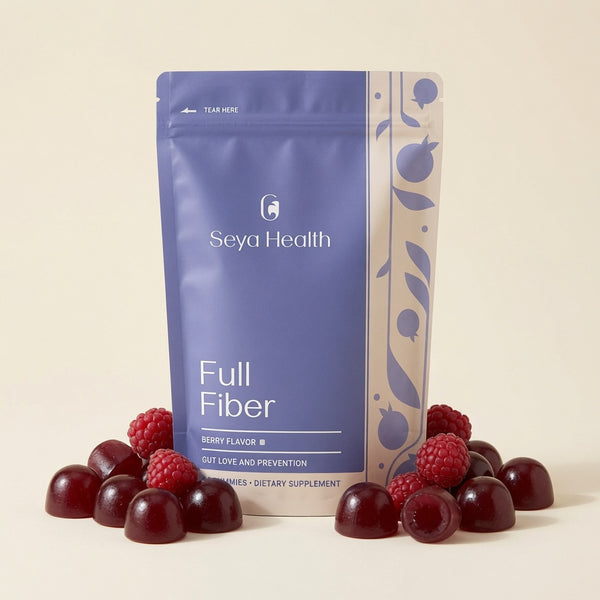
Seya Full Fiber
Most women fall short on fiber. Seya Full Fiber gives you 6 grams from three fibers in three small vegan gummies. Plant based, no gelatin, no sugar alcohols.
Shop Full Fiber