
Home/ The Journal/ evidence
evidence
The Best Supplements for Women's Health in 2026 — and Where Fiber Fits

Short version: the best supplements for women's health are the ones that clear 3 tests. Right dose. Studied in women. Filling a gap you actually have. Most bottles fail the first one, and a ranked list of pills will not tell you which.
- The FDA does not approve supplements before they go on sale. The company decides.
- In 2022 the US Preventive Services Task Force reviewed vitamin and mineral supplements for heart disease and cancer. Its verdict on almost all of them was "insufficient evidence."
- US women average 15g of fiber a day. Men average 18g.
- The daily target is 25g for women under 50 and 21g after 50.
- In 2013 the FDA halved the recommended dose of a common sleep drug for women, from 10mg to 5mg.
Last updated August 2026.
You went looking for one answer and came back with nine tabs.
Every list is different. Every list sounds sure of itself.
Here is the part those pages leave off. The evidence behind most of what they rank is thin, and the few things with real research behind them come with a dose the bottle usually does not meet.
So this is not a ranking. It is a test you can run on any label in about 2 minutes.
What are the best supplements for women's health?
The honest answer: it depends on the gap you have, and almost nothing has been proven to help women who do not have that gap.
That is not a dodge. It is what the largest independent review says.
In June 2022 the US Preventive Services Task Force finished a full evidence review of vitamin and mineral supplements taken to prevent heart disease and cancer. For multivitamins, and for nearly every single nutrient it looked at, the finding was the same: the evidence is insufficient to weigh the benefits against the harms.
Two got worse than that. The Task Force recommended against them outright.
So a ranked list is the wrong shape for this question. A test is the right shape.
Why is the evidence thinner than the marketing?
Because the rules are different from the ones you are picturing.
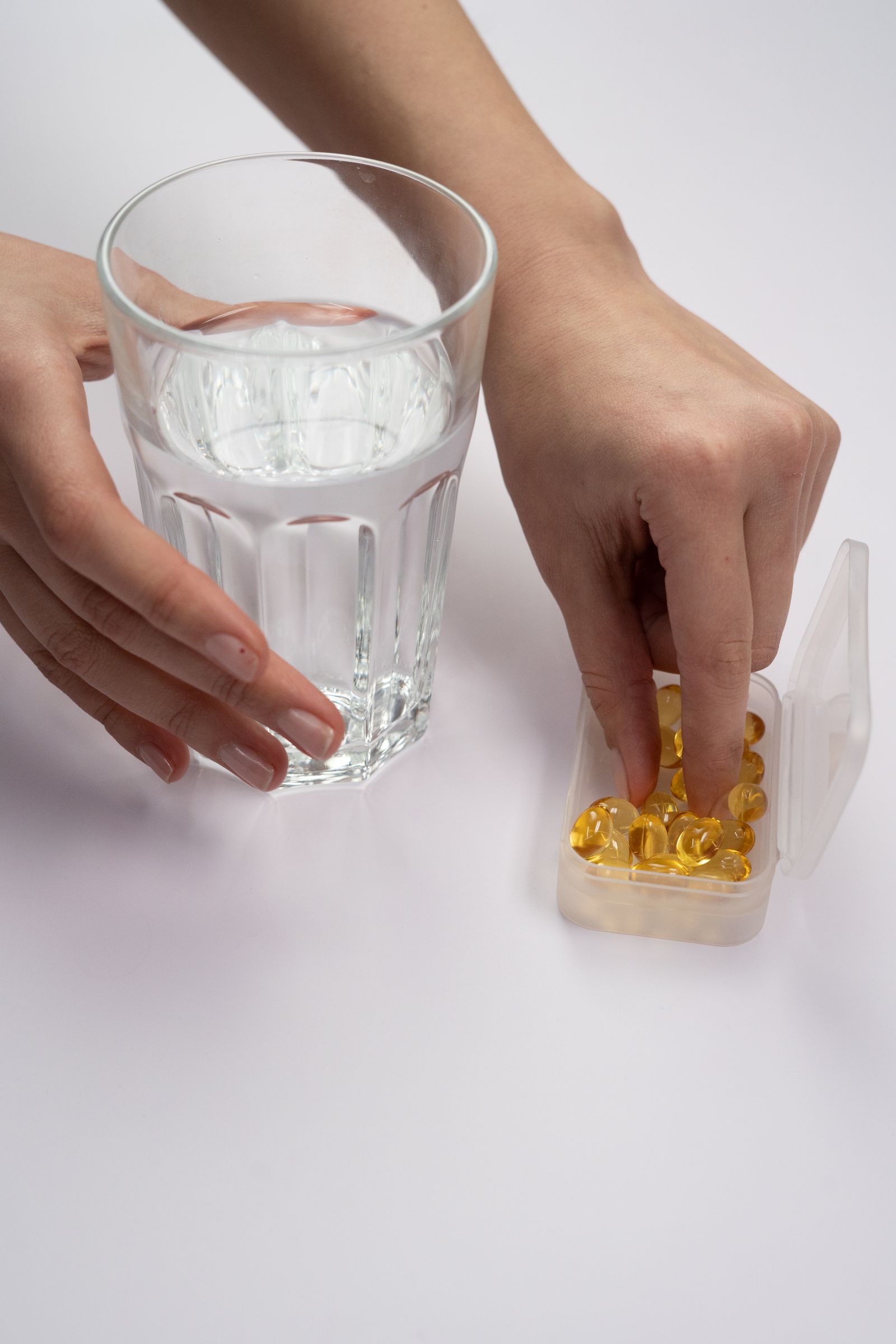
Drugs have to clear the FDA before they reach a shelf. Supplements do not. The National Institutes of Health puts it plainly: "Medicines must be approved by FDA before they can be sold or marketed. Supplements do not require this approval."
The company is the one responsible for having evidence that the product is safe and the label is truthful.
That is why every honest supplement page, including this one, carries the same line at the bottom. The FDA has not evaluated the claim.
None of that makes supplements useless. It means the burden of checking has been handed to you.
Test 1: is the dose the one the studies used?
This is where most bottles fail, and it takes 30 seconds to check.
An ingredient can have good research behind it at 10g and almost none at 1g. Putting a named ingredient on a label says nothing about whether the amount inside matches the amount that was studied.
So find the number. Then find the number in the research.
If a product will not print the per-serving amount, or hides it inside a blend, you cannot run this test at all. That is your answer.
Test 2: was it studied in women?
Ask it out loud and it sounds paranoid. Look at the history and it is not.
Here is one documented case, from the drug side where the rules are strictest. In 2013 the FDA told manufacturers to lower the recommended dose of zolpidem for women from 10mg to 5mg, and from 12.5mg to 6.25mg for the extended-release version.
The reason was simple. Women clear the drug more slowly than men, so the standard dose left too much of it in the body the next morning.
That correction arrived decades after the drug did. We wrote the longer version of this in dosed like a smaller man.
Supplements are held to a looser standard than that one. Apply the question anyway.
Test 3: are you filling a gap you actually have?
A supplement can only fill a hole. If there is no hole, there is nothing to fill.
Most nutrients you already get from food, which is exactly why the Task Force review kept landing on "insufficient." Adding more of something you have enough of does very little.
So the useful question is narrow. Where does your intake fall short of a published number, measurably, most weeks?
For most women there is one obvious answer, and it is not a vitamin.
| The test | What you are checking | Fails if |
|---|---|---|
| 1. The dose | Per-serving amount vs the amount used in the research | The label hides it, or it is a fraction of the studied dose |
| 2. The research | Whether women were studied, and at what dose | The trials were male-default, or there are no trials |
| 3. The gap | Whether your own intake falls short of a published target | You already hit the target from food |
So where does fiber fit?
It is the rare case where all 3 tests have a real answer.
The gap is measured. In national dietary data, women average 15g of fiber a day and men average 18g. The daily target is 25g for women under 50 and 21g after 50, and the National Institute of Diabetes and Digestive and Kidney Diseases puts the adult range at 22 to 34g depending on age and sex.
That is a 10g hole, sitting in the average woman's day, with a number on both sides of it.
Food closes it best. Start with the highest-fiber foods for women, and read why the gap exists before you buy anything.
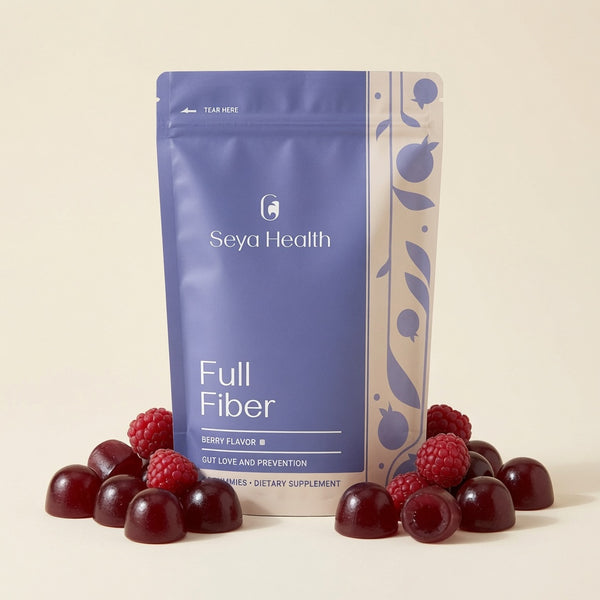
Seya makes 1 product: a vegan fiber gummy with resistant tapioca fiber. It delivers about 5g, which is a fraction of the daily target and well under the doses used in most fiber trials. So we scope it the way the evidence allows. It supports regularity. It is a top-up on a food-first day, and it is not a substitute for one.
That is the same test we just asked you to run, applied to us.
What this page is not telling you to do
Take a bottle to your clinician if you are pregnant, nursing, managing a condition, or on any prescription. Fiber and medications can interact on timing.
And if a page ranks 12 supplements for you without ever asking what your intake is, close the tab.
Frequently asked questions
What are the best supplements for women's health in 2026?
There is no ranked list that holds for every woman, and the 2022 US Preventive Services Task Force review is the reason. It found insufficient evidence to judge multivitamins and nearly every single-nutrient supplement for preventing heart disease or cancer, and recommended against 2 of them. The better approach is a 3-part test: does the per-serving dose match the research, was the ingredient studied in women, and does it fill a shortfall you can measure in your own diet.
Do women need different supplements than men?
Sometimes the ingredient is the same and the right amount is not. The clearest documented case comes from prescription drugs: in 2013 the FDA cut the recommended zolpidem dose for women from 10mg to 5mg because women clear it more slowly. Supplement research has historically leaned on male-default trial populations too, so "was this studied in women, at this dose" is a fair question to ask of any label.
Are supplements regulated by the FDA?
Not in the way medicines are. The NIH Office of Dietary Supplements states that medicines must be approved by the FDA before they can be sold, and supplements do not require that approval. Companies are responsible for having evidence that their products are safe and their labels are truthful. That is why structure and function claims must carry the disclaimer that the FDA has not evaluated the statement.
How much fiber should a woman get a day?
25g a day under age 50 and 21g after 50, with NIDDK giving an adult range of 22 to 34g depending on age and sex. National dietary survey data puts the average woman at 15g a day, so the typical shortfall is roughly 10g. That gap is one of the few in the supplement aisle with a published number on both sides of it.
Can a fiber gummy replace fiber from food?
No. A gummy delivering about 5g covers a fraction of a 25g target, and whole foods bring water, micronutrients, and a mix of fiber types that a single ingredient does not. Use food first and treat a supplement as a top-up for the days your week does not cover. Seya's fiber gummy supports regularity; it does not replace a plate.
How do I check if a supplement dose is high enough?
Read the per-serving amount on the Supplement Facts panel, then search the ingredient name plus "randomized" on PubMed and look at the dose the trial actually used. If the label will not print the amount, or buries it inside an undisclosed blend, you cannot run the check, and that is itself a reason to put the bottle down.
These statements have not been evaluated by the Food and Drug Administration. This product is not intended to diagnose, treat, cure, or prevent any disease. This article is educational and is not medical advice. Talk to your clinician about your own situation.
Related reading
- How Much Fiber Do Women Actually Need? Grams by Age, and Why It's More Than You Think
- Fiber Intake by State: America's Fiber Gap, Mapped and Ranked (2026)
- Fiber Supplements for Women Over 40: How They Work and How to Choose One
Seya Full Fiber
More than 90% of women fall short on fiber. Seya Full Fiber gives you 6 grams from three fibers in one, in three small gummies that feed the beneficial bacteria in your gut. Plant based, no gelatin, no sugar alcohols.
Shop Full FiberKeep reading
fiber
Can a Multivitamin Replace Vegetables? What Supplements Can't Do for Your Gut

constipation
The Best Way to Beat Constipation in Your 30s (and Where Fiber Gummies Fit)
fiber
The Gut-Skin Axis: Does Your Gut Health Affect Your Skin?
The gut-skin axis, explained: how your gut bacteria and blood sugar affect your skin, w...