
Home/ The Journal/ creatine
creatine
Creatine for older adults: benefits for muscle, bone, and memory

Short version: Creatine for older adults has one solid benefit: a small boost in strength when it is paired with lifting. A 2026 review of 11 trials in adults 60 and up graded that strength gain as moderate-certainty evidence. Gains in muscle size, daily function, bone, and memory are less sure.
- Strongest: a little more strength than lifting alone.
- Unsure: muscle size, stairs, chairs, and walking speed.
- Not shown: stronger bones or fewer falls.
- Usual dose in trials: 3 to 5 g a day.
Last updated November 2026.
Your parents never thought about creatine. Most of their doctors didn't either.
Now it shows up in headlines about aging well. Some of that is earned. Some of it runs ahead of the data.
This guide is for anyone past 60, man or woman, or anyone helping a parent decide. We sort what the trials found from what they didn't.
What does creatine do for older adults?
It helps muscles refill their quick energy during hard effort. In older adults who lift, that adds up to a bit more strength over time.
The newest summary pooled 11 randomized trials in adults aged 60 and up. Creatine plus strength training beat strength training alone for strength. The effect was small, and the authors rated the evidence as moderate. See Yao et al. (Front Nutr, 2026).
The same review did not find a clear gain in muscle mass or physical function. Those results were rated low and very low certainty.
The authors added a warning we think is worth repeating. These results came from generally healthy older adults. They should not be applied straight to people who are frail or already losing function.
If you want the basics first, start with what creatine is or how it works during strength training.
Why strength matters more after 60
Losing muscle with age has a name: sarcopenia. Europe's expert group on the condition updated its definition in 2019.
Their key change was to put low muscle strength first. Muscle size is used to confirm it. Poor physical performance marks the severe form. See Cruz-Jentoft et al. (Age Ageing, 2019).
That matters here. Strength is the outcome where creatine has its best support. It is also the one doctors now look at first.
What did trials in older men and women find?
Most trials include both. Here are two that shaped the field.
- The 2014 meta-analysis: 357 older adults, average age about 64, lifting for about 12.6 weeks. Creatine plus lifting added more fat-free mass, strength, and functional performance than lifting alone. The authors said the small number of studies meant more work was needed. See Devries and Phillips (Med Sci Sports Exerc, 2014).
- A 14-week trial: 28 healthy men and women over 65 trained 3 days a week. Half took 5 g of creatine a day. The creatine group gained more fat-free mass and more knee strength. See Brose et al. (J Gerontol A, 2003).
One detail from that 14-week trial is easy to miss. Ankle strength rose more with creatine in the men only. Results do not always match by sex.
For trials in women only, see creatine for women over 60.

Does creatine help with stairs, chairs, and walking?
This is the part most people care about. It is also where the evidence is thinnest.
In the 14-week trial, everyone got better at standing up from a chair, walking 30 meters, and climbing 14 stairs. That was true with or without creatine. The training did that work.
The 2026 review found a hint of better function with creatine, but it was not statistically clear. The certainty was rated very low.
Our honest read: creatine may help you get a little stronger. Whether you will feel it on the stairs has not been proven.
Do older adults need to lift weights for creatine to work?
Based on the long trials, yes.
A 2-year trial gave 200 women past menopause 3 g of creatine a day, with no exercise program. It did not improve bone. It also did not change the number of falls or fractures. See Sales et al. (J Gerontol A, 2020).
You don't need a gym, though. Bands, light dumbbells, a sturdy chair, and your own body weight all count. A physical therapist can build a plan that fits your joints and balance.
Creatine for older adults: the evidence at a glance
| Outcome | What trials show | How sure |
|---|---|---|
| Strength, with lifting | Small extra gain over lifting alone | Moderate |
| Muscle mass, with lifting | Gains in older reviews; not clear in the 2026 review | Low |
| Stairs, chairs, walking | Training helps; creatine's added effect unclear | Very low |
| Bone density | No change in 2 trials of 2 years each | Fairly consistent |
| Falls | No change in the 200-woman trial | One trial |
| Memory | Small studies hint at a benefit | Low |
| Bed rest or a cast | Not tested in older adults | No data |
The certainty grades for strength, muscle, and function come from the 2026 review. The rest are our summary of the trials cited on this page.
Does creatine help bone after 60?
Not bone density, so far.
The largest bone trial ran 2 years in 237 women past menopause who lifted and walked. Creatine did not change bone density at the hip or spine. It did help keep 2 measures of hip shape that predict bone strength. See Chilibeck et al. (Med Sci Sports Exerc, 2023).
That is interesting, but it is not the same as fewer breaks. If bone is your main worry, ask your doctor about a bone scan, calcium, vitamin D, and a strength plan.
Does creatine help memory in older adults?
Maybe. The signal is real enough to study, and too weak to bank on.
- A 2023 meta-analysis: 8 trials found a small memory benefit overall. It was larger in adults aged 66 to 76. See Prokopidis et al. (Nutr Rev, 2023).
- An early trial: 32 older adults. One group took 5 g of creatine 4 times a day for a week, which is 20 g a day. Most memory tests improved. See McMorris et al. (Aging Neuropsychol Cogn, 2007).
- A 2024 review by the same lead author: results on thinking were "somewhat equivocal." See McMorris et al. (Behav Brain Res, 2024).
We give the most weight to that last line. When the person who ran an early positive trial calls the overall picture mixed, that is worth hearing. The full story is in creatine for brain health.
What about a hospital stay or bed rest?
This is a common question, since muscle drops fast when you can't move. The honest answer is that nobody has tested it in older adults.
A 2026 review found 6 trials of creatine during a cast or brace. All 118 people were 15 to 24 years old. Results were mixed, and the authors said the evidence does not back creatine as a way to stop that muscle loss. See Pratt et al. (Exp Physiol, 2026).
If you have surgery coming up, ask your care team about protein and early movement. Those have a stronger track record.
Is creatine safe for older adults?
For healthy adults, the safety record is good. A few points deserve care after 60.
- Kidneys: a 2025 meta-analysis pooled 12 studies. Creatine caused a small rise in blood creatinine, a lab marker. Kidney filtering did not change. See Naeini et al. (BMC Nephrol, 2025).
- Lab results: that creatinine rise can make kidney tests look worse than they are. Tell your doctor before blood work. More in creatine vs creatinine.
- Medicines: a 2026 review searched major drug databases. It found no known moderate or serious creatine interactions. It also found zero controlled human studies on the question. See Ostojic (Curr Ther Res Clin Exp, 2026).
- Side effects in trials: the 14-week trial of adults over 65 reported none of note.
Most people over 60 take at least one daily medicine. So check with your doctor or pharmacist first, and always if you have kidney disease.
How much creatine should someone over 60 take?
Most trials in older adults used 3 to 5 g a day. A few used weight-based doses or a short, higher loading phase.
The 2026 review did not find that dose, a loading phase, or trial length changed the results in a reliable way. A 2025 expert review from the International Society of Sports Nutrition calls creatine safe in older adults, mainly when combined with exercise. Several of its authors have worked with creatine makers, which is worth knowing. See Candow et al. (JISSN, 2025).
Creatine monohydrate is the form used in nearly all of these trials. For how to pick a clean product, see creatine purity and safety.
Should older adults take creatine?
It is reasonable to consider if all 3 of these are true:
- You do, or will start, strength training 2 to 3 times a week.
- Your kidneys are healthy, and your doctor knows your medicines.
- You expect a modest boost, not a fix for aging.
If you can only pick one, pick the training. In every trial here, the lifting did most of the work.
Where Seya fits
Seya sells a vegan fiber gummy today that supports regularity. Our creatine gummy is coming January 2027. It is not on sale, so we are not sharing a dose or price.
This guide is education, not medical advice. No supplement can promise results.
These statements have not been evaluated by the Food and Drug Administration. This product is not intended to diagnose, treat, cure, or prevent any disease.
Frequently asked questions
What are the benefits of creatine for older adults?
The best-supported benefit is a small extra gain in strength when creatine is paired with strength training. Effects on muscle size, daily function, and memory are less certain. Trials have not shown a bone density benefit.
Does creatine work for older adults?
For strength, modestly, and mainly with lifting. A 2026 review of 11 trials in adults 60 and up rated the strength gain as moderate-certainty evidence. Its effects on muscle mass and function were not clear.
Is creatine safe for older adults?
In healthy older adults, trials report a good safety record. It can raise blood creatinine, which may skew kidney tests. Check with a doctor first if you have kidney disease or take daily medicines.
Does creatine help prevent age-related muscle loss?
It has not been shown to stop it. With strength training, it may help you build a little more strength. Training on its own remains the main tool for keeping muscle with age.
Do older adults need to lift weights for creatine to work?
The long trials say yes. A 2-year trial of 3 g a day with no exercise program found no gains in bone, falls, or fractures. Bands, dumbbells, and body weight all count.
How much creatine should someone over 60 take?
Most trials in older adults used 3 to 5 g a day. A 2026 review did not find that dose or a loading phase changed results reliably. Your doctor can help you pick a dose that fits your health.
Does creatine help memory in older adults?
Possibly. A 2023 meta-analysis found a larger memory benefit in adults aged 66 to 76, but the studies were small. A 2024 review called the results on thinking mixed.
Should older adults take creatine?
It may be worth considering if you strength train, have healthy kidneys, and have cleared it with your doctor. Expect a modest strength boost, not a big change.
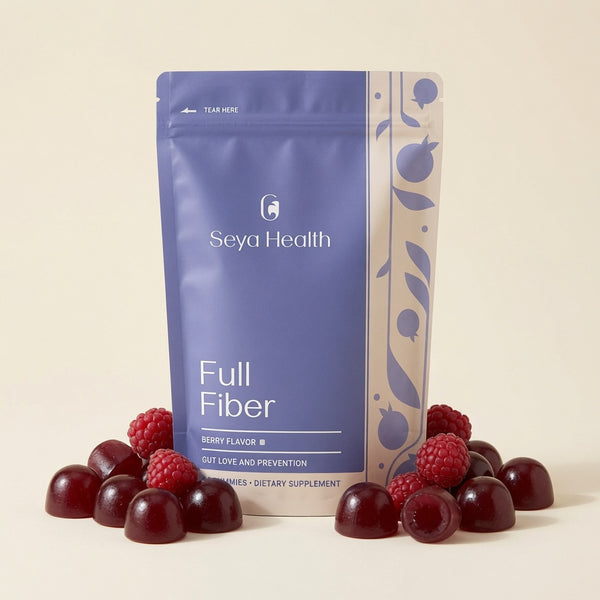
Seya Full Fiber
Most women fall short on fiber. Seya Full Fiber gives you 6 grams from three fibers in three small vegan gummies. Plant based, no gelatin, no sugar alcohols.
Shop Full FiberKeep reading

bone health
Best supplements for women over 40: what the evidence supports for heart, bones and muscles (and what's hype)

creatine
How long does creatine take to work? A realistic timeline for women

constipation