

Short version: Creatine without working out is a mixed bag. Your muscles will soak it up, but a daily dose alone will not build muscle. In a 2-year trial, 200 women past menopause took 3 g a day with no training plan. Their bone, lean mass, and strength did not change.
- Muscle: small, short-term gains showed up only with big "loading" doses. Plain 3 g a day did nothing in the long trials.
- Brain: this is the real reason a non-exerciser might take it. The evidence is early but promising.
- Hormones: creatine is not a hormone. Your hormones change how you use creatine, not the other way around.
- Every day: safe for most healthy adults, with or without a workout.
Last updated November 2026.
You keep seeing creatine on your feed. It is sold to lifters. But you do not lift. Maybe you walk the dog, chase your kids, or sit at a desk all day.
So is creatine worth it for you? Or is it a gym supplement you can skip?
The honest answer depends on what you want from it. Below, we split it by goal, so you can make the call for yourself.
Should women take creatine if they don't work out?
Only if you want it for your brain, or you plan to start moving more. For muscle on its own, a normal daily dose does very little.
That 2-year trial is the clearest test we have. Women past menopause with thinning bones took 3 g of creatine a day or a placebo. Both groups lost a little bone over time, at the same rate. Creatine added nothing to lean mass or muscle function. See Sales et al. (J Gerontol A, 2020).
A 2026 review of 7 trials in 608 women past menopause found the same split. Trials that used 3 g a day or less, with no training, showed no measurable effect. The gains came when women took 5 g or more and did strength training. See Naddafha et al. (JISSN, 2026).
What does creatine do in your body if you sit still?
It still gets stored. Your muscles take it in whether you train or not.
Your body uses up about 1 to 3 g of creatine a day. It makes some, and food covers about half. A pound of raw beef or salmon holds only about 1 to 2 g. See Kreider et al. (JISSN, 2017).
Supplements top up those stores. In early studies, 3 g a day for 28 days raised muscle creatine about as much as a week of 20 g a day. That finding is summed up in a 2025 expert review. See Antonio et al. (JISSN, 2025).
Fuller stores are not the same as more muscle, though. A full tank only matters if you drive the car.
Can creatine build muscle without working out?
Not much, and not at the dose most people take. The same 2025 review looked closely at this question. Here is what it found:
- High doses, short term: in men and women aged 64 to 86, 14 days of loading with no exercise raised grip strength by 6.7%. It also delayed fatigue on a bike test by 15.6%.
- Most positive studies: used loading at 20 g a day for 7 to 10 days, or 17 to 26 g a day.
- Studies with no loading phase: found no benefit.
Those high doses are far above the 3 to 5 g a day most people use. If muscle is your goal, a little training does more than a big dose. The lifting trials in women show what creatine adds when you train.

Does creatine help the brain without exercise?
Maybe, and this is where non-exercisers have a real reason to look. Your brain uses creatine to recycle quick energy, just like muscle does. Brain studies do not need a workout.
The brain seems harder to fill than muscle. The 2025 review says 4 to 5 g a day for several months can raise brain creatine. Much bigger doses do it faster. Researchers still do not know the best dose or how long it takes.
The memory and sleep-loss findings are promising but small. For every study, read our guide to creatine for brain health. For the full scorecard of non-gym benefits, see creatine benefits beyond muscle.
Is creatine good for women's hormones?
Creatine is not a hormone, and it does not act like one. It is a small compound made from amino acids. It is not a steroid either. Our post on whether creatine is a steroid explains why.
The link runs the other way. A 2021 review of creatine in women says hormone shifts change how the body handles creatine. That may matter around your period, during pregnancy, after a baby, and in menopause. See Smith-Ryan et al. (Nutrients, 2021).
That is a reason to study creatine in women. It is not proof that creatine balances hormones. Be wary of any label that says it does. If you are in perimenopause, our guide to creatine for perimenopause covers what has been tested.
Is it OK to take creatine every day if you don't exercise?
For most healthy adults, yes. The trials above gave it daily, and many people in them did not train. The ISSN position stand says doses up to 30 g a day for 5 years were safe in healthy people. That is far more than you need.
The 2026 review in women past menopause also found side effects were mild and similar to placebo. Kidney markers did not change.
One thing to know: creatine can nudge up creatinine on a blood test. That can look like a kidney problem when it is not. Tell your doctor you take it. Our post on creatine vs creatinine explains the difference.
Ask your doctor first if you have kidney disease, are pregnant or nursing, or take daily medicine. For the long-term safety data, see is creatine safe for women.
Creatine without working out: who gets the most from it?
Use this table to find yourself. It sums up the studies above.
| Your situation | What the research says | Worth trying? |
|---|---|---|
| You eat little or no meat | Plant-based eaters start with lower stores and may respond more | Reasonable, for the brain |
| You want sharper focus or memory | Small, early studies, no workout needed | Reasonable, keep hopes modest |
| You are 60 or older and want to stay strong | Loading helped grip in a short study; 3 g a day alone did nothing over 2 years | Better paired with light strength work |
| You want to build bone | No bone benefit in the long trials in women | No, focus on calcium, vitamin D, and weights |
| You want to lose weight | Creatine is not a fat burner (see creatine and weight loss) | No, it will not help on its own |
What small change makes creatine worth it?
Add some strength work. That is the step that changes the answer.
In the 2026 review, women past menopause who lifted and took 5 g or more a day gained about 0.37 kg of lean mass. Their leg press went up by about 7.5 kg compared with placebo. Those are small numbers, but they are real.
You do not need a gym for this. Squats to a chair, wall push-ups, and carrying heavy groceries all load your muscles. Creatine helps most when your muscles have work to do.
If you decide to try it, how should you take it?
- Form: creatine monohydrate. It is the form used in almost every study.
- Dose: 3 to 5 g a day. No loading phase is needed. See Antonio et al. (JISSN, 2021).
- Timing: with a meal. Taking it with carbs or protein helps muscle hold on to more of it in the short term, per the 2025 review.
- Patience: give it about 4 weeks for your muscle stores to fill. The brain may take months.
- Quality: pick a brand with third-party testing. Our guide to the best creatine for women shows what to check on a label.
Where Seya fits, honestly
Seya sells one product today: a fiber gummy that supports regularity. Our creatine gummy is coming January 2027. It is not on sale yet, and we will not share its dose, price, or ingredients until the formula is final.
We wrote this so you can decide if creatine makes sense for your life before you buy from anyone. This is education, not medical advice. Talk to a qualified clinician before adding any supplement.
These statements have not been evaluated by the Food and Drug Administration. This product is not intended to diagnose, treat, cure, or prevent any disease.
Frequently asked questions
Is creatine good for women even if you don't work out?
It can be, mainly for the brain. For muscle and bone, a 2-year trial of 200 women taking 3 g a day with no training plan found no change in bone, lean mass, or strength.
Is creatine good for women every day?
For most healthy women, yes. The ISSN says doses up to 30 g a day for 5 years were safe in healthy people. Most people take 3 to 5 g a day.
Does creatine help the brain without exercise?
Possibly. Brain studies do not require a workout. A 2025 expert review says 4 to 5 g a day for several months can raise brain creatine, but the best dose is not known yet.
Is creatine good for women's hormones?
Creatine is not a hormone or a steroid. Hormone shifts change how women's bodies use creatine, but there is no proof that creatine balances hormones.
Can creatine build muscle if you don't exercise?
Only a little, and only at high loading doses in short studies. Studies that used normal daily doses without loading found no benefit.
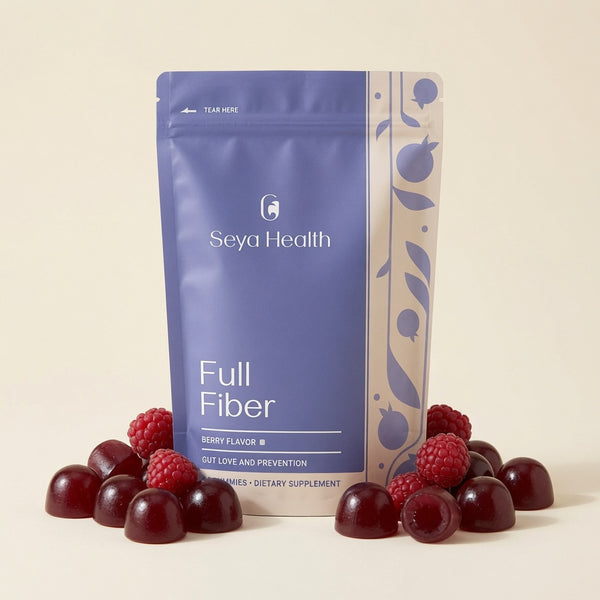
Seya Full Fiber
Most women fall short on fiber. Seya Full Fiber gives you 6 grams from three fibers in three small vegan gummies. Plant based, no gelatin, no sugar alcohols.
Shop Full FiberKeep reading

bone health
Best supplements for women over 40: what the evidence supports for heart, bones and muscles (and what's hype)

creatine
How long does creatine take to work? A realistic timeline for women

constipation