
Home/ The Journal/ cholesterol
cholesterol
Fiber and Heart Health: How It Lowers Cholesterol and Steadies Blood Sugar for Women

Short version: Fiber and heart health connect through one physical mechanism. Soluble fiber forms a gel that traps bile acids and carries them out of your body. Your liver pulls cholesterol out of your blood to build more. That is how a food lowers a lab number.
- Heart disease killed 304,970 US women in 2023, about 1 in every 5 female deaths.
- Every 5 grams of soluble fiber a day lowered LDL cholesterol by about 5.57 mg/dL across 181 randomized trials.
- Risk drops most between 25 and 29 grams of total fiber a day. Most women eat closer to 15.
Last updated August 2026.
Fiber and heart health are linked by something you can picture. Soluble fiber turns into a gel in your gut. That gel grabs bile acids and takes them out with the waste.
Your liver has to replace them. It builds new bile acids out of cholesterol, and it takes that cholesterol from your blood.
Here is the number. Across 181 randomized controlled trials in 14,505 people, every 5 grams of soluble fiber a day lowered LDL cholesterol by about 5.57 mg/dL.
Not a theory. A dose and a measured result.
And this matters more for you than most women have been told. Heart disease is the leading cause of death for women in the United States. It killed 304,970 of them in 2023, roughly 1 in every 5 female deaths, and only 56% of US women know it is their number one killer, according to the CDC on women and heart disease.
How does fiber and heart health actually connect?
Through bile.
Your liver makes bile acids out of cholesterol to help you digest fat. Normally your gut reabsorbs most of them and sends them back for reuse. A tidy loop.
Soluble fiber breaks the loop. It gels, binds the bile acids, and escorts them out. As one review of cholesterol-lowering foods puts it, soluble fibers "form a gel in the intestinal lumen that binds cholesterol and bile acids, impeding their absorption and accelerating their excretion," per the 2025 review of functional foods for cholesterol management.
So your liver rebuilds the supply. It needs raw material. It pulls circulating cholesterol out of your blood to get it.
That is the whole trick. Fiber never touches your bloodstream. It works entirely inside your gut, and your cholesterol number moves anyway.
Insoluble fiber does something different. It adds bulk and speeds transit, which is a regularity story rather than a cholesterol one. We break down the split in high-fiber foods for women.
How much does soluble fiber actually lower cholesterol?
Enough to show up on a lab report. Not enough to replace medical care.
The largest pooled analysis to date ran 181 randomized trials with 220 treatment arms and 14,505 participants. Soluble fiber supplementation lowered LDL cholesterol by 8.28 mg/dL and total cholesterol by 10.82 mg/dL overall. The dose-response piece is the useful part: each additional 5 grams a day moved LDL by about 5.57 mg/dL and total cholesterol by about 6.11 mg/dL. You can read the soluble fiber and serum lipid dose-response meta-analysis (Advances in Nutrition, 2023).
Zoom out from lab numbers to actual outcomes and the picture holds.
A review of 185 prospective studies and 58 clinical trials found that people eating the most fiber had a 15% to 30% lower rate of all-cause and cardiovascular mortality, and of coronary heart disease, compared with people eating the least. The protection was greatest between 25 and 29 grams of fiber a day. That comes from the Lancet carbohydrate quality and human health series (Reynolds et al., 2019).
Two honest caveats. Those outcome numbers come from observational data, so they show a strong pattern rather than proof of cause. And they describe total fiber from a whole diet, not a supplement taken on its own.
Why does your cholesterol climb at menopause?
You did not change. Your hormones did.
Women often watch their cholesterol rise in their late forties and early fifties while their diet stays exactly the same. It reads like a personal failure. It is not one.
The Study of Women's Health Across the Nation tracked women through the menopause transition and separated the effect of aging from the effect of menopause itself. Total cholesterol, LDL cholesterol, and apolipoprotein B all rose sharply in the window from one year before to one year after the final menstrual period. Triglycerides drifted up with age, but that LDL jump tracked menopause specifically. See Lipids, Menopause and Early Atherosclerosis in SWAN Heart Women.
Read that again. The number moved because estrogen fell, not because you got lazy.
That is a signal, not a character flaw. And a signal is something you can respond to.
The same hormonal shift slows your gut at the same time, which is why regularity often changes in the same years. We cover that in perimenopause and constipation.
Does fiber work differently before and after menopause?
There is a small, striking study suggesting it might.
Researchers gave 19 women with high cholesterol 15 grams of psyllium a day for 6 weeks, baked into cookies at about 5 grams each. Then they split the results by menopausal status.
The postmenopausal women dropped their total cholesterol by 5.2%, from 230.8 to 218.7 mg/dL, and that change was statistically significant. The premenopausal women dropped 1.3%, which was not. Full details are in Ganji and Kuo, Nutrition Journal (2008).
Now the honesty part, because it matters more than the headline. Nineteen women is a tiny sample. Eight of them were premenopausal. LDL changes did not reach significance in either group. This is a hypothesis worth testing, not a finding to build a protocol on.
But it points at the thing Seya exists to say. Women are not smaller men, and the research that would tell us how fiber behaves across a woman's hormonal life has barely been done. A study of 19 women is what passes for evidence here. That gap is the problem.
What about blood sugar?
Same gel, different job.
The viscous gel that traps bile acids also slows how fast sugar leaves your meal and enters your blood. Flatter spike, gentler insulin response. Cholesterol and glucose improve through one shared mechanism, which is why they tend to move together.
We go deep on the glucose side in fiber and blood sugar for women over 40.
How much fiber do you actually need for your heart?
The heart data points at 25 to 29 grams a day. Most women land near 15.
That is the gap, and it is not a small one. It is roughly 10 grams a day, every day, between where women eat and where the protection shows up. We map the whole thing in the fiber gap in women, and break the target down by age in how much fiber women actually need per day.
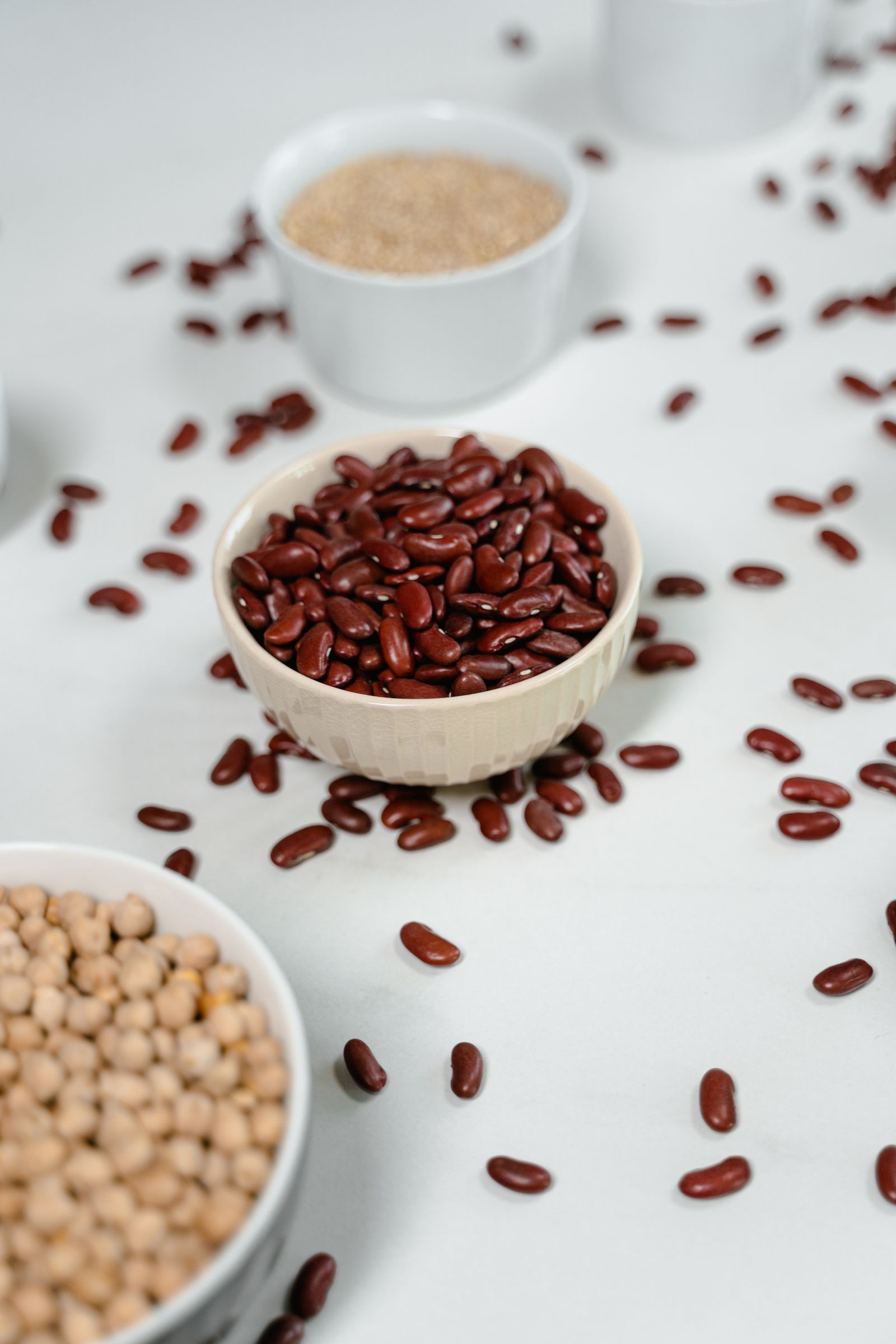
Close it with food first. Beans, lentils, oats, barley, chia, and pears carry the most soluble fiber per serving.
Go slowly. Adding a large amount of fiber overnight usually means gas and bloating for a week or two while your gut adjusts. Increase gradually and drink more water.
Where Seya fits, honestly
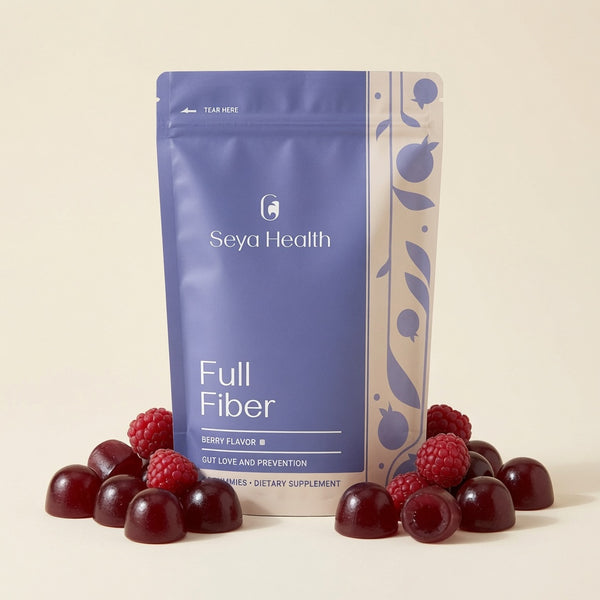
Seya makes one product at launch. A fiber gummy.
Three vegan gummies deliver about 5 grams of resistant tapioca fiber. That is roughly half the dose used in the trials above, and the evidence at that dose earns a grade of C. So here is exactly what we claim and nothing more: it supports regularity.
It is not a cholesterol product. It does not prevent heart disease, and it is not a substitute for the 25 grams of daily fiber the cardiovascular research is built on, or for the care of your doctor. It is one honest, repeatable habit that helps close a 10-gram gap.
If your cholesterol is high, talk to your doctor. Fiber is a lever, not the whole machine.
These statements have not been evaluated by the Food and Drug Administration. This product is not intended to diagnose, treat, cure, or prevent any disease.
Frequently asked questions
Can eating more fiber reduce the risk of heart disease?
Observational evidence says yes, strongly. A review of 185 prospective studies found people with the highest fiber intake had 15% to 30% lower all-cause and cardiovascular mortality and lower coronary heart disease rates than those with the lowest intake. Protection peaked between 25 and 29 grams a day. Because the data is observational, it shows a consistent association rather than proof of cause.
How does a high-fiber diet lower heart disease risk?
Mainly through cholesterol. Soluble fiber forms a gel that binds bile acids in your gut and removes them, so your liver pulls cholesterol from your blood to make more. In pooled trials, every 5 grams of soluble fiber a day lowered LDL cholesterol by about 5.57 mg/dL. The same gel also slows sugar absorption, which steadies blood glucose, a second cardiovascular risk factor.
What role does fiber play in a woman's overall health?
Fiber supports regularity, feeds your gut bacteria, slows glucose absorption, and helps lower LDL cholesterol. For women specifically, it matters across hormonal transitions: LDL cholesterol rises sharply around the final menstrual period, and gut transit slows in the same years. Most women eat about 15 grams a day against a target near 25, so it is one of the widest and most fixable gaps in a woman's diet.
Is soluble or insoluble fiber better for cholesterol?
Soluble. Only soluble fiber forms the viscous gel that binds bile acids, which is the mechanism that moves LDL cholesterol. Insoluble fiber adds bulk and speeds transit, so it mostly helps regularity. Beans, oats, barley, chia, and pears are among the richest soluble sources.
How long does it take fiber to lower cholesterol?
Weeks, not days. The trials that measured a significant drop typically ran 4 to 8 weeks at a steady daily dose. In one study of women with high cholesterol, 15 grams of psyllium a day for 6 weeks lowered total cholesterol by 5.2% in the postmenopausal group. Consistency matters more than any single high-fiber meal.
Does fiber lower cholesterol after menopause?
The limited evidence is encouraging but thin. In a 6-week study of 19 women with high cholesterol, postmenopausal women saw a significant 5.2% drop in total cholesterol on 15 grams of psyllium daily, while premenopausal women saw 1.3%, which was not significant. The sample is far too small to be conclusive, and it reflects how little fiber research has been done across women's hormonal stages.
Related reading
Seya Full Fiber
Getting enough fiber from food every day is hard. Seya Full Fiber is 6 grams from three fibers in one, in three small gummies, so you have a reliable daily floor. Plant based, no gelatin, no sugar alcohols, 60 gummies per pouch.
Shop Full FiberKeep reading

fiber
Can a Multivitamin Replace Vegetables? What Supplements Can't Do for Your Gut

constipation
The Best Way to Beat Constipation in Your 30s (and Where Fiber Gummies Fit)
fiber
The Gut-Skin Axis: Does Your Gut Health Affect Your Skin?
The gut-skin axis, explained: how your gut bacteria and blood sugar affect your skin, w...