
Home/ The Journal/ bowel habits
bowel habits
How to poop every morning: a simple routine that works with your gut clock

Short version: Here is how to poop every morning: wake at the same time, drink something, eat breakfast, then sit down 15 to 45 minutes later with your feet on a stool. Your colon is built for this. Waking up makes it 3 times more active.
- Your gut runs on a clock. Most people go in the early morning, per a study of 1,897 adults.
- A meal doubles colon activity. Breakfast is your best trigger.
- Coffee helps some people. In one study, it worked about as well as a 1,000-calorie meal.
- Give it 5 minutes, then get up. Leave the phone outside.
- Fiber and fluids make the stool easy to pass. Give a change at least 4 weeks.
Last updated November 2026.
Some people go like clockwork. Coffee, then the bathroom, then out the door.
Others get the urge at 11 a.m. in a meeting. Or not at all.
Good news: a morning poop is a habit you can build. Your body already wants to go then. You just need to give it the right cues, at the right time, in the same order each day.
How to poop every morning
You line up your routine with your gut's natural morning surge. Get up at a steady time, drink a glass of fluid, eat breakfast, and then sit on the toilet within the hour, even if you do not feel a strong urge yet.
The timing is not a guess. In a study that tracked colon pressure around the clock in 25 healthy adults, waking up caused a threefold jump in colon activity. Meals caused a twofold jump. Those numbers come from Rao and colleagues' 24-hour colon study.
So the morning stacks 2 triggers on top of each other. That is your window.
| Time | Step | Why it helps |
|---|---|---|
| Wake-up | Get up at the same time daily | Waking alone triples colon activity |
| First 10 minutes | Drink a glass of water or coffee | Fluid keeps stool soft; coffee moves the colon in some people |
| Within the hour | Eat a real breakfast | A meal doubles colon activity |
| 15 to 45 minutes after eating | Sit on the toilet, feet on a stool | This is the NIDDK's suggested window |
| 5 minutes later | Get up, even if nothing happened | Long sits lead to straining |
How does your digestive system wake up in the morning?
Your colon slows down at night and speeds up when you wake. Think of it like a dimmer switch, not an on-off button.
In the Rao study, the colon was clearly quieter overnight. Then, on waking, pressure waves rose sharply.
The colon also has a special kind of strong squeeze. Doctors call it a high-amplitude propagated contraction. It is the big wave that pushes stool toward the exit. In the same study, people had about 10 of these a day, and most came right after waking, after meals, or during a bowel movement.
Real life matches the lab. In a classic study of 838 men and 1,059 women in Bristol, England, most bowel movements happened in the early morning, per the Heaton study in the journal Gut. Women tended to go a bit later in the morning than men.
Why do I poop every morning before eating?
Because waking up is a trigger on its own. In the Rao data, the wake-up jump was bigger than the jump from a meal: threefold versus twofold.
Standing up, moving around, and the stool that built up overnight all add to it. So if you go before breakfast, your gut clock is doing its job. That is a sign of a steady rhythm, not a problem.
How can I train my body to poop every morning?
Pick a time and repeat it daily. The NIDDK calls this bowel training. On its constipation care page, it suggests trying to go 15 to 45 minutes after breakfast, "because eating helps your colon move stool."
Here is the routine, step by step:
- Wake at the same time. Weekends too, within an hour or so. Your gut clock likes a steady start.
- Drink first. A tall glass of water, tea, or coffee. Fluid matters most when you eat more fiber.
- Eat breakfast. Not just a bite. A real meal gives a stronger push.
- Sit down on schedule. Go 15 to 45 minutes after eating, even with no urge.
- Raise your feet. Put them on a small stool so your knees sit above your hips.
- Breathe and relax. Let your belly go soft. Do not hold your breath and push.
- Stop at 5 minutes. If nothing happens, get up and try again tomorrow.
One more rule: when you feel the urge at any time of day, go. The NIDDK says to use the bathroom as soon as you feel the need. Holding it trains your body to ignore the signal.
Expect this to take a few weeks. You are building a habit, and your gut learns by repetition.

Does a footstool really help?
Yes, for most people. A footstool puts you closer to a squat, which straightens the path out.
In one study, 28 healthy adults timed their bowel movements in 3 positions. Squatting cut both the time and the effort needed to feel empty, compared with sitting, in every person tested, per the Sikirov study.
A larger test used a store-bought toilet stool. In 52 healthy volunteers, using it raised the odds of feeling fully empty about 3.6-fold and cut straining, per a 2019 study in the Journal of Clinical Gastroenterology. Without it, bowel movements took about 25% longer.
Do coffee, warm water, and fiber help a morning bowel movement?
Coffee and fiber have good evidence. Warm water has less than you might think.
Coffee. In 12 healthy people, regular coffee moved the colon about as much as a 1,000-calorie meal. It was 60% stronger than water and 23% stronger than decaf, per a study on coffee and the colon. But it does not work for everyone. In a survey of 99 young adults, only 29% said coffee gave them the urge to go, per the Brown study in Gut. Among those who did respond, decaf worked too.
Warm water. In that same Brown study, a drink of hot water did not raise colon activity in anyone. Water still helps. It keeps stool soft, and the NIDDK says to drink plenty of fluids when you add fiber. It just is not a trigger on its own.
How much fiber helps you go in the morning?
Fiber is the slow, steady part. A 2022 review of 16 trials with 1,251 adults found 66% of people with chronic constipation responded to fiber, versus 41% on placebo or control, per the meta-analysis in the American Journal of Clinical Nutrition. The best results came with more than 10 grams a day, for at least 4 weeks. Psyllium had the strongest data.
The NIDDK says adults need 22 to 34 grams of fiber a day, depending on age and sex. Most people fall short. Food comes first: oats, beans, berries, pears, and chia all count. A fiber supplement can help fill the gap, and our guide on how fiber works with water covers why the 2 go together.
Seya's fiber gummy is one way to add fiber. It is a food supplement, not a laxative, and it supports regularity as part of a fiber-rich diet.*
How do you poop in the morning without coffee?
Lean on breakfast. A meal is the strongest trigger you control, and it works whether or not you drink coffee.
Any real meal works. In a study of 18 healthy adults, both a high-fat and a high-carb meal set off colon activity, per Rao's meal study in Gut. The carb response was short. The fat response lasted longer. So a mixed breakfast, like oats with berries and yogurt, is a fine choice.
Moving helps as well. A short walk after breakfast, or even getting dressed and making the bed, keeps your body in "day mode."
How long should it take to poop in the morning?
A few minutes. If you are sitting much longer, the phone is often why.
In a study of 125 adults having a screening colonoscopy, 66% used their phone on the toilet. Of the phone users, 37.3% sat for more than 5 minutes per visit, compared with 7.1% of people who left the phone outside, per the 2025 study in PLOS One. Phone use was also linked to a 46% higher risk of hemorrhoids. That study shows a link, not proof of cause.
So set a simple limit. Five minutes, then up.
Is it better to poop in the morning or at night?
Neither is better. Steady and easy matters more than the hour.
Morning is just the easiest time to build a habit, because your gut is already most active then. If you go after dinner every day and it is soft and easy, that is fine too.
A morning poop is also not required. Anywhere from 3 times a day to 3 times a week is normal for most adults. Our guide on how often you should poop breaks down the numbers, and what a normal bowel movement feels like covers shape and effort.
What if you are constipated in the morning?
Keep the routine, and work on the stool itself. Hard stool will not pass easily no matter when you sit down.
Start with fiber, fluids, and daily movement. Check the shape with our guide to what healthy poop looks like. If you are on a GLP-1 or in perimenopause, our guide to constipation in women explains why things may slow down.
See a doctor if self-care does not help, or if you have a family history of colon cancer. The NIDDK says to see a doctor right away if constipation comes with blood in your stool, constant belly pain, vomiting, fever, or weight loss you did not try for, per its symptoms page.
Frequently asked questions
Is it normal or healthy to poop every morning?
Yes. Most bowel movements happen in the early morning, per the Bristol study of 1,897 adults. Waking up triples colon activity, so a morning poop is your gut clock working as designed. Not going every morning is also normal.
How do you poop in the morning before work or school?
Wake up 20 to 30 minutes earlier than you need to. Drink something, eat breakfast, then sit on the toilet 15 to 45 minutes after eating. A rushed morning is the most common reason the routine fails, so build in the time.
How do circadian rhythms affect gut motility?
Your colon follows a daily rhythm. It is quiet at night and much more active after waking and after meals. In a 24-hour study, waking up raised colon activity threefold and meals raised it twofold.
How do habits and routines help regularity?
Repeating the same steps at the same time teaches your body when to go. The NIDDK suggests trying to go at the same time each day, 15 to 45 minutes after breakfast. Responding to the urge right away helps too.
How do I get my bowel movements regular?
Combine a steady routine with enough fiber and fluid. Aim for 22 to 34 grams of fiber a day, drink plenty of water, move daily, and sit down at the same time each morning. Give it at least 4 weeks.
What simple trick empties your bowels?
Raise your feet on a small stool so your knees sit above your hips. In a study of 52 volunteers, a toilet stool raised the odds of feeling fully empty about 3.6-fold and cut straining.
*These statements have not been evaluated by the Food and Drug Administration. This product is not intended to diagnose, treat, cure, or prevent any disease. This article is educational and is not medical advice. Talk to your clinician about your own symptoms.
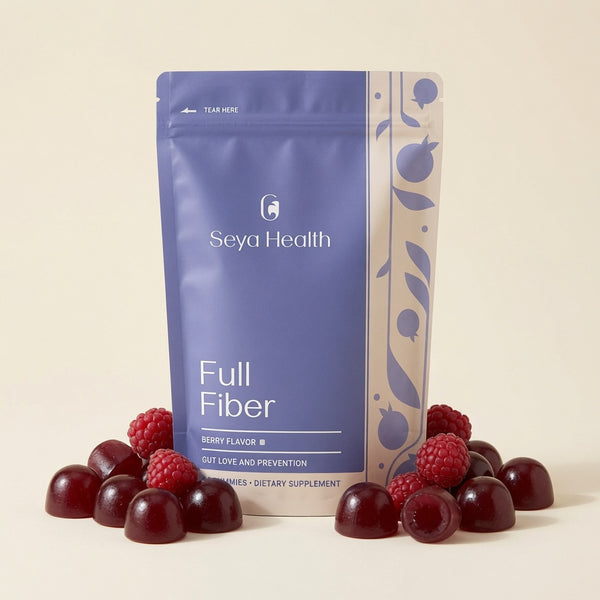
Seya Full Fiber
Most women fall short on fiber. Seya Full Fiber gives you 6 grams from three fibers in three small vegan gummies. Plant based, no gelatin, no sugar alcohols.
Shop Full FiberKeep reading

bone health
Best supplements for women over 40: what the evidence supports for heart, bones and muscles (and what's hype)

creatine
How long does creatine take to work? A realistic timeline for women

constipation