
Home/ The Journal/ cassava
cassava
Baking With Tapioca Starch: Chewy Crusts, Clear Sauces, and the Fiber It Doesn't Have

Short version: Baking with tapioca starch is a texture decision, not a nutrition one. It buys you chew, gloss, and a clean set in gluten-free baking, and it hands you 0.9 g of fiber per 100 g. Plain wheat flour has 3.74 g. Whole wheat has 11.06 g. If your gluten-free year came with a slower gut, the flour blend is the first place to look.
- 100 g of dry tapioca carries 358 calories, 88.69 g of carbohydrate, and 0.9 g of fiber, per USDA FoodData Central (entry 169717, Tapioca, pearl, dry).
- Measured fiber in gluten-free flours: rice 2.50 g, corn 2.94 g, potato starch 0.40 g per 100 g, versus 3.74 g for wheat and 11.06 g for whole wheat.
- Cassava starch sets low, from about 58 °C to 73 °C (136 °F to 163 °F). That is why it thickens before a sauce boils.
- Tapioca starch and resistant tapioca fiber are two different ingredients. Your body digests one of them fast. It cannot digest the other.
Last updated September 2026.
You went gluten-free and the baking got better.
The bread holds together. The cookies chew instead of crumble. The pie filling sets clear.
Then, a few months in, things slowed down.
Most women file that under "my gut is just like this now." It usually is not. Baking with tapioca starch works so well for the exact reason it does nothing for you nutritionally: it is almost pure starch, stripped of everything else the root had.
Your gut noticed the swap before you did. That is a mechanism, not a character flaw.
Here is what the ingredient actually does, when to reach for it, and how to bake with it without paying for it three days later.
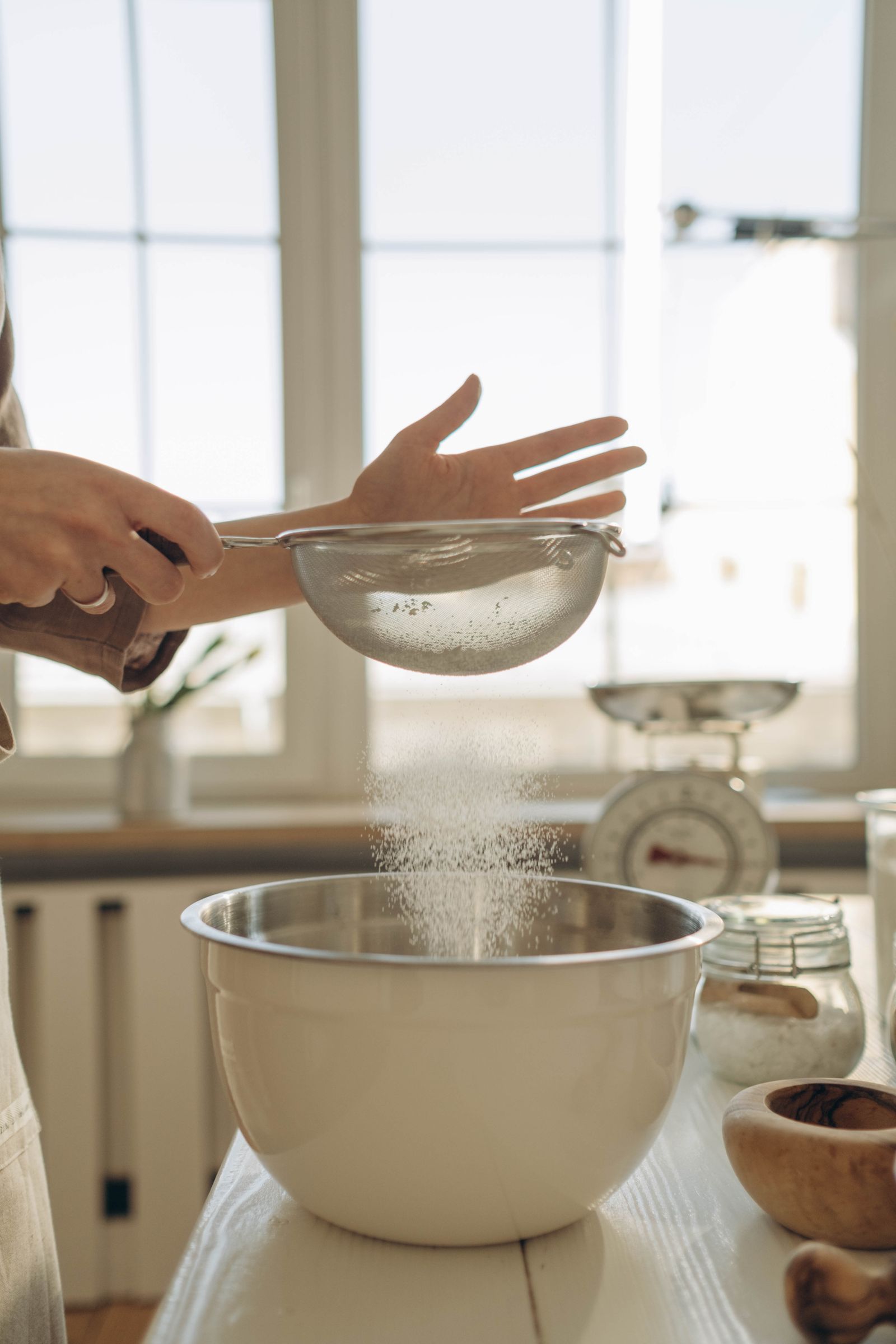
What is tapioca starch?
It is the starch washed out of cassava root. That is the whole ingredient list.
Cassava is a tuber grown across South America, West Africa, and Southeast Asia. Growers grate the root, rinse the starch free, and dry it into a fine white powder. What survives that process is about 89% carbohydrate by weight.
Four names on a US shelf mean the same thing: tapioca starch, tapioca flour, tapioca powder, cassava starch.
One name does not. Cassava flour is the whole ground root, fiber and all. Tapioca starch is only the extract. Swapping one for the other in a recipe changes both the texture and the nutrition, and most blogs use the words as if they were the same.
What baking with tapioca starch actually does
Four jobs, and it is genuinely good at all four.
- Chew. It gives gluten-free doughs the stretch and pull that rice flour alone cannot produce. This is why it shows up in nearly every commercial blend.
- Crust. It crisps and browns at the edges, which is what makes a gluten-free crust read as baked rather than pale.
- Gloss. Tapioca sets translucent. Fruit fillings stay shiny instead of turning cloudy.
- Freezer tolerance. The gel it forms holds up better through a freeze and a thaw than most starch gels do.
The temperature is the useful part. A review of cassava starch research puts gelatinization onset at 58.0 °C to 60.7 °C, peak at 62.1 °C to 66.3 °C, and completion by 69.4 °C to 73 °C, per Comprehensive Reviews in Food Science and Food Safety, 2019 (PMID 31205336).
Translate that to a stove. Tapioca is fully thickened around 163 °F, well under a boil. Push a tapioca-thickened sauce to a hard simmer and you thin it back out, because you keep breaking the gel after it has already formed.
Take it off the heat earlier than you think.
Will gluten-free flour rise without gluten?
Yes. Not on starch alone.
Gluten does two things in wheat dough. It builds an elastic web, and that web traps the gas the yeast makes. Take the gluten out and you still have gas. You have nothing holding it.
Bakers replace the web with hydrocolloids, which is the technical word for gums. Xanthan gum and hydroxypropylmethylcellulose are the two that do the most work. Their long molecules mimic the viscoelastic behavior of gluten and hold the gas cells through proofing and baking, per a 2019 review in Food Science and Nutrition.
There is a quiet irony in that second gum. Hydroxypropylmethylcellulose is one of the 7 isolated fibers the FDA has formally recognized as dietary fiber, per its questions and answers on dietary fiber. The binder in your gluten-free loaf counts as fiber. The starch making up most of the loaf does not.
Practical version: if a recipe uses starch and no gum, expect it to bake flat.
Tapioca vs. cornstarch vs. arrowroot: which one, when?
They are not interchangeable, and the difference is mostly about heat and acid.
| Starch | Best at | Avoid it when |
|---|---|---|
| Tapioca | Fruit pies, glossy glazes, chew in gluten-free dough, anything going in the freezer | You need a long, hard simmer |
| Cornstarch | Opaque gravies, custards, puddings, sauces that will sit hot | The dish is acidic, or you want it clear |
| Arrowroot | Clear sauces finished off the heat, acidic fruit, delicate glazes | The sauce contains dairy, which can turn it slimy |
Rough swap ratio: use about 2 teaspoons of tapioca starch where a recipe asks for 1 tablespoon of cornstarch. Whisk it into a little cold liquid first. Dumped dry into hot liquid, any of the three will seize into lumps.
All three are similar nutritionally, which is to say close to zero. We compared them by the numbers in resistant tapioca starch versus potato, corn, and rice starch.
What does tapioca starch taste like?
Almost nothing, and that is the point.
Plain starch on its own is faintly sweet and mostly neutral. No bean note like chickpea flour. No grain note like sorghum. No coconut note.
That neutrality is a real advantage in baking. It is also exactly why it disappears from the nutrition panel. Flavor in a whole food usually rides along with the parts that were removed here: the fiber, the minerals, the plant compounds.
Strip a root down to its starch and you get a clean canvas. You also get a blank one.
How much fiber is in tapioca starch?
0.9 g per 100 g. That is the honest number, and 100 g is a lot of flour.
The full USDA FoodData Central entry for dry tapioca (169717) reads 358 calories, 88.69 g of carbohydrate, 3.35 g of sugars, and 0.19 g of protein per 100 g. A quarter-cup in a recipe is roughly 30 g, so you are looking at about 0.27 g of fiber from that ingredient.
For scale: the daily target is 25 g of fiber for women, and about 21 g after 50, per the National Academies. More than 90% of US women already fall short of it, per Thompson, Nutrients, 2021.
0.27 g does not move that. That shortfall has a name and a size, and we mapped it in the fiber gap in women.
What a gluten-free swap actually costs you in fiber
This is the part nobody prints on the bag. A 2025 analysis measured fat and fiber directly in gluten-free and gluten-containing flours and breads.
| Flour | Fiber per 100 g |
|---|---|
| Whole wheat | 11.06 g |
| Wheat, white | 3.74 g |
| Corn (maize) | 2.94 g |
| Rice | 2.50 g |
| Tapioca | 0.9 g |
| Potato starch | 0.40 g |
Source: González et al., Foods, 2025;14(5):894 (PMID 40077597), except tapioca, which is the USDA figure above.
Read the top and bottom rows together. Trading whole wheat for a rice-and-tapioca blend can cost you roughly 10 g of fiber per 100 g of flour. That is close to half a woman's daily target, gone, from one shelf swap you made for a reason that had nothing to do with fiber.
Worth saying plainly: none of this is an argument against eating gluten-free. If you have celiac disease, the diet is the treatment, and the FDA sets the bar for that label at under 20 parts per million of gluten under a rule in force since August 5, 2014. The point is narrower. The swap has a fiber cost, and almost nobody is told about it.
How to bake gluten-free and keep the fiber
You do not have to give up the texture to get the fiber back. You have to add it on purpose.
- Use tapioca as a minority player. Roughly 15% to 25% of the blend by weight is enough for chew. Beyond that you are mostly adding starch.
- Build the rest from something whole. Sorghum, buckwheat, teff, oat, and almond all carry more fiber than any of the pure starches.
- Swap in cassava flour where texture allows. It is the whole root rather than the extract, so the fiber comes with it. It behaves differently, so start at a quarter of the blend.
- Add ground flaxseed or psyllium. Both bind gluten-free dough and both bring real fiber. We covered how they compare in flaxseed versus psyllium.
- Cook it, then cool it. Cooked starch that cools forms retrograded starch, which digests more slowly. A 2022 meta-analysis confirmed the effect, though it measured lab heating-and-cooling cycles. A night in your fridge gives a smaller version of the same thing, not the same magnitude.
None of that fixes the day you already had. Your plate does the heavy lifting. There is a full grocery list in high-fiber foods for women over 40.
Is tapioca starch the same as resistant tapioca fiber?
No. Same root, opposite behavior in your body.
Regular tapioca starch is rapidly digestible. Your enzymes break it into glucose in the small intestine, which is exactly what you want from a thickener and exactly why it contributes nothing to your fiber total.
Resistant tapioca fiber is processed so those enzymes cannot get at it. It passes into the large intestine intact and feeds the bacteria there. That is the definition of a dietary fiber, and it is why high amylose starch sits on the FDA's list of 11 isolated fibers the agency intends to formally recognize, alongside inulin and polydextrose.
Two ingredients, one root, one letter of difference on a label. We go deeper in what resistant tapioca starch actually is.
So if you bought a bag of tapioca flour hoping it was the fiber you keep reading about, it was not. That is a labeling problem, not a you problem.
Where Seya fits, honestly
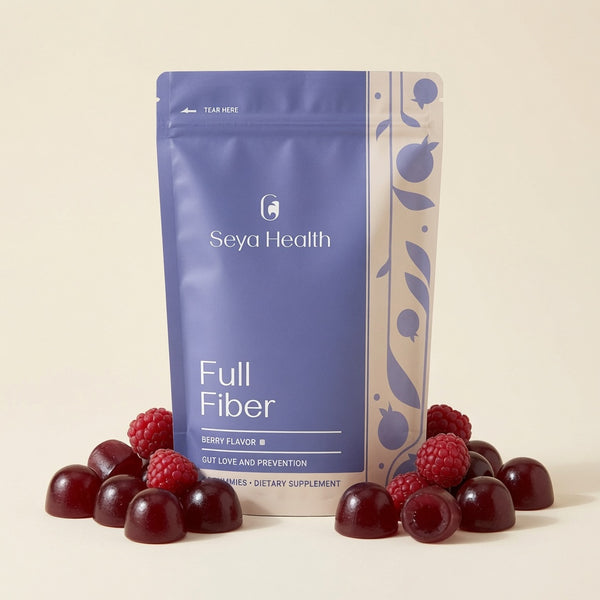
Our Fiber gummy uses the second ingredient, not the first.
3 gummies deliver 5,650 mg of dietary fiber, which is 5.65 g, or 16% of the Daily Value. The split is printed on the jar: 4,500 mg of resistant tapioca fiber, 950 mg of prebiotic soluble fiber, 200 mg of cellulose. Plus 80 mg of magnesium as magnesium citrate and 100 mg of ginger root.
The limit is worth naming. That 950 mg of prebiotic soluble fiber sits below the doses used in the prebiotic trials, and we are not going to round it up. What the 5.65 g total can honestly claim is that it supports regularity. It is about a fifth of a 25 g day. It closes part of the gap a starch-heavy blend opens, not all of it.
Full Fiber Gummies are $24.99 for 20 servings, third-party tested every batch.
This is education, not medical advice. Talk to a qualified clinician before starting a new supplement, especially if you take medication or have a digestive condition.
These statements have not been evaluated by the Food and Drug Administration. This product is not intended to diagnose, treat, cure, or prevent any disease.
Frequently asked questions
How do you make flour gluten-free at home?
You blend, you do not convert. No home process removes gluten from wheat.
A workable all-purpose blend runs roughly 40% whole-grain flour such as sorghum or buckwheat, 40% rice flour, and 15% to 25% tapioca starch for chew, plus about 1 teaspoon of xanthan gum per 3 cups. Weigh the flours rather than scooping them, because starches pack differently. If you bake for celiac disease, buy certified ingredients: the FDA standard is under 20 parts per million, and shared equipment can push a naturally gluten-free grain past it.
Will gluten-free flour rise?
Yes, if something replaces the gluten network. Yeast still makes gas in a gluten-free dough. The problem is holding it. Hydrocolloids such as xanthan gum and hydroxypropylmethylcellulose mimic gluten's elastic behavior and trap the gas cells through proofing and baking. Psyllium husk does similar work and brings fiber with it. Expect a wetter batter than a wheat dough and a single rise rather than two, since gluten-free structure does not survive a hard punch-down.
How do corn flour, rice flour, and tapioca flour compare?
By measured fiber, corn flour holds about 2.94 g per 100 g and rice flour about 2.50 g, while tapioca starch holds 0.9 g. By behavior, corn flour carries flavor and a yellow color, rice flour is the neutral bulk of most blends but bakes gritty on its own, and tapioca contributes chew, browning, and gloss rather than structure. Most good blends use all three, with tapioca as the smallest share.
What does tapioca starch taste like?
Close to neutral, with a faint sweetness. It has none of the bean flavor of chickpea flour or the earthiness of buckwheat, which is why it is the default chew ingredient in commercial gluten-free blends. That neutrality is a processing artifact. Extracting the starch removes the fiber, minerals, and plant compounds that would have carried flavor, leaving 88.69 g of carbohydrate and 0.9 g of fiber per 100 g.
What does starch taste like on its own?
Bland and chalky raw, faintly sweet once cooked. Heat gelatinizes the granules and begins breaking long chains into shorter sugars, so a cooked slurry tastes sweeter than the dry powder.
Raw starch coats the tongue and leaves a floury aftertaste. That is the usual sign a sauce came off the heat too early. Cassava starch finishes gelatinizing by about 73 °C, so a sauce that still tastes raw never reached temperature.
Is arrowroot powder a better thickener than corn starch?
Better for some jobs, worse for others. Arrowroot sets clear and tolerates acid, so it suits fruit sauces and glazes where cornstarch would turn cloudy or thin out. Cornstarch gives more opaque body and holds up better in a sauce that sits hot, which is why gravies and custards still use it. Arrowroot can go slimy with dairy. Neither one contributes meaningful fiber, so pick on texture, not nutrition.
Related reading
Seya Full Fiber
Your gut bacteria run on fiber. Seya Full Fiber delivers 6 grams from three fibers in one to feed the beneficial bacteria in your gut and support short-chain fatty acid production. Plant based, no gelatin, no sugar alcohols.
Shop Full FiberKeep reading
fiber
Can a Multivitamin Replace Vegetables? What Supplements Can't Do for Your Gut

constipation
The Best Way to Beat Constipation in Your 30s (and Where Fiber Gummies Fit)
fiber
The Gut-Skin Axis: Does Your Gut Health Affect Your Skin?
The gut-skin axis, explained: how your gut bacteria and blood sugar affect your skin, w...