
Home/ The Journal/ fiber
fiber
What Supplements Should You Take on a GLP-1?
On a GLP-1 like Ozempic or Wegovy? What supplements actually matter (protein, key nutrients, fiber), what to skip, and where fiber honestly fits.

GLP-1 medicines like Ozempic, Wegovy, and Zepbound work largely by cutting your appetite, so you end up eating a lot less. That is the point, but it also means it is easier to fall short on nutrients and to lose muscle along with fat. The supplements most worth prioritizing, ideally guided by your doctor and your bloodwork, are protein, enough fluids and electrolytes, whatever nutrient gaps you actually have, and fiber. None of it is required, and none of it replaces food or medical advice.
Why a GLP-1 changes what your body needs
These medications are effective because they turn down hunger and slow digestion. Most people end up eating 30 to 50% fewer calories a day.1 Fewer calories can mean fewer of the nutrients that ride along with food, and the data backs this up. A 2025 analysis of more than 460,000 people on GLP-1 medications found that about 22% were diagnosed with a nutritional deficiency within a year of starting, most often vitamin D, B vitamins, and minerals like iron and magnesium.2
There is a second issue: muscle. When you lose weight quickly, a meaningful share of what you lose can be muscle, not just fat. That is normal with any fast weight loss, but it is worth protecting against, because muscle is what keeps you strong and supports your metabolism.2 This is why "just eat less" is not the whole story on a GLP-1. What you do eat has to work harder for you.
Eating less is the goal. Getting less of what your body needs is the side effect to manage.
What to prioritize (with your doctor)
Before the list, one honest note. We make a fiber supplement, and we will get to where fiber fits. But most of what matters here is not something we sell, and we are not going to pretend otherwise. Think of this as what to talk through with your doctor, not a shopping list from us.
1. Protein comes first
Protein is the single most important thing to stay on top of, because it is what protects your muscle while you lose fat.3 When your appetite is low, hitting your protein target from food alone gets hard, so many people use a protein shake or add protein to meals. Your doctor or a dietitian can help you set a target.
2. Fluids and electrolytes
Nausea, lower food intake, and simply forgetting to drink can leave you dehydrated, which makes you feel worse. Steady water and, for some people, electrolytes help with the fatigue, headaches, and constipation that come from not drinking enough.3
3. Cover your actual gaps
Rather than guessing, this is where bloodwork pays off. In that large 2025 analysis, the shortfalls that showed up most often were vitamin D, thiamine and other B vitamins, and minerals like iron, calcium, magnesium, and potassium.2 A general multivitamin can be a reasonable foundation, but the smarter move is to let your doctor check your levels and target what you are actually low on, rather than taking a little of everything. Test, do not guess.
A note for women
A few of these matter more if you are a woman. Iron is easy to run low on, so it is worth checking rather than assuming. Protecting muscle with protein and strength work matters at every age and even more through perimenopause and beyond, when muscle and bone are already under pressure. And the appetite drop can make it harder to get enough calcium and vitamin D for your bones. None of this is a reason to worry, just a reason to be deliberate, and to bring it up with your doctor.3
4. Fiber
Fiber earns its own section below, because it fits a GLP-1 in a specific and honest way.
Where fiber fits on a GLP-1
Fiber matters here for two real reasons, and it is worth being clear about what they are and what they are not.
Your fiber gap gets wider. Most women already fall short on fiber, eating only about half of what is recommended.4 When you cut your intake by a third or more, you are almost certainly getting even less fiber than before. So the everyday gap that was already there gets bigger right when your gut could use the support.
Constipation is a common side effect. Slowed digestion is part of how these drugs work, and constipation is one of the most common complaints. For milder cases, fiber and fluids support your digestion, though you should loop in your doctor if it is stubborn. We cover the specifics in how to relieve GLP-1 constipation and in medications that cause constipation.
Now the honest boundary. Fiber is not a weight-loss booster, and it does not make your GLP-1 work better or faster. Anyone selling it that way is overselling. Fiber is for your gut and your fiber gap, full stop. And because fiber can affect how some medications are absorbed, take it a couple of hours apart from your prescriptions, and ask your pharmacist about your specific ones.5
What to be careful with
More is not better with supplements, and a few need extra care on a GLP-1. Fat-soluble vitamins (A, D, E, K) can build up if you overdo them, iron should be taken only if you actually need it, and some supplements can interact with medications.6 The theme is the same throughout: test before you treat, keep your doctor and pharmacist in the loop, and be skeptical of any product promising to supercharge your results.
Where Full Fiber fits
If your doctor agrees fiber is a good fit for you, a measured daily source is a simple way to cover the wider fiber gap that comes with eating less, without adding one more thing to overthink.
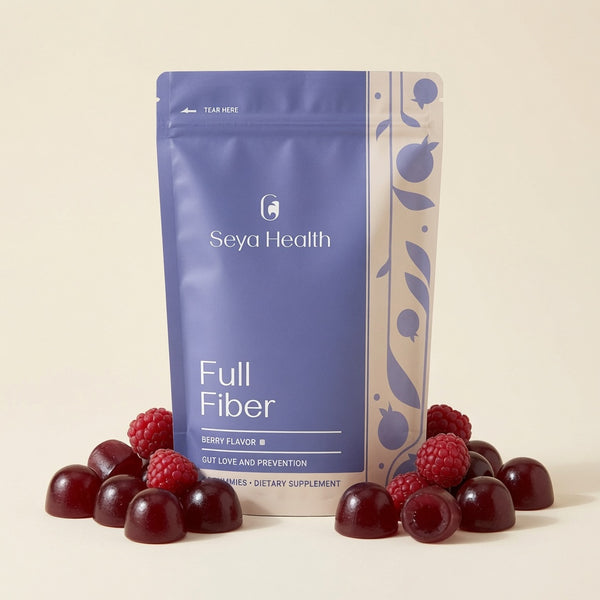
Seya Full Fiber gives you 6 grams of fiber from three fibers in one, in three small gummies. The fermentable fibers feed the beneficial bacteria in your gut, and it is plant based with no gelatin, no sugar alcohols, and 60 gummies per pouch. It is easy to take even when your appetite is low. To be clear about what it is not: it is not a weight-loss aid, not a replacement for protein or food, and not something that changes how your medication works. It is everyday fiber support, taken a couple of hours apart from your medication, if your doctor says it is right for you.
Seya Full Fiber
6 grams of fiber in three gummies to help cover the wider fiber gap when you are eating less, and feed the beneficial bacteria in your gut. Plant based, no gelatin, no sugar alcohols. Not a weight-loss aid. Ask your doctor if fiber is right for you.
Shop Full FiberFor the food side of eating well on a GLP-1, see what to eat on a GLP-1, and for the full list of side effects, GLP-1 side effects explained. For your baseline fiber target, see how much fiber women need per day.
The bottom line
You do not need a cabinet full of pills to do well on a GLP-1. You need to protect your protein, stay hydrated, find and fix your actual nutrient gaps with your doctor, and keep your fiber up as you eat less. Everything else is optional, and anything promising to boost your results deserves a raised eyebrow. Simple, tested, and doctor-guided beats a long supplement list every time.
Frequently asked questions
Do I need to take supplements on a GLP-1?
Not automatically, but the risk of falling short goes up because you eat much less, and about 22% of users develop a nutritional deficiency within a year.2 Many people benefit from prioritizing protein and covering any gaps their bloodwork shows. Food comes first, and your doctor should guide the rest.
What is the most important thing to take on a GLP-1?
For most people, protein, because losing muscle along with fat is a real risk when you eat less. After that, enough fluids and electrolytes, and covering any nutrient gaps your doctor finds.
Does fiber help on a GLP-1?
It can, in two ways: it supports digestion, since constipation is a common side effect, and it helps cover the fiber gap that widens when you eat less. It is not a weight-loss booster and does not make the medication work better.
Can I take fiber at the same time as my GLP-1?
It is better to space fiber a couple of hours apart from medications, since fiber can affect absorption. Ask your pharmacist about your specific prescriptions.5
Will supplements boost my weight loss on a GLP-1?
No. Supplements support your nutrition and can help you feel better while you eat less, but they do not enhance the medication or speed weight loss. Be cautious with anything that promises they will.
Sources
- 1 Harvard T.H. Chan School of Public Health, The Nutrition Source. Fiber; and clinical reporting on reduced energy intake with GLP-1 therapy.
- 2 Harvard Health Publishing. Study: Taking GLP-1 drugs may increase risk of key nutrient deficiencies (Butsch et al., Obesity Pillars, 2025).
- 3 ConsumerLab. Supplements to Take or Avoid When Using a GLP-1.
- 4 American Society for Nutrition. Most Americans are not getting enough fiber in our diets.
- 5 Mayo Clinic. Dietary fiber: Essential for a healthy diet.
- 6 ConsumerLab. Supplements to Take or Avoid When Using a GLP-1 (interactions and cautions).
This article is general information, not medical advice, and it is not a substitute for guidance from your doctor, pharmacist, or dietitian. Seya Full Fiber is a dietary supplement and is not intended to diagnose, treat, cure, or prevent any disease, and it is not a weight-loss product. Do not start, stop, or change any medication or supplement without talking to your healthcare provider, especially while taking a prescription medication.
Keep reading
Fiber
Can You Take Fiber With Your Medications? A Safety Guide
Yes, but timing matters. How to take fiber safely with medications, which drugs to watc...
fiber
Antidepressants and Your Gut: Digestion, Weight, and What Actually Helps
How antidepressants affect digestion and weight, why SSRIs and older drugs differ, what...
constipation
Medications That Cause Constipation (and How to Get Relief)
Which medications cause constipation, why opioids are the exception, and how to get rel...