
Home/ The Journal/ constipation
constipation
Flaxseed vs. Psyllium for Perimenopause Constipation: Which Fiber Works Better?

Short version: Flaxseed vs psyllium is not a tie. Psyllium has the deeper evidence file, from a pooled analysis of 16 randomized trials. Flaxseed edged ahead of psyllium in the one 12-week trial that ran them against each other. Both need a real dose, held for at least 4 weeks.
- Psyllium husk is over 90% fiber by weight, and it is the gel-forming kind.
- Flaxseed fiber is about one third soluble and two thirds insoluble.
- In pooled trial data, psyllium raised stool frequency by about 3 bowel movements a week.
- In a 12-week trial of 77 adults, 10 g twice a day of either fiber beat placebo.
Last updated August 2026.
Two jars on the counter. Ground flaxseed and psyllium husk.
Both say fiber. Neither says which one a slower midlife gut actually needs.
If you have tried one of them and quit, the first suspect is not your discipline. It is usually the dose, the timeline, or the type. Fiber is a mechanical tool. Pick the wrong one and it does the wrong job.
So here is the comparison, with the numbers the trials actually used.
Is flaxseed better than psyllium for perimenopause constipation?
On the evidence we have, no. And it is not worse, either.
Only one trial has put them head to head. It followed 77 adults who had both constipation and type 2 diabetes for 12 weeks. Each person got 10 g of flaxseed, 10 g of psyllium, or a placebo, baked into cookies, twice a day.
Both fibers beat placebo on symptom scores and on stool consistency. The authors wrote that flaxseed "appear to be superior to psyllium." Read the randomized flaxseed versus psyllium trial in Clinical Nutrition ESPEN (2019).
One trial. One population. That is a signal, not a verdict.
Psyllium has the deeper file. So the honest answer is that psyllium is the safer bet, and flaxseed is a real option, not a downgrade.
Flaxseed vs psyllium: what is actually different?
One is a seed you eat. One is a husk stripped off a seed. That single difference sets everything else.
| Feature | Ground flaxseed | Psyllium husk |
|---|---|---|
| Format | Whole food. You grind it and eat it. | Isolated fiber. Powder or capsule. |
| Fiber make-up | About one third soluble, two thirds insoluble | Over 90% fiber by weight, mostly soluble |
| How it acts in water | Mucilage gums swell. They are 7% to 10% of the seed. | Forms a thick gel that holds water |
| Dose used in trials | 10 g twice a day for 12 weeks. Or 50 g of flour a day for 4 weeks. | 10 g twice a day for 12 weeks. Above 10 g a day in pooled trials. |
| What the evidence supports | Better symptom scores and stool consistency than placebo | Strongest stool-frequency effect of the fibers pooled, about 3 more movements a week |
| Trade-offs | Bulky. Needs grinding. Goes rancid. Brings fat and calories with it. | Needs plenty of water. Gritty. Gas while you adjust. |
Sources for the make-up figures: the flaxseed composition review in the Journal of Food Science and Technology and the 2025 psyllium husk structure review in Comprehensive Reviews in Food Science and Food Safety.
How do these two actually move stool?
By two different physical mechanisms. There are only two.
That is not a figure of speech. It is the finding of a review by Johnson W. McRorie Jr., PhD, and Nicola M. McKeown, PhD, in the Journal of the Academy of Nutrition and Dietetics:
"In the large bowel, there are only two mechanisms that drive a laxative effect: large/coarse insoluble fiber particles ... mechanically irritate the gut mucosa stimulating water and mucous secretion, and the high water-holding capacity of gel-forming soluble fiber ... resists dehydration."
Psyllium runs the second mechanism. Its gel holds onto water all the way through, so stool stays soft and bulky. The review notes that 1 g of psyllium adds 5.9 g to 6.1 g of stool weight.
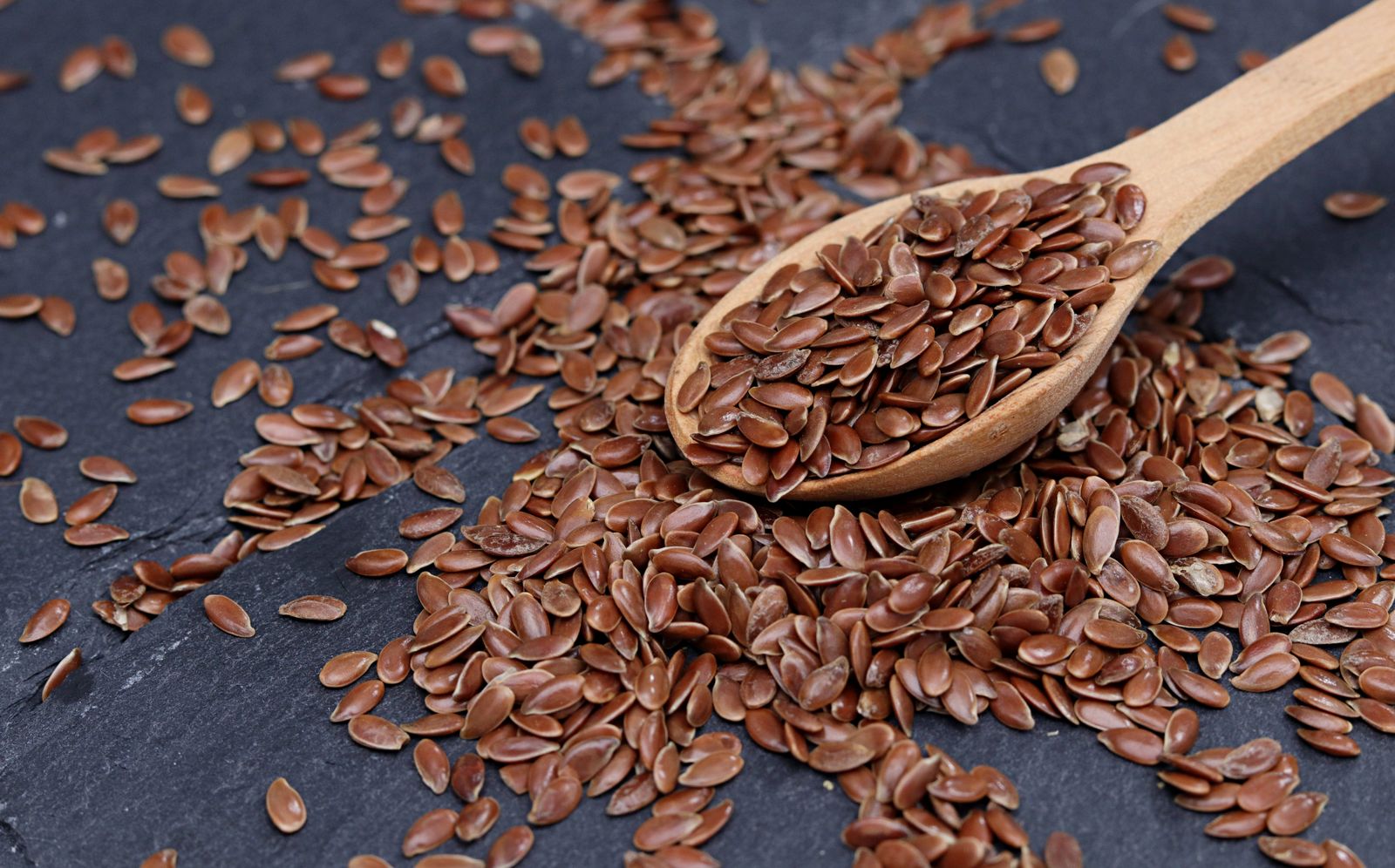
Flaxseed runs both at once. Coarse ground particles do the mechanical work. The mucilage does the water work. See the McRorie and McKeown review of fiber physics in the gut (2017). We break the same machinery down in how fiber actually works.
What does the evidence say about psyllium?
It is the most-tested fiber in this whole category.
A 2022 pooled analysis in The American Journal of Clinical Nutrition combined 16 randomized trials and 1,251 adults with chronic constipation. Several fiber types went into that pool. Psyllium came out with the strongest effect on how often people went, at about 3 more bowel movements a week.
Two conditions decided whether any of it worked. Doses above 10 g a day. Held for at least 4 weeks.
The same analysis flagged the cost. Gas was higher on fiber than on control. That is the trade you are making, and it usually fades. Read the AJCN meta-analysis of fiber supplementation for chronic constipation.
Psyllium also needs water to do anything at all. A gel-forming fiber with no fluid behind it is a brick.
What does the evidence say about flaxseed?
Less of it, and what exists looks good.
A 4-week randomized trial enrolled 90 adults with functional constipation. The 60 assigned to flaxseed ate 50 g of flaxseed flour a day, with meals.
Their median Wexner constipation score dropped from 14 to 6.5. Median bowel movements went from 2 a week to 7. Quality-of-life scores improved too. See the flaxseed trial in the Asia Pacific Journal of Clinical Nutrition (2020).
Notice the dose. 50 g of flour a day is a lot of food. That is closer to a diet change than a scoop in water.
Flaxseed also brings things psyllium does not: fat, calories, and a nutty taste that suits oatmeal and yogurt. Whether that is a feature depends on how you eat. Our list of high-fiber foods for women puts it in context.
Why does this choice get harder in perimenopause?
Because the gut you are feeding has changed underneath you.
Estrogen and progesterone act on receptors in your gut wall. As they swing and fall, transit slows and stool sits longer. We cover that mechanism in full in why your gut slows down at midlife.
The practical effect on this decision is small but real. A slower gut is less forgiving of a fast ramp. Add either fiber too quickly and you buy gas instead of relief.
So the answer here is not about your body failing. It is about matching a tool to a gut that moves at a different speed than it did at 30.
How do you pick one?
Three questions, answered honestly.
- Do you want a supplement or a food? Psyllium is a scoop. Flaxseed is an ingredient you put in something. Pick the one you will still be doing in week 4.
- Will you drink the water? Psyllium demands fluid. If you know you will not drink it, flaxseed in oatmeal is the more forgiving choice.
- Can you get to a real dose? The trials that worked used above 10 g a day of added fiber. A teaspoon of anything is not the experiment.
Then run it the way the trials ran it. Ramp up over a couple of weeks. Drink more as you go. Judge the result at 4 weeks, not at day 3.
The NIDDK puts fiber and fluid at the front of its constipation guidance and says to add fiber a little at a time.
And know when this stops being a food question. New symptoms lasting more than a few weeks, blood in your stool, vomiting, unexplained weight change, or pain that wakes you up all belong in front of a clinician.
Where does a fiber gummy fit?
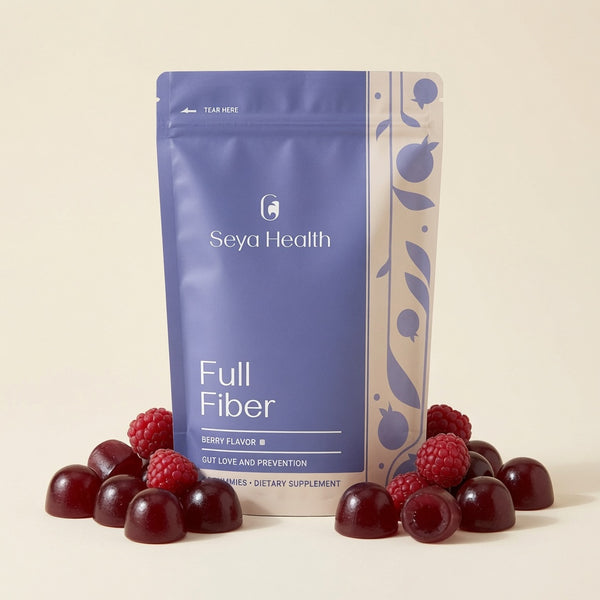
Seya makes one product. A fiber gummy.
3 vegan gummies deliver about 5 g of resistant tapioca fiber. That is roughly half the 10 g threshold where the pooled trial effect shows up. So we grade our own evidence a C and make one claim. It supports regularity.
It is not a replacement for psyllium at a studied dose, and it is not 50 g of flaxseed flour. It is a daily habit that closes part of the gap on days when food does not. What that fiber is and how it behaves is covered in what resistant tapioca starch is.
This is education, not medical advice. Talk to your clinician before you add anything, especially if you take medication that slows your gut.
These statements have not been evaluated by the Food and Drug Administration. This product is not intended to diagnose, treat, cure, or prevent any disease.
Frequently asked questions
Which works better for constipation, flaxseed or psyllium?
Psyllium has more evidence behind it. In a pooled analysis of 16 randomized trials covering 1,251 adults with chronic constipation, psyllium produced the strongest effect on stool frequency, at roughly 3 extra bowel movements a week. Flaxseed has been tested less, but in the single 12-week trial that compared the two directly in 77 adults, the flaxseed group improved slightly more on symptom scores and stool consistency. Both beat placebo. Neither result settles the question on its own.
How much flaxseed do you need for constipation?
More than a sprinkle. The trials used 10 g of ground flaxseed twice a day for 12 weeks, or 50 g of flaxseed flour a day for 4 weeks. Both are substantial amounts of food. Whole seeds pass through largely intact, so grind them or buy them ground. Add the amount gradually over a couple of weeks and drink more water alongside it, because a fast jump usually produces gas rather than relief.
How much psyllium do the trials actually use?
Above 10 g a day is the threshold where the pooled effect appears, and the head-to-head trial used 10 g twice a day for 12 weeks. Psyllium husk is over 90% fiber by weight, so the labeled scoop size is close to the fiber dose. Water matters as much as the amount: psyllium works by forming a gel that holds water through the large bowel, so taking it dry defeats the mechanism.
Can you take flaxseed and psyllium together?
No trial has tested the pair, so nobody can tell you the combination works better than either one alone. What is known is that both raise your total fiber, and total fiber is what needs to climb slowly. If you stack them, count the grams together, ramp over several weeks, and raise your fluid intake at the same time. If you take prescription medication, ask your clinician about timing, since fiber can affect absorption.
How long does it take for either one to work?
Judge it at 4 weeks. That is the duration threshold in the pooled trial data, and the flaxseed trials ran 4 to 12 weeks. Stool consistency usually softens before frequency changes. Expect some extra gas during each step up in dose, easing as your gut adjusts. If you have run 4 honest weeks at a real dose, with more fluid, and nothing has shifted, that is useful information to bring to a clinician.
Does perimenopause change which fiber you should pick?
Not the choice itself, but the pacing. Estrogen and progesterone act on receptors in the gut wall, and as those hormones fall, transit slows and stool sits longer. A slower gut is less tolerant of a fast increase in fiber, whichever type you choose. So the midlife adjustment is to ramp more gradually, keep fluid high, and give it the full 4 weeks before deciding it did not work.
Related reading
- How Much Fiber Do Women Actually Need? Grams by Age, and Why It's More Than You Think
- How Fiber Works With Water: Staying Full, Hydrated, and Regular After 40
- Brown Rice vs. White Rice vs. Bread: Which Carbs Give Women the Most Fiber?
Seya Full Fiber
Getting enough fiber from food every day is hard. Seya Full Fiber is 6 grams from three fibers in one, in three small gummies, so you have a reliable daily floor. Plant based, no gelatin, no sugar alcohols, 60 gummies per pouch.
Shop Full FiberKeep reading

fiber
Can a Multivitamin Replace Vegetables? What Supplements Can't Do for Your Gut

constipation
The Best Way to Beat Constipation in Your 30s (and Where Fiber Gummies Fit)
fiber
The Gut-Skin Axis: Does Your Gut Health Affect Your Skin?
The gut-skin axis, explained: how your gut bacteria and blood sugar affect your skin, w...