
Home/ The Journal/ fiber
fiber
Resistant Tapioca Starch vs. Potato, Corn & Rice Starch: Which Fiber Wins?

Short version: No single starch "wins." Raw potato and raw high-amylose corn hold the most resistant starch, but heat destroys it. Resistant tapioca starch is the chemically stable kind (RS4) that survives a jar, a gummy, and a shelf. The trade-off is honesty about dose.
- Raw potato starch is about 63% to 80% resistant starch by weight, the highest of the four.
- Cook any of them and most of that resistance disappears, unless you cool it back down.
- A meta-analysis found resistant starch added 35.51 g of daily stool weight, but did not reliably raise how often people went.
- Resistant tapioca starch (RS4) is heat-stable, which is why it works in a gummy at about 5 g a day.
Last updated August 2026.
Four white powders. Potato, corn, rice, tapioca. Every label says starch.
Not one of them tells you which resists digestion, which feeds your gut, and which is just going to spike and vanish.
Here is the answer up front. Raw potato and raw corn hold the most resistant starch by weight. But you cannot cook them, and raw potato starch in a glass of water is grittier than most people will keep up. Resistant tapioca starch holds less, and holds it through heat. So "which fiber wins" is really a question about your day, not your gut.
And if a spoon of raw starch did nothing for you, that is not your discipline failing. It is a dose and a heat problem. A mechanism, not a character flaw.
What is resistant starch, and why do the types matter?
Resistant starch is starch that slips past your small intestine undigested and reaches your colon, where bacteria ferment it. It acts more like fiber than like a carb.
There are four kinds, and the differences are the whole story.
| Type | What it is | Food sources | Survives cooking? |
|---|---|---|---|
| RS1 | Physically trapped in cell walls | Whole grains, seeds, legumes | Partly |
| RS2 | Raw, tightly packed granules | Raw potato starch, green banana, high-amylose corn | No — heat unpacks it |
| RS3 | Retrograded, cooked then cooled | Cooled potato, cooled rice, cooled pasta | Formed by cooling |
| RS4 | Chemically modified to resist digestion | Resistant tapioca starch, some wheat starches | Yes — stable by design |
Potato, corn, and rice cover RS2 and RS3. Resistant tapioca starch is RS4. That single split decides how much fiber actually reaches your colon after the food is made. We break down the machinery in how fiber actually works.
Which starch has the most resistant starch?
Raw potato starch, by a wide margin. When it is raw and granular, roughly 63% to 80% of its weight is resistant starch.
Raw high-amylose corn is next. It is the RS2 workhorse in food science because, unlike potato, it holds some resistance through baking.
Rice is the weakest. Plain cooked rice is mostly digestible. It only becomes a meaningful resistant-starch source after you cook it and chill it, which turns it into RS3.
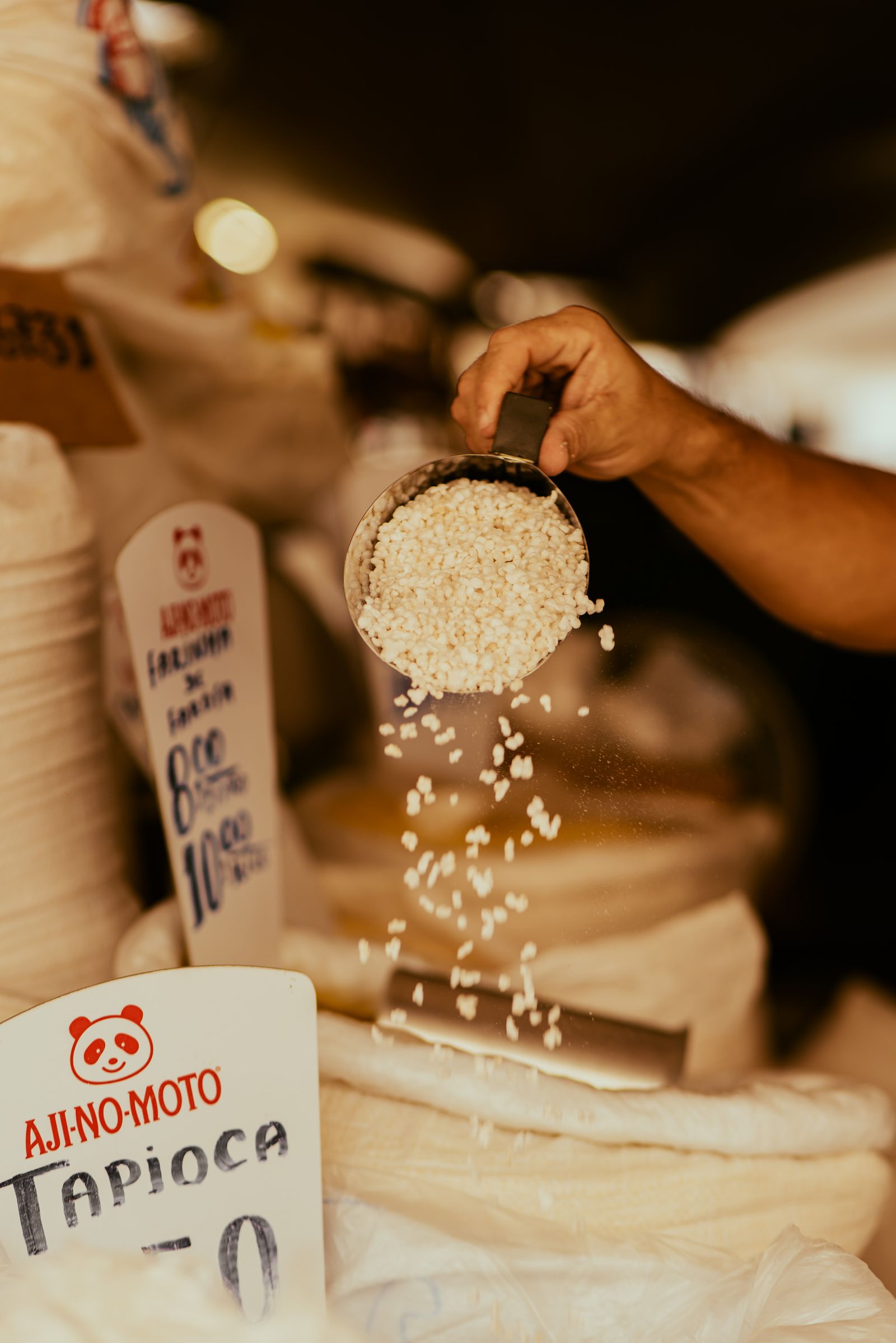
Resistant tapioca starch holds less resistant starch per gram than raw potato. Native tapioca is almost all digestible. The resistant version is engineered, not scooped from a root.
So on raw numbers, potato leads. But raw numbers are not what lands on your plate.
Does cooking destroy resistant starch?
Mostly, yes. That is the catch nobody prints on the bag.
RS2 is a raw structure. Heat swells the granules open, and your enzymes walk right in. A baked potato is not a resistant-starch food. A raw one is, and nobody eats a raw potato.
Cooling can win some of it back. Cook potato, rice, or pasta, then chill it, and part of the starch re-crystallizes into RS3. That is why cold potato salad and day-old rice carry more resistant starch than the hot version. But the amount is modest and hard to pin down. It swings with the food, the cook, and the fridge time.
Resistant tapioca starch skips this whole problem. It is RS4, modified so the resistance is built into the molecule instead of into a temperature. It stays resistant hot or cold. That is the entire reason it can live in a shelf-stable gummy while raw potato starch cannot.
What does the evidence actually show for regularity?
Real, but narrower than the internet promises. Be honest with yourself here.
A meta-analysis of randomized trials in healthy adults found resistant starch raised fecal wet weight by 35.51 g a day. Bulkier stool, clearly. But the same analysis found defecation frequency barely moved, at a weighted mean difference of 0.04, which was not significant. Read the meta-analysis of resistant starch and stool output.
Frequency does look better in people who are actually constipated. In a 12-week randomized trial, 87 adults with chronic constipation took 9 g a day of RS3 or a placebo. By the end, 80% of the resistant-starch group were going at least 4 times a week. Between-group numbers trended in its favor without clearing significance. See the RS3 constipation trial in Scientific Reports (2024).
The gut-bug story is stronger. A broad systematic review of 39 trials in 2,263 people found short-chain fatty acid production rose in about 70% of the studies that measured it. Read the systematic review of resistant starch and the gut microbiome. And in a placebo-controlled trial in Nutrients (2023), just 3.5 g a day of raw potato starch for 4 weeks lifted Bifidobacterium and Akkermansia, two bugs tied to a healthier gut lining.
Do any of these fix blood sugar?
Slow down before you believe that one. The blood-sugar claim on resistant starch is thinner than the fiber claim.
A systematic review pooled 22 trials and 670 people on RS2, at doses from 8 g to 66 g a day. On the headline metabolic markers, it came up short. As the authors, Snelson and colleagues, put it plainly:
"Short-term RS2 supplementation in humans is of limited cardiometabolic benefit."
Read the RS2 metabolic meta-analysis in Nutrients (2019). Fasting glucose, insulin, and HbA1c did not move significantly. So if a starch is sold to you as a glucose fix, the evidence does not carry it. This is a fiber and gut story, not a metabolic one. We keep the blood-sugar picture honest in fiber and blood sugar for women over 40.
Which fiber wins?
The one you can actually keep taking. That is the real contest.
- Raw potato starch (RS2) holds the most resistant starch and feeds gut bacteria well. But it must stay raw and cold. Cook it and it is gone. Most people quit the gritty glass by week two.
- Raw high-amylose corn (RS2) is the sturdiest for cooking, which is why it hides inside processed foods. Harder to dose on purpose at home.
- Rice (RS3) only counts when it is cooked and cooled. Fine as a habit, unreliable as a dose.
- Resistant tapioca starch (RS4) holds less per gram, but it survives heat and processing, so a known amount reaches your colon every day without you managing the temperature.
So the honest scoreboard: potato wins on raw concentration, corn wins on cooking, and tapioca wins on reliability. For a daily habit you will still be doing in a month, reliability usually beats a big number you cannot hit twice.
Where does a fiber gummy fit?
Seya makes one product. A fiber gummy.
3 vegan gummies deliver about 5 g of resistant tapioca fiber. That is roughly half the 10 g a day where the trial effects show up most clearly. So we grade our own evidence a C, and we make one claim. It supports regularity.
It is not a raw scoop of potato starch, and it is not a metabolic drug. It is the heat-stable kind of fiber in a dose you can actually take every morning, closing part of the gap on days when your food does not. What that fiber is and how it behaves is covered in what resistant tapioca starch is, and the broader question in is tapioca starch bad for you.
This is education, not medical advice. Talk to your clinician before you add anything, especially if you take medication that slows your gut. New symptoms that last more than a few weeks, blood in your stool, or pain that wakes you up belong in front of a clinician, not a supplement.
These statements have not been evaluated by the Food and Drug Administration. This product is not intended to diagnose, treat, cure, or prevent any disease.
Frequently asked questions
Which starch has the most resistant starch?
Raw potato starch, by a wide margin. In its raw, granular form, roughly 63% to 80% of its weight is resistant starch (type RS2), the highest of the common starches. Raw high-amylose corn is second and holds up better through cooking. Rice is the weakest, becoming a meaningful source only after it is cooked and cooled into RS3. Resistant tapioca starch holds less per gram than raw potato, but it is the only one engineered to stay resistant through heat and processing.
Is resistant tapioca starch the same as potato or corn starch?
No. Potato and corn are natural RS2 when raw, meaning their resistance comes from the granule structure and is lost when you cook them. Resistant tapioca starch is RS4, chemically modified so the resistance is built into the molecule and survives heat. That difference is why tapioca fiber can sit in a shelf-stable gummy while raw potato starch cannot. All of them reach the colon and feed gut bacteria, but they get there by different routes.
Does cooking destroy resistant starch?
For raw RS2 like potato and corn, mostly yes. Heat swells the starch granules open so your enzymes can digest them, which is why a baked potato is not a resistant-starch food. Cooling cooked potato, rice, or pasta wins part of it back as RS3, so cold rice and potato salad carry more than the hot versions. The recovered amount is modest and varies a lot. RS4, the resistant tapioca kind, stays resistant hot or cold by design.
How much resistant starch do you need a day?
Most trials that changed anything used doses in the 8 g to 20 g a day range, and the clearer effects tend to show above about 10 g a day held for at least 4 weeks. Most people currently get only 3 g to 5 g a day from food. Add it slowly over a couple of weeks and drink more water, because a fast jump usually produces gas rather than relief. A 5 g supplement dose supports regularity but is not the same as a full studied dose.
Does resistant starch help with blood sugar?
The evidence is weaker than the marketing. A meta-analysis of 22 trials in 670 people found RS2 had limited cardiometabolic benefit, with no significant change in fasting glucose, insulin, or HbA1c. Resistant starch is better understood as a fiber and gut-health tool than as a blood-sugar treatment. If a product sells you a starch mainly as a glucose fix, the current evidence does not support that framing.
Which resistant starch is best for regularity?
The best one is the one you will take consistently at a real dose. Raw potato starch feeds gut bacteria strongly but must stay raw and cold, so many people stop. RS3 from cooled rice and potato is easy but hard to dose. Resistant tapioca starch (RS4) holds less per gram but reaches your colon reliably every day regardless of temperature. Across the evidence, resistant starch bulks stool clearly and supports regularity, though frequency gains are most reliable in people who are already constipated.
Related reading
- How Much Fiber Do Women Actually Need? Grams by Age, and Why It's More Than You Think
- Baking With Tapioca Starch: Chewy Crusts, Clear Sauces, and the Fiber It Doesn't Have
- Is Resistant Tapioca Starch Keto-Friendly? Fiber Without the Blood-Sugar Spike
Seya Full Fiber
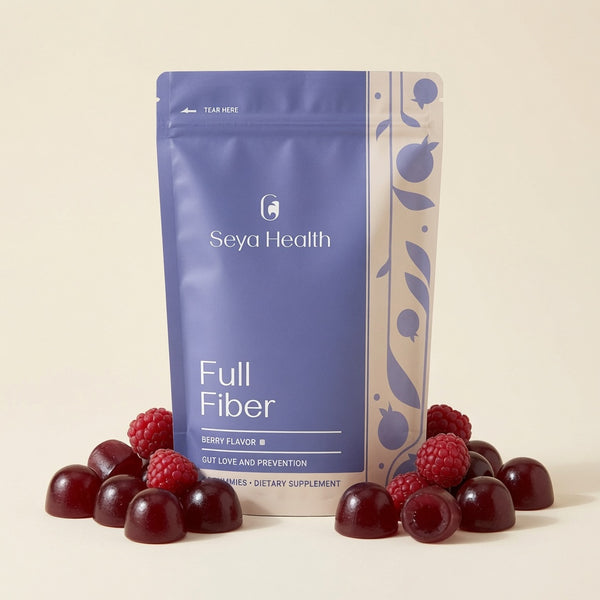
Your gut bacteria run on fiber. Seya Full Fiber delivers 6 grams from three fibers in one to feed the beneficial bacteria in your gut and support short-chain fatty acid production. Plant based, no gelatin, no sugar alcohols.
Shop Full FiberKeep reading
fiber
Can a Multivitamin Replace Vegetables? What Supplements Can't Do for Your Gut

constipation
The Best Way to Beat Constipation in Your 30s (and Where Fiber Gummies Fit)
fiber
The Gut-Skin Axis: Does Your Gut Health Affect Your Skin?
The gut-skin axis, explained: how your gut bacteria and blood sugar affect your skin, w...