
Home/ The Journal/ best creatine for older adults
best creatine for older adults
Best creatine for older adults: what to look for

Short version: The best creatine for older adults is plain creatine monohydrate, 3 to 5 g a day, in a form you will actually take every day, with an NSF or USP seal. Pair it with strength training. In 22 trials of 721 older adults who lifted, creatine added about 1.37 kg more lean mass than lifting alone.
- Form: creatine monohydrate. Skip "senior" blends and fancy salts.
- Dose: 3 to 5 g a day. More has not been shown to be reliably better.
- Easy to take: powder stirred into a warm drink is the cheapest, easiest option for many people.
- Before you buy: show the label to your doctor or pharmacist, especially if you take daily medicine.
Last updated November 2026.
You read that creatine may help you keep strength as you age. Maybe a friend takes it. Maybe your daughter sent you a link.
Then you look at the shelf. Tubs, capsules, gummies, chews. Some say "senior." Some cost three times more than others.
Here is how to pick one in five minutes, with the questions that matter most after 60. No brand paid to be here, and Seya does not sell a creatine product yet.
What is the best creatine for older adults?
Creatine monohydrate. It is the form used in nearly every trial in older adults, and it is usually the cheapest.
A 2022 review of every form on the market reached a blunt verdict. No other form has been shown to be a better source of creatine than monohydrate. See Kreider et al. (Nutrients, 2022).
So the "best" pick is not a brand. It is a short list of checks:
- The label says creatine monohydrate.
- You get 3 to 5 g a day.
- You can take it every day without a fight.
- An outside lab has checked the label.
- Your doctor knows you are taking it.
Want the research on what creatine can and cannot do after 60? Read creatine for older adults first. This post is the shopping guide.
What is the best creatine for muscle loss?
The same plain monohydrate, taken alongside strength training. The training is the part that does most of the work.
The largest review pooled 22 trials with 721 older men and women who lifted 2 to 3 days a week. Creatine added about 1.37 kg of lean mass compared with lifting plus a placebo. Chest press and leg press strength rose more too. See Chilibeck et al. (Open Access J Sports Med, 2017).
An earlier review of 357 older adults found one result you can feel at home. People on creatine did better on a test of how many times they could stand up from a chair in 30 seconds. See Devries and Phillips (Med Sci Sports Exerc, 2014).
Keep the size of this in view. A 2026 review of 11 trials in adults 60 and up rated the strength gain as small. Effects on muscle size and daily function were not clear. See Yao et al. (Front Nutr, 2026).
And without exercise, the long trial came up empty. Two hundred women took 3 g a day for 2 years with no training plan. Muscle and function did not improve. See Sales et al. (J Gerontol A, 2020).
So buy the creatine, and also plan the lifting. For signs that muscle loss has already started, see what sarcopenia is.
How much creatine should an older adult take?
Most trials used 3 to 5 g a day. A 2021 expert review gives the same range, or about 0.1 g per kg of body weight. See Antonio et al. (JISSN, 2021).
Is more better? Not clearly. One review of older-adult trials found doses above 5 g a day helped leg press strength. But once the trials with a big loading phase were taken out, the extra edge went away. See Forbes et al. (Nutrients, 2021).
The same review found something handy. Taking creatine only on training days still helped. So if you forget on rest days, you have not wasted the tub.
You also do not need a loading week. In a classic study, 3 g a day for 28 days filled muscle stores about as much as a big 6-day load. See Hultman et al. (J Appl Physiol, 1996).
The buying tip: check the grams per serving and how many scoops, capsules, or gummies make one. That is the number that matters.
Powder, capsules, or gummies: which is easiest after 60?
The best creatine is the one you take every day for months. That makes the format a real choice, not a detail.
| Format | Good for | Watch for |
|---|---|---|
| Powder | Lowest cost; no pills; mixes into a drink you already have | Grit if mixed in a small glass of cold water |
| Capsules | No taste, easy to travel with | At 750 mg each, 5 g is about 7 capsules a day |
| Gummies | Easy to remember, no mixing | Label accuracy, added sugar, sugar alcohols, cost |
Capsules. Seven pills is a lot to add to a daily routine, and many people struggle with pills already. In a survey of 1,051 patients at family doctors' offices, 37.4% said they had trouble swallowing tablets or capsules. Most of their doctors did not know. See Schiele et al. (Eur J Clin Pharmacol, 2013).
Gummies. They can work if the dose is real. Many are not. In a 2025 lab test paid for by SuppCo, only 2 of 6 creatine gummies had the amount on the label. See SuppCo's results. Our creatine gummy checklist walks through dose, sugar, and testing.
How do you mix creatine powder so it dissolves?
Use a warm drink, or more water. Creatine dissolves much better in warm liquid. This one fact fixes the most common complaint about powder.
The 2022 Nutrients review gives the numbers. About 14 g dissolves in a liter of room-temperature water. About 34 g dissolves in a liter of water at 122°F, which is warm but not scalding.
Here is what that means for a 5 g scoop:
- Room-temperature water: about 1.5 cups to dissolve fully.
- Warm water, tea, or coffee: about two-thirds of a cup.
- Ice water: it will sit at the bottom. Stir and drink it anyway, or warm it up.
That is why early researchers served creatine in warm water or hot tea. Grit at the bottom is not a bad batch. It is just undissolved creatine, and you can swirl it up and drink it.
One more note from the same review. Creatine slowly breaks down in acidic drinks like orange juice. That is fine if you drink it soon after mixing. Do not make a big jug for the week.

Are senior formulas or newer forms worth paying for?
Usually not. A "healthy aging" creatine is often plain monohydrate with a higher price, or a blend that hides how much creatine you get.
Three things to check before you pay more:
- A "blend" or "complex." If the label lists one total weight for a mix, you cannot tell how many grams are creatine.
- Creatine HCl and other salts. They dissolve more easily in water. But by weight they hold less creatine. Monohydrate is 87.9% creatine and HCl is 78.2%, per the 2022 review. Our monohydrate vs HCl guide covers the trials.
- Extra stimulants. Pre-workout mixes can add caffeine and other extras. If your doctor has told you to limit caffeine, choose plain creatine.
Older forms were tested head to head, too. A 2011 review found "little to no evidence" that any newer form works better or is safer than monohydrate. See Jäger et al. (Amino Acids, 2011).
Why a testing seal matters more than the brand
No one checks a supplement before it goes on sale in the US. The FDA says it does not have the authority to approve dietary supplements before they are marketed. See the FDA's supplement Q&A.
Two seals check that what is in the tub matches the label:
- NSF Certified for Sport. Search the exact product in the NSF directory.
- USP Verified. See USP's verified mark page.
Plain monohydrate powders from Thorne, Momentous, and Klean Athlete have appeared on the NSF list in our past checks. Listings change, so look up the product yourself. Our best creatine for menopause post has a dated price and dose table.
What should you ask your doctor before buying?
Bring the tub or a photo of the label. Then ask about three things.
- Your kidneys. A 2025 review of 12 studies found creatine raised blood creatinine a little, while kidney filtering did not change. See Naeini et al. (BMC Nephrol, 2025). If you have kidney disease, ask before you start.
- Your lab tests. That creatinine rise can make a kidney test look worse than it is. Tell whoever orders your blood work. Our post on creatine vs creatinine explains why.
- Your medicines. A 2026 review checked major drug databases and found no known moderate or serious creatine interactions. It also found no controlled human studies on the question. See Ostojic (Curr Ther Res Clin Exp, 2026). "Not studied" is a good reason to ask your pharmacist.
Your older-adult creatine checklist
| Check | Pass | Skip it if |
|---|---|---|
| Form | Creatine monohydrate | Only a "blend" or "complex" is listed |
| Daily dose | 3 to 5 g, grams per serving printed | You cannot work out the grams |
| Daily effort | One scoop or a few gummies | It takes 7 or more pills you will skip |
| Testing | NSF or USP seal you can look up | Only "lab tested" with no named seal |
| Extras | Nothing, or a named flavor | Caffeine or stimulants you did not ask for |
| Doctor | Label reviewed with your doctor or pharmacist | You have kidney disease and have not asked |
Then add the part no tub can do: strength work 2 to 3 times a week. Bands, light dumbbells, and chair stands all count. Our post on strength training for women is a good place to start.
Where Seya fits, honestly
Seya sells one product today: a fiber gummy that supports regularity. Our creatine gummy is coming January 2027. It is not on sale yet, and we will not share its dose, price, or ingredients until the formula is final.
We wrote this so you can choose any brand with clear eyes. This is education, not medical advice. No supplement can promise results.
These statements have not been evaluated by the Food and Drug Administration. This product is not intended to diagnose, treat, cure, or prevent any disease.
Frequently asked questions
What is the best creatine for older adults?
Plain creatine monohydrate, 3 to 5 g a day, with an NSF or USP seal, in a format you will take daily. Pair it with strength training, which drove most of the gains in trials.
What is the best creatine for muscle loss?
Creatine monohydrate taken alongside strength training. In 22 trials of older adults who lifted, it added about 1.37 kg more lean mass than lifting alone. Without training, a 2-year trial found no benefit.
Is creatine powder or pills better for seniors?
Powder is usually cheaper and easier. A 5 g dose can take about 7 capsules. Powder dissolves well in about two-thirds of a cup of warm tea or water.
Can older adults take creatine with their medicines?
A 2026 review found no known serious interactions in major drug databases, but no controlled human studies either. Show the label to your pharmacist or doctor first, especially if you have kidney disease.
Do older adults need a loading phase?
No. A steady 3 to 5 g a day fills muscle stores over a few weeks. Bigger doses have not been shown to be reliably better in older adults.
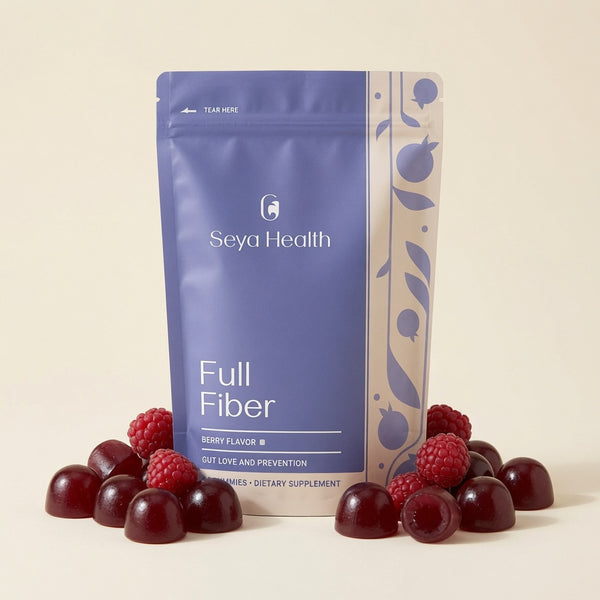
Seya Full Fiber
Most women fall short on fiber. Seya Full Fiber gives you 6 grams from three fibers in three small vegan gummies. Plant based, no gelatin, no sugar alcohols.
Shop Full FiberKeep reading

bone health
Best supplements for women over 40: what the evidence supports for heart, bones and muscles (and what's hype)

creatine
How long does creatine take to work? A realistic timeline for women

constipation