
Home/ The Journal/ comparison
comparison
Creatine vs protein: what each does and whether to take both

Short version: Creatine vs protein is not a this-or-that choice. Protein is a nutrient your body uses to build and repair muscle. Creatine is a fuel helper that lets muscle work harder in short bursts. Most active people do well on 1.4 to 2.0 g of protein per kg of body weight a day, plus 3 to 5 g of creatine if they want it.
- Protein builds: it is the raw material for new muscle. You need it every day, no matter what.
- Creatine powers: it helps refill quick energy during hard sets. It is optional.
- Does creatine replace protein? No. It has no calories and does not count toward your protein.
- Both together: safe for most healthy adults, and they do different jobs. Get protein right first.
Last updated November 2026.
You are standing in the supplement aisle. One tub says creatine. The other says protein. Both promise muscle. So which one do you need?
The short answer: they are not rivals. They work at different steps of the same job. Think of protein as the bricks and creatine as the fuel for the crew that lays them.
Below, we compare what each one is, how much you need, where to get it, and when it makes sense to take both.
What is the difference between creatine and protein?
Protein is a macronutrient, like carbs and fat. It is made of amino acids. Your body breaks it down and uses those amino acids to build muscle, skin, enzymes, and much more.
Creatine is a small compound your body makes from three amino acids: arginine, glycine, and methionine. See Antonio et al. (JISSN, 2021). It is not a protein. The International Society of Sports Nutrition calls it a "non-protein amino acid compound" found mainly in red meat and seafood. See Kreider et al. (JISSN, 2017).
Creatine vs protein at a glance
| Protein | Creatine | |
|---|---|---|
| What it is | A nutrient made of amino acids | A compound made from 3 amino acids |
| Main job | Building and repairing tissue | Refilling quick energy in muscle |
| Calories | About 4 per gram | Essentially none at 3 to 5 g |
| Daily amount for active adults | 1.4 to 2.0 g per kg of body weight | 3 to 5 g, the same for most people |
| Do you need it? | Yes, every day | No, it is optional |
| Main food sources | Meat, fish, eggs, dairy, beans, tofu | Red meat and fish |
What does protein do for your muscles?
Protein gives your muscles the parts they need to grow and repair. Your muscles are always breaking down and rebuilding. Protein tips that balance toward building.
Exercise helps too. The ISSN protein position stand says both lifting and eating protein switch on muscle building, and they work better together. See Jäger et al. (JISSN, 2017).
That same paper offers some practical numbers:
- Per meal: about 20 to 40 g of good-quality protein.
- How often: spread it out, about every 3 to 4 hours.
- Leucine: each serving should carry 700 to 3,000 mg of this amino acid. Whey, eggs, meat, and fish are rich in it.
Protein shakes help, but only a little on top of food. A 2018 review of 49 trials with 1,863 people found extra protein added about 0.3 kg of lean mass during a training program. See Morton et al. (Br J Sports Med, 2018).
What does creatine do for your muscles?
Creatine helps your muscles refill their fastest energy source. That source is called ATP. During a heavy lift or a sprint, you burn through ATP in seconds.
About 95% of your body's creatine sits in muscle. Roughly two thirds of it is stored as phosphocreatine. When ATP runs low, phosphocreatine hands over energy to rebuild it. That helps most during short, all-out efforts, per the 2017 ISSN creatine position stand above.
So creatine does not build muscle directly. It lets you squeeze out an extra rep or two. Over weeks, that extra work can add up to more strength and muscle. Our guide to how creatine powers strength training goes deeper on this.

Creatine vs protein: how much of each do you need?
Protein depends on your size and how active you are. Creatine does not change much.
Here is what that looks like for a 150-pound (68 kg) woman:
| Goal | Protein per day | Creatine per day |
|---|---|---|
| Basic needs (RDA, 0.8 g per kg) | About 54 g | None needed |
| Over 65 (1.0 to 1.2 g per kg) | About 68 to 82 g | Optional |
| Active or lifting (1.4 to 2.0 g per kg) | About 95 to 136 g | 3 to 5 g, optional |
The RDA and the active range come from the ISSN protein stand. The over-65 range comes from Bauer et al. for the PROT-AGE group (J Am Med Dir Assoc, 2013), which advises at least 1.2 g per kg for older adults who exercise.
For creatine, 3 to 5 g a day works and a loading phase is not required, per Antonio et al. above.
Is creatine better than protein?
No. Neither is better, because they do not do the same thing. If you had to pick one, protein comes first. It is an essential nutrient. Creatine is an extra.
Look at what each adds when people lift weights:
- Protein: about 0.3 kg more lean mass than training alone, in the Morton review above. The gains stopped rising past about 1.6 g per kg a day.
- Creatine: about 1.4 kg more lean mass in older adults, in a review of 22 trials with 721 people. They also got stronger at chest and leg press. See Chilibeck et al. (Open Access J Sports Med, 2017).
Do not read too much into that gap. Part of the creatine number is water stored in muscle. And the people in the protein trials were often already eating enough. Our post on creatine vs protein for weight gain breaks down what is water and what is muscle.
Does creatine replace protein?
No. Creatine cannot stand in for protein, even though it is made from amino acids.
A daily 5 g scoop gives your muscles fuel storage, not building blocks. It adds no protein grams to your day. It also has none of the leucine that helps switch on muscle building.
If you take creatine but skimp on protein, you are missing the bricks. A simple check: count your protein for three normal days. If you land well under your target, fix food first.
Should you take creatine and protein together?
You can, and many people do. They do not get in each other's way.
One 11-week trial tested this in men who already lifted. They took creatine with carbs, whey protein alone, creatine with whey, or carbs alone. All three supplement groups gained more strength and muscle than the carbs-only group. See Cribb et al. (Med Sci Sports Exerc, 2007).
That study was small and only in men. It did not settle whether the pair clearly beats either one alone. Still, it found no sign they cancel out.
Want to stir them into one drink? Our post on mixing creatine with protein, coffee, or pre-workout covers that.
Which is better for women, creatine or protein?
Protein first, for women too. If you are cutting calories or taking a GLP-1 medicine, eating less overall makes it harder to hit your protein target. Our GLP-1 protein and fiber guide covers that case.
Creatine still has a place. But be honest about the research. The ISSN notes most creatine studies were done in men, and some suggest women may see smaller gains in strength and muscle.
Women may also care about benefits beyond the gym. See creatine for women over 60 for muscle, bone, and brain research.
Who should check with a doctor first?
- You have kidney disease. The PROT-AGE group notes some people with severe kidney disease may need to limit protein.
- You are pregnant, trying to conceive, or breastfeeding.
- You take medicine that affects your kidneys.
- You have been told to follow a special diet.
For the full safety picture, see is creatine safe for women?
Where Seya fits, honestly
Seya does not sell protein. Right now, the only Seya product you can buy is our fiber gummy, which supports regularity.
A Seya creatine gummy is coming January 2027. Until it launches, we will not share its dose, price, or ingredients.
New to creatine? Start with what creatine is and what it does. This is education, not medical advice.
These statements have not been evaluated by the Food and Drug Administration. This product is not intended to diagnose, treat, cure, or prevent any disease.
Frequently asked questions
What is the difference between creatine and protein?
Protein is a nutrient made of amino acids that your body uses to build and repair muscle. Creatine is a compound made from three amino acids that helps muscle refill quick energy during hard, short efforts.
Is creatine better than protein?
No. They do different jobs. Protein is an essential nutrient you need every day. Creatine is an optional supplement that can help you train harder.
Does creatine replace protein?
No. A 3 to 5 g dose of creatine adds no protein to your day and does not supply the amino acids muscle needs to grow.
Are creatine and protein the same?
No. Creatine is a non-protein compound. Your body makes some of it, and the rest comes from red meat and fish.
Do you need creatine and protein?
You need protein. Creatine is optional. Active adults often aim for 1.4 to 2.0 g of protein per kg of body weight a day, and some add 3 to 5 g of creatine.
Should you take creatine and protein together?
You can. In an 11-week trial, people taking creatine, whey, or both gained more strength and muscle than people taking carbs alone, and the two did not cancel each other out.
Which is better for women, creatine or protein?
Protein comes first, because it is an essential nutrient. Creatine can be added, though most creatine research was done in men.
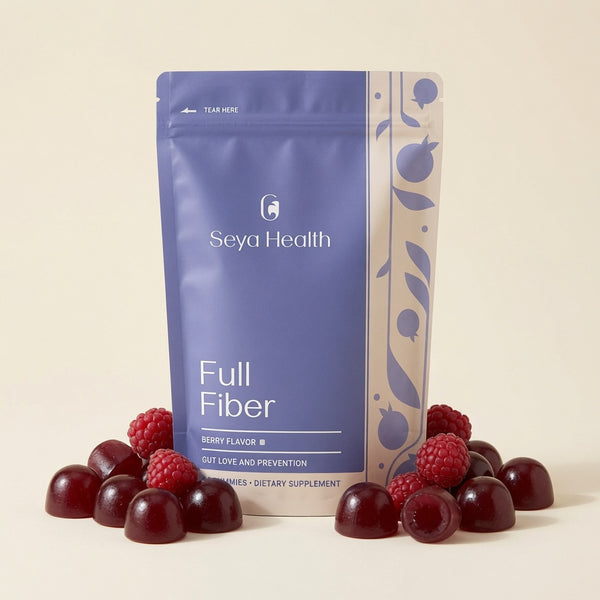
Seya Full Fiber
Most women fall short on fiber. Seya Full Fiber gives you 6 grams from three fibers in three small vegan gummies. Plant based, no gelatin, no sugar alcohols.
Shop Full FiberKeep reading

bone health
Best supplements for women over 40: what the evidence supports for heart, bones and muscles (and what's hype)

creatine
How long does creatine take to work? A realistic timeline for women

constipation