
Home/ The Journal/ fiber for women
fiber for women
Is Tapioca Starch Bad for You? A Women's-Health Look at the Nutrition

Short version: Is tapioca starch bad for you? Not in the way the internet means it. The cyanide scare belongs to raw cassava root, not to the washed starch you buy. The real catch is duller. Tapioca starch is close to pure carbohydrate, so it hands you calories and almost nothing else.
- 100g of dry tapioca holds 358 calories, 88.7g carbs, and 0.19g protein.
- It also holds 0.9g fiber, 0mg vitamin C, and 11mg potassium. Close to a blank slate.
- Raw cassava roots can carry 15 to 400mg of cyanide compounds per kg.
- Commercial cassava starch averaged 5mg per kg. The WHO safe level for cassava flour is 10.
- Tested tapioca snack products ran 1.5 to 6.6mg per kg.
Last updated August 2026.
You flipped over a package, read "tapioca starch," and went looking.
Then you found the word cyanide. And now a boba tea feels like a risk you did not sign up for.
Here is the part the scary posts skip. The cyanide question is real, and it has already been answered, in food-safety labs, with numbers. It just belongs to a different food than the one in your pantry.
So let us go through what is actually in tapioca starch, what the testing shows, and where it does and does not earn a place in your day.
Is tapioca starch bad for you?
No. It is just close to empty.
Tapioca starch is the white powder washed out of the cassava root. The washing is the whole point. It pulls the starch away from the fiber, the protein, and the plant compounds that cause the safety worry in the first place.
What you are left with is a clean, neutral thickener. It is safe. It is also nearly bare.
That is a fair thing to know before you build a diet on it, and a silly thing to panic about if you eat it twice a month.
What is actually in tapioca starch?
Very little, and the numbers are blunt about it.
Per 100g of dry tapioca, the USDA lists 358 calories, 88.7g of carbs, 0.19g of protein, and 0.02g of fat. Fiber comes in at 0.9g. Sugars sit at 3.35g.
The micronutrient column is thinner still. 20mg of calcium. 1.58mg of iron. 11mg of potassium. Zero vitamin C, zero vitamin A, zero vitamin B12.
You can pull the full record yourself from USDA FoodData Central, entry 169717, "Tapioca, pearl, dry".
Read that column again. It is not a warning label. It is a shrug.
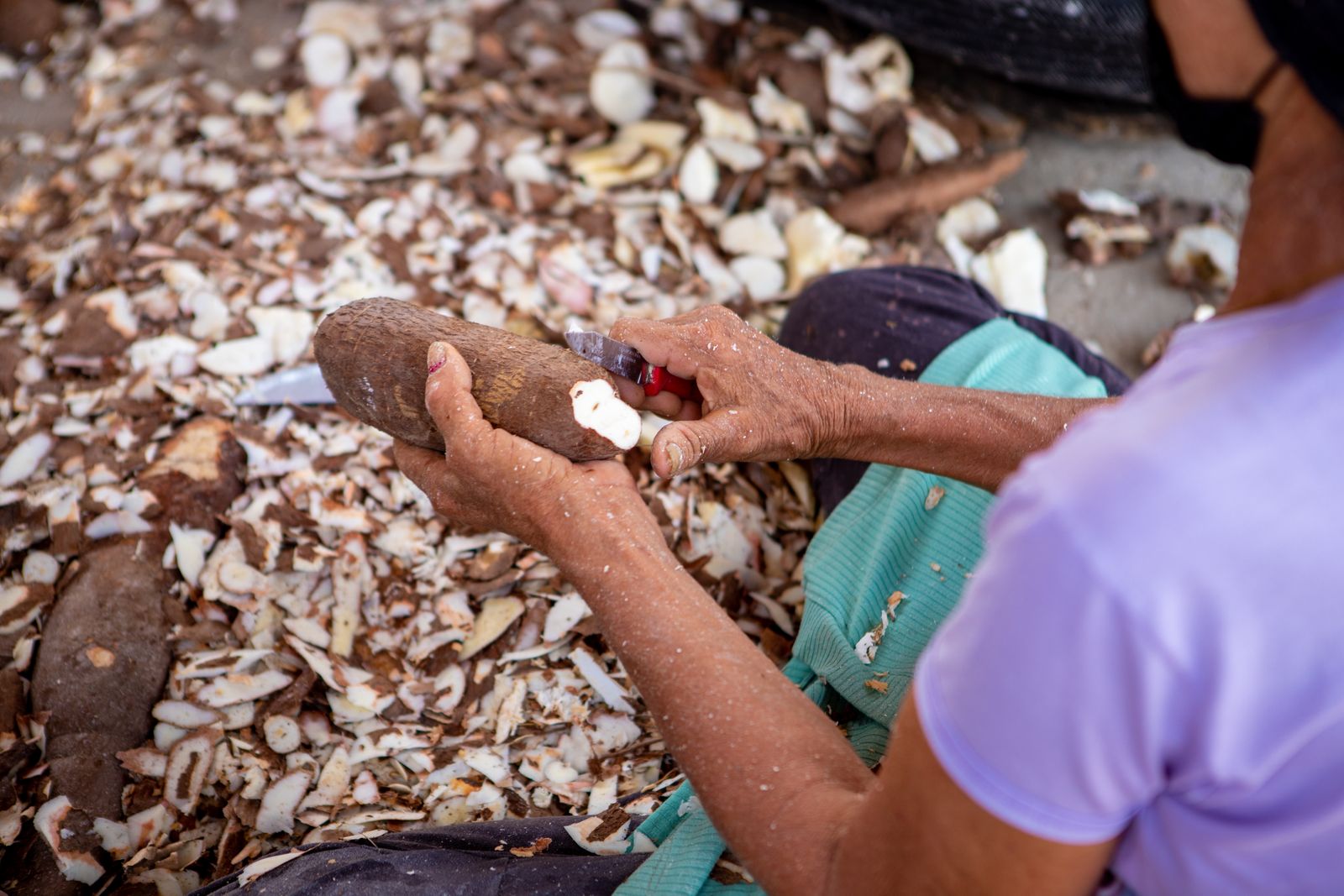
Does tapioca starch have cyanide in it?
Raw cassava does. Tapioca starch is what is left after that gets stripped out.
Cassava roots contain a compound called linamarin. Break the plant cells and it releases hydrogen cyanide. That is a genuine hazard, and it is why raw cassava is never a food anywhere in the world.
Food Standards Australia New Zealand put real ranges on it. Cassava roots have measured anywhere from 15 to 400mg of hydrogen cyanide per kg of fresh weight. Sweet varieties, the ones that get traded commercially, usually sit at 15 to 50.
Peeling, washing, drying, and heating knock that down. The full risk assessment is public in the FSANZ report on cyanogenic glycosides in cassava and bamboo shoots.
How much is left after processing?
Almost none, and this is where the starch separates from the flour.
An Indonesian survey covered 59 samples across cassava-growing provinces. Cassava flour averaged 54mg per kg, with wide scatter. The 22 starch samples averaged 5mg per kg, plus or minus 4.
Nine commercial tapioca snack products ran from 1.5 to 6.6mg per kg.
Now compare that to the ceiling. The FAO and WHO set 10mg per kg as the safe level for cassava flour, and the Codex standard for edible cassava flour carries the same figure.
| Form | Cyanide compounds (mg/kg) |
|---|---|
| Raw cassava root | 15 to 400 |
| Cassava flour (Indonesian survey) | 54 average |
| Cassava starch (Indonesian survey) | 5 average |
| Commercial tapioca snacks | 1.5 to 6.6 |
| FAO/WHO safe level, cassava flour | 10 |
The starch fraction lands under the limit set for the flour. That is the answer, and it has been sitting in a government report since 2004.
The harm you read about is real, and it happens where cassava is a daily staple, eaten with too little protein and iodine, and prepared without enough washing or drying. That is a food-security problem. It is not a bubble tea problem.
Is tapioca healthy, or just an empty carb?
Empty carb. Say it plainly.
0.9g of fiber per 100g means tapioca does nothing meaningful for your daily fiber target. The National Institute of Diabetes and Digestive and Kidney Diseases puts adults at 22 to 34g of fiber a day, depending on age and sex.
Most women eat around 15. Tapioca will not close that gap. It barely nudges it.
That is not a reason to fear it. It is a reason to stop counting it as a health food, which is the mistake most gluten-free labels quietly encourage.
What about tapioca pearls, boba, and sago?
Same starch, more sugar.
Pearls are tapioca starch rolled and cooked. Sago looks similar and often gets the same name, though it usually comes from palm rather than cassava. Either way, the pearl itself is a starch ball.
The sweetener is the part worth watching. Boba pearls are typically steeped in syrup before they hit your cup, and the drink around them adds more.
So the honest read on a boba: a sugary drink with chewy starch in it. Enjoy it as that. If your blood sugar is something you track, we covered the fiber side of that in how fiber flattens the glucose curve for women over 40.
How is resistant tapioca starch different?
Different molecule, different job.
Plain tapioca starch digests fast in your small intestine. Resistant tapioca starch is modified so most of it does not. It travels intact to your colon, where your gut bacteria ferment it.
That is why the FDA counts certain resistant starches toward the dietary fiber on a label, and plain tapioca starch does not qualify. The agency lays out which non-digestible carbohydrates make the list in its questions and answers on dietary fiber.
We wrote the long version separately, in what resistant tapioca starch is and how it works in your gut.
One label. Two very different ingredients. Worth checking which one you are holding.
So where does it fit?
As a thickener, it is fine. As a nutrition strategy, it is not one.
If you eat gluten-free, tapioca starch shows up in a lot of your bread and baking mixes. That is worth knowing, because those swaps often trade wheat fiber for cassava starch and quietly shrink your daily total.
The fix is the boring one. Get your fiber from food first, and use a supplement to cover what your week does not. Seya's fiber gummy supports regularity, and it uses resistant tapioca fiber rather than the plain starch on this page. If you want the food-first list, start with the best high-fiber foods for women.
You did not fail at nutrition by eating tapioca. You just ate a thickener that was never carrying much.
Frequently asked questions
Why do people say tapioca starch is bad for you?
Two reasons, and they get tangled together. The first is cyanide, which belongs to raw cassava root rather than the washed starch. FSANZ data puts raw roots at 15 to 400mg per kg, while surveyed cassava starch averaged 5mg per kg, under the 10mg per kg FAO/WHO safe level for cassava flour. The second is nutrition, and that one holds up. Tapioca is 88.7g of carbs and 0.19g of protein per 100g.
Is tapioca healthy?
It is safe, and it is close to nutritionally empty. Per 100g, USDA data shows 358 calories, 0.9g of fiber, zero vitamin C, and zero vitamin A. It works as a thickener and as an easily digested carb, which matters if you avoid gluten or grains. It does not work as a source of fiber, protein, or micronutrients, and no amount of it moves you toward the 22 to 34g daily fiber range NIDDK recommends.
Is tapioca sago healthy?
Nutritionally, it reads about the same. Sago pearls are mostly starch, whether they come from palm pith or cassava, so expect a similar picture: high carbs, minimal fiber, minimal protein. Sold as a sweet pudding or a boba topping, added sugar usually dominates the final number. Judge the whole dish rather than the pearl.
What are the nutritional values of tapioca?
USDA FoodData Central entry 169717, "Tapioca, pearl, dry," lists per 100g: 358 calories, 88.7g carbohydrate, 3.35g total sugars, 0.9g dietary fiber, 0.19g protein, and 0.02g fat. Minerals are sparse at 20mg calcium, 1.58mg iron, and 11mg potassium. Vitamin A, vitamin C, and vitamin B12 all read zero.
Is tapioca starch safe during pregnancy?
Commercially processed tapioca starch is a normal food ingredient, and the cyanide levels measured in it sit below the FAO/WHO limit for cassava flour. Raw or poorly processed cassava is a different matter and is not safe for anyone. Pregnancy raises the stakes on every nutrition decision, so bring specific questions to your obstetric provider or a registered dietitian rather than to a search bar.
Does tapioca starch spike blood sugar?
It is a rapidly digested starch with essentially no fiber to slow it, so a large portion behaves like other refined carbs. Individual responses vary widely, and the rest of the meal matters more than the ingredient alone. If glucose is something you monitor, pair starchy foods with fiber, protein, and fat rather than eating them on their own.
These statements have not been evaluated by the Food and Drug Administration. This product is not intended to diagnose, treat, cure, or prevent any disease. This article is educational and is not medical advice. Talk to your clinician about your own situation.
Related reading
- How Much Fiber Do Women Actually Need? Grams by Age, and Why It's More Than You Think
- Baking With Tapioca Starch: Chewy Crusts, Clear Sauces, and the Fiber It Doesn't Have
- How to Quiet Food Noise Naturally: Can Fiber and Nutrition Turn Down the Volume?
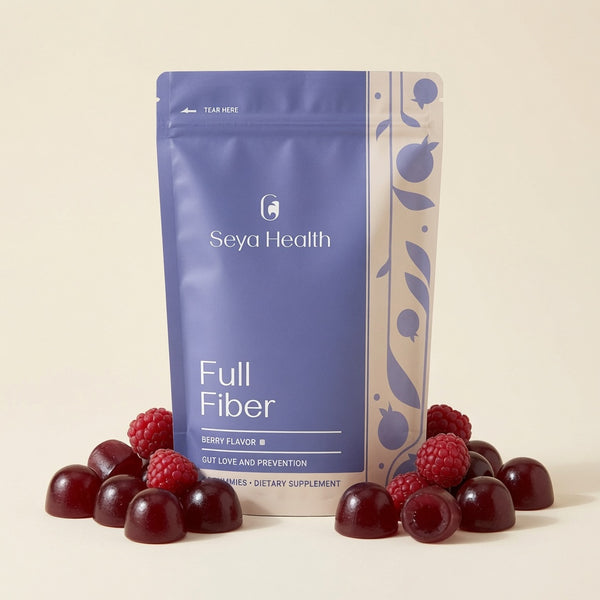
Seya Full Fiber
Your gut bacteria run on fiber. Seya Full Fiber delivers 6 grams from three fibers in one to feed the beneficial bacteria in your gut and support short-chain fatty acid production. Plant based, no gelatin, no sugar alcohols.
Shop Full FiberKeep reading
fiber
Can a Multivitamin Replace Vegetables? What Supplements Can't Do for Your Gut

constipation
The Best Way to Beat Constipation in Your 30s (and Where Fiber Gummies Fit)
fiber
The Gut-Skin Axis: Does Your Gut Health Affect Your Skin?
The gut-skin axis, explained: how your gut bacteria and blood sugar affect your skin, w...