

Short version: Creatine after 50 may help you hold on to muscle while you lose weight, but only as a partner to strength training. In the one diet trial of adults aged 45 to 65, people who took creatine gained 1.27 kg of lean tissue while dieting, versus 0.14 kg on placebo. Lifting, protein, and a modest calorie cut still do most of the work.
- The 50-plus problem: dieting can cost you muscle and bone, not just fat.
- Best protection in trials: walking or cardio plus strength work, together.
- Protein target for older adults: 1.0 to 1.2 g per kg of body weight a day.
- Creatine dose in studies: 3 to 5 g a day.
Last updated November 2026.
Losing weight at 30 and losing weight at 55 are not the same job.
At 55, you start with less muscle, and your body is slower to rebuild it. Bone is thinning too, especially after menopause.
So the goal shifts. You want to lose fat and keep the parts that keep you strong and steady. Here is what the trials say about doing that, and how much creatine adds.
Why is weight loss after 50 harder on muscle?
Two things change with age. Your muscles respond less to the protein you eat, and you tend to move less day to day.
An expert panel on protein and aging described "declining anabolic responses to ingested protein" in older adults. In plain words, the same meal builds less muscle than it used to. See Bauer et al., the PROT-AGE group (J Am Med Dir Assoc, 2013).
Add a calorie cut on top, and some of the weight that comes off can be muscle. Over time, low muscle plus extra body fat has a name: sarcopenic obesity. Our guide to what sarcopenia is explains why it matters for balance and falls.
A big trial in older adults with obesity put the worry this way: weight loss "might accelerate age-related loss of muscle and bone mass." See Villareal et al. (N Engl J Med, 2017).
How much muscle and bone can you lose while dieting after 50?
It depends on how you exercise. That same trial put 160 older adults with obesity on a 6-month diet plan. Each group did a different kind of exercise.
Everyone who exercised lost about 9% of their body weight. What they lost besides fat was very different.
| Exercise while dieting | Lean mass | Hip bone density | Physical performance score |
|---|---|---|---|
| Cardio only | Down 5% | Down 3% | Up 14% |
| Strength only | Down 2% | Down 0.5% | Up 14% |
| Cardio plus strength | Down 3% | Down 1% | Up 21% |
Source: Villareal et al. (N Engl J Med, 2017).
Cardio alone cost the most muscle and the most hip bone. Strength work cut both losses. Doing both gave the best gain in everyday function, like climbing stairs and getting up from a chair.
Strength rose 18% to 19% in the groups that lifted. It rose just 4% with cardio alone.
Does creatine after 50 help you keep muscle while losing weight?
It may, and there is one trial that tested almost exactly this. It is promising, but it is small.
Researchers followed 64 adults aged 45 to 65, with an average age of 54.5. Forty were women. Some chose a diet and exercise program, and the rest kept their usual routine. Then each person got either creatine, 2 doses of 5 g a day, or a placebo for 12 weeks.
In the diet and exercise group, creatine users gained 1.27 kg of lean tissue. The placebo group gained 0.14 kg. Body fat fell 3.24 percentage points with creatine, versus 1.87 points with placebo. See Chun et al. (J Int Soc Sports Nutr, 2026).
Three honest caveats:
- People picked their own program, so the diet groups were not randomly assigned. Only creatine versus placebo was.
- Lean tissue counts water held in muscle, and creatine adds some water.
- One senior author has ties to a creatine maker. That does not make the results wrong, but it is worth knowing.
The wider evidence points the same way. In 22 trials of older adults who lifted, creatine added about 1.37 kg of lean mass over lifting alone. See Chilibeck et al. (Open Access J Sports Med, 2017). Those trials were not diet trials, though.

How much protein do you need after 50 while dieting?
More than the label minimum. The PROT-AGE group advises older adults to get at least 1.0 to 1.2 g of protein per kg of body weight a day.
If you are active, they suggest 1.2 g per kg or more. For a 70 kg person, about 155 pounds, that is roughly 84 g a day. See Bauer et al. (J Am Med Dir Assoc, 2013).
There is one big exception. People with severe kidney disease may need to limit protein. Ask your doctor before you raise it.
Wondering how creatine and protein differ? Our side-by-side on creatine vs protein covers what each one does.
Creatine, GLP-1 medicines, and weight loss after 50
Many people over 50 now lose weight on a GLP-1 medicine. Fast weight loss raises the same muscle question, and age makes it sharper.
A 2024 review found lean mass made up 40% to 60% of the weight lost in some GLP-1 studies. In others it was about 15% or less. The authors flagged older age as a reason for extra care. See Neeland et al. (Diabetes Obes Metab, 2024).
No trial has yet tested creatine during GLP-1 weight loss. We walk through what is known in creatine on a GLP-1. Talk to your prescriber before adding any supplement.
Is creatine safe for adults over 50?
For most healthy adults, yes. An expert review called it "relatively well tolerated" at 3 to 5 g a day. See Antonio et al. (J Int Soc Sports Nutr, 2021).
A few things matter more after 50:
- Kidneys: if you have kidney disease, ask your doctor first.
- Lab tests: creatine can raise creatinine on a blood test. Read creatine vs creatinine and tell your doctor before lab work.
- Medicines: bring your full list to your doctor or pharmacist.
- The scale: you may gain a pound or two of water early on. Our creatine weight gain timeline shows how long that lasts.
A simple plan for losing weight after 50 without losing strength
- Lift 2 to 3 times a week. Bands, machines, or hand weights all count.
- Keep walking or doing cardio. In the trial above, the mix beat either one alone.
- Eat enough protein. Aim for 1.0 to 1.2 g per kg a day, spread over meals.
- Keep the calorie cut modest. Slow loss leaves more room to keep muscle.
- Consider creatine as the add-on. Plain monohydrate at 3 to 5 g a day is the studied form. See best creatine for older adults for what to look for.
- Track strength, not just pounds. A stronger grip and easier stairs are wins.
Want the full ranking of lifting, protein, and creatine at any age? Read creatine in a calorie deficit. For the 60-plus evidence on strength and memory, see creatine for older adults.
Where Seya fits, honestly
Seya sells one product today: a fiber gummy that supports regularity. Our creatine gummy is coming January 2027. It is not on sale yet, so we are not sharing a dose or price.
No supplement can promise weight loss or guarantee you keep muscle. This is education, not medical advice.
These statements have not been evaluated by the Food and Drug Administration. This product is not intended to diagnose, treat, cure, or prevent any disease.
Frequently asked questions
Does creatine help with weight loss after 50?
Not directly. Creatine does not melt fat. In one 12-week diet trial of adults aged 45 to 65, it helped people gain lean tissue while body fat percentage fell more than on placebo.
Is creatine safe for adults over 50?
For most healthy adults, yes, at 3 to 5 g a day. Ask your doctor first if you have kidney disease, take several medicines, or are due for blood work.
Can creatine protect muscle during weight loss or GLP-1 use?
It may help during diet-based weight loss when paired with strength training. No trial has tested it during GLP-1 treatment yet, so talk to your prescriber.
What exercise protects muscle and bone best when dieting after 50?
Cardio plus strength training. In a 6-month trial, that mix gave the biggest gain in physical function, and lifting cut the loss of lean mass and hip bone.
How much protein should you eat after 50 while losing weight?
At least 1.0 to 1.2 g per kg of body weight a day, or 1.2 g or more if you are active. People with severe kidney disease may need less.
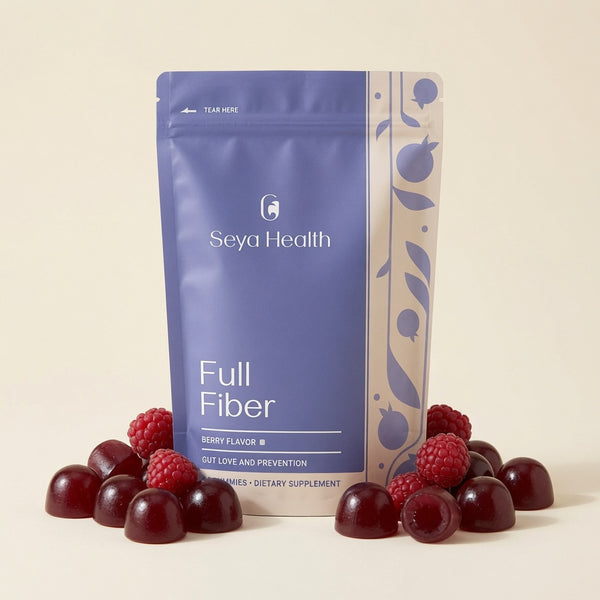
Seya Full Fiber
Most women fall short on fiber. Seya Full Fiber gives you 6 grams from three fibers in three small vegan gummies. Plant based, no gelatin, no sugar alcohols.
Shop Full FiberKeep reading

bone health
Best supplements for women over 40: what the evidence supports for heart, bones and muscles (and what's hype)

creatine
How long does creatine take to work? A realistic timeline for women

constipation